HCPCS code G0257: Unscheduled or emergency dialysis billing guide
HCPCS code G0257: Official descriptor and code overview HCPCS code G0257 is defi...

Last Updated: Oct 27, 2026
A6010 is the HCPCS Level II code for collagen based wound filler, dry form, sterile, per gram of collagen.
Wound care billing denials often trace back to a single misstep: Documenting grams applied instead of calculating units correctly, or reaching for A6011 when the product in hand is a dry powder. HCPCS Code A6010 covers collagen based wound filler in dry form only, billed per gram of collagen, under Medicare Part B's surgical dressings benefit. Get the form factor wrong and the claim bounces.
Let Pabau's smart automation suggest the right codes, reduce claim denials, and keep your practice compliant—effortlessly.
Automate repetitive tasks and focus on what matters most—your patients.
Reduce coding errors and ensure compliance with the latest regulations.
Clean claims, fewer denials, and faster reimbursements.
Powerful insights and reporting to help your practice thrive.
HIPAA compliant SOC 2 certified GDPR-compliant Trusted by 4,000+ clinics worldwide

HCPCS Code A6010 describes collagen based wound filler, dry form, billed per gram of collagen under Medicare Part B surgical dressings
Coverage requires documented wound type, size, depth, and drainage plus a physician order with a treatment plan supporting medical necessity
A6010 is the dry/powder form; A6011 is the gel/paste form – billing the wrong code for the wrong formulation is the most common denial trigger
Pabau’s claims management software can prompt wound measurement documentation and flag unit calculation errors before claim submission
HCPCS Code A6010 sits in the A-series of HCPCS Level II, the CMS-maintained alphanumeric coding system covering medical supplies, dressings, and equipment billed outside the CPT framework. The A-series specifically covers surgical dressings and wound care supplies billed to Medicare Part B. A6010 is one of several collagen wound filler codes, distinguished by formulation (dry powder) and billing unit (per gram).
The billing unit is the detail coders most often miscalculate. Each unit of A6010 represents one gram of collagen applied. If the wound required 3 grams during the encounter, bill with a quantity of 3. Billing one unit regardless of the amount applied is a systematic undercoding error; billing more units than the product label supports is an overcoding risk subject to audit.
Medicare Part B covers A6010 under the surgical dressings benefit, governed by CMS Policy Article A54563. Coverage is not automatic. The wound and clinical setting must meet all of the following criteria before the claim will pay.
Non-covered situations include cosmetic wound care, wounds in inpatient settings, and applications where the medical record does not support clinical necessity. Always confirm the payer’s current local coverage determination (LCD) before billing, as Medicare Administrative Contractors may apply additional coverage criteria beyond the national policy.
Missing or incomplete wound documentation is the leading cause of A6010 claim denials. The chart note for each encounter must support medical necessity at the time of service. Per CGS Medicare billing guidance, the medical record must include all of the following.
Practices that use digital intake and wound documentation forms reduce the risk of incomplete entries because required fields can be made mandatory before a note is saved.

Flag every A6010 encounter for a documentation completeness check before claim submission. Build a simple checklist: Wound measurements present, quantity applied recorded, physician order on file, treatment plan current. A 60-second pre-submission review prevents the 30-day denial and appeal cycle.
An inventory management tool flags when supply usage and supply billing drift apart.
A6010 reimbursement is set per gram of collagen under the Medicare Part B Durable Medical Equipment (DME) fee schedule. Rates vary by MAC jurisdiction and by whether the service is provided in a facility or non-facility setting. For current 2026 rates, use the CMS Physician Fee Schedule lookup tool or the AAPC HCPCS code reference, filtering by your MAC jurisdiction and calendar year.
Because the fee schedule rate is per gram, accurate unit calculation directly determines reimbursement. Document the grams applied in the clinical note, confirm the quantity matches the claim, and verify you are using the current-year rate for the correct jurisdiction before submitting.
The A6010 billing workflow follows six steps. Each step has a potential failure point; the steps below flag where denials most often originate. The clearinghouse validates structure before the payer validates content, which is why an electronic claim can fail twice.
Always verify modifier applicability against current CGS Medicare or your MAC’s LCD before billing. Modifier guidance is subject to payer-specific updates and misapplication can trigger fraud and abuse review in addition to claim denial.

Pabau helps wound care clinics document wound measurements, calculate units, and attach supporting records to claims before submission, reducing A6010 denials caused by incomplete documentation.

A6010 and A6011 are sibling codes covering different formulations of the same product category. Using the wrong code for the product on hand is the single most common A6010 billing error. The distinction is straightforward: A6010 is dry powder form, billed per gram; A6011 is gel or paste form, also billed per gram. The form factor in the product labeling determines the code, not the clinical application method.
Both codes share the same coverage criteria and documentation requirements under CMS Policy Article A54563. The decision between A6010 and A6011 should be made at the point of care by the clinician documenting the product used, not by the biller interpreting an incomplete note. Documenting the product name and lot number in the wound care note eliminates ambiguity for the coder.
A6010 is part of a broader set of wound filler and surgical dressing codes. Understanding the boundaries between them prevents unbundling errors and ensures the correct code is used for each product type. For a complete searchable reference, the PGM Billing HCPCS lookup tool provides free access to CMS code data including descriptors and effective dates.
Mixing up A6010, A6196. Always verify the product’s classification against its FDA registration and product labeling before selecting a code. “Wound filler” and “wound cover” are not interchangeable in HCPCS; they have different codes and different billing units.
Most A6010 denials fall into five categories. Each is preventable with the right documentation practice.
Run a monthly audit of A6010 claims: Pull all denials with reason codes CO-50 (not medically necessary) and CO-4 (modifier required). CO-50 denials indicate documentation gaps; CO-4 denials indicate a missing or incorrect modifier. Tracking these by denial code identifies the exact step in the workflow that needs fixing.
The most consistent source of A6010 claim failures is the gap between clinical documentation and billing. A wound care clinician records measurements in one system; a biller pulls a summary in another; the quantity applied disappears in translation. Practice management platforms that connect documentation directly to claim generation close that gap at its source.
Pabau’s claims management software keeps wound measurements, physician orders, and treatment plans attached to the patient record and accessible at claim submission. The coder sees the grams applied field, the order on file, and the wound dimensions without switching systems or requesting records from the clinical team. This is where most A6010 unit errors are caught before they become denials.
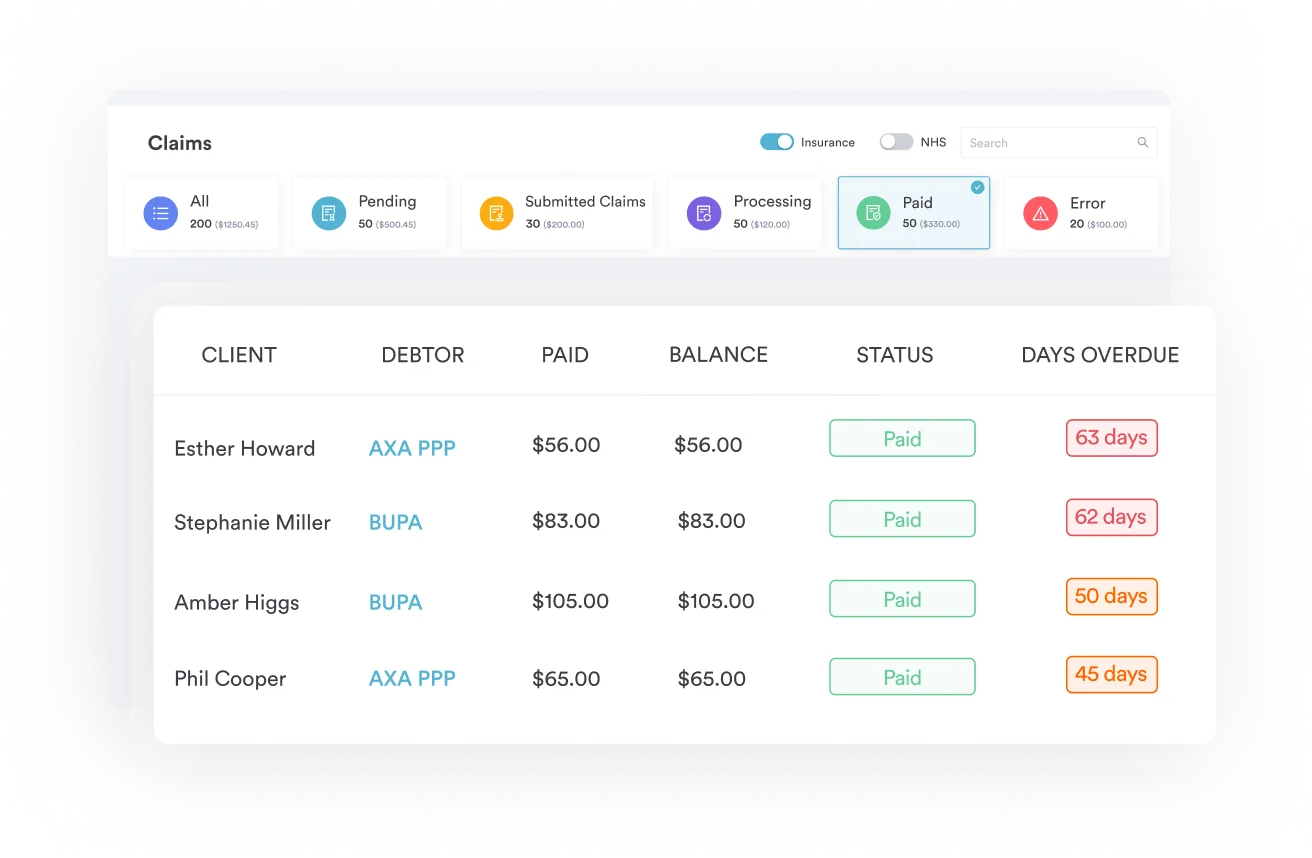
For practices managing multiple wound care patients, automated workflows can also flag when a patient’s A6010 claim count is approaching Medicare frequency limits, prompting the team to prepare an ABN in advance rather than discovering the issue after denial. For more on medical practice management software options suited to wound care and procedure-heavy practices, the Pabau blog covers the key feature differences in detail.

Wound care clinics operating within skin clinic software environments benefit especially from having claims management and wound documentation in one platform, since dermatology-adjacent wound care involves a high volume of per-gram billing that makes unit accuracy a weekly rather than occasional concern. For practices evaluating HIPAA-compliant clinic software options, wound care documentation and claims integration are among the core features to assess during any software evaluation.
HCPCS Code A6010 is straightforward when the documentation is right: Verify wound eligibility, record grams applied, attach a current physician order, and apply the KX modifier. The denials happen when any one of those steps is incomplete or inconsistent with the claim.
Pabau’s claims management software connects wound documentation directly to claim generation, so the unit count, wound measurements, and physician order travel with the claim from the point of care. To see how Pabau handles wound care billing workflows, book a demo with the team.

Billing a zoledronic acid infusion? zoledronic acid injection billing guide covers the 2026 unit conversion for billing a Zometa or Reclast bisphosphonate dose.
What about an unclassified biologic? unclassified biologics billing guide covers the drug name, dosage and NDC details required when a biologic has no specific J-code.
Need to bill a normal saline infusion? normal saline infusion billing guide covers when this code applies for hydration, medication dilution or as a vehicle for other therapies.
HCPCS Code A6010 is a Level II HCPCS code describing collagen based wound filler, dry form, per gram of collagen. It is used to bill Medicare Part B for dry/powder collagen wound filler products applied to qualifying wounds such as diabetic foot ulcers, pressure injuries, and venous stasis ulcers.
A6010 covers collagen wound filler in dry powder or granule form; A6011 covers collagen wound filler in gel or paste form. Both are billed per gram of collagen, but you must match the code to the product’s actual formulation as stated on the product label. Billing A6010 for a gel product is a misclassification that will result in a denial upon audit.
Yes, Medicare Part B covers A6010 under the surgical dressings benefit per CMS Policy Article A54563, when the wound meets coverage criteria: The wound must be a chronic wound requiring collagen-based filler, documentation must include wound measurements and a physician order, and frequency limits must not be exceeded.
A6010 is billed per gram of collagen applied. If 3 grams were applied during the encounter, the claim quantity is 3. A common error is billing a quantity of 1 regardless of the amount applied, which results in systematic undercoding and lost reimbursement over time.
The primary modifier for A6010 is KX, which certifies that the patient meets all Medicare coverage criteria documented in the medical record. GA is used when the patient does not meet criteria but has signed an Advance Beneficiary Notice (ABN). GZ is used when the patient does not meet criteria and no ABN was obtained. The NU modifier is also commonly applied to indicate a new supply item.
Required documentation includes wound measurements (length, width, depth in centimeters), wound characteristics (exudate type and volume, wound bed description), a physician or NPP order specifying collagen wound filler, an active treatment plan with healing goals, the quantity of grams applied at the encounter, and progress notes comparing current wound status to previous measurements.