CCSD code G5100: Bypass of duodenum billing guide
CCSD code G5100 bills a bypass that leaves the duodenum in place CCSD code G5100...

Last Updated: Oct 16, 2026
T1001 is the HCPCS Level II code for nursing assessment / evaluation.
The service captures the clinical work of an RN assessing a patient's health status, care needs, and treatment plan. It is usually delivered in a home health or home and community-based services (HCBS) setting.
The official long descriptor reads: Nursing assessment/evaluation. The code carries no time unit, so individual state Medicaid programs set their own billing frequency limits and rate structures. Billing teams working across several states need to check the fee schedule and coverage rules for each one before submitting.
Let Pabau's smart automation suggest the right codes, reduce claim denials, and keep your practice compliant—effortlessly.
Automate repetitive tasks and focus on what matters most—your patients.
Reduce coding errors and ensure compliance with the latest regulations.
Clean claims, fewer denials, and faster reimbursements.
Powerful insights and reporting to help your practice thrive.
HIPAA compliant SOC 2 certified GDPR-compliant Trusted by 4,000+ clinics worldwide

HCPCS code T1001 is a Level II code for nursing assessment and evaluation, primarily used in Medicaid home health and HCBS billing.
Only a registered nurse (RN) may perform the service billed under T1001. Documentation must clearly identify RN credentials.
Reimbursement rates vary by state Medicaid program and payer. Prior authorization requirements differ by state and are not universal.
Most T1001 denials come from a missing state modifier, a non-RN provider, or a thin medical necessity note.
Practice management software like Pabau helps home health and HCBS billing teams track T1001 documentation and reduce denials.
T1001 applies when a registered nurse conducts a formal assessment or evaluation of a patient. The purpose is to determine care needs, monitor a clinical condition, or establish a baseline for a care plan. The code is not intended for routine skilled nursing visits or therapeutic procedures.
T1001 is not appropriate for documenting a medication administration visit, a wound care treatment, or a supervisory visit conducted by an RN over another provider. Those services have their own dedicated codes.
Misapplying T1001 to routine skilled nursing procedures is one of the most common reasons claims are flagged for review. Sound patient care management keeps the assessment visit distinct from treatment visits in both the schedule and the record. Community programs carry the same risk, so mental health practices billing Medicaid log assessments separately from therapy sessions.
Documentation for T1001 must establish that a qualified RN performed a nursing assessment and that the service was medically necessary. Incomplete documentation is the leading cause of T1001 claim denials. The elements below apply broadly, though individual state Medicaid programs may add requirements.
Digital forms and structured clinical templates cut the number of missing fields. Practices using digital intake and clinical forms can build a T1001 template that requires every element before an RN closes the visit. A ready-made nursing health assessment form gives you a structure to adapt.
This matters most on multi-patient HCBS caseloads, where free-form visit notes drift away from payer requirements. How you handle medical forms often decides whether a claim clears on first submission or lands in a denial queue.
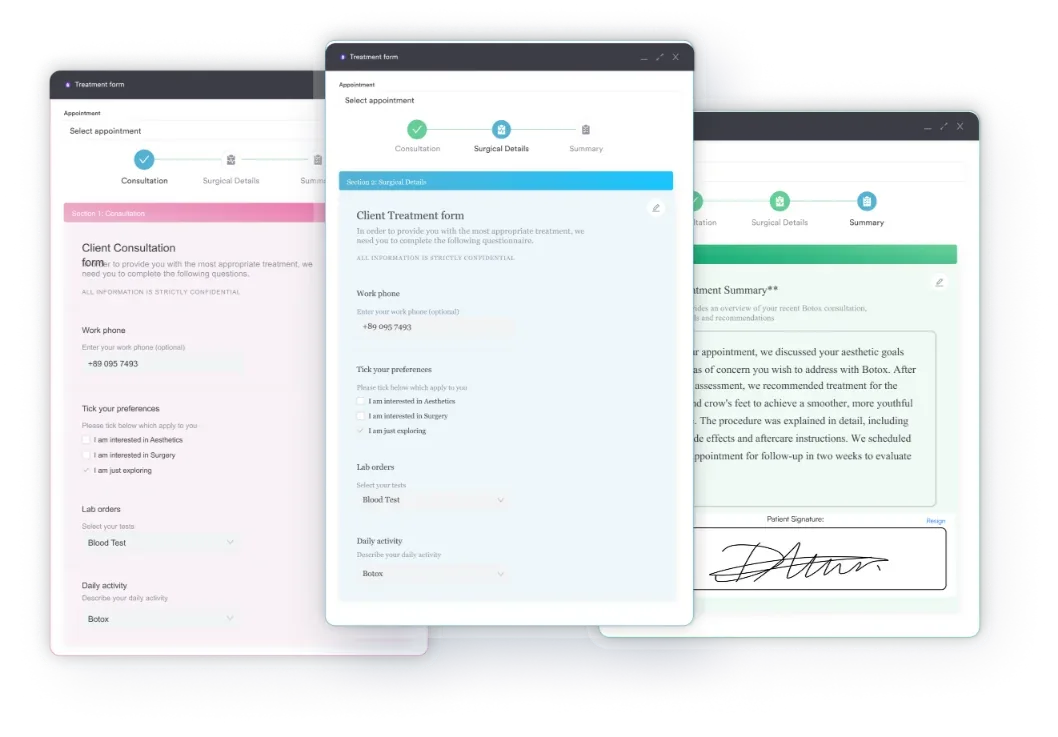
Build a T1001 documentation checklist into your RN visit template. Flag RN license number, assessment domains covered, and care plan linkage as mandatory fields. A claim submitted without all three is a denial waiting to happen.
Prior authorization (PA) requirements for HCPCS code T1001 vary by state Medicaid program and payer. No universal federal rule requires PA for this code. Billing teams must check with each state’s Medicaid agency and with any managed care organization (MCO) covering the patient.
One notable exception applies to the US Department of Labor’s Office of Workers’ Compensation Programs (OWCP). In June 2018, the DOL issued a bulletin removing the PA requirement for T1001 within OWCP programs. The change also covers EEOICPA, the Energy Employees Occupational Illness Compensation Program Act.
That change applies to those federal workers’ compensation programs only, not to standard state Medicaid programs. Billing teams handling both Medicaid and OWCP claims should track PA requirements separately by payer type.
Tracking PA status across a high-volume home health caseload needs a reliable system. Practice management software like Pabau flags PA-required codes at the patient record level. Its claims management tools then stop a T1001 claim going out before the authorization is on file.
Modifiers add clinical or administrative context to the claim. Applying the wrong one, or omitting one the payer requires, triggers a denial or a payment reduction. These are the modifiers most often attached to T1001 billing.
State-assigned modifiers (U1 through U9) are the ones most often missed. Several state Medicaid programs use them to identify the waiver program a service was delivered under. A claim without the right modifier is rejected at the payer edit level, never reaching clinical review.
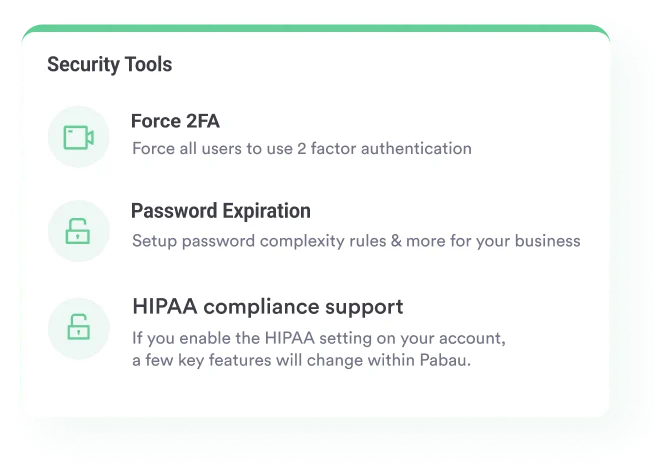
Confirm the required modifier set with each state Medicaid program before your first claim goes out. Practices handling HIPAA compliance and billing across several states should keep a per-state modifier reference at the claim entry screen.
Reimbursement rates for HCPCS code T1001 are set by individual state Medicaid programs, not by a single CMS national fee schedule. A T1001 claim submitted in California will reimburse at a different rate than the same service billed in Texas, Florida, or New York.
Each state updates its rates annually or every two years. Verify current figures on the state Medicaid fee schedule portal before you set internal benchmarks.
Ranges across state Medicaid programs in 2025-2026 fall roughly between $30 and $120 per assessment. The figure depends on the state, the waiver program, and whether managed care rates apply. MCO rates often differ from fee-for-service Medicaid and are negotiated separately.
The CMS fee schedule tool does not include T-code rates, because T1001 is Medicaid-specific. For verified figures, ask your state Medicaid agency for its current fee schedule.
T1001 sits in a series of HCPCS Level II T-codes covering nursing and home health services. Knowing the adjacent codes helps billing teams pick the most accurate one and avoid upcoding or undercoding.
The table below compares T1001 to its nearest neighbors. The CMS HCPCS overview sets out the full Level II code structure and the annual update process.
The T1001 versus T1002 distinction causes the most confusion in this code family. T1002 covers RN services billed in 15-minute increments, which suits ongoing skilled nursing visits. T1001 applies when the visit’s main purpose is assessment rather than treatment.
Billing T1002 for a visit that was principally an assessment misrepresents the service and can trigger a retrospective audit. Check your state Medicaid policy guidance, because some states define the split more narrowly than others.
HCBS billing for T1001 adds program-specific requirements on top of the standard Medicaid rules. Most state HCBS waiver programs operate under approved 1915(c) waivers that define which services are covered, at what frequency, and under what conditions.
Coverage within an HCBS waiver depends on whether that state’s approved waiver names nursing assessment as a covered service category. Waiver programs often bundle it alongside other service lines. A practice also delivering occupational therapy under the same waiver bills against the same participant plan.
Practices running HCBS billing alongside other Medicaid service lines need one place for documentation and claims. A compliance management system ties each claim to the clinical record behind it. Federal audit exposure is higher in HCBS than in standard home health billing, so that link matters.
Records also have to stay retrievable years later. That is where HIPAA-compliant practice software earns its keep during a retrospective review.
Most T1001 denials trace back to a short list of causes. The errors below are the ones most often cited for T-code rejections in home health and HCBS settings. Together they account for the bulk of first-pass denials.
Two habits cut first-pass denial rates. The first is a structured documentation review before submission. The second is a billing workflow that checks modifier and PA rules by payer before the claim leaves the practice.
Reading the denial codes on returned claims tells you which of these errors is costing you most. The AAPC HCPCS lookup confirms code-specific guidance alongside your state Medicaid bulletins.
Home health and HCBS billing teams handle more payer variation per claim than almost any other setting. State modifiers, per-waiver coverage rules, PA tracking, and documentation standards each create a point of failure between the visit and the payment.
Plenty of billing teams carry that variation in a spreadsheet and in someone’s memory. Pabau holds it in the system instead, so the rules travel with the payer rather than with the person who learned them.
The same platform that handles T1001 claims also runs broader practice management workflows. Scheduling, patient records, and reporting sit next to the billing side rather than in a separate tool. When billing and clinical documentation live apart, audit findings tend to follow.
Your clean claim rate is the number worth watching month to month. The CMS CPT/HCPCS code list is the authoritative source for the annual updates that can change T1001 rules each October.

Pabau’s claims management tools help home health and HCBS billing teams track documentation requirements, prior authorizations, and modifier rules across multiple payers and states.

The code itself is straightforward. What costs money is the variation around it. Modifier sets, PA thresholds, waiver rules, and documentation standards all shift when you cross a state line.
Build those variables into the pre-submission workflow and the denial queue shrinks. Treat them as corrections after the fact and you pay for the same claim twice, in staff time and in delayed revenue.
Start with the one state or MCO that generates the most T1001 volume. Get its modifier set, PA rule, and documentation checklist right, then repeat the exercise for the next payer.
Book a demo to see how Pabau keeps T1001 documentation and claims in one place for home health and HCBS teams.

Need a documentation framework that holds up in an audit? Medical forms at your healthcare practice covers how structured forms keep visit notes complete.
Managing HIPAA compliance across a multi-payer billing operation? HIPAA compliance for medical offices sets out the record-keeping and security rules that apply to Medicaid billing.
Coding a follow-up or reassessment visit instead? HCPCS code S0316 covers disease management follow-up, which sits close to T1001 in many care plans.
Billing another community-based service line? Coaching CPT codes walks through the billing reference for health and wellness coaching services.
HCPCS code T1001 is a Level II code describing a nursing assessment or evaluation performed by a registered nurse. State Medicaid programs use it for home health and home and community-based services (HCBS) billing. It covers a standalone assessment, billed separately from treatment delivery.
Documentation must identify the performing registered nurse by name and license number. It also needs the date and setting of the assessment, plus a clinical note describing the domains evaluated. A medical necessity statement and a link to the care plan complete the record. Most state Medicaid programs also require a physician order or authorized referral on file.
Prior authorization requirements vary by state Medicaid program and managed care organization. There is no universal federal PA requirement for T1001. The US Department of Labor removed PA for T1001 within OWCP and EEOICPA programs in June 2018. That change covers those federal workers’ compensation programs only, not standard Medicaid. Always verify PA requirements with the applicable payer before submitting.
T1001 covers a nursing assessment or evaluation as a discrete service and is not time-based. T1002 covers RN services billed in 15-minute increments, used for skilled nursing visits focused on treatment delivery. Billing either code for the other type of visit misrepresents the service and increases audit risk.
Yes, T1001 can be billed in HCBS settings if the patient’s approved waiver includes nursing assessment as a covered service. The service must appear in the participant’s person-centered service plan. You also need the applicable state modifiers and the correct claim submission pathway for that waiver program.
Reimbursement rates for T1001 are set by individual state Medicaid programs and vary widely. Ranges across states in 2025-2026 fall roughly between $30 and $120 per assessment. Managed care rates differ from fee-for-service amounts and are negotiated separately. Verify current figures with your state Medicaid agency’s published fee schedule, since each state runs its own update cycle.