CPT code 51797: Intra-abdominal voiding pressure add-on
What CPT code 51797 covers CPT code 51797 is the add-on code for intra-abdominal...

Last Updated: Oct 19, 2026
S0316 is the HCPCS Level II code for disease management program, follow-up/reassessment.
It belongs to HCPCS Level II, the code system maintained by the Centers for Medicare and Medicaid Services (CMS). Level II covers supplies, services, and procedures that CPT codes do not capture. Within it, S0316 sits in the S-code range, which Medicaid managed care plans and commercial insurers use most.
For practices running chronic disease programs, the difference between S0316 and the codes either side of it decides whether a claim gets paid. Practice management software can carry the code through to the claim, but somebody still has to pick it correctly.
Let Pabau's smart automation suggest the right codes, reduce claim denials, and keep your practice compliant—effortlessly.
Automate repetitive tasks and focus on what matters most—your patients.
Reduce coding errors and ensure compliance with the latest regulations.
Clean claims, fewer denials, and faster reimbursements.
Powerful insights and reporting to help your practice thrive.
HIPAA compliant SOC 2 certified GDPR-compliant Trusted by 4,000+ clinics worldwide

HCPCS code S0316 covers follow-up and reassessment visits inside an established disease management program.
Traditional Medicare does not pay S0316, but many Medicaid managed care plans and commercial payers do.
S0315 covers the initial enrollment assessment, and S0316 covers every reassessment visit that follows it.
S0317 is a per diem code, so it bills by day of program participation rather than by visit.
Practice management software like Pabau tracks S0316 claims, applies the right modifiers, and keeps documentation audit-ready.
The table below summarizes the core code attributes for S0316 under the 2026 HCPCS update cycle. S-codes are reviewed every year, so check the CMS HCPCS update before you submit.
S0316 covers follow-up and reassessment visits inside an established disease management program. Onboarding appointments do not qualify. The code applies to the ongoing structured encounters where a clinician reviews progress against program goals, adjusts the care plan, and documents the reassessment.
Payers contract disease management programs for diabetes, heart failure, asthma, COPD, hypertension, and similar chronic conditions. Practices running those programs on functional medicine software can see enrollment status and visit cadence on the record. That context stops a follow-up being coded as an initial assessment.
Services typically documented under S0316 include:
S0316 is not meant for evaluation and management (E/M) services billed under CPT. If the visit rises to a billable E/M encounter, check payer policy on whether the CPT code applies instead. Structured patient care management makes that call easier, because the note already shows what the visit contained.
The S0315 and S0316 mix-up is one of the most common coding errors in disease management billing. Both codes sit in the same series, but they describe different points in the patient’s program journey. Billing S0316 for an enrollment visit, or S0315 for a reassessment, usually ends in a denial or a documentation request.
Key rule: bill S0315 once per program enrollment event. Bill S0316 for every follow-up and reassessment visit after that. S0317 works on a different basis again, because it is a per diem code rather than a per-visit one. Confirm with each payer contract whether a per diem arrangement applies before you use it.
Traditional Medicare fee-for-service does not cover S0316. S-codes are temporary non-Medicare codes, and as a category they sit outside the Medicare Physician Fee Schedule. Practices billing Medicare should not expect S0316 to process. Checking your Medicare Administrative Contractor (MAC) for local policy is still worth a few minutes.
Practices contracted with Medicaid managed care or commercial payers will find S0316 broadly supported, though coverage is not universal. Primary care software that stores each plan’s rules alongside the patient record saves the billing team a lookup on every claim. The payer landscape breaks down as follows:
Medicaid coverage of S0316 varies by state and by managed care plan, so billing staff should confirm policy rather than assume it. Run eligibility verification against the patient’s plan and pull that plan’s own fee schedule before submitting.
Run a payer eligibility check before every disease management visit. Confirm that S0316 is covered under the patient’s plan and that their program enrollment is still active. One missed check can trigger denials across every follow-up claim you file after it.
Individual payers set the reimbursement rate for S0316, not CMS. S-codes carry no published national payment rate, unlike CPT codes on the Medicare Physician Fee Schedule. What you collect depends on the rate you contracted with each Medicaid MCO or commercial payer.
Sound revenue cycle management means requesting the S0316 fee schedule from every contracted payer during negotiation and reviewing it each year. Rates differ substantially between plans and regions. The table below shows the factors that move the number:
Third-party lookup tools will show you ranges, but the only number that governs your payment is the one in your contract. Reconcile every S0316 rate against your own signed fee schedule.
Getting S0316 claims paid consistently takes the right documentation, correct modifier use, and a clear picture of which payers accept the code. Use the steps below as a baseline, then layer your own payers’ billing guidelines on top.
Send those coverage denials to whoever handles payer contracting. Knowing the common denial codes helps the team tell a contract problem from a coding one before anybody reworks the claim. The AAPC HCPCS lookup is a solid secondary reference for confirming the S0316 description before submission.
S-codes can carry standard HCPCS and CPT modifiers, depending on what the payer requires. The modifiers most relevant to S0316 are listed below. S-code modifier policy varies widely across Medicaid MCOs and commercial plans, so always check before you append one.
Modifier policy for S-codes comes from the payer rather than from CMS. Confirm the requirements with each contracted plan before billing, and keep a note of them where your coders will see it.
S0316 is the middle code in the disease management program series. Coders should know all three to avoid sequencing errors and to apply the right code at each stage of a patient’s participation. Practices that also run diabetes education should check G0109, which sits outside this series but often lands on the same patients.
Practices billing across all three codes need an internal protocol that ties each code to a visit type and program phase. Miscoding S0315 as S0316 is a common audit trigger, particularly in Medicaid managed care reviews.
The per diem structure of S0317 is easy to miss, because it bills on a different unit from the other two codes. A practice on metabolic health EMR can flag the program phase on the record itself. The coder then reads it off the chart instead of reconstructing it from the note.
Disease management billing gets scrutinized more closely than routine office visit billing. Payers that contract these programs expect the note to show genuine participation, not a brief check-in. Thin documentation is the most frequent cause of S0316 denials and post-payment audits.
Each S0316 encounter note should contain the following core elements:
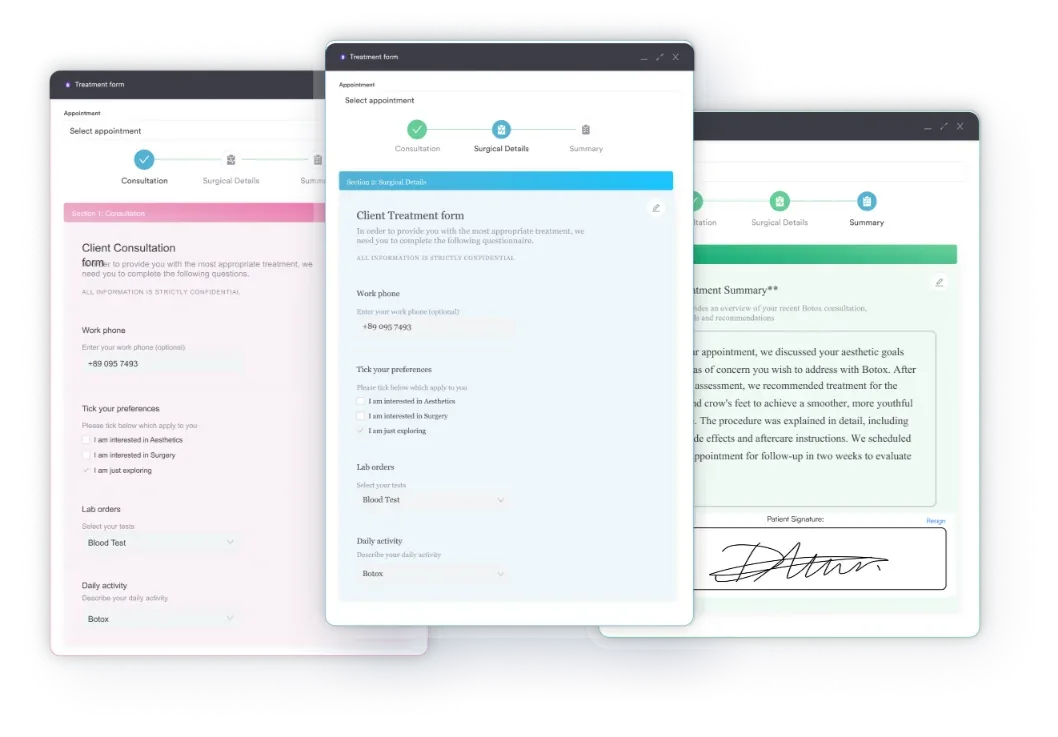
Digital intake forms built around the program’s requirements make it easier to capture every element at every visit. Free-text notes tend to lose one or two elements under audit, while a structured template anchors the note to the required content areas.
HIPAA-compliant documentation is the baseline for every disease management record. Payer rules then add a second layer on top. Some Medicaid MCOs require these notes to be generated and signed within 24–48 hours of the encounter.
Check your contract addenda for that requirement before you set the clinical documentation workflow. The same notes carry your medical billing compliance position in an audit, so the two reviews belong together.
Audit five S0316 claims each quarter against your documentation checklist. Compare what the note contains with what the payer’s contract requires. Documentation problems in disease management tend to repeat across every note, so a small sample surfaces the pattern early.
Most practices track disease management billing across three places at once. Program enrollment lives in one system, the reassessment note in another, and the claim in a third. The coder then rebuilds the patient’s program phase from whichever record looks most current.
Practice management software like Pabau holds all three in the same patient record. The enrollment date, every reassessment note, and the submitted claim sit on one timeline. A coder can see at a glance whether the visit is an S0315 or an S0316.
Claims management software then carries the code and its modifiers straight through to submission, and tracks what comes back. Every subscription includes it, so billing, charting, and program tracking are not separate purchases.
The result is fewer S0316 denials caused by a wrong code choice. It also leaves a documentation trail that stands up when a Medicaid MCO asks to see it.

Pabau’s claims management software applies HCPCS codes and modifiers as you submit, tracks each claim’s status, and keeps the reassessment note attached to it.

S0316 is a straightforward code with an unforgiving edge. It only holds up when the record proves the patient was already enrolled and the visit was a genuine reassessment.
So the work sits upstream of the claim. Decide how your practice records program enrollment, who confirms the phase before coding, and what a reassessment note has to contain. Once those three answers are written down, the code choice stops being a judgment call.
The trade-off worth remembering is that S0316 does not scale with clinical complexity the way an E/M code does. A visit that genuinely escalates may belong elsewhere. Book a demo to see how Pabau ties disease management notes to the claims that depend on them.

Worried a disease management claim will land too late? Timely filing limits sets out how long each payer type gives you and what to do when a deadline slips.
Need approval before a program visit goes ahead? Prior authorization process walks through the request, the follow-up, and the appeal when a payer says no.
Still waiting on a Medicaid MCO contract? How to get credentialed with insurance companies covers the paperwork and the timelines that decide when you can start billing.
Billing patients who pay out of pocket as well? Superbill template gives you a ready-made form with the code, diagnosis, and provider fields already laid out.
Deciding how to send claims electronically? Claim MD clearinghouse explains what a clearinghouse does to a claim between your practice and the payer.
HCPCS code S0316 is a Level II S-code for disease management program follow-up and reassessment services. It bills ongoing reassessment visits for patients already enrolled in a structured program. Those programs commonly cover diabetes, heart failure, asthma, and hypertension. Many Medicaid managed care plans and commercial payers accept the code, but traditional Medicare fee-for-service usually does not.
Traditional Medicare fee-for-service does not cover S0316. S-codes are temporary non-Medicare codes and do not appear on the CMS Physician Fee Schedule. Some Medicare Advantage plans cover S0316 under supplemental benefits, so verify directly with the individual plan before billing.
S0315 covers the initial assessment and program initiation when a patient first enrolls in a disease management program. S0316 covers every follow-up and reassessment visit after that enrollment. Billing S0316 for a first program visit, or S0315 for a follow-up, usually results in a denial.
S0316 bills a single follow-up or reassessment visit inside a disease management program. S0317 is a per diem code, so it bills by day of program participation rather than by encounter. The two are not interchangeable, and the payer contract decides which arrangement applies.
Many Medicaid managed care organizations and commercial insurers accept S0316 under contracted disease management programs. Coverage varies by state Medicaid plan and by individual commercial contract. Traditional Medicare does not cover the code. Always verify payer-specific coverage before submitting claims.
Common modifiers include state-defined Medicaid modifiers such as U1 to U9 and UA to UD. Telehealth modifiers also apply: GT for synchronous video, GQ for asynchronous delivery, and modifier 95 for commercial plans. Provider-type modifiers such as AH cover clinical psychologists. Requirements vary by payer, so confirm with each contracted plan.
An S0316 claim needs documentation showing active program enrollment and a reassessment of clinical goals against baseline measurements. The note should also record symptoms and self-management data, any care plan updates from the visit, and the patient education delivered. Individual payer contracts may add further requirements on top.