CPT code 93503: Swan-Ganz catheter billing and modifiers
CPT code 93503: Official descriptor and procedure overview In the AMA CPT code s...

Last Updated: Oct 23, 2026

CPT code 01636 describes anesthesia for interthoracoscapular (forequarter) amputation, carrying 15 base units under the ASA relative value guide.
Reimbursement is calculated using the formula: (Base Units + Time Units + Qualifying Circumstance Units) x Conversion Factor.
Modifier selection is critical: use AA for personally performed, QK/QX for medical direction, and QZ for unsupervised CRNA services.
Pabau’s claims management software helps surgical billing teams track anesthesia time units and submit modifier-correct claims.
CPT code 01636 is the anesthesia code for interthoracoscapular (forequarter) amputation, the highest base-unit procedure in the shoulder and axilla anesthesia range (01610-01680).
This guide covers the code descriptor, the base units and reimbursement formula, the modifiers for provider type and qualifying circumstances, and the ICD-10 codes payers expect to see paired with a claim.
CPT code 01636 is one of the highest base-unit anesthesia codes in the shoulder and axilla range. Billing errors on this code tend to run in one direction: undercharging due to incorrect modifier assignment or incomplete time documentation.
The full official descriptor for CPT code 01636, as maintained by the American Medical Association (AMA), reads: Anesthesia for open or surgical arthroscopic procedures on humeral head and neck, sternoclavicular joint, acromioclavicular joint, and shoulder joint; interthoracoscapular (forequarter) amputation. This code sits within the shoulder and axilla anesthesia range (01610-01680) and represents the most complex amputation-level procedure in that grouping.
A forequarter amputation involves removal of the entire upper extremity together with the scapula and clavicle. It is performed primarily for bone sarcomas, soft-tissue sarcomas invading the brachial plexus or subclavian vessels, and occasionally for severe traumatic injury when limb salvage is not viable.
Because of the anatomical extent of the resection and the complexity of the anesthetic plan, the code carries a base unit value of 15.
Anesthesia reimbursement does not follow the standard relative value unit (RVU) model used for most CPT codes. Instead, it uses a time-based formula that combines base units, time units, and any applicable qualifying circumstance units.
The standard anesthesia payment formula:
(Base Units + Time Units + Qualifying Circumstance Units) x Conversion Factor = Allowed Amount
For CPT code 01636, the base unit value is 15, confirmed across multiple payer schedules including the VA Community Care Table H and the Department of Labor Office of Workers’ Compensation Programs (OWCP) fee schedule.
Time units are calculated from the start of anesthesia induction to the point when the anesthesiologist is no longer in personal attendance. For a procedure as extensive as a forequarter amputation, operative times typically run several hours, making accurate time documentation a major driver of reimbursement.
Verify the current Medicare conversion factor using the CMS fee schedule lookup, as it changes annually and varies by geographic locality.
The same base-unit and time-unit formula applies across the anesthesia code set.
Modifier selection on anesthesia claims defines both the payment rate and the compliance risk. The wrong modifier combination on CPT code 01636 can trigger claim denial or a post-payment audit.
The key anesthesia modifiers fall into two categories: those that identify the provider type performing the service, and those that describe qualifying circumstances.
Medicare medical direction rules require the supervising anesthesiologist to perform seven specific tasks for each case under QK/QX billing:
Failure to document all seven tasks converts a QK/QX claim to an AD claim, reducing payment to 3 base units regardless of time.
Qualifying circumstances are reported separately alongside CPT code 01636 when applicable. They add units to the base unit count.
Document the specific qualifying circumstance in the anesthesia record with a clinical rationale before reporting codes 99100-99140. Payers including Medicare may request supporting documentation during claim review. A note stating ‘Patient age 74, qualifying for 99100’ is not sufficient; document the clinical significance of the age-related risk factor in the pre-anesthesia assessment.
CPT code 01636 sits within the 01610-01680 range for shoulder and axilla anesthesia. Understanding the adjacent codes prevents upcoding and downcoding errors when the operative report describes a different level of procedure than anticipated.
A shoulder procedure billed for a non-amputation diagnosis.
The most common coding confusion occurs between 01634 (shoulder disarticulation, 9 base units) and 01636 (forequarter/interthoracoscapular amputation, 15 base units). The distinction is anatomical: shoulder disarticulation removes the arm at the glenohumeral joint, leaving the scapula and clavicle intact.
Forequarter amputation additionally removes the scapula and clavicle, which increases surgical complexity and anesthetic duration. These anatomical differences also affect diagnosis coding.
Code selection depends on the operative report, not the preoperative plan. Coders and billers should also reference AAPC Codify for the full shoulder and axilla code range context.
Every anesthesia claim requires a supporting diagnosis code that establishes medical necessity. For CPT code 01636, the underlying diagnosis typically reflects the oncologic, traumatic, or vascular condition that necessitated forequarter amputation.
Understanding these pairings reduces denial risk on first submission. The same diagnosis-pairing principle applies to other amputation-level anesthesia codes.
Payers expect the ICD-10 code to directly support the level of surgical intervention. Submitting a diagnosis code that implies a less severe condition than the one requiring forequarter amputation is a common audit flag. Use CrossCoder to verify CPT-to-ICD-10 medical necessity crosswalks for specific payer policies.
A related upper-arm fracture that heals poorly is billed under ICD-10 code S42.211P. Forearm fracture treatment, in contrast, uses an entirely different code.
Anesthesia claims for a forequarter amputation carry a higher-than-average audit risk given the base unit value and the relatively low procedure frequency. Documentation needs to be airtight across four domains. Choosing a level means weighing problems addressed, data reviewed and risk, which is what MDM documentation covers.
The anesthesiologist must document a pre-anesthesia evaluation that covers the patient’s medical history, airway assessment, ASA physical status classification, and planned anesthetic technique. For oncology patients undergoing forequarter amputation, the evaluation should also address prior chemotherapy or radiation effects on cardiac and pulmonary function.
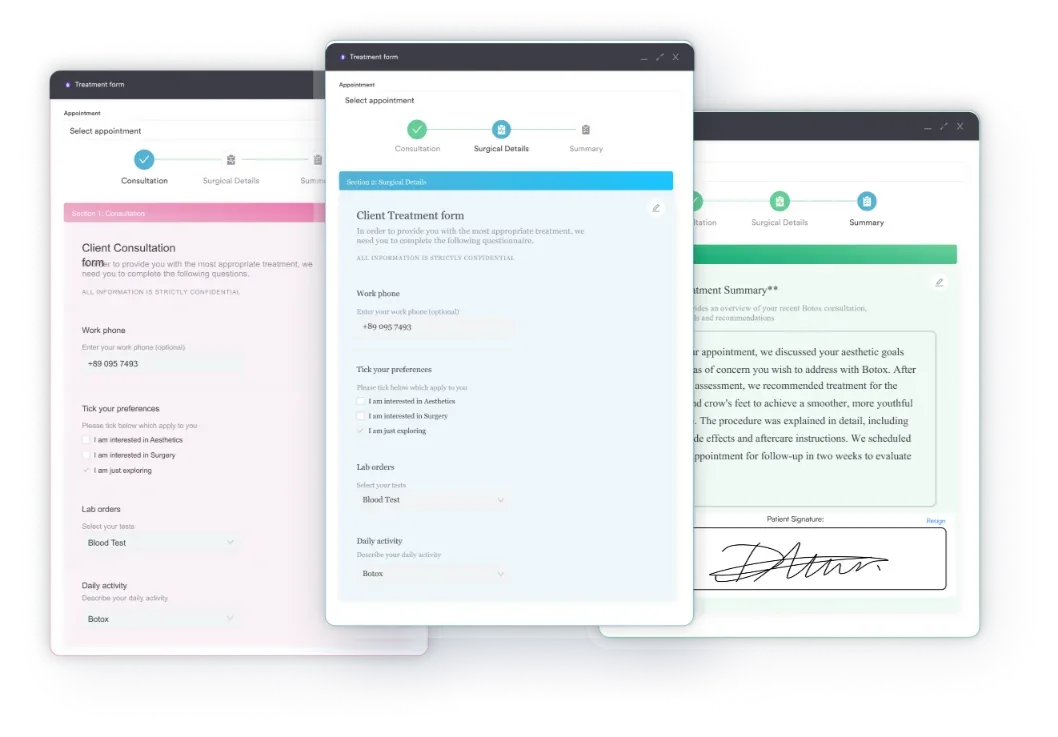
These HIPAA-compliant documentation practices are required regardless of payer. Using digital preoperative intake forms reduces transcription errors and creates a permanent timestamped record.
The anesthesia record must capture:
Time units are calculated from this record. A discrepancy between the anesthesia record time and the operating room log is a denial trigger.
CMS requires documentation of a post-anesthesia evaluation for personally performed services billed under modifier AA. This evaluation should be completed before the patient is discharged from the post-anesthesia care unit (PACU) and should address patient status, any adverse anesthesia events, and disposition instructions.
This step is frequently audited for high-complexity anesthesia codes like CPT code 00541.
When billing under QK/QX, the supervising anesthesiologist must document completion of all seven CMS medical direction tasks for each concurrent case. Keep a checklist integrated into the anesthesia record or post-case attestation form.
Failure to document even one of the seven tasks may convert the claim to a lower payment category. Practices managing anesthesia claims management across multiple concurrent cases benefit from structured digital workflows that flag incomplete attestation before claim submission.
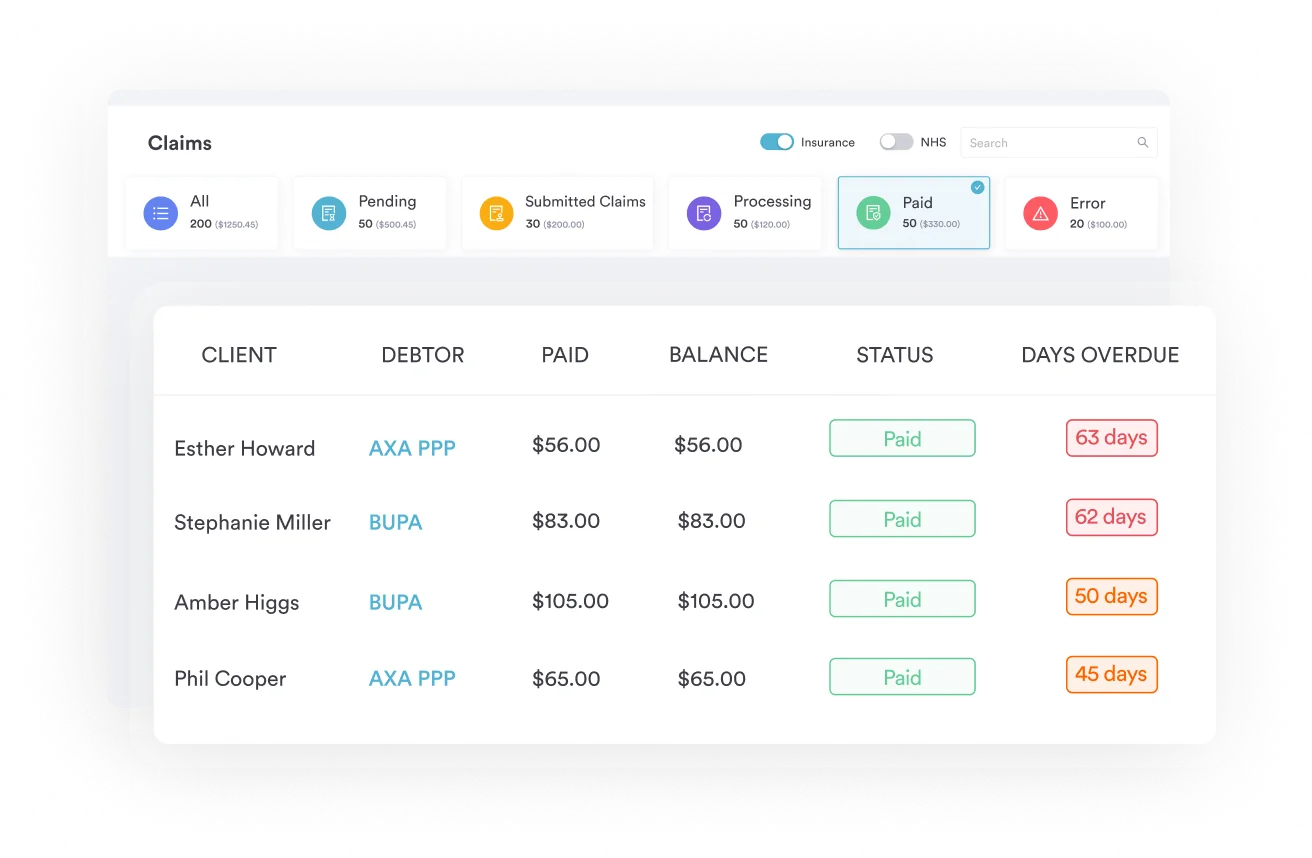
Submit CPT code 01636 claims with the operative report attached as a supporting document on first submission when working with payers that require prior authorization for high-complexity anesthesia. This reduces the round-trip time on documentation requests and accelerates payment on 15-base-unit claims that may trigger manual review.
CPT code 01636 carries a covered designation across most major payers when medical necessity is established by appropriate diagnosis coding. Kern Family Healthcare explicitly lists 01636 as covered on its prior authorization schedule. Wisconsin Medicaid (ForwardHealth) includes anesthesia codes in its covered services table, subject to standard documentation requirements.
Specific considerations by payer class:

Pabau helps surgical and anesthesia practices track time-based claims, attach operative documentation, and submit modifier-accurate claims without manual checklists. See how it works for your billing team.

Coders regularly encounter operative reports that describe shoulder-level amputations without clearly stating whether the procedure was a disarticulation or a forequarter resection. The distinction matters: billing 01634 when 01636 applies leaves 6 base units on the table per encounter. Billing 01636 when 01634 applies is upcoding.
The definitive differentiator is whether the scapula and clavicle were removed. Look for these terms in the operative report when selecting between the two codes:
When the operative report is ambiguous, query the surgeon before submitting the claim. A signed addendum clarifying the anatomical extent of resection provides the audit trail needed to defend code selection.
The same operative-complexity principle applies to CPT code 00620, where documentation determines the correct anesthesia code.
CPT code 01636 is a low-volume, high-complexity anesthesia code. Billing accuracy depends on three things:
With 15 base units and long operative times, even a single missed time unit or incorrect modifier can mean significant revenue loss or compliance exposure.
Pabau’s patient record documentation tools and structured workflows help surgical practices maintain the documentation depth that anesthesia claims at this complexity level require.
For teams managing multiple concurrent high-unit anesthesia cases, see how practice management software built for surgical specialties reduces manual documentation burden and claim error rates.
To see how Pabau handles anesthesia and surgical billing documentation end to end, book a demo with the team.

Billing dystrophic nail trimming? nail trimming billing guide explains the systemic condition documentation and Q modifier this service requires.
Billing routine foot care exclusions? dystrophic nail trimming billing guide covers the coverage rules that apply when Medicare excludes routine foot care by default.
Looking for broader anesthesia coding context? CPT code 01320 covers another musculoskeletal anesthesia code and its billing rules.
Billing for major vascular anesthesia cases? CPT code 00880 explains base units and reimbursement for major lower abdominal vessel anesthesia.
CPT code 01636 is used to bill anesthesia services for an interthoracoscapular (forequarter) amputation, a procedure that removes the entire upper extremity including the scapula and clavicle. It carries 15 base units and is primarily reported for oncologic or severe traumatic indications where limb salvage is not viable.
CPT 01636 carries 15 base units, confirmed by the VA Community Care Table H, the DOL OWCP fee schedule, and the Massachusetts anesthesia service codes schedule. This is the highest base unit value in the shoulder and axilla anesthesia code range (01610-01680).
The primary modifiers are AA (anesthesiologist personally performing), QK (physician directing 2-4 concurrent cases), QX (CRNA with physician medical direction), QY (physician directing one CRNA), QZ (CRNA without medical direction), and AD (physician supervising more than 4 cases). Qualifying circumstance codes 99100-99140 may also be reported alongside the base code when applicable clinical conditions exist.
CPT 01634 (9 base units) covers anesthesia for shoulder disarticulation, where the arm is removed at the glenohumeral joint while the scapula and clavicle remain intact. CPT 01636 (15 base units) covers forequarter amputation, where the scapula and clavicle are also removed. The distinction is anatomical and must be confirmed from the operative report before claim submission.
Reimbursement uses the formula: (Base Units + Time Units + Qualifying Circumstance Units) x Conversion Factor. Time units are typically 1 unit per 15 minutes under Medicare, though some payers use 1 unit per 10 minutes. The Medicare conversion factor changes annually and varies by geographic locality; verify the current rate via the CMS Physician Fee Schedule lookup tool.
Medicare does not require prior authorization for the anesthesia code itself, but the underlying surgical procedure must meet local coverage determination (LCD) criteria. Commercial payers typically require prior authorization for the surgical procedure (not the anesthesia code), and authorization for the correct surgical CPT code implicitly supports billing 01636. Confirm requirements with each payer before the procedure date.