CPT code 93503: Swan-Ganz catheter billing and modifiers
CPT code 93503: Official descriptor and procedure overview In the AMA CPT code s...

Last Updated: Oct 23, 2026

CPT code 11606 reports excision of a malignant skin lesion on the trunk, arms, or legs once the excised diameter passes 4.0 cm.
Code selection follows the diameter measured before excision, not the smaller figure a pathology report gives after fixation.
Missing laterality modifiers and size discrepancies between the operative note and pathology drive most denials on this code.
In 2026, Medicare pays roughly $460 to $470 in the office and $270 to $280 in a facility.
Practice management software like Pabau keeps the operative note, the measurement, and the claim record on one patient file.
CPT code 11606 covers the excision of a malignant skin lesion on the trunk, an arm, or a leg. The code applies once the excised diameter passes 4.0 cm. It is the top tier of the 11600 series, and it pays accordingly.
That price tag draws attention. Payers look at the size, the pathology, and the modifier before releasing money on a claim this large. Two diameters usually sit in the chart, one taken in the treatment room and one taken by the lab. Only one of them picks the code, and almost every 11606 denial starts with the wrong choice. Most claim errors are structural rather than clinical, which is why scrubbing rules catch them. A paid claim can still be underpaid, and the electronic remittance file is where that shows up.
The code describes full-thickness removal of a malignant skin lesion and its margins from the trunk, an arm, or a leg. The threshold is an excised diameter above 4.0 cm.
Per the American Medical Association’s CPT code set, that diameter covers two things. It is the lesion at its widest point, plus the normal tissue taken on either side to reach clear margins.
Dermatologists, general surgeons, and plastic surgeons report it most often. In the CPT book it sits in the Integumentary System section, under excision of malignant lesions.
Method matters as much as size, though. Freezing, burning, or curetting a malignant lesion counts as destruction rather than excision. A lesion over 4.0 cm treated that way belongs to 17266.
All six codes in this family describe the same procedure at the same sites, so the excised diameter picks the code for you. Bill 11606 on a 3.2 cm excision and you have upcoded, however clean the note reads. Lower tiers such as 11601 and 11603 exist for that reason.
There is a second boundary worth watching. This series stops at the trunk and the limbs. Scalp, neck, hand, foot, and genital excisions belong to the 11620 range, which opens at 11621. Face, ear, eyelid, nose. A site that contradicts the code series is one of the easiest denials for a payer to spot.
Every claim needs a diagnosis code that names the malignancy you removed. Most pairings come from three families: melanoma, squamous cell carcinoma (SCC), and basal cell carcinoma (BCC). Your Medicare Administrative Contractor (MAC) publishes the covered list in its Local Coverage Determination (LCD).
Code to the highest level of specificity the pathology supports. If the report names the left forearm, reach for the left upper limb code rather than the unspecified one. Unspecified codes on a high-value excision invite review, so dermatology practices are better off matching the diagnosis to the pathology line by line.
Modifier choice follows the clinical story rather than habit. Leave one off when the payer expects it and you get a denial or a records request. Each row below pairs a modifier with the situation that triggers it.
Modifier 22 deserves extra care. Reviewers rarely accept the operative note on its own, so attach a short narrative that spells out what made the case harder. Practices running high excision volume on skin clinic software build that prompt into the note template. The surgeon then writes it while the case is fresh.
Payment comes from the CMS Physician Fee Schedule, and it moves with locality and place of service. The figures below are 2026 national averages. Confirm your own numbers in the CMS lookup tool or your MAC’s fee schedule, because locality adjustments shift them either way.
Commercial contracts usually land between 110% and 150% of the Medicare allowable, depending on the deal you signed. Place of service is worth a glance on every line, since the office rate here runs close to $190 above the facility rate.
Medicare builds that payment from relative value units, or RVUs. The 2026 values below come from the CMS physician fee schedule file, and a conversion factor turns the total into dollars.
Multiply the non-facility total of 13.88 by the 2026 conversion factor of $33.4009 and you get about $464. That factor applies to clinicians outside a qualifying alternative payment model.
The facility total of 8.24 works out near $275. CMS revises these values every year, so pull the current relative value files rather than trusting a cached figure.
Medical necessity lives or dies on the note. Each element below either supports the code now or defends it later, during a post-payment audit. Writing them at the time of service beats reconstructing them from memory.
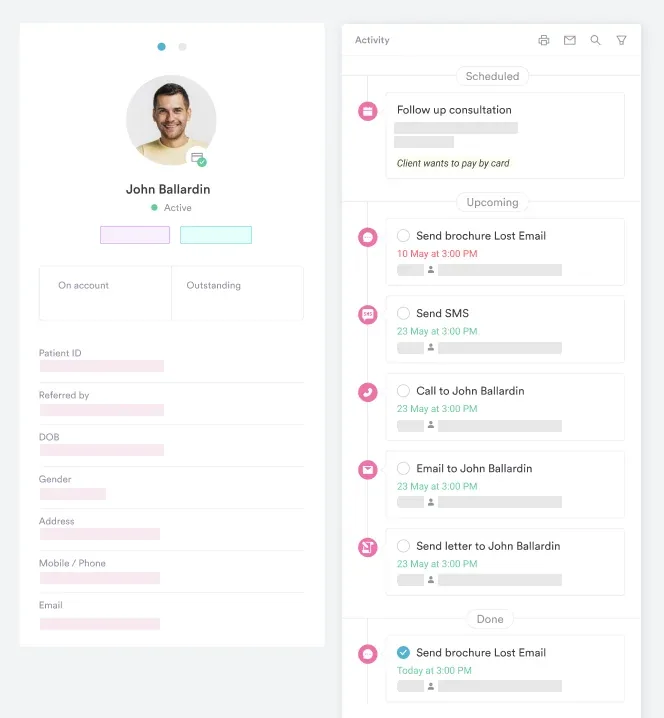
Digital forms carry a lot of this for you. Let the intake forms and the operative template capture size and closure in the same record. Billing staff can then verify the claim before it goes out, rather than chase paper afterwards.
Denials on this code repeat themselves. Billing teams working dermatology accounts see the same handful every month, which makes them straightforward to screen for before submission.
One more scenario catches people out. If pathology comes back benign, the excision moves to the benign series, where 11406 is the matching size tier for the trunk and limbs. Change the code before the claim leaves the practice, rather than after the denial arrives.
Closure decides this one. Simple closure is bundled into 11606 and never billed separately. Intermediate and complex layered repairs can sit on their own line, as long as no active NCCI edit blocks the pair.
Two of those codes cover the limbs and two cover the face, so match the site before anything else. When you do bill a repair with 11606, add modifier 59 only after confirming the edit can be bypassed. Then describe the repair on its own terms, with layers and total wound length, and most bundling disputes go away.
Numbers make the rules easier to follow. A dermatologist removes a squamous cell carcinoma from a patient’s left forearm. The lesion measures 4.4 cm at its widest, and clearing it needs 4 mm margins on each side.
The pathology report measures a specimen that has already shrunk in preservative, so it often reads smaller than the wound you made. CPT bases code selection on the diameter measured in the treatment room, before the excision. Write that number in the operative note and say when it was taken. That one line settles most size arguments with a payer.
Most 11606 problems begin as documentation problems. The measurement sits in one system, the pathology result arrives by portal or fax, and the claim gets built from whatever the coder can find. Anything missing turns into a phone call, or into a denial three weeks later.
Treatment note templates can make lesion site, excised diameter, and closure type required fields. So the number your coder needs is captured while the patient is still in the room, alongside the photos, the consent, and the pathology result.
Billing then works from the same record. Pabau’s claims management tools check that the fields an insurer requires are complete before a claim can be sent. A status dashboard then shows what is pending, submitted, paid, or in error. A rejected excision claim shows up on a screen your team already watches.

Pabau holds treatment notes, photos, pathology results, and claim status on a single patient record. Your billing team can check an excision claim before it ever leaves the practice.

On an 11606 case, the surgery is rarely what costs you the payment. A diameter recorded at the wrong moment does, and so does a diagnosis code that drifts from the histology. Neither takes long to put right. Both have to be right before the claim leaves the practice.
So treat the operative note as the first draft of the claim. Get the measurement, the site, the closure, and the pathology reference into it while the case is fresh. Coding then becomes a lookup rather than an investigation. Book a demo to see how Pabau keeps excision documentation and claim status on one patient record.

Treating the lesion with destruction instead of excision? 17280 sets out the documentation and payment rules for destroying a malignant lesion.
Clearing actinic keratoses in the same visit? 17000 explains how the premalignant destruction codes are counted and billed.
Working a benign excision on the face? 11443 walks through the size tiers and the documentation reviewers expect.
Coding a prostate cancer diagnosis? ICD-10 code C61 identifies malignant neoplasm of the prostate at the primary tumor site.
Bill the benign excision series instead. For the trunk, arms, or legs, 11406 is the tier for an excised diameter over 4.0 cm. Correct the code before the claim goes out, because a malignant code with benign histology will not survive review.
Yes, when two separate malignant lesions are excised. Report each lesion on its own line with its own excised diameter, and never add the diameters together. Your payer decides whether the second line needs modifier 51 or 59.
Routine wound checks in those 10 days fall inside the surgical package, so they are not billed separately. If the patient returns for an unrelated problem in that window, append modifier 24 to the office visit and document the different reason.
No. Mohs micrographic surgery uses codes 17311 through 17315. Those codes already include the surgical stages and the pathology done by the same physician. Adding an excision code for the same lesion duplicates work that is already paid for.
Original Medicare does not require prior authorization for an office excision. Some commercial plans do ask for it on larger excisions, so check the plan’s surgical policy before the appointment rather than after the denial.