CPT code 93503: Swan-Ganz catheter billing and modifiers
CPT code 93503: Official descriptor and procedure overview In the AMA CPT code s...

Last Updated: Oct 23, 2026

CPT code 01320 describes anesthesia for all procedures on nerves, muscles, tendons, fascia, and bursae of the knee and popliteal area.
The code carries 4 base anesthesia units, confirmed by the VA Community Care Table H and Arizona ICA fee schedules.
Physical status modifiers (P1-P6), qualifying circumstances codes (99100-99140), and CRNA modifiers (QX, QZ) apply depending on the provider and patient case.
Practice management software like Pabau helps anesthesia practices attach correct modifiers, track time units, and reduce denials before submission.
CPT code 01320 covers anesthesia services for all procedures performed on the nerves, muscles, tendons, fascia, and bursae of the knee and popliteal area. It sits within the 01320-01444 range maintained by the American Medical Association (AMA) for anesthesia services on the knee and popliteal region.
This code is distinct from other knee anesthesia codes in the same range. Where CPT 01380 applies to closed knee joint procedures (3 base units) and CPT 01382 covers diagnostic knee arthroscopy (3 base units), CPT code 01320 specifically targets soft tissue structures rather than the joint itself.
Anesthesiologists and CRNAs billing for procedures like bursectomies, tendon repairs, or nerve releases at the knee or popliteal area will use this code.
Accurate use of CPT code 01320 begins with understanding the exact anatomical scope. The popliteal area is the posterior region of the knee joint, bordered by the popliteal fossa. Procedures on the popliteal vessels or structures within that fossa fall under this code when anesthesia supports work on nerves, muscles, tendons, fascia, or bursae specifically.
Procedures that involve the knee joint directly, such as arthroplasty or arthroscopy, have their own dedicated codes within the 01380-01402 range. Diagnosis codes commonly paired with CPT code 01320 include M94.9 for unspecified cartilage disorders.
Anesthesia billing uses a time-based formula rather than a flat fee. The total units billed equal base units plus time units, multiplied by the anesthesia conversion factor for the relevant payer and geography.
The 4 base unit value for CPT code 01320 reflects the relative complexity of soft tissue knee anesthesia. For comparison, open femur procedures (CPT 01360) carry 5 base units, while closed knee joint procedures (CPT 01380, 01382) carry just 3.
Reimbursement calculators that use FastRVU’s 2026 RVU lookup can help anesthesia billing teams estimate expected Medicare payment amounts before claims are submitted.
Pabau’s anesthesia claims management tools let billing teams attach time units directly to encounter records, reducing the manual calculation errors that cause underpayments and denials. Each field ties back to the payer’s conversion factor, so billing staff can verify the expected reimbursement before submission.
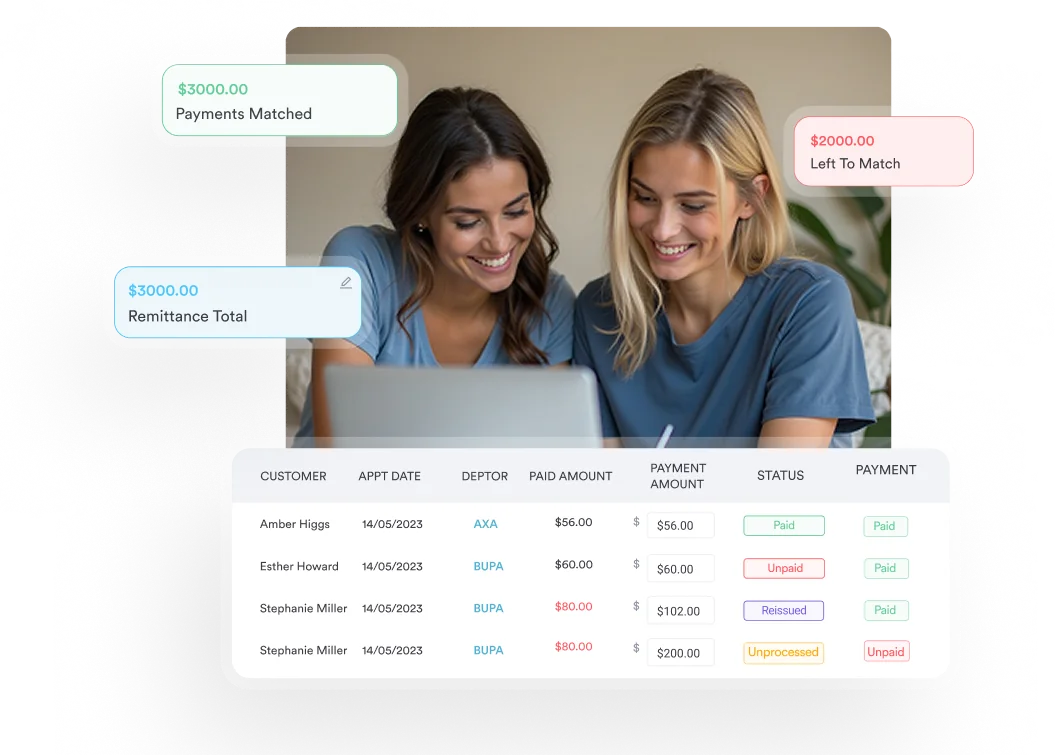
Reimbursement for CPT code 01320 varies by payer, geography, contract terms, and year. No single national rate applies universally. The figures below are reference points, not guaranteed payment amounts. Where a practice does not bill the payer directly, the patient needs an itemized statement carrying this code and its charge.
Medicare calculates anesthesia reimbursement by multiplying total units (base + time + qualifying circumstance units) by the locality-specific anesthesia conversion factor, then applying any applicable reduction for CRNA supervision arrangements. The Physician Fee Schedule lookup lets anesthesia practices search current conversion factors and payment rates by HCPCS or CPT code, locality, and year.
Conversion factors stop at the US border. UK private insurers like Bupa and AXA Health each set their own fee for CCSD code XR935, with the preauthorization reference required on every invoice.
For practices billing IVF and other procedure-adjacent anesthesia codes, comparing how base units are structured across the range helps with internal fee schedule audits. Looking at IVF procedure CPT codes alongside codes like 01320 illustrates how procedural complexity drives unit values across different specialties.
Run your CPT 01320 reimbursement calculation against both your contracted commercial rate and the Medicare fee schedule annually. Conversion factors change each fiscal year. If your billed rate was set two years ago, you may be undercharging commercial payers whose contracts tie to a percentage of Medicare.
Modifiers tell payers who provided the anesthesia, under what supervision arrangement, and whether any special circumstances applied. Missing or incorrect modifiers are among the most common denial triggers for CPT code 01320 claims.
Physical status modifiers reflect patient health at the time of anesthesia and affect the total unit count for some payers.
Medicare does not add units for physical status modifiers, but many commercial payers do. Verify whether your contracted payers recognize additional units for P3 or P4 before coding.
The provider arrangement determines which modifier applies to CPT code 01320 claims submitted under Medicare and most commercial plans.
Under the AAPC Codify guidelines, the AA modifier indicates the anesthesiologist was personally present and continuously involved throughout the procedure. When QK applies, Medicare pays 50% of the allowable for both the anesthesiologist and the CRNA.
Billing teams that handle ADHD or behavioral health anesthesia alongside orthopedic cases can apply the same modifier logic.
Qualifying circumstances add units when the case involves conditions that significantly affect the character or conduct of anesthesia.
These codes are reported in addition to CPT code 01320, not as replacements. Unit values vary by code: 99100 adds 1 unit, 99116 and 99135 each add 5 units, and 99140 adds 2 units. Document the clinical rationale in the anesthesia record before appending a qualifying circumstance code.

Pabau helps anesthesia and surgical practices attach correct modifiers, track time units, and generate pre-submission checklists that catch errors before claims go out the door.

Clean claims for CPT code 01320 depend on documentation that establishes medical necessity, verifies the procedure type, and records continuous anesthesia time. Incomplete records are the leading source of post-payment audits in anesthesia billing. Auditors read the note before the code, so the documentation level has to support what was submitted.
Practices managing HIPAA compliance for medical offices should ensure that anesthesia records stored in electronic systems are access-controlled and audit-logged. CMS audit programs specifically target anesthesia claims with missing start/stop times or unsigned provider documentation.
Billing methodology for CPT code 01320 differs based on who personally provided the anesthesia.
When an anesthesiologist performs the service personally (modifier AA), the full allowable amount applies. Under medical direction of one or two CRNAs, Medicare typically pays each party 50% of the fee schedule amount.
When a CRNA bills independently without physician direction (modifier QZ), CMS pays 100% of the CRNA-specific allowable regardless of opt-out status. Opt-out status determines whether physician supervision is legally required for that claim. It doesn’t change the payment percentage, which instead depends on state scope-of-practice law and facility type.
State opt-out provisions matter. Roughly 18 to 25 states, plus Guam, have exercised the CMS opt-out, allowing CRNAs to practice and bill without physician supervision for Medicare patients — a count that shifts over time as states act.
Understanding how this interacts with CPT code 01320 billing matters for facilities that use a mixed anesthesia team model. Practices tracking fee schedules across multiple provider types can review how other procedure-specific billing guides handle this split.
Digitizing anesthesia consent and pre-procedure documentation through digital anesthesia documentation forms creates a timestamped, provider-attributed record that satisfies both payer audit requirements and HIPAA-compliant storage standards. Paper-based anesthesia records are difficult to retrieve during post-payment reviews and create unnecessary denial risk.

Document your anesthesia start time as the moment you begin preparing the patient for anesthesia induction, not when the first drug is given. CMS and most commercial payers define start time this way. Billing from the wrong start point undercounts time units and reduces reimbursement.
The 01320-01444 code range covers anesthesia for procedures across the knee and popliteal area. Selecting the wrong code within this range is a common cause of claim edits, particularly when the operative report describes both joint and soft tissue work.
Other anesthesia CPT codes follow the same base-unit and modifier logic outlined above. See our billing guides to 00472.
When a surgeon performs both a bursectomy (soft tissue, fitting CPT code 01320) and an arthroscopic component in the same session, review the operative report carefully. If the arthroscopic procedure was the primary surgical service, the anesthesia code should match that service’s complexity.
Billing teams that handle diverse procedure types.
Cross-code confusion between 01320 and 01380 is common when operative notes describe “knee procedures” without specifying tissue type. Request clarification from the surgeon before billing rather than defaulting to the higher-value code. The ResDAC coding resources provide useful context on how CPT codes are structured within Medicare claims data, helping billing teams understand how payers read and adjudicate anesthesia claims.
CPT code 01320 denials follow recognizable patterns. Catching these errors before submission saves significant rework and protects cash flow.
ICD-10 diagnosis codes on the claim must support the anesthesia service. For CPT code 01320, the principal diagnosis should reflect the underlying musculoskeletal condition requiring the knee or popliteal procedure.
Anesthesia billing for soft tissue knee procedures comes down to precision: The right code, the right modifier, and continuous time documentation. CPT code 01320’s 4 base units place it within a well-defined range, but errors in modifier selection and provider role documentation cause most of the denials seen in practice.
Pabau’s practice management software gives anesthesia and surgical teams the tools to document encounters completely, attach modifiers at the point of care, and generate audit-ready records before claims go out. To see how Pabau handles anesthesia billing workflows end to end, book a demo.

Billing a urinary ostomy pouch? HCPCS Code A4432 covers the 2-piece urinary ostomy pouch code and the detail that separates it from similar codes.
Billing a disposable NMES replacement? HCPCS code A4560 covers replacing a disposable neuromuscular electrical stimulator and why many of these claims get denied.
Billing casting material for Medicare? HCPCS Code A4590 explains why Medicare stopped paying for special casting material and what happens if it is billed today.
CPT code 01320 covers anesthesia for all procedures performed on the nerves, muscles, tendons, fascia, and bursae of the knee and popliteal area. It does not apply to procedures on the knee joint itself, which use separate codes such as 01380 for closed joint procedures or 01382 for diagnostic arthroscopy.
CPT 01320 carries 4 base anesthesia units, confirmed by the VA Community Care Table H and the Arizona ICA fee schedule. Total reimbursable units equal base units plus time units, multiplied by the applicable payer conversion factor.
The most common modifiers for CPT code 01320 are AA (personal performance by an anesthesiologist), QK (medical direction of two to four CRNAs), QX (CRNA with physician direction), and QZ (CRNA without physician direction). Physical status modifiers P1 through P6 are also appended based on patient health status at the time of anesthesia.
Procedures covered by CPT 01320 include bursectomies, tendon repairs, nerve releases, fasciotomies, and muscle procedures at the knee or popliteal area when anesthesia is required. Procedures on the knee joint itself (e.g., total knee arthroplasty, arthroscopy) fall under different codes in the 01380-01402 range.
Multiply total units (4 base units + time units + any qualifying circumstance units) by your payer’s anesthesia conversion factor for the relevant locality and year. Medicare conversion factors change annually and are published in the CMS Physician Fee Schedule. Commercial rates depend on your contracted terms.