CCSD Code L8540: Radiofrequency ablation of multiple venous trunks
CCSD Code L8540: Definition and clinical context CCSD Code L8540 is defined as: ...

Last Updated: Oct 27, 2026

CPT code 01462 describes anesthesia for all closed procedures on the lower leg, ankle, and foot — a single broad code that applies regardless of which tissue (bone, joint, nerve, or tendon) the closed procedure involves, as long as the approach isn’t arthroscopic.
01462 carries 3.0 base units per the VA Community Care Nationwide Base Units Table H, the same base value as the soft-tissue NOS code 01470 and the open-bone NOS code 01480.
Because 01462 isn’t split by tissue type the way the open-procedure codes in this family are, the most common coding error is reaching for a bone- or soft-tissue-specific code out of habit when the operative report actually documents a closed reduction or manipulation.
Pabau’s claims management feature automates insurer claim submission, validation, status tracking, and reconciliation with invoices and payments — while structured digital intake and consent forms help keep the documentation trail behind a 01462 claim complete and audit-ready.
CPT code 01462 is the anesthesia billing code for closed procedures on the lower leg, ankle, and foot. Its official descriptor, as maintained by the American Medical Association (AMA), reads: Anesthesia for all closed procedures on lower leg, ankle, and foot.
Notice what’s missing compared to its neighbors: 01462 doesn’t carry a “not otherwise specified” (NOS) qualifier tied to a specific tissue type, the way 01470 (soft tissue) and 01480 (bone) do. Instead, the word “all” is doing the work.
01462 is the single, broad code for any closed procedure in this region, whether the surgeon is manipulating bone, reducing a joint, or working around nerves and tendons through a closed approach. In practice, the tissue-type split only kicks in once the procedure becomes open.
The code sits within the anesthesia section of the CPT code set (00100-01999), in the range covering anesthesia for procedures on the lower leg, below the knee (01462-01522). Common procedures billed under CPT code 01462 include:
Anesthesia for procedures higher up the same limb falls under separate ranges. For instance, CPT 01200 covers hip joint procedures.
01462 does not apply once the approach changes. Arthroscopic procedures of the ankle and foot have their own code, 01464, even though arthroscopy is minimally invasive — CPT carves it out separately because of the distinct technique and equipment involved.
Open procedures on soft tissue fall under 01470 (or the named codes 01472 and 01474). By contrast, a simple cast application, removal, or repair that doesn’t involve a reduction is billed under 01490.
Practices using claims management software with anesthesia code logic built in can flag a potential 01462-vs-sibling mismatch at the point of charge entry, before the claim reaches a payer.
The table below summarizes the key reference data for CPT code 01462.
Anesthesia codes don’t follow the standard RVU-based fee schedule that governs most surgical and E/M codes. Instead, payment combines a fixed base unit value (reflecting procedure complexity) with time units (reflecting how long anesthesia was administered), then multiplies the total by a conversion factor.
CPT code 01462 carries 3.0 base units, as listed in the VA Community Care program’s Table H. In short, that’s a relatively low value, reflecting that most closed reductions and manipulations in this region are shorter and less complex than the named open procedures nearby.
The table below compares base unit values across the lower leg, ankle, and foot anesthesia family, to help coders confirm they’ve selected the right code before billing.
Payers convert documented anesthesia time into units, typically by dividing total minutes by 15 (Medicare’s standard), though some commercial payers and state Medicaid programs use a different divisor. The formula then runs:
(Base Units + Time Units + Qualifying Circumstance Units) x Anesthesia Conversion Factor = Allowed Amount
Qualifying circumstance add-on codes — 99100 (patient under 1 year or over 70), 99116 (controlled hypotension), 99135 (deliberate hypothermia), and 99140 (emergency conditions) — add base units when the documented conditions apply, but they can’t be billed as standalone codes; they must accompany a base anesthesia code like 01462.
Anesthesia time for CPT code 01462 is documented from the point the provider begins preparing the patient for induction through transfer of care to the post-anesthesia recovery team.
The CMS Physician Fee Schedule publishes the Medicare anesthesia conversion factor annually, and it varies by region. As a result, never cite a fixed dollar amount for 01462 without specifying the calendar year and locality.
The best medical practice management tools capture start and stop times at the point of care, which anesthesia billing depends on.
Modifiers communicate context the base code alone can’t capture. Three categories apply to CPT code 01462: physical status modifiers, qualifying circumstance codes, and provider-type (supervision) modifiers.
The American Society of Anesthesiologists (ASA) defines six physical status levels. Accordingly, one must accompany every anesthesia claim, including CPT code 01462.
Medicare does not add incremental units for P3-P5 physical status modifiers on CPT code 01462 or any other anesthesia code. Some commercial payers do, however. Therefore, confirm the specific payer contract before assuming a modifier adds units to your calculation.
These modifiers communicate who provided the anesthesia and under what level of supervision. Per AAPC billing guidance, the correct modifier determines whether the claim processes under the anesthesiologist’s rate or the CRNA’s rate.
Whether a CRNA can bill CPT code 01462 independently depends on state scope-of-practice law and the specific payer contract. In states that have opted out of the Medicare physician supervision requirement, for example, a CRNA may bill independently using modifier QZ.
Where supervision is required, the claim splits between the anesthesiologist (QK) and the CRNA (QX). Verify your state’s opt-out status before configuring billing defaults.
Audit 01462 claims quarterly for one specific pattern: cases where the operative report actually documents an open incision, an arthroscopic portal, or a straightforward cast change, but 01462 was billed anyway out of habit. Because 01462 covers every closed procedure regardless of tissue type, it’s an easy default — pull a sample of 20 claims, compare the code against the signed operative note, and confirm the approach (closed, arthroscopic, or open) matches before the claim goes out.
Clean CPT code 01462 claims depend on documentation that tells the clinical story a payer needs to confirm medical necessity. Three record types carry most of that weight.
This is the primary billing support document. It must capture:
The time entries on this record must match the units billed. For example, a claim for 4 time units on a 01462 procedure requires a record showing 60 minutes of anesthesia time (at the 15-minutes-per-unit rate). Discrepancies are a primary target in payer post-payment audits.
This document supports the physical status modifier. When a P3 or higher modifier is appended to CPT code 01462, the pre-anesthesia evaluation must clearly name the systemic condition that justifies the classification.
Vague language (“patient has comorbidities”) will not hold up a P3 modifier under audit. The note should name the condition (uncontrolled diabetes with peripheral neuropathy, peripheral vascular disease, morbid obesity with breathing problems) and explain why it increases anesthesia risk.
Practices that build standard pre-anesthesia evaluation templates into clinical documentation software see fewer P-modifier denials, because the required elements are captured by default rather than left to memory.
The surgeon’s operative report confirms what procedure was performed, and CPT code 01462 must match it. If the report documents a closed reduction, a closed manipulation, or application of a reduction cast or splint under anesthesia — on bone, joint, or soft tissue — 01462 is the appropriate anesthesia companion code, provided the approach was truly closed.
Documenting an arthroscopic approach instead means 01464 applies. An open incision to soft tissue points to 01470 (or the named codes 01472 and 01474), while an open approach to bone calls for 01480 instead.
Maintaining HIPAA-compliant clinical documentation across the anesthesia record, pre-evaluation note, and operative report is the foundation of a solid 01462 claim — all three documents should tell the same story about the approach used. If a closed reduction site later needs treatment for wound dehiscence, that’s billed separately under CPT 12020, not folded into the 01462 anesthesia claim. Auditors read the note before the code, so the documentation level has to support what was submitted. Tracking which plans carry an authorization requirement for a service saves the appeal later.

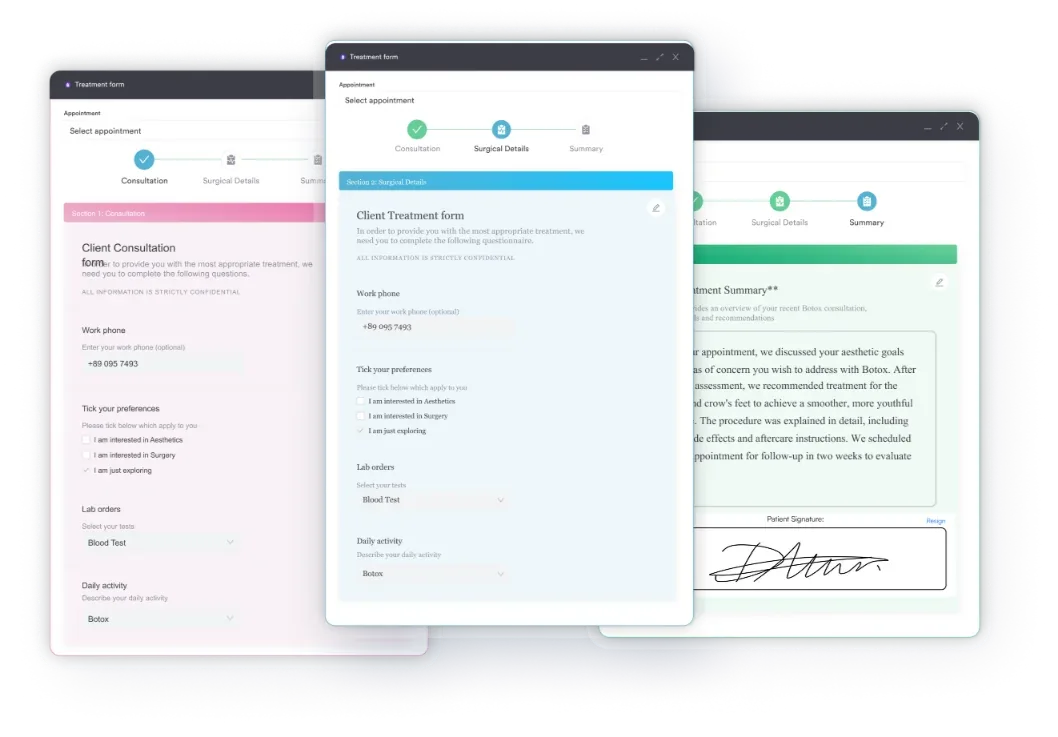
Pabau’s digital intake, consent, and clinical documentation tools help surgical and anesthesia practices capture a complete pre-op and operative record, so the paper trail behind a claim like CPT 01462 holds up under payer review.

Reimbursement for CPT code 01462 varies by payer, region, and contract terms — no single dollar figure applies everywhere.
Medicare calculates anesthesia payment using its own conversion factor, published annually in the CMS Physician Fee Schedule, multiplied by total units (base plus time plus any qualifying circumstances). However, Medicare does not add extra payment for P3-P5 physical status modifiers on 01462 or any other anesthesia code — they’re required for documentation purposes, not reimbursement.
The VA Community Care program uses Table H base unit values, confirming CPT code 01462 at 3.0 base units. VA reimbursement rates differ from Medicare and commercial rates. Therefore, providers seeing Veterans Administration patients should check current VA conversion factors through their VA Community Care contract or provider representative.
Some commercial payers do reimburse additional units for physical status modifiers. Therefore, confirm modifier reimbursement terms in each payer contract rather than assuming Medicare’s rules apply everywhere.
Because 01462 is used so frequently for fracture and dislocation reductions performed in an emergency setting, qualifying circumstance code 99140 (emergency conditions complicating anesthesia) shows up on a meaningful share of 01462 claims. Confirm the emergency circumstance is documented in the anesthesia record before appending it.
Based on standard anesthesia billing patterns, the most frequent denial drivers for CPT code 01462 include:
Run a monthly denial analysis on all 01462 claims. Separate denials by reason code and map each one back to the documentation step that failed. Time unit mismatches point to a missing step in the anesthesia record workflow, while wrong code selections usually point to a coder defaulting to 01462 without checking whether the operative report actually describes a closed approach. Treating these as distinct problems gets you to the root cause faster than reviewing claims in bulk.
Every anesthesia claim requires a supporting ICD-10-CM diagnosis code that shows medical necessity for the procedure. Because 01462 covers closed reductions and manipulations across bone, joint, and soft tissue, the paired diagnosis should reflect a fracture, dislocation, or other condition of the lower leg, ankle, or foot that’s consistent with a closed — not open — treatment approach.
Always select the ICD-10-CM code that matches the procedure performed and the patient’s documented condition. The laterality character (right vs. left) and encounter type (initial vs. subsequent) must match the clinical documentation.
Unspecified diagnosis codes carry a heavier documentation burden when the paired procedure is expensive. ICD-10 code M26.9 needs a note recording why M26.0 through M26.8 were ruled out, plus a provider query.
A claim for 01462 paired with a diagnosis that’s only treated by an open approach in this practice’s standard protocol will get extra payer review — the diagnosis and the documented treatment approach both have to support a closed procedure.
Ankle sprains coded under S93.401A often continue into a course of care with physical therapy practices once the acute anesthesia episode ends, so the same patient record may carry both a 01462 claim and a separate plan of care.
Selecting the wrong code from the lower leg, ankle, and foot anesthesia series is one of the most frequent 01462 errors, usually because 01462’s breadth makes it an easy default.
Review the adjacent codes before assigning 01462, since a more specific arthroscopic or open code always takes priority once the approach stops being closed. The AAPC Codify CPT code search is a practical reference for checking code placement within this section.
What matters most for 01462 is approach, not tissue type: it applies whenever the procedure is closed — no arthroscopic portal, no open incision — regardless of whether the target is bone, a joint, or soft tissue.
Once the approach changes to arthroscopic or open, a different, more specific code takes over. Coding to the approach and level of detail the documentation supports is the same principle that governs anesthesia coding across the rest of the CPT anesthesia section.
Coders and anesthesiologists who want a cross-reference lookup can use the AAPC Codify CPT code search to review the full 01462-01522 range with clinical descriptors. In addition, checking code selection against the AMA coding resources page for the current code year keeps it in line with any annual CPT updates.
Anesthesia claims for closed lower leg, ankle, and foot procedures carry a distinct pattern of errors. Each mistake below has a direct cost: underpayment, denial, or having the payment clawed back after an audit.
Surgical practices billing CPT code 01462 deal with a documentation chain that touches multiple people: the anesthesiologist or CRNA, the surgical scheduler, and the billing specialist. When that documentation lives in disconnected systems — paper pre-op forms, a separate scheduling tool, notes typed up after the fact — missing time units and mismatched modifiers become far more likely.
Practice management software like Pabau brings pre-operative intake, consent forms, and clinical documentation into one patient record, so the anesthesia team, the surgeon, and the billing specialist are working from the same source rather than re-keying details between systems.
Pabau’s claims management feature automates insurer claim submission, checks required fields like membership and authorization numbers before a claim goes out, tracks each claim’s status on a central dashboard, and matches payments against invoices and patient records automatically once an insurer pays.
That’s a different job from US CPT modifier logic or multi-provider NPI tracking, which Pabau doesn’t run. Therefore, US anesthesia and surgical billing teams will still need dedicated coding software or a billing partner for the modifier and NPI side of a 01462 claim.
Where Pabau helps directly is the documentation trail behind that claim: structured digital intake forms and clinical notes that anesthesiologists and CRNAs can pull straight into the pre-anesthesia evaluation and operative record, instead of rebuilding it from memory at claim time.
Accurate CPT code 01462 billing comes down to three things: confirming the operative report describes a truly closed approach rather than an arthroscopic or open procedure, documenting anesthesia time and physical status in a way that survives payer review, and applying the correct supervision modifier for how the case was staffed.
In short, Pabau’s documentation tools and claims management features address the points where anesthesia billing errors typically start, from pre-op intake through to insurer claim reconciliation. To see how Pabau fits your practice’s workflow, book a demo.

Billing anesthesia for a procedure higher up the body instead? 00220 covers intracranial procedures, including base units and documentation requirements.
Need the anesthesia code for a mastectomy? 00404 covers radical mastectomy procedures, with modifier and reimbursement guidance.
Looking for the anesthesia code for an open hip replacement? 01214 covers open total hip arthroplasty, including base units and paired diagnosis codes.
Billing for an elbow orthosis alongside a reduction? L3762 covers rigid elbow orthosis billing and documentation.
CPT code 01462 covers anesthesia for all closed procedures on the lower leg, ankle, and foot — including bone, joint, and soft-tissue work — as long as the approach is closed rather than arthroscopic or open. Common examples include closed reduction of an ankle, tibial, fibular, calcaneal, or metatarsal fracture, closed reduction of an ankle or subtalar dislocation, and manipulation under anesthesia for a stiff or malunited fracture.
CPT 01462 applies to any closed procedure in the lower leg, ankle, and foot region, regardless of tissue type. CPT 01470 is the NOS code for open procedures on nerves, muscles, tendons, and fascia in the same region that don’t have their own dedicated code. If the operative report documents a closed reduction or manipulation, use 01462; if it documents an open soft-tissue procedure, use 01470 (or a more specific named code like 01472 or 01474 if it applies).
CPT 01464 is specifically for arthroscopic procedures of the ankle and/or foot. Even though arthroscopy doesn’t involve a large open incision, CPT treats it as a distinct approach from a closed manual reduction because of the different technique, equipment, and positioning involved. CPT 01462 applies to closed procedures performed without arthroscopic portals or an open incision.
CPT code 01462 carries 3.0 base units, per the VA Community Care Nationwide Base Units Table H. This is the same base value as the soft-tissue NOS code 01470 and the open-bone NOS code 01480. Total reimbursable units combine base units, time units, and any applicable qualifying circumstance units.
CPT code 01462 requires a physical status modifier (P1 through P6) and a supervision modifier (AA for personally performed by an anesthesiologist, QK for medical direction of 2-4 CRNAs, QX for CRNA under medical direction, QY for medical direction of one CRNA, or QZ for CRNA without medical direction). Qualifying circumstance add-on codes (99100, 99116, 99135, 99140) may also apply when documented conditions are present, and 99140 is common given how often 01462 procedures happen in an urgent setting.
Appropriate ICD-10-CM codes for CPT code 01462 claims reflect fractures, dislocations, or other conditions of the lower leg, ankle, or foot treated with a closed approach, such as S82.65XA (nondisplaced lateral malleolus fracture), S82.853A (displaced trimalleolar fracture), S82.201A (tibial shaft fracture), S92.011A (calcaneal fracture), S92.301A (metatarsal fracture), and S93.401A (ankle ligament sprain). The diagnosis must match the documented condition and treatment approach, including correct laterality and encounter type.
Medicare reimbursement for CPT code 01462 is calculated using the formula: (Base Units + Time Units) x Anesthesia Conversion Factor. The conversion factor is updated annually by CMS and payment amounts vary by geographic locality. Use the CMS Physician Fee Schedule lookup tool at cms.gov to find the current-year rate for your specific locality rather than relying on a fixed figure.