CPT code 93503: Swan-Ganz catheter billing and modifiers
CPT code 93503: Official descriptor and procedure overview In the AMA CPT code s...

Last Updated: Oct 23, 2026

CPT Code 00540 covers anesthesia for thoracotomy procedures involving the lungs, pleura, diaphragm, and mediastinum, including surgical thoracoscopy not otherwise specified.
Reimbursement uses the B + T + M formula: base units plus time units plus modifying units, all multiplied by the anesthesia conversion factor.
Provider-type modifiers (AA, QX, QK, QY, QZ) are required on every claim — missing them is one of the most common denial reasons for this code.
Pabau’s claims management software helps anesthesia billing teams track modifier requirements, flag missing documentation, and reduce claim denials.
CPT code 00540 is the anesthesia code for thoracotomy procedures involving the lungs, pleura, diaphragm, and mediastinum, including surgical thoracoscopy, used when no more specific intrathoracic code applies. The American Medical Association (AMA) maintains it under the Anesthesia for Intrathoracic Procedures section of the Current Procedural Terminology (CPT) code set, with the official descriptor: Anesthesia for thoracotomy procedures involving lungs, pleura, diaphragm, and mediastinum (including surgical thoracoscopy); not otherwise specified. If the encounter included an assessment and a plan, the evaluation and management component needs its own documentation.
The “not otherwise specified” qualifier is the key to correct use. CPT 00540 is the default code for general thoracic anesthesia when no more specific intrathoracic code applies. As soon as the procedure involves one-lung ventilation, decortication, or pulmonary resection with thoracoplasty, a different code from the 00541-00546 range takes over.
Procedures typically billed under CPT Code 00540 include:
Anesthesia services for anesthesia claims management in these cases require careful documentation of the specific surgical approach and ventilation technique used, since those details determine whether 00540 or a more specific sibling code applies.
One common miscode to avoid: some sources erroneously list CPT 00540 as covering esophageal procedures. Esophageal anesthesia maps to the CPT 00500 series, not 00540. Payers cross-reference the surgeon’s procedure code against the anesthesia code, so a mismatch will trigger an edit or denial.
Anesthesia billing uses a unit-based formula rather than a flat fee per procedure. As a result, understanding each component helps billing teams build accurate claims and explain payment calculations to providers.
The full formula is: (B + T + M) x CF = payment. For CPT Code 00540, base unit values are established by the American Society of Anesthesiologists (ASA) Relative Value Guide and reviewed annually. The same formula applies across the anesthesia code set.
You can verify the current base unit value and Medicare reimbursement amounts using the CMS fee schedule tool or the FastRVU 2026 RVU lookup. Rates change annually and vary by geographic locality modifier (GAF), so always confirm the figure against the applicable year’s data.
Commercial payers frequently negotiate conversion factors below the Medicare rate. When billing CPT 00540 to a managed care plan, check the anesthesia section of the provider agreement before calculating expected reimbursement. In addition, some payers cap time units or apply per-procedure flat rates rather than using the unit formula at all.
Qualifying circumstances codes (99100-99140) add modifying units when clinical conditions increase the risk or complexity of anesthesia beyond the baseline. They are reported in addition to CPT Code 00540, not instead of it.
Not all payers reimburse qualifying circumstances codes separately. Medicare, for example, does not pay additional units for 99100 on most claims. Verify each payer’s policy before adding these codes to the claim. Documentation supporting the qualifying circumstance must appear in the anesthesia record or pre-anesthesia evaluation note.
Modifier selection is where most anesthesia claims for CPT Code 00540 run into trouble. Payers require a provider-type modifier on every anesthesia claim to identify who delivered the service and whether medical direction rules apply. As a result, missing or incorrect modifiers are the leading cause of initial denials on thoracic anesthesia claims.
Medical direction rules under Medicare require that when an anesthesiologist directs 2-4 concurrent Certified Registered Nurse Anesthetist (CRNA) cases, specific documentation criteria must be met for all cases involved.
Specifically, the anesthesiologist must perform a pre-anesthesia examination, prescribe the anesthesia plan, personally participate in the most demanding portions, monitor the patient’s condition, and remain immediately available throughout. The AAPC Codify CPT reference provides detailed modifier guidance for the intrathoracic anesthesia code range.
State regulations on independent CRNA billing vary significantly. Some states allow CRNAs to opt out of physician supervision requirements, which changes both the modifier used (QZ instead of QX) and how Medicare calculates payment. Therefore, check the applicable state’s CRNA supervision opt-out status before selecting a modifier on CPT Code 00540 claims in those jurisdictions.
Flag every CPT 00540 claim for a modifier pre-submission review. Build a simple two-question checklist into your claim preparation workflow: (1) Who delivered the anesthesia? (2) Was a second anesthesia provider present and under whose direction? Those two answers determine the correct modifier combination every time.
Payers auditing CPT Code 00540 claims look for a consistent, complete anesthesia record that supports the time reported, the personnel involved, and the clinical circumstances documented. As a result, missing elements trigger recoupment demands long after the claim has paid. For surgical practices managing surgical practice management software workflows, centralizing anesthesia documentation reduces audit exposure across all cases.
The anesthesia record should include the following at minimum:
For patients recovering from pleural procedures under this code.
For medical direction cases (QK/QX or QY/QX modifier pairs), payers also require evidence that the anesthesiologist met each of the seven medical direction criteria defined by CMS. This documentation is frequently reviewed in Medicare Recovery Audit Contractor (RAC) audits and must be created at the time of care, not reconstructed after the fact.
As a result.
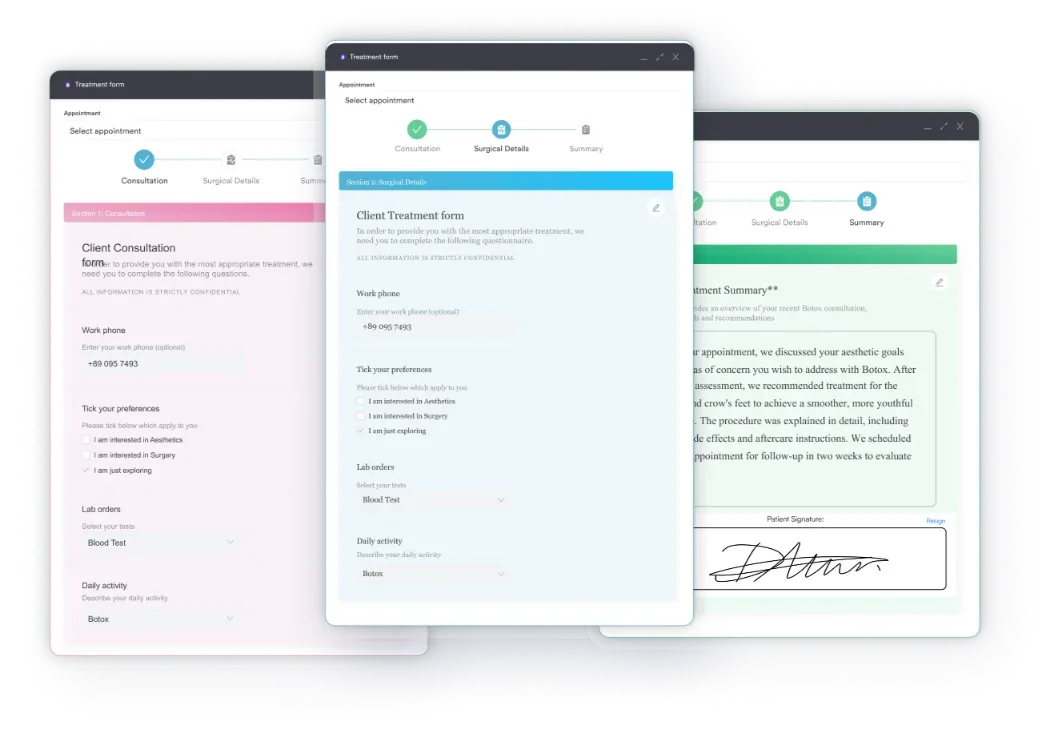

Pabau’s claims management tools help anesthesia billing teams catch modifier errors, track documentation requirements, and submit cleaner claims the first time. See how it works for surgical centers and anesthesia groups.

CPT Code 00540 is the catch-all for thoracic anesthesia, but it sits within a cluster of related codes that cover more specific procedural circumstances. Other anesthesia sections use the same “not otherwise specified” pattern.
Choosing the wrong code in this range changes the base unit value and the resulting reimbursement. The procedure note from the surgeon determines which code applies. Therefore, the anesthesia team must review that note before coding.
The distinction between 00540 and 00541 comes up frequently in VATS lobectomy cases. If the surgeon’s note documents selective lung ventilation using a double-lumen endotracheal tube or a bronchial blocker, code 00541 applies no matter whether the overall approach is open thoracotomy or thoracoscopic.
As a result, billing 00540 in those cases downplays the difficulty of the anesthesia service. Likewise, reviewing the surgeon’s note carefully matters just as much outside thoracic anesthesia.
The parenthetical “(including surgical thoracoscopy)” in the code description clarifies that CPT Code 00540 covers both open and thoracoscopic approaches as long as the ventilation and resection criteria for 00541-00546 are not met. VATS procedures without lung isolation, mediastinoscopy, and pleuroscopy all fall within the 00540 scope.
The surgical approach (open vs. minimally invasive) does not by itself determine the anesthesia code. Instead, the ventilation technique and specific procedure performed do.
Request a copy of the surgeon’s operative note before finalizing the anesthesia claim for any VATS case. The note will specify whether one-lung ventilation was used. This single step prevents the most common 00540 vs. 00541 miscode and saves appeal time down the line.
Anesthesia claims are denied at higher rates than most other claim types. CPT Code 00540 claims face several common denial patterns that billing teams should expect and plan for in their pre-submission workflow.
In practice, managing these denials across a surgical group requires consistent tracking, which HIPAA-compliant billing workflows.
Diagnosis-code alignment matters here too. The diagnosis codes on the claim must support the need for the thoracic surgery that required anesthesia.
ICD-10-CM codes for the underlying condition (lung neoplasm, pleural disease, diaphragmatic hernia, mediastinal mass) should be verified against the surgeon’s documented diagnoses before claim submission. Similarly.
A mismatch between the ICD-10 diagnosis and the CPT procedure code triggers automatic edits under the National Correct Coding Initiative (NCCI). Billing teams should also consult NCCI guidelines for procedure-to-procedure edits that may affect claims combining CPT Code 00540 with other services billed on the same date.
When appealing denied claims, reference the applicable Local Coverage Determination (LCD) or National Coverage Determination (NCD) from the CMS website. Attach the operative note and anesthesia record as supporting documentation.
The same appeal logic applies to codes outside anesthesia. As a result, code-specific appeal templates aligned to payer LCD language reduce the time staff spend drafting individual appeal letters.
Thoracic anesthesia billing is unforgiving. CPT Code 00540 is the right code for most general thoracotomy and thoracoscopy cases, but the modifier stack, time unit calculation, and diagnostic code alignment all need to be exact before the claim goes out. One wrong modifier or a misread operative note can turn a clean claim into a denial that takes weeks to resolve.
Pabau’s compliance management and claims tools give anesthesia billing teams a structured workflow for tracking modifier requirements, flagging missing documentation before submission, and managing appeals through a single platform. To see how Pabau handles anesthesia billing workflows for surgical centers and group practices, book a demo.

Need to verify CPT code requirements for other procedure types? Coaching CPT codes covers the full billing and documentation requirements for coaching and counseling procedure codes.
Coding myopia with laterality requirements? ICD-10 code H52.11 is the billable, eye-specific code for myopia that replaces the rejected parent code.
Coding an uncategorized visual disturbance? ICD-10 code H53.8 covers other visual disturbances, including documentation and CPT pairing requirements.
CPT Code 00540 covers anesthesia for thoracotomy procedures involving the lungs, pleura, diaphragm, and mediastinum, including surgical thoracoscopy, when no more specific intrathoracic code (00541, 00542, 00546) applies. This includes general thoracotomy, pleurodesis, mediastinal biopsy, diaphragmatic repair, and VATS without one-lung ventilation. Esophageal procedures are not covered by this code; those map to the 00500 series.
Base unit values for CPT 00540 are established annually by the American Society of Anesthesiologists (ASA) Relative Value Guide and are subject to change each fiscal year. Current base unit values and Medicare reimbursement amounts can be verified using the CMS Physician Fee Schedule lookup tool or the FastRVU RVU lookup database. Therefore, always confirm figures against the current year’s data, as values are updated annually.
CPT 00541 is used when one-lung ventilation (via double-lumen endotracheal tube or bronchial blocker) is employed during the thoracic procedure. CPT 00540 is the default code when standard bilateral ventilation is maintained throughout the case. The operative note must document the ventilation technique used; billing 00540 when one-lung ventilation is documented downplays the difficulty of the anesthesia service and may count as undercoding.
Every CPT 00540 claim requires a provider-type modifier to identify who performed the anesthesia service. Anesthesiologists billing personally performed services use modifier AA. CRNAs under medical direction use QX, paired with QK (2-4 concurrent cases) or QY (one case) on the anesthesiologist’s claim. Independent CRNAs without physician direction use QZ. Modifier AD applies when an anesthesiologist supervises more than four concurrent procedures. Missing modifiers are the leading cause of initial denials on thoracic anesthesia claims.
Anesthesia reimbursement for CPT 00540 uses the formula (B + T + M) x CF, where B equals the base units assigned to the code, T equals the time units calculated at one unit per 15 minutes of anesthesia time, M equals any modifying units for qualifying circumstances, and CF is the conversion factor (dollar amount per unit) set by Medicare or the payer contract. Geographic locality adjustments also apply to the Medicare conversion factor.
Required documentation includes the pre-anesthesia evaluation with ASA physical status classification, the complete anesthesia record showing start and stop times to the nearest minute, names and roles of all anesthesia providers, intraoperative monitoring data, and a PACU note. For medical direction cases, evidence that all seven CMS medical direction criteria were met must appear in the record. Qualifying circumstances (codes 99100-99140) require documentation created at the time, noting the specific clinical condition.