CPT Code 98981: RTM Treatment Management Billing Guide
CPT code 98981: Definition and official descriptor CPT code 98981 is an add-on c...

Last Updated: Nov 9, 2026
N1520 is the CCSD code for unilateral epididymectomy, the removal of one epididymis through a scrotal incision with the testis left in place. UK private medical insurers and Healthcode use it to identify the surgeon's fee for this day-case operation.
The code covers one side only. Bilateral epididymectomy is N1510, and excision of an epididymal cyst alone is N1580. Anaesthesia, assistant surgeon and histology fees are billed separately.
Let Pabau's smart automation suggest the right codes, reduce claim denials, and keep your practice compliant—effortlessly.
Automate repetitive tasks and focus on what matters most—your patients.
Reduce coding errors and ensure compliance with the latest regulations.
Clean claims, fewer denials, and faster reimbursements.
Powerful insights and reporting to help your practice thrive.
HIPAA compliant SOC 2 certified GDPR-compliant Trusted by 4,000+ clinics worldwide

CCSD Code N1520 describes unilateral epididymectomy: surgical removal of one epididymis with the testis preserved, used in UK private practice billing.
N1520 is strictly unilateral. Bilateral epididymectomy is N1510, so never report N1520 twice for a two-sided operation.
Excision of an epididymal cyst alone is N1580, and removal of the testis takes an orchidectomy code instead.
Pre-authorisation is required by most major UK insurers (Bupa, AXA Health, Aviva, Vitality) before elective epididymectomy proceeds.
Pabau, the practice management platform we build, submits CCSD-coded claims through Healthcode and tracks them through to reconciliation.
CCSD Code N1520 is the Clinical Coding and Schedule Development (CCSD) Group schedule code for unilateral epididymectomy. In this day-case operation, a urological surgeon removes one epididymis through a scrotal incision and leaves the testis in place.
The CCSD schedule is the standard procedure code set used by UK private medical insurers (PMIs) and their recognised providers. Healthcode, the principal electronic claims clearinghouse for UK private practice, requires the correct CCSD code on every submitted invoice.
The descriptor for N1520 is “Unilateral epididymectomy.” It does not cover bilateral surgery, which is N1510, or isolated epididymal cyst excision, which is N1580. Orchidectomy, the removal of the testis, takes a different code again. In short, using N1520 for any of these is miscoding, and it triggers denial or post-payment audit. Our library of CCSD codes lists the neighbouring procedures.
Surgeons perform epididymectomy under general or spinal anaesthesia as a day-case procedure. The surgeon makes a scrotal incision and identifies the epididymis, the coiled tubule that runs along the posterior surface of the testis. The surgeon then dissects it free from the testicular surface and the vas deferens. Only the epididymis comes out. The testis and vas stay in situ, and the surgeon closes the wound in layers.
The operative approach and anaesthetic are the same whatever the indication, so documentation must state clearly that the removal was unilateral. In fact, insurers flag a missing operative side in post-payment audits more often than almost any other documentation error.
N1520 is the correct code when the operative note confirms unilateral epididymectomy for a recognised clinical indication. A matching ICD-10 diagnosis code must support it. The table below lists the principal indications and the ICD-10 codes used for them in UK private practice.
Insurers now ask for proof of conservative management before they approve surgery under N1520. For example, that means antibiotic courses, scrotal support or a physiotherapy review. Therefore, the operative note should cross-reference the ICD-10 code and confirm that the team tried non-surgical management first.
Bundling rules decide what the N1520 fee pays for. Getting them right therefore prevents both undercoding, which loses revenue, and overcoding, which creates audit liability. Below, the table shows what the fee covers and what the practice bills separately.
Coders often confuse several adjacent codes with N1520. To help, the table below maps the most common alternatives, so coders can choose the right one at the point of invoice.
The key distinction between N1520 and an orchidectomy code is anatomical. Epididymectomy removes the epididymis and preserves the testis, while orchidectomy removes the testis with the epididymis as an incidental structure. Miscoding epididymectomy as orchidectomy is upcoding and carries audit and contractual liability risk.
Cyst excision is also a common mix-up. When the note records only a cyst or spermatocele coming out, N1580 applies instead. The flow below puts the three checks in the order a coder should run them against the operative note.
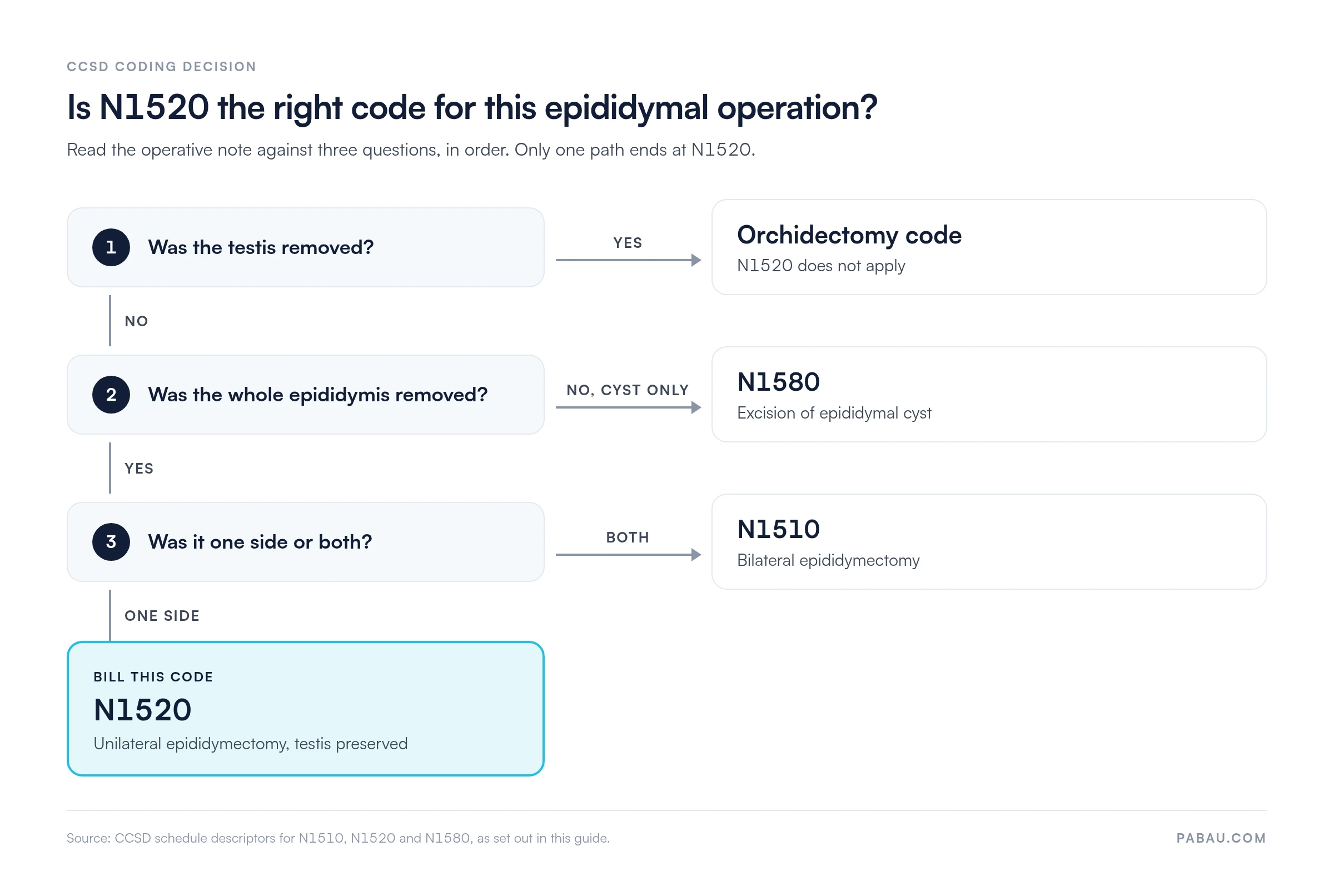
CCSD Code N1520 covers one side only. When a consultant surgeon removes both epididymides in a single operative episode, bill N1510, the bilateral code. Billing N1520 twice for a bilateral procedure is incorrect, so expect denial or clawback after audit.
An N1520 claim stands or falls on the operative note. Insurers conducting post-payment audits look for specific content, so the note must include all of the following to support a compliant claim.
Most UK private medical insurers require pre-authorisation before elective surgical urology procedures, including CCSD Code N1520. Requirements and evidence standards vary by insurer. The table below summarises the position for the main UK PMIs.
Always verify current requirements directly with the insurer, because insurers update their policies periodically. For Bupa-specific guidance, see the Bupa CCSD procedure codes reference.
Submit via Healthcode where the insurer supports electronic claims. In addition, every invoice should carry the N1520 code, the matching ICD-10 diagnosis code, the pre-authorisation reference number and the surgeon’s credentials.
Before listing any epididymectomy, confirm the insurer’s pre-authorisation reference is recorded in the patient’s clinical file. Where your system allows, set a rule that holds back an N1520 invoice until that reference is filled in. Missing pre-authorisation is one of the most common reasons N1520 claims are denied.
N1520 claim denials share a consistent pattern across UK private insurers. Each fix below therefore follows the same steps as wider denial management in healthcare: find the root cause, correct it, then resubmit.
Private urology consultants billing N1520 need each claim to reach the insurer complete and on time. Pabau’s claims management software submits CCSD-coded invoices through Healthcode. Your team can then track each claim and reconcile the insurer’s payment from a single interface.
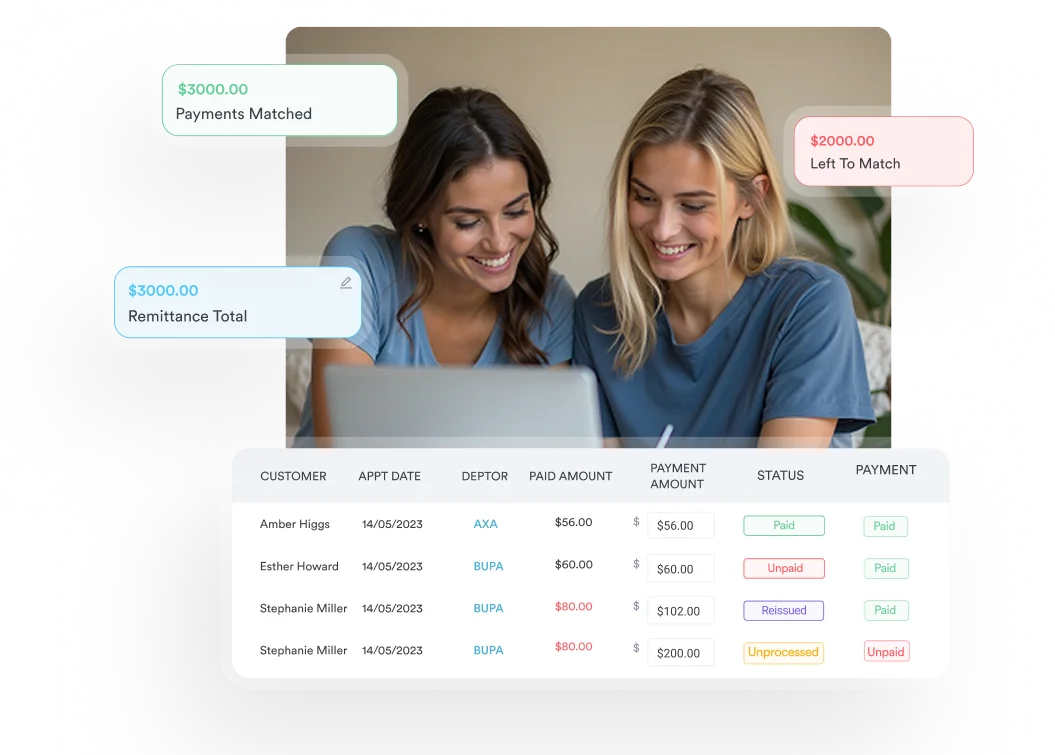
Pabau also keeps clinical records in the same patient file as the claim, so the operative note is ready if an insurer audits the payment. Likewise, practices comparing platforms can weigh these features in our guide to UK medical billing software.

Pabau submits CCSD-coded claims through Healthcode, then tracks and reconciles them. Urology consultants and their billing staff keep claims and clinical records in one platform.

N1520 rewards precision more than effort. In practice, before an epididymectomy invoice leaves the practice, check that the note names one side, records the testis as preserved, and carries a valid pre-authorisation reference.
If any of those three is missing, however, fix the note or the code before submission. A corrected invoice takes minutes, while a clawback after audit takes back the whole fee.
Book a demo to see how Pabau sends CCSD claims through Healthcode and keeps the operative note beside each one.

Need a broader CCSD reference for Bupa procedures? Bupa CCSD codes covers the Bupa procedure code schedule with fee-schedule context for private practice billing teams.
Removing an epididymal cyst rather than the whole epididymis? CCSD code N1580 explains how cyst excision is coded and documented.
Is the testis being removed laparoscopically? CCSD code N0630 covers billing for laparoscopic orchidectomy.
Chasing a run of rejected insurer claims? Denial management in healthcare sets out how to trace, correct and prevent repeat denials.
Choosing billing software for a UK private practice? The best medical billing software in the UK compares the platforms private practices use to bill insurers.
CCSD Code N1520 covers unilateral epididymectomy, the surgical removal of one epididymis through a scrotal incision, with the testis left in situ. The code covers the surgeon’s fee for the procedure only. Anaesthesia, assistant surgeon fees and histology are billed separately.
Bilateral epididymectomy is coded N1510. N1520 is strictly unilateral, so using it twice for a bilateral procedure is incorrect coding and will trigger denial or audit.
N1520 describes removal of the epididymis while the testis remains in place. An orchidectomy code describes removal of the testis itself. The two procedures are anatomically distinct, and coding one as the other is miscoding that carries contractual liability risk.
Excision of an epididymal cyst, where only the cyst is removed and the epididymis stays intact, is coded N1580. Use N1520 only when the full epididymis is surgically removed. Check the operative note to confirm which procedure took place before assigning the code.
Bupa, AXA Health and Vitality Health all typically require pre-authorisation before elective surgical urology procedures, including CCSD Code N1520. Aviva Health and WPA requirements depend on the specific policy and plan type. Always obtain a pre-authorisation reference before the procedure date and include it on the invoice.
The most common reason is missing pre-authorisation. Others are an operative note that does not confirm unilateral epididymectomy, a mismatched ICD-10 code, and N1520 billed for a bilateral procedure. Most are resolved with an operative note addendum, a retrospective pre-authorisation request, or a corrected invoice.