CPT code 48152: Whipple procedure without pancreatojejunostomy
CPT code 48152: Official description and procedure overview CPT code 48152 descr...

Last Updated: Nov 13, 2026
N1510 is the CCSD code for bilateral epididymectomy, the removal of both epididymides in one operation with the testes left in place. UK private medical insurers and Healthcode use it to identify the surgeon's fee for this procedure.
One code covers both sides. Unilateral epididymectomy is N1520, and excision of an epididymal cyst alone is N1580. Anaesthesia, assistant surgeon and histology fees are billed separately.
Let Pabau's smart automation suggest the right codes, reduce claim denials, and keep your practice compliant—effortlessly.
Automate repetitive tasks and focus on what matters most—your patients.
Reduce coding errors and ensure compliance with the latest regulations.
Clean claims, fewer denials, and faster reimbursements.
Powerful insights and reporting to help your practice thrive.
HIPAA compliant SOC 2 certified GDPR-compliant Trusted by 4,000+ clinics worldwide

CCSD Code N1510 is bilateral epididymectomy: both epididymides removed in one operation, with the testes left in place.
One N1510 line covers both sides. Never bill the unilateral code, N1520, twice for a two-sided operation.
Excision of an epididymal cyst alone is N1580, and removal of a testis takes an orchidectomy code instead.
UK private medical insurers usually require pre-authorisation for elective epididymectomy, so check the patient’s policy before the theatre date.
Pabau, our practice management software, sends CCSD-coded invoices through Healthcode and tracks each one to payment.
CCSD Code N1510 is the Clinical Coding and Schedule Development (CCSD) code for bilateral epididymectomy. A urological surgeon removes the epididymis on each side in one operative session and leaves both testes in place.
The CCSD Schedule is the standard set of procedure and diagnostic test codes for the UK private healthcare sector. It is maintained by the CCSD Group of four private medical insurers: Aviva, AXA Health, Bupa and Vitality. Healthcode, the main electronic billing clearinghouse for UK private practice, expects the correct CCSD code on every invoice.
N1510 sits in chapter 12 of the schedule, urinary system and male reproductive organs, under sub-chapter 12.6, genitalia. Its structure follows OPCS-4 code N15.1, the NHS classification for the same operation. Our CCSD codes library lists the neighbouring procedures.
Bilateral epididymectomy is usually a day-case or short-stay operation under general or spinal anaesthesia. The surgeon works through an incision on each side of the scrotum, or through a single midline scrotal incision.
The steps are the same on each side, which is why the operative note has to say plainly that both epididymides came out. A note that names only one side supports N1520 only.
N1510 is the right code when the operative note confirms bilateral epididymectomy for a documented indication. UK private claims report the diagnosis in WHO ICD-10, so the table uses WHO codes rather than the US ICD-10-CM set.
Insurers usually want evidence that conservative treatment failed before they approve surgery. Record antibiotic courses, their dates and the response, and explain why both sides need surgery. Check each code in the WHO ICD-10 browser before submission.
Bundling rules decide what the N1510 fee pays for. Getting them right prevents undercoding, which loses revenue, and overcoding, which creates audit risk.
Several codes in the genitalia sub-chapter sit close to N1510. Varicocele surgery sits in the same sub-chapter, and an open ligation of the spermatic cord veins is billed under CCSD code N1900. The table maps the ones coders mix up most often, with each descriptor as the schedule lists it.
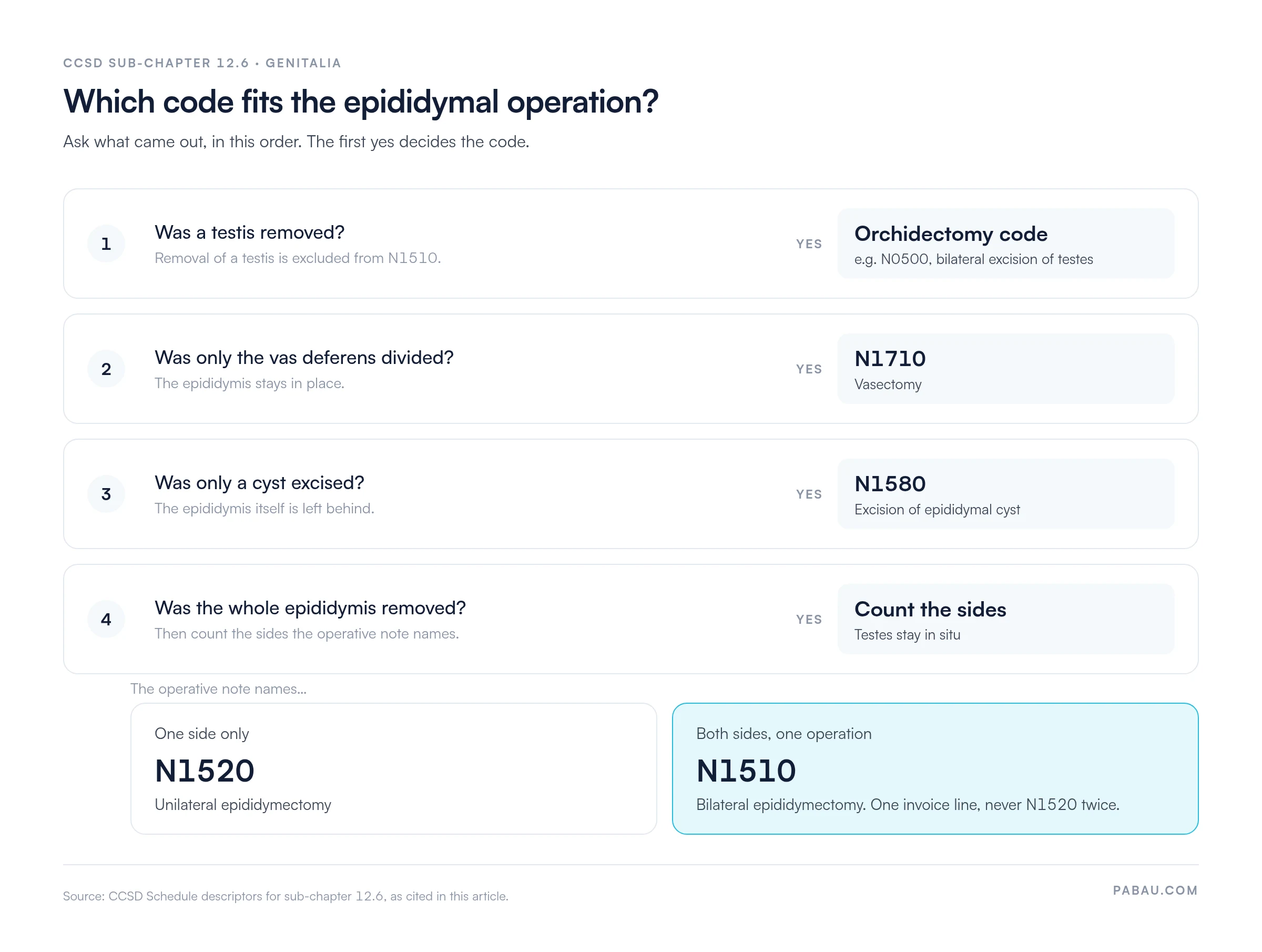
Laterality causes most errors in this family. When a note describes epididymectomy without naming a side, ask the surgeon before choosing between N1520 and N1510. When only cysts came out, N1580 applies instead. The ladder below rules out the neighbouring codes in the order a coder should check them.
Yes. The word “bilateral” is part of the N1510 descriptor, so one line on the invoice pays for both sides. No bilateral modifier or second line is added.
The fee reflects the extra work. Bupa’s February 2026 schedule places N1510 in band Intermediate 5, three bands above Intermediate 2 for N1520. Other insurers set their own fees for the same code, so check each insurer’s current schedule, such as Bupa code search.
An N1510 claim stands or falls on the operative note. Insurers auditing a paid claim look for the items below, so the note should carry each one.
Keep the consent form, anaesthetic record and histology report with the note. Clinical records management software holds them on one patient file, ready for an insurer query.
Most UK private medical insurers ask for pre-authorisation before elective surgery, and bilateral epididymectomy is usually elective. The patient normally contacts their insurer for an authorisation number once the consultant has recommended surgery.
Requirements differ between insurers and between policies. Confirm these points before the theatre date:
For Bupa’s codes and fee bands, see our Bupa CCSD codes guide. For other insurers, check the provider portal or ask the insurer’s authorisation team.
Hold an N1510 invoice until the pre-authorisation reference is in the patient file. If the theatre date moves, confirm the authorisation is still valid for the new date before the operation goes ahead.
N1510 denials follow a short, predictable list. Each one below has a known fix.
Private urologists billing N1510 need the note, the authorisation and the invoice to agree before the claim leaves the practice. Pabau’s claims management software sends CCSD-coded invoices to UK insurers through Healthcode. Your team then tracks each claim and reconciles the insurer’s payment in one place.
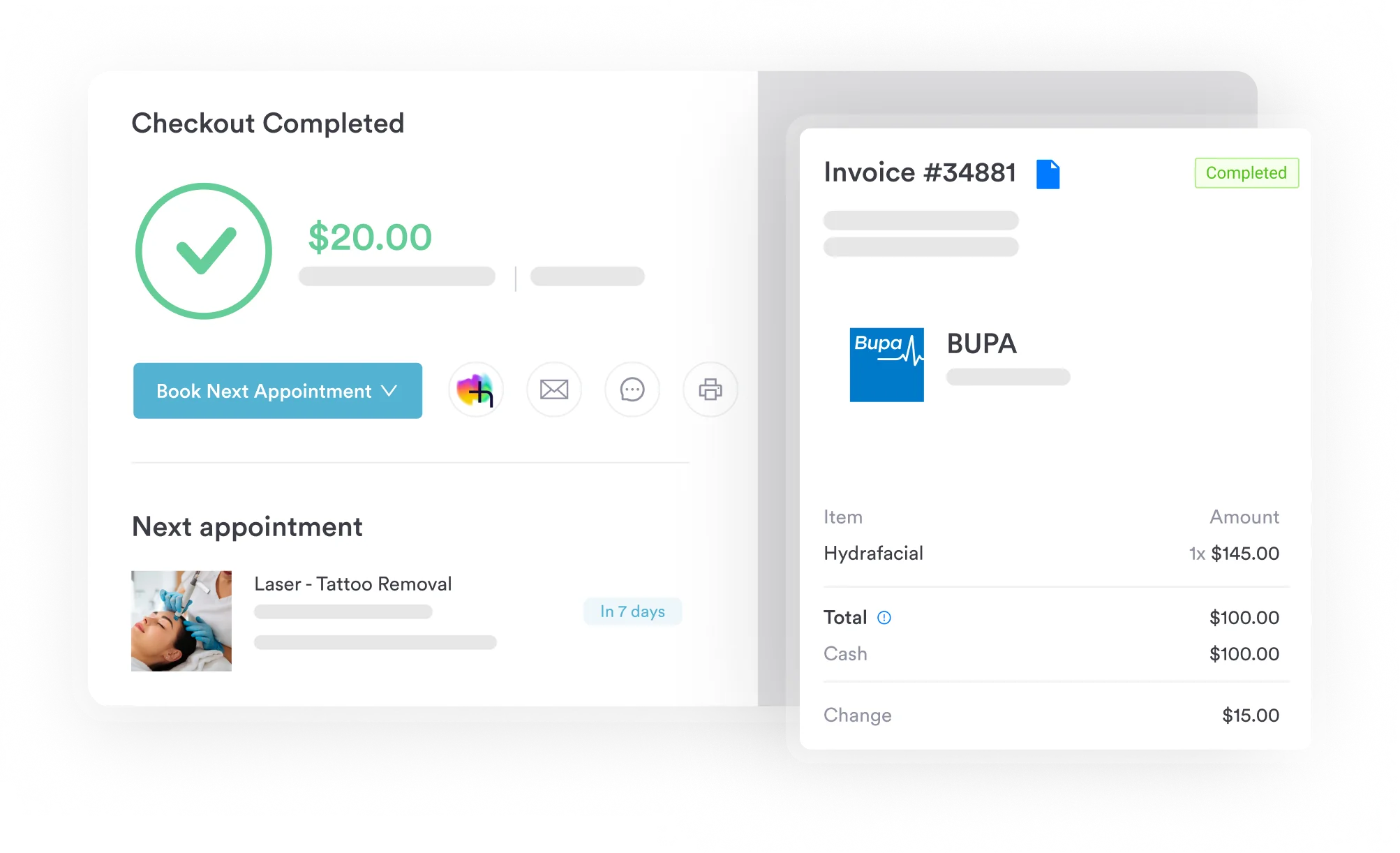
Clinical records sit in the same patient file as the claim. When an insurer queries a paid N1510 invoice, the operative note and histology report are already attached to the patient.

Pabau sends CCSD-coded claims through Healthcode, then tracks and reconciles them. Urology consultants and their billing teams keep claims and clinical records in one platform.

On N1510, a single word in the operative note decides the fee. If the note says “bilateral” and records both epididymides removed with the testes preserved, one N1510 line pays for the operation. If it does not, the claim falls back to N1520 or returns for an addendum.
So before the invoice goes out, check the bilateral statement, the authorisation reference and an ICD-10 code that matches both. Practices weighing up platforms for this work can compare options in our guide to UK medical billing software.
Book a demo to see how Pabau sends CCSD claims through Healthcode with the operative note beside each one.

Is the testis being removed laparoscopically? CCSD code N0630 covers billing for laparoscopic orchidectomy.
Chasing a run of rejected insurer claims? Denial management in healthcare sets out how to trace, correct and prevent repeat denials.
CCSD Code N1510 covers bilateral epididymectomy, the removal of both epididymides in one operation with the testes left in place. It is the surgeon’s fee code in the UK private healthcare schedule. Anaesthesia, assistant surgeon and histology fees are billed separately.
UK private claims use WHO ICD-10. The usual pairings are N45.9 for epididymitis or epididymo-orchitis without abscess, N45.0 with abscess, and N43.4 for spermatocele. N50.8 covers post-vasectomy pain, and D29.3 a benign epididymal tumour.
Usually, yes. Most UK private medical insurers require pre-authorisation for elective surgery, including bilateral epididymectomy. Requirements vary by insurer and policy, so get the reference number before the theatre date and put it on the invoice.
No. N1520 is unilateral epididymectomy, so two N1520 lines for one operation is incorrect coding. Bill a single N1510 line when both epididymides are removed in the same session.
N1510 removes both epididymides and leaves the testes in place. Orchidectomy codes, such as N0500 for bilateral excision of testes, remove the testis itself. Coding one as the other is miscoding and invites an audit.
The most common are a missing pre-authorisation reference and an operative note that does not confirm both sides. Two N1520 lines in place of N1510 and a mismatched ICD-10 code follow. Most are fixed with an addendum or a corrected invoice.