CCSD Code B2710: Radical mastectomy including block dissection
CCSD Code B2710: Definition and clinical scope CCSD Code B2710 is the UK private...

Last Updated: Nov 13, 2026
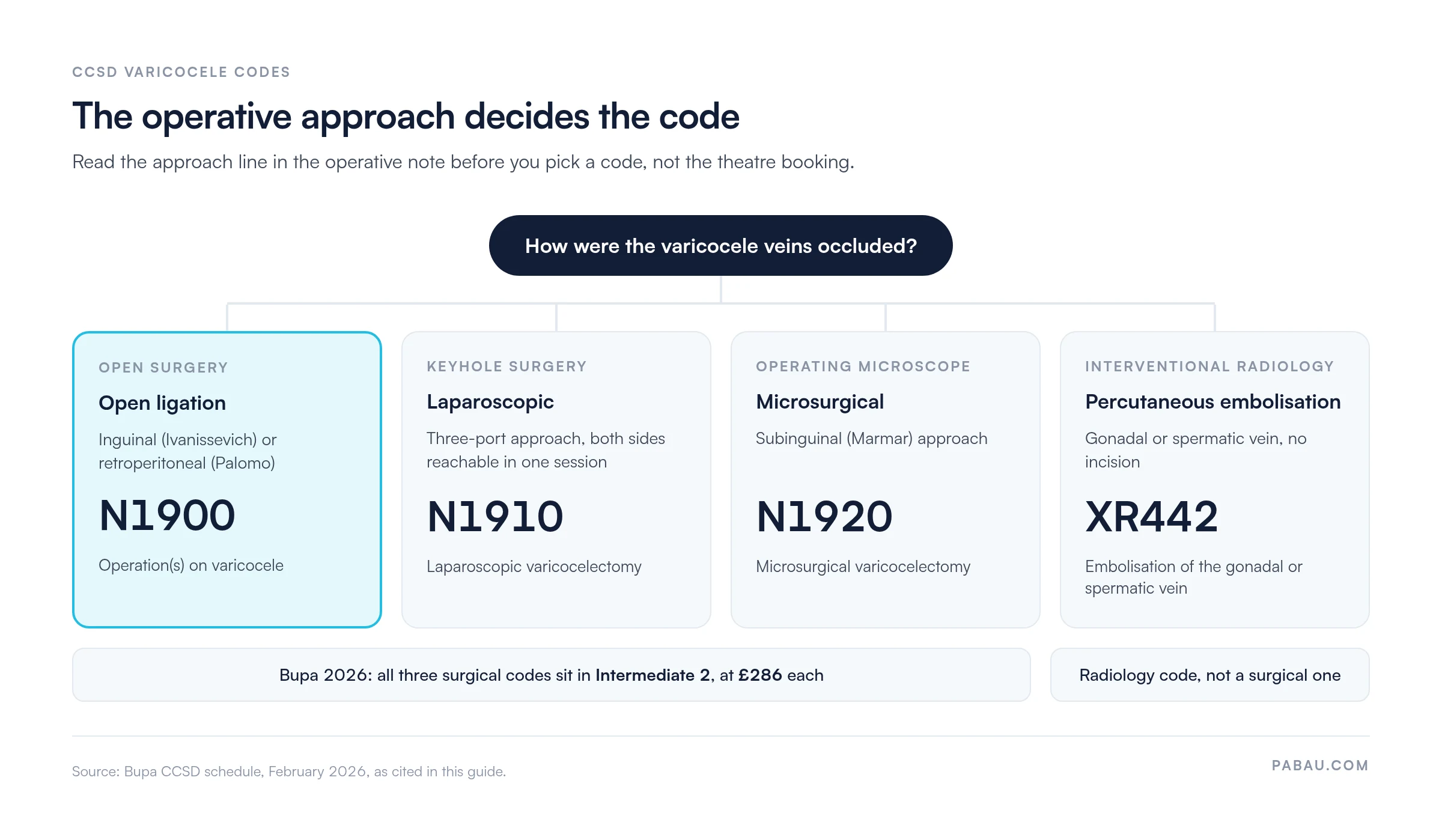
N1900 is the CCSD code for operation(s) on varicocele. In practice it covers open surgical ligation of the dilated spermatic cord veins, through an inguinal (Ivanissevich) or retroperitoneal (Palomo) approach.
The approach decides the code. Laparoscopic varicocelectomy bills as N1910, microsurgical varicocelectomy as N1920, and percutaneous embolisation as XR442. Most UK private insurers ask for pre-authorisation before surgery.
Let Pabau's smart automation suggest the right codes, reduce claim denials, and keep your practice compliant—effortlessly.
Automate repetitive tasks and focus on what matters most—your patients.
Reduce coding errors and ensure compliance with the latest regulations.
Clean claims, fewer denials, and faster reimbursements.
Powerful insights and reporting to help your practice thrive.
HIPAA compliant SOC 2 certified GDPR-compliant Trusted by 4,000+ clinics worldwide

N1900 covers open surgical ligation of a varicocele, through the inguinal (Ivanissevich) or retroperitoneal (Palomo) approach.
The approach decides the code. Laparoscopic varicocelectomy is N1910, microsurgical varicocelectomy is N1920, and percutaneous embolisation is XR442.
ICD-10 code I86.1 (scrotal varices) is the primary diagnosis pairing. N46 (male infertility) can support the claim as a secondary indication when a fertility workup is documented.
Each insurer applies its own bilateral rule, so two N1900 line items are not automatically payable at full fee.
Pabau’s claims tools hold the authorisation reference and diagnosis codes against each episode before the claim goes to Healthcode.
CCSD code N1900 is the Clinical Coding and Schedule Development code for open surgical ligation of a varicocele. Its official descriptor is “Operation(s) on varicocele.”
It sits in chapter 12 of the schedule, which covers the urinary system and male reproductive organs. The other techniques have their own codes: laparoscopic varicocelectomy is N1910, and microsurgical varicocelectomy is N1920.
The schedule is maintained by the CCSD Group, which is governed by four private medical insurers: Bupa, Vitality, AXA Health and Aviva. No hospital providers sit on it. The schedule is updated periodically and serves as the reference for private healthcare billing in the United Kingdom.
Other UK private insurers, including WPA and Cigna, also map their procedure reimbursement schedules to CCSD codes. Our CCSD code library lists N1900 alongside the rest of the schedule, and the Bupa CCSD codes guide explains how Bupa applies it.
Three varicocele treatments have codes of their own and are never billed as N1900:
If a patient has surgical ligation and embolisation as staged procedures, each one needs its own CCSD code on a separate claim. Billing N1900 for a laparoscopic, microsurgical or embolisation procedure is a common coding error and a frequent cause of denial.
A varicocele is an abnormal dilatation of the pampiniform venous plexus within the spermatic cord. It most often affects the left side, because the left testicular vein drains into the left renal vein at a steep angle. Surgical correction occludes the abnormal venous channels so blood returns through normal venous drainage.
The surgical approach decides the CCSD code. N1900 applies only to the open approaches, and the laparoscopic and microsurgical operations each have their own code. The main approaches are:
The operative note must record the approach, the laterality, whether the testicular artery was preserved, and any intraoperative findings. The approach line matters most, because it tells the coder which code applies. The chart below maps each approach to its code.
UK private insurers recognise a small set of clinical indications for N1900 reimbursement. Each maps to an ICD-10 diagnosis code that must accompany the claim.
UK insurers use the WHO edition of ICD-10, not the US ICD-10-CM, so the codes below are shorter than their US equivalents. A claim without a supported diagnosis code is usually rejected.
When male infertility is the primary indication, insurers typically ask for a semen analysis result and, where available, a fertility specialist’s referral letter. Some policies exclude infertility treatment altogether. Check the patient’s policy wording before submission, and document why surgery was chosen over conservative management.
Several CCSD codes are frequently confused with CCSD code N1900, and two of them describe the same operation done a different way. Selecting the wrong code typically results in underpayment or outright denial, even when the clinical documentation is strong.
A varicocele operation and a hydrocele repair in one session may go on separate line items. Each insurer’s unbundling rules decide it. Check the current Bupa schedule and the other insurers’ tables before coding a combined procedure, because unbundling policies differ.
Epididymal surgery has codes of its own too. Excision of an epididymal cyst bills as N1580, and a unilateral epididymectomy as N1520. Older code lists may also still carry CCSD code N0930 for an abdominal undescended testis, though it has been inactive since January 2009. Fixing both testes in the scrotum in one operation is a bilateral orchidopexy, billed under CCSD code N0820.
Code from the operative note, not from the theatre booking. A list booked as varicocele ligation can become laparoscopic or microsurgical on the day, and those operations bill as N1910 and N1920. Embolisation done by interventional radiology is XR442, never N1900.
N1900 can be billed for both sides, but how depends on the insurer’s bilateral procedure policy. Bilateral varicocele is less common than a one-sided presentation. When a surgeon operates on both sides in one session, that policy sets the line items and the fee.
UK private insurers share no single rule. Each one says whether bilateral procedures go in as two line items at full fee, or with a reduced payment for the second side. The three largest handle it this way:
Bilateral rules are payer-specific and change periodically. State the laterality in the pre-authorisation request, and confirm the expected payment basis before the procedure takes place.
Most UK private insurers require pre-authorisation before they pay an N1900 claim. Not every policy demands it. Where a policy does, a claim sent without authorisation is denied, however strong the clinical case.
A pre-authorisation request for N1900 should carry four details:
If male infertility is a co-indication, attach the semen analysis report too. An incomplete package is the most common reason an authorisation decision is delayed.
Because the approach sets the code, the request should name the planned code as well as the approach. If the surgeon changes approach, ask the insurer to amend the authorisation to N1910 or N1920 before the claim is sent.
A complete N1900 claim needs documents from before, during and after surgery. A missing document at any stage can delay payment or prompt the insurer to ask for more information.
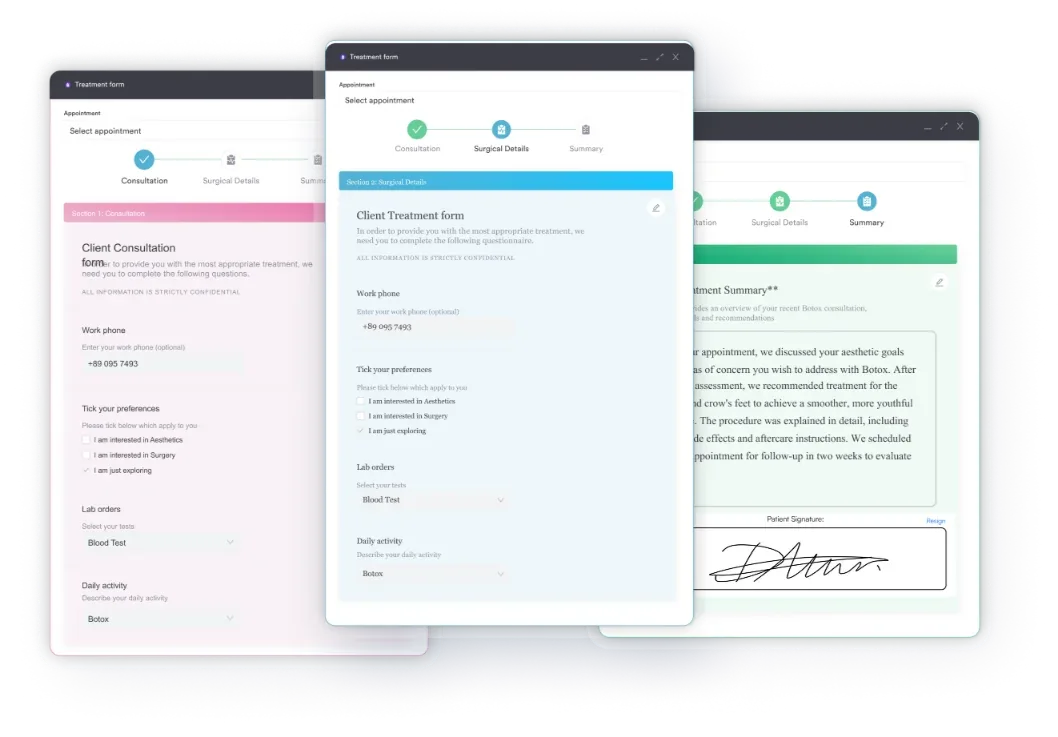
Digital consent and clinical note forms can capture laterality, approach and intraoperative findings at the point of care. The coder then works from a complete record, instead of chasing the surgeon for the missing approach line.
N1900 denials follow a predictable pattern, and most can be prevented before submission. The table below sets out the most frequent reasons and the fix for each.
CCSD code N1900 fees are set by each insurer independently and are not published as a single national rate. Consultants in independent practice also set their own self-pay fees, which typically exceed insurer reimbursement rates.
Key sources for current N1900 fee information:
Confirm the current rate in the relevant insurer’s schedule before quoting any pound figure for N1900. Fees are revised annually and vary by insurer and by level of consultant recognition.
Some insurers also grade the three varicocele operations differently. National Friendly, for example, grades N1900 as Intermediate but N1910 as Major.
Our guide to the Bupa fee schedule explains how to read and apply Bupa’s published rates.
Healthcode is the main electronic billing and remittance platform UK private providers use to send CCSD claims to insurers. Most UK private insurers, including Bupa and AXA Health, accept it as the standard electronic route for consultant procedures.
The workflow for submitting N1900 on Healthcode follows these steps:
Save a diagnosis code set for N1900 in your practice management system. Make I86.1 the primary and pin N46 as a secondary option. It prevents the most common coding omission and speeds up claim creation for returning patients.
Most urology practices run an N1900 claim across three places. The authorisation sits in an insurer email, the approach sits in the operative note, and the claim is keyed into Healthcode by hand. Every hand-off is a chance to send the wrong code or a missing reference.
Pabau, the practice management platform we build, keeps those pieces on the patient’s episode. Its claims management tools store the authorisation reference, attach ICD-10 codes from a saved list, and send the claim through Healthcode.
Claim status then comes back to the same record. Your team sees a query on a bilateral claim the day it arrives, rather than at month-end reconciliation.

Pabau helps UK private urology practices attach diagnosis codes, authorisation references and operative notes to each claim before submission. That cuts the back-and-forth that delays payment.

Code N1900 from the operative note, never from the theatre list. If the note says open inguinal or retroperitoneal ligation, N1900 is right. If it says laparoscope, microscope or embolisation, it is not, whatever was booked.
Bupa pays the three surgical codes at the same rate, so a wrong code rarely costs money up front. It costs time, because the claim comes back and the authorisation may need amending. Settle the approach and the laterality before the pre-authorisation request goes out, and most of the denials in this guide never happen.
Book a demo to see how Pabau carries the authorisation reference and diagnosis codes from pre-auth through to a paid N1900 claim.

Billing surgery on both sides in one session? CCSD code N1510 covers bilateral epididymectomy, another chapter 12 procedure where the bilateral rule decides the fee.
Coding other scrotal surgery? CCSD code N1350 covers exploration of the testis, with its documentation and pre-authorisation requirements.
CCSD code N1900 is the UK private healthcare procedure code for operation(s) on varicocele. It covers open surgical ligation, such as the inguinal (Ivanissevich) and retroperitoneal (Palomo) approaches. Laparoscopic varicocelectomy is N1910, microsurgical varicocelectomy is N1920, and percutaneous embolisation is XR442.
Open varicocele ligation is a surgical procedure coded as CCSD code N1900. Embolisation is a radiological intervention, coded as XR442 for embolisation of the gonadal or spermatic vein. Billing N1900 for an embolisation procedure leads to a clinical mismatch and denial.
Yes, most UK private insurers including Bupa, AXA Health, and Aviva require pre-authorisation before accepting an N1900 claim. The pre-auth request should include the scrotal ultrasound report, clinical indication, proposed laterality, and the specialist referral letter.
Yes, N1900 can be billed for both sides when surgery is performed bilaterally. Insurers differ on whether the second side is paid in full or at a reduced rate. Verify the specific rule with the insurer before submission.
N1900 is most often confused with N1910 (laparoscopic varicocelectomy), N1920 (microsurgical varicocelectomy) and XR442 (embolisation). The operative note’s approach decides which applies. Hydrocele codes are another source of confusion. When both conditions are repaired in one session, two codes may apply, subject to insurer unbundling rules.
The operative note must record the surgical approach, laterality, whether the testicular artery was preserved, ligatures placed, and intraoperative findings. The approach decides the code: open is N1900, laparoscopic N1910 and microsurgical N1920. The ICD-10 diagnosis code on the claim must match the indication stated in the note.