CPT Code 62284: Injection procedure for myelography
CPT Code 62284: official descriptor and procedure overview The American Medical ...

Last Updated: Oct 19, 2026
H0310 is the CCSD code for drainage of abscess of appendix or drainage of intra-abdominal abscess. UK private medical insurers use it when a surgeon drains a collection of pus around the appendix or elsewhere inside the abdomen. It sits in Chapter 11, Large Intestine, of the CCSD schedule.
The code covers drainage as the main procedure. If the surgeon also removes the appendix in the same operation, the appendicectomy code is billed instead. CCSD lists H0310 as an unacceptable combination with H0210, H0211, H0280 and H1700, so choosing the right code early prevents an insurer query.
Let Pabau's smart automation suggest the right codes, reduce claim denials, and keep your practice compliant—effortlessly.
Automate repetitive tasks and focus on what matters most—your patients.
Reduce coding errors and ensure compliance with the latest regulations.
Clean claims, fewer denials, and faster reimbursements.
Powerful insights and reporting to help your practice thrive.
HIPAA compliant SOC 2 certified GDPR-compliant Trusted by 4,000+ clinics worldwide

H0310 is the CCSD code for drainage of abscess of appendix or drainage of intra-abdominal abscess, in Chapter 11, Large Intestine.
Bill H0310 when drainage is the main procedure. If the appendix comes out in the same operation, the appendicectomy code replaces it.
CCSD lists H0310 as an unacceptable combination with H0210, H0211, H0280 and H1700, so none of those pairs belongs on one claim.
The descriptor names no surgical approach, so the operative note has to state the route, the abscess site and what was drained.
CCSD sets codes, not fees. Each insurer publishes its own benefit for H0310, so check the payer’s schedule before quoting a patient.
CCSD code H0310 covers drainage of an abscess of the appendix, or drainage of an abscess elsewhere inside the abdomen. UK private medical insurers use it to identify that operation on a claim.
An appendix abscess usually forms when an inflamed appendix perforates and the body walls off the infection. A surgeon may drain that collection first and leave the appendix for later. H0310 describes that drainage. It also covers an intra-abdominal abscess with another cause, such as a collection after earlier surgery.
The code is one entry among the CCSD codes that UK insurers share. Its key facts fit in one table.
Some details sit behind the CCSD login, such as the complexity band. Confirm those on the CCSD website before you rely on them.
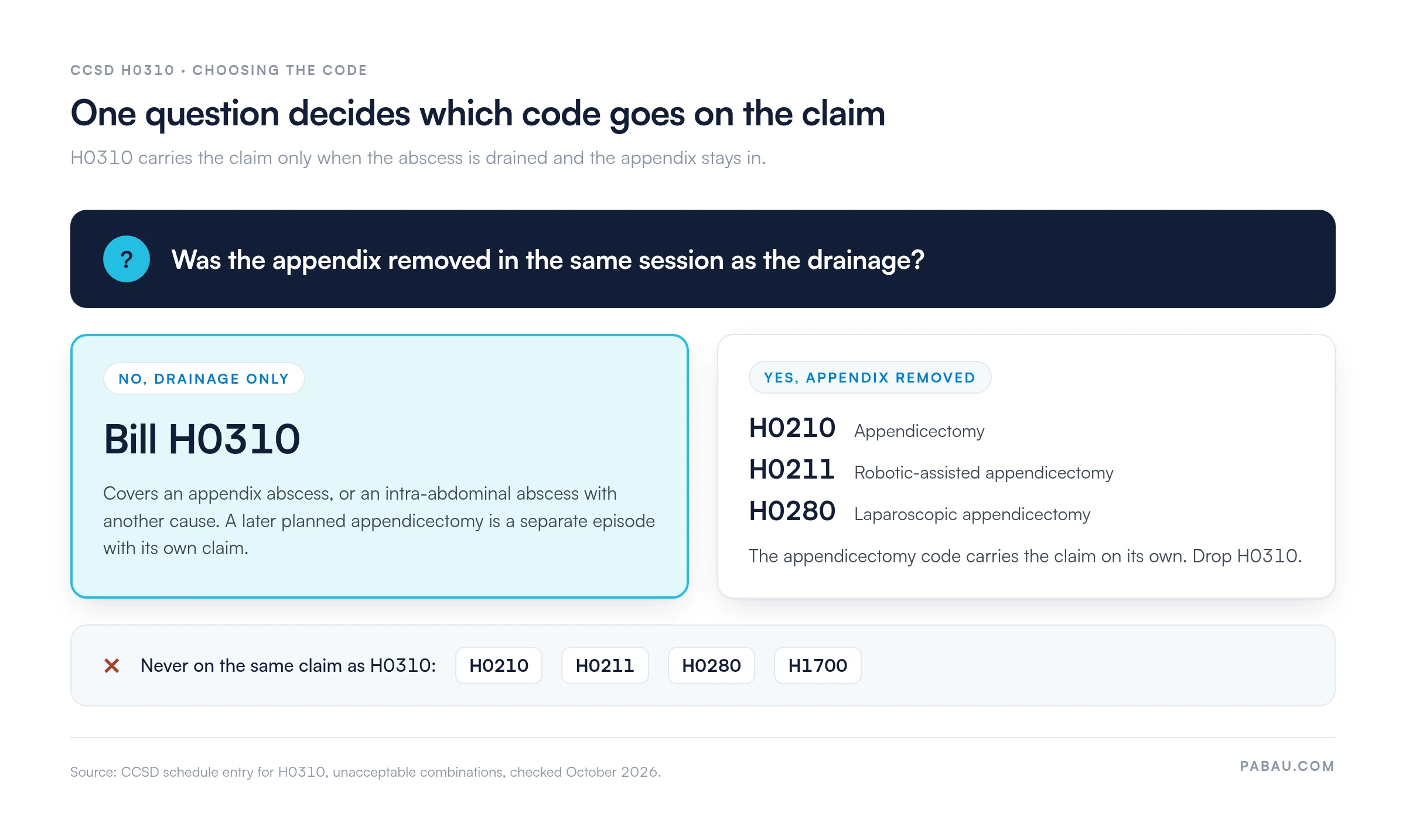
The most important H0310 decision is whether the appendix was also removed. CCSD flags four codes that must not be billed alongside H0310 for the same procedure:
In practice, draining the abscess is treated as part of the larger operation. When the surgeon removes the appendix and washes out a local abscess, the appendicectomy code carries the claim on its own. The diagram below turns that rule into a single question.
A patient arrives with a walled-off appendix mass. The surgeon drains the abscess and leaves the appendix in place. That episode is coded H0310.
Eight weeks later, the same patient returns for a planned laparoscopic appendicectomy. That second operation is a separate episode, so it is coded H0280 on its own claim.
Had both steps happened in one session, only H0280 would apply. Insurers can still choose how they adopt a combination rule, so check the payer’s own policy when a case is unusual.
The descriptor is broad, so the insurer relies on the note to see what happened. A clear operative note answers five questions:
The route matters more than it looks. The descriptor does not name an approach. If an interventional radiologist drains the collection, ask the insurer whether H0310 or a radiology code applies.
US claims describe the same operation with CPT codes instead. CPT 44900 covers open incision and drainage of an appendiceal abscess.
Its percutaneous partner, CPT 44901, was retired in 2014. US coders now report image-guided catheter drainage with a separate set of codes (CPT 49405-49407).
That split by approach is the main difference. H0310 groups the routes under one descriptor, while CPT separates them. Never put a CPT code on a UK private claim, because insurers there accept CCSD codes only.
The removal rule works the same way in the US. When the appendix comes out laparoscopically, CPT 44970 carries the claim and the drainage is not billed separately.
The CCSD Group sets codes and their descriptions. It does not set prices. Bupa, AXA Health, Aviva and Vitality each decide their own benefit for H0310 and publish it to recognized specialists.
Before you submit, check three points with the payer:
Most of these insurers receive claims electronically through Healthcode. The Bupa CCSD codes guide explains how one insurer handles the schedule.
Four avoidable errors account for most H0310 queries. Here is what causes each one and how to clear it.
Q: The insurer rejected H0310 and H0280 on the same claim. Why?
A: CCSD lists them as an unacceptable combination. Resubmit with H0280 alone if the appendix came out in the same session.
Q: The claim was queried for a missing approach. What now?
A: Send the operative note showing the route and the abscess site. Ask the surgeon to state both in future notes.
Q: The fee paid was lower than expected. Is that an error?
A: Usually not. Each insurer sets its own benefit, so compare the payment with that payer’s schedule before you appeal.
Q: The insurer says there was no authorization. Can it still pay?
A: Often yes for emergency cases. Send the admission details and request retrospective authorization promptly.
Run through these checks before the claim leaves your practice. Each one takes a minute and saves a query.
Many surgical practices still rebuild each insurer claim by hand. Staff copy the code, the authorization number and the patient’s policy details from several places.
Pabau, our billing and practice management software, keeps those details on the patient record instead. Its claims management software pre-fills the claim from that record. It also checks that required fields, such as membership and authorization numbers, are complete before you send it.
In the UK, Pabau submits CCSD claims through its Healthcode integration and tracks each claim’s status. Your team can see which H0310 claims are paid and which need a reply.
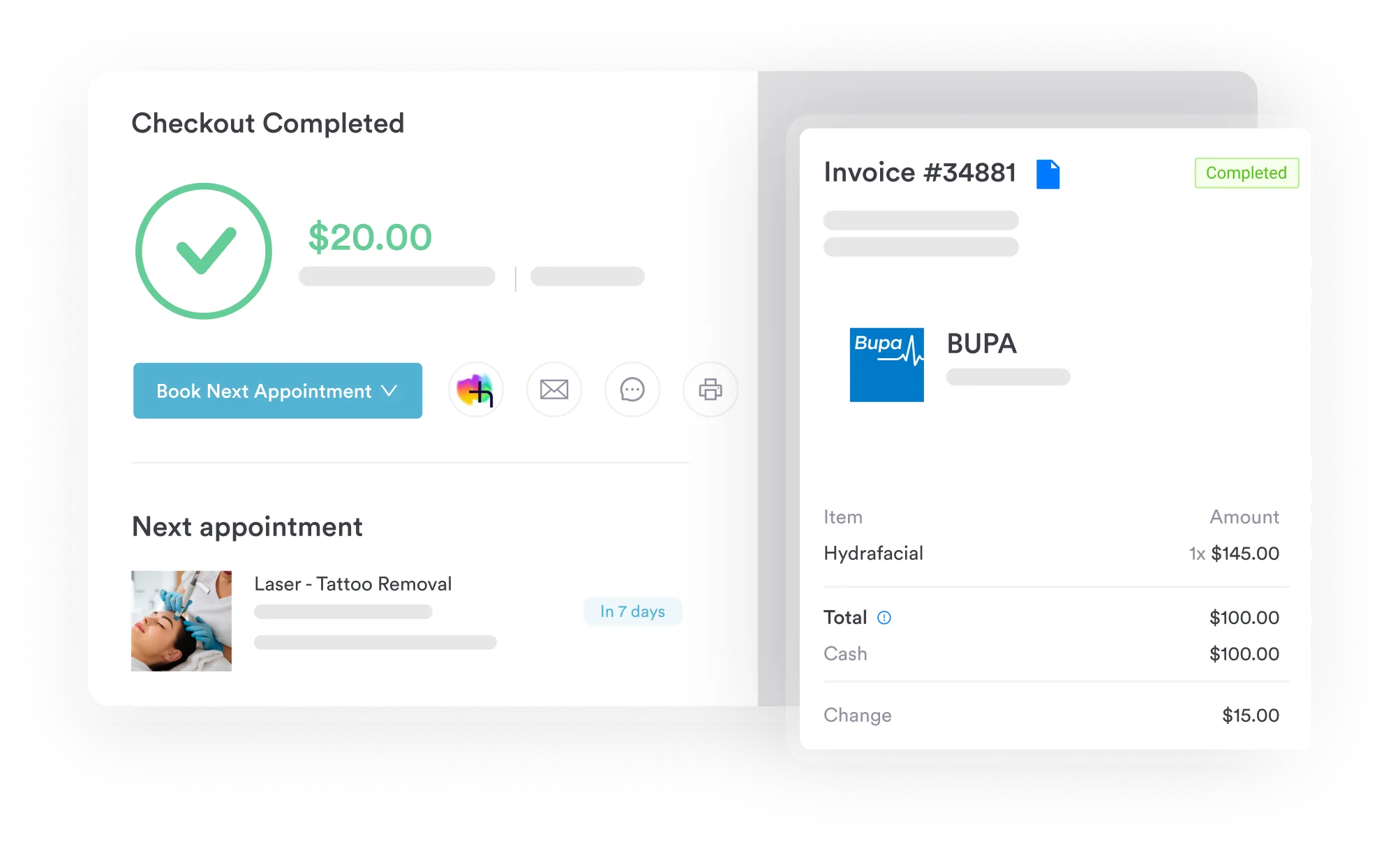

Pabau pre-fills insurer claims from the patient record, checks required fields before submission and sends UK claims through Healthcode. Your team spends less time rebuilding claims after a query.

H0310 looks simple, yet one decision shapes the whole claim. Was the appendix removed in the same session, or was the abscess drained alone?
Answer that in the operative note, and the code follows. Add the route, the site and the authorization reference, and the insurer has little left to query.
If your team still assembles insurer claims by hand, book a demo to see how Pabau sends them from the patient record.

Need the wider schedule? CCSD codes explained covers how UK insurers use the full code set.
Billing Bupa patients? The Bupa fee schedule guide shows how to find the benefit for a procedure code.
Want fewer returned claims? Clean claim requirements walks through what payers check before they pay.
Dealing with a backlog of queries? Denial management in healthcare sets out a process for working rejected claims.
No. H0310 is a CCSD code used by UK private medical insurers. The US HCPCS code for an alcohol and drug assessment is H0001, which is unrelated.
No. The NHS records procedures with OPCS-4, while private insurers use CCSD codes. A privately funded drainage is claimed with H0310, not with an OPCS-4 code.
The anesthetist sends a separate invoice to the insurer. It normally references the same procedure code, but check the insurer’s rules for anesthetist claims.
The CCSD Group maintains it. Its members are Aviva, AXA Health, Bupa and Vitality, and they agree the codes and descriptions together.
A second drainage in a new episode is usually a new claim. Document why the collection returned, and check the insurer’s rules on repeat procedures first.