ICD-10 code S61.201A: Open wound of left index finger without nail damage
ICD-10 code S61.201A covers a left index finger wound of unstated type ICD-10 co...

Last Updated: Oct 16, 2026
Billable Code Specific Code
Y09 is the billable ICD-10-CM code for assault by unspecified means.
There is no single assault ICD-10 code. Assault ICD-10 codes run across the X92-Y09 range, one for each documented mechanism of intentional harm by another person. When the record confirms an assault but names no weapon or method, the code is Y09 (assault by unspecified means).
Let Pabau's smart automation suggest the right codes, reduce claim denials, and keep your practice compliant—effortlessly.
Automate repetitive tasks and focus on what matters most—your patients.
Reduce coding errors and ensure compliance with the latest regulations.
Clean claims, fewer denials, and faster reimbursements.
Powerful insights and reporting to help your practice thrive.
HIPAA compliant SOC 2 certified GDPR-compliant Trusted by 4,000+ clinics worldwide

The ICD-10 code for assault by unspecified means is Y09, a billable diagnosis code valid for 2026, used when the method of assault is unknown or not documented.
Assault ICD-10 codes span the X92-Y09 range: 18 categories covering drowning, firearms, sharp and blunt objects, bodily force, sexual force, and more. Y09 is the fallback when no mechanism is recorded.
Specificity always wins. Use Y09 only after ruling out a specific code from X92-Y08, and never sequence an external cause code as the principal diagnosis: the injury code leads.
Pabau’s structured intake forms and claims management software help practices capture mechanism, intent, and perpetrator details at the point of care, so the right assault code reaches the claim.
The assault subrange sits in Chapter 20 of ICD-10-CM (External causes of morbidity, V00-Y99). It holds 18 code categories, ordered by mechanism. The table below pairs each code with the documentation trigger that tells you to use it, so you can match the encounter note to the code without paging through the tabular list.
| Code | Assault by | Documentation trigger |
|---|---|---|
| X92 | Drowning and submersion | Record describes forced drowning |
| X93-X95 | Firearm discharge (handgun; rifle/shotgun; other or unspecified) | Gunshot wound, weapon type noted |
| X96 | Explosive material | Blast or explosive injury |
| X97 | Smoke, fire, and flames | Burns from deliberately set fire |
| X98 | Steam, hot vapors, and hot objects | Scald or contact burn inflicted |
| X99 | Sharp object | Stab or slash wound (knife, blade) |
| Y00 | Blunt object | Struck with a bat, bottle, or similar |
| Y01 | Pushing from a high place | Pushed from height |
| Y02 | Pushing or placing before a moving object | Shoved into traffic or machinery |
| Y03 | Crashing of a motor vehicle | Vehicle used as a weapon |
| Y04 | Bodily force | Hit, punched, kicked, or shoved with no weapon |
| Y05 | Sexual force (sexual assault) | Sexual assault by bodily force |
| Y06 | Neglect and abandonment | Willful neglect by a caregiver |
| Y07 | Perpetrator of maltreatment and neglect | Identifies the perpetrator’s relationship |
| Y08 | Other specified means | Mechanism documented but not listed above |
| Y09 | Unspecified means | Assault confirmed, no mechanism recorded |
Most of these categories need a 7th character to become billable (A for initial encounter, D for subsequent, S for sequela), often with placeholder X’s, as in X99.9XXA. Y09 is a complete code and is billable as written. Verify the current-year form against the CDC/NCHS ICD-10-CM web tool after each October 1 update cycle.
ICD-10 code Y09 (assault by unspecified means) applies when injuries result from intentional harm by another person but the mechanism is not documented or remains unknown at the time of coding.
Y09 falls within the Assault subrange X92-Y09. The Centers for Medicare and Medicaid Services (CMS) and the National Center for Health Statistics (NCHS) maintain it for US clinical use as part of ICD-10-CM. The code carries the designation NOS (Not Otherwise Specified), signaling it is a last-resort code when no more specific classification exists.
Coders working in emergency medicine, forensic health, primary care, and mental health practices reach for Y09 when patients present with injuries attributed to another person but documentation does not identify a weapon, body part used, or specific assault mechanism. The situational anxiety ICD-10 code is a common co-occurring code when assault victims develop acute stress responses alongside their physical injuries.
The ICD-10-CM tabular listing for Y09 includes four official applicable-to terms. These are not separate codes. They are clinical scenarios that map to Y09 when the record leaves the means unspecified.
| Applicable-to term | Clinical context |
|---|---|
| Assassination (attempted) NOS | Targeted killing attempt where method is undocumented |
| Homicide (attempted) NOS | Killing of another person, method unspecified |
| Manslaughter (attempted) NOS | Unlawful killing without premeditation, means unknown |
| Murder (attempted) NOS | Intentional killing, mechanism not recorded |
Synonyms also associated with Y09 in clinical databases include assault, assault and battery, assault by person, and battery. These terms appear in the code’s index entries and may surface in provider notes, police reports attached to records, or emergency department documentation. When any of these terms appear without a specific mechanism, Y09 is the correct external cause code to apply.
An occupational therapy platform links how an injury happened to the functional goals that guide recovery.
Y09 sits at the end of the X92-Y09 range as the residual NOS option. Use it only after ruling out a more specific code from the table above. If the clinical notes, imaging report, or police documentation identifies a mechanism, the specific code applies. Y09 is not a default for assault. Reach for it only when the record genuinely provides no mechanism detail.
When documentation confirms injury from another person but names no weapon or method, Y09 is the code for assault by another person. The perpetrator’s identity does not change the selection, so an assault by an unknown person still codes to Y09 as long as the mechanism is unrecorded. Once a mechanism appears in the note (a punch, a knife, a firearm), move to the matching X92-Y08 code instead.
Physical assault ICD-10 codes usually resolve to Y04 (assault by bodily force) when the injuries come from hands, fists, or feet with no weapon involved. Use Y09 only when the encounter confirms a physical assault but records no mechanism at all. When a weapon is documented, the specific code takes over: X99 for a sharp object, Y00 for a blunt object.
A cervical spine injury from bodily force often needs its own stabilization billing. A soft foam collar for a mild sprain is billed under HCPCS code L0120, while a semi-rigid adjustable collar for a moderate injury uses L0140.
Reviewing traumatic injury diagnosis coding alongside external cause coding helps ensure the injury code and the assault mechanism code are sequenced correctly on the claim.
Review the emergency department triage notes, nursing documentation, and any police or social work reports attached to the encounter before defaulting to Y09. A single phrase like ‘hit with an object’ or ‘choked’ changes the code to Y00 or Y04, which provides more precise data for both billing and public health surveillance.
CMS and the AHA Coding Clinic both require that the treating provider’s documentation support external cause codes directly. Coders cannot infer them from police reports alone. For Y09, the record must establish three things.
Robust client record management tools make this documentation requirement manageable in busy practices. When structured encounter templates prompt providers to record mechanism, intent, and perpetrator relationship, staff capture the notes needed for Y09 coding accuracy at the point of care rather than reconstructing them during billing review.
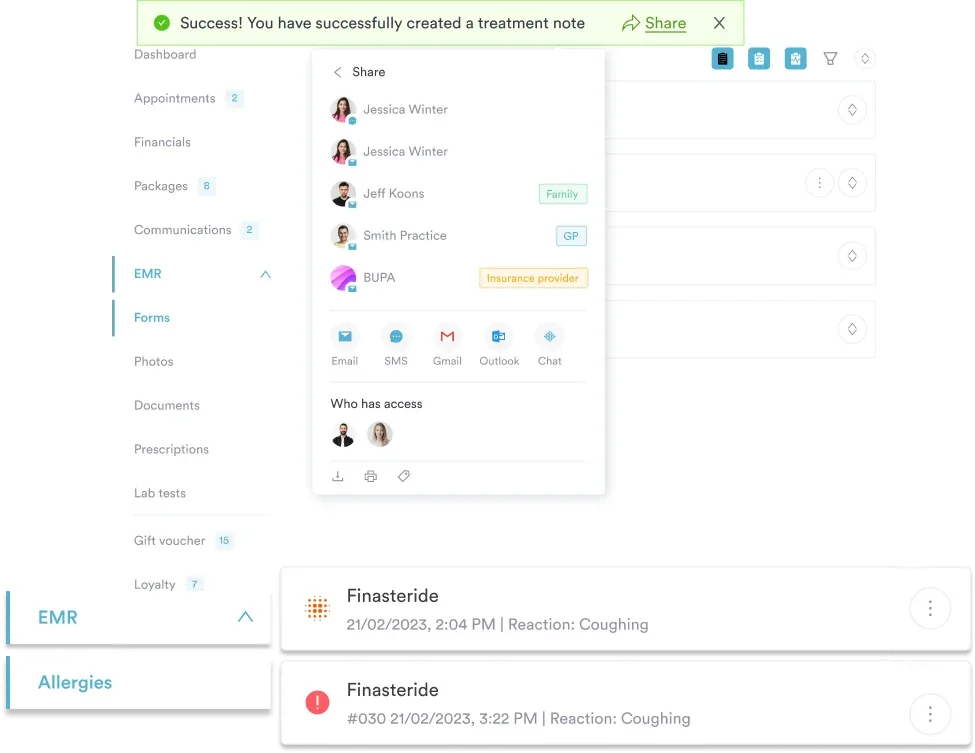
Supporting documentation elements that strengthen the Y09 record include injury diagrams.
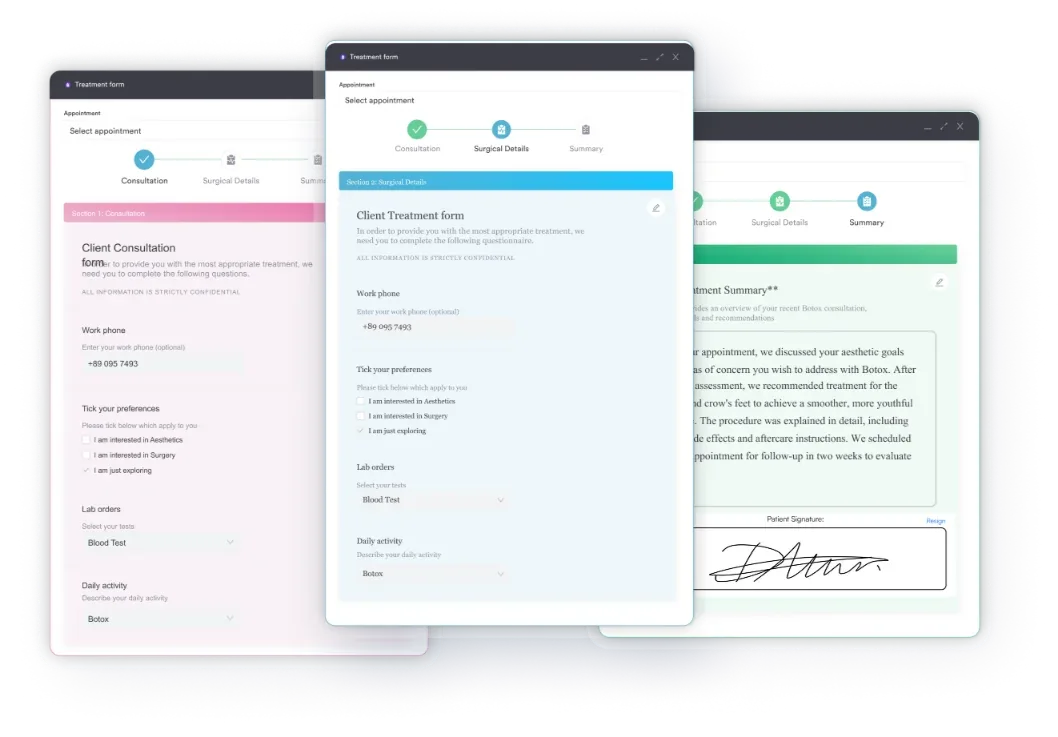

Pabau helps clinics capture structured encounter data, manage compliance documentation, and submit clean claims for complex external cause codes like Y09.

A patient management system keeps external cause documentation consistent, which insurers and lawyers eventually ask for.
External cause codes, including Y09, are supplementary codes in ICD-10-CM. Coders never sequence them as the principal diagnosis. The injury code (fracture, laceration, contusion, or internal injury) always leads as the principal diagnosis, and Y09 follows as an additional external cause code.
For insurance billing, Y09 typically routes to DRG assignments based on the principal injury diagnosis rather than the external cause code itself. Payers with specialized trauma or violence-related benefit carve-outs may flag Y09 for coordination of benefits review. Practices using claims management software can set up claim scrubbing rules to catch sequencing errors before submission.
A more severe cervical injury may need a collar molded to the patient, billed under HCPCS code L0170. A thoracic or lumbar fracture from blunt force often needs a TLSO brace, billed under HCPCS code L0460.
Maintaining HIPAA compliance for medical offices is especially important when handling assault-related records, given that these encounters often involve law enforcement, attorneys, or child protective services requesting documentation.
Practices transitioning legacy data or working with historical claims will encounter two ICD-9-CM predecessor codes for Y09.
| ICD-9-CM code | Description | ICD-10-CM equivalent |
|---|---|---|
| E968.9 | Assault by unspecified means | Y09 |
| E988.9 | Injury undetermined whether accidentally or purposely inflicted by other unspecified means | Y09 (in confirmed assault context) |
The CDC/NCHS ICD-10-CM web tool provides the official current-year tabular and index entries for Y09, including any annual updates from CMS. Verifying against this tool before coding is good practice, particularly after each October 1 code update cycle.
When a patient presents with injuries from a confirmed assault but the encounter note only says ‘assault’ with no further detail, query the treating provider before coding. A single clarification note added to the record can upgrade Y09 to a specific assault code and improve both documentation accuracy and public health surveillance data quality.
Y09 encounters carry documentation weight beyond reimbursement. Many states require healthcare providers to report certain assault injuries to law enforcement or public health departments, particularly when the victim is a minor, an elderly person, or when injuries suggest domestic violence.
When abuse leaves a minor with lasting mobility loss, billing may include a pediatric power wheelchair under HCPCS code K0890.
The external cause code itself does not trigger reporting, but it does signal to compliance officers and billers that the encounter may have mandatory reporting obligations attached. Practices with compliance management workflows should configure alert flags for Y09-coded encounters to prompt a mandatory reporting review during or after the visit.
Strong patient data security in clinical workflows is equally critical for assault records. These encounters are high-sensitivity files: courts may subpoena them, attorneys may review them in criminal proceedings, or insurers may request them for coverage disputes. Access controls, audit logs, and encrypted storage are not optional for this category of encounter.
For practices managing patient information and HIPAA obligations related to assault cases, understanding the limits of permissible disclosure to law enforcement (45 CFR 164.512(f)) is fundamental before responding to any external request for Y09-coded records.
Practices that see assault or trauma patients can reduce documentation errors with structured encounter workflows. Pabau, practice management software built for busy clinics. These fields map directly to the elements needed to assign a specific X92-Y08 code or, where necessary, confirm Y09 as the correct choice.
When combined with Pabau’s structured diagnostic coding workflows, practices can maintain complete clinical records that hold up to payer review and legal scrutiny alike. The compliance management module adds a further layer by logging documentation completeness checks against configurable standards.
For practices managing similar sensitive external cause encounters. See also our guidance on handling HIPAA violations if an inadvertent disclosure has already occurred in connection with an assault case.
Assault ICD-10 codes reward specificity. Work down the X92-Y09 range to the code that matches the documented mechanism, and reach Y09 only when the record genuinely leaves the assault means unspecified. Most encounters have enough detail in the notes, triage forms, or attached reports to support a code from X92-Y08. When Y09 is the correct choice, accurate sequencing with the injury code, place of occurrence, and any applicable abuse code ensures the claim reflects the full clinical picture. Denial rate by code shows which services are worth a process fix and which are one-off errors. A code lookup that lives beside the desk gets used; one buried in a shared drive does not.
Pabau’s structured documentation tools, compliance workflows, and claims management capabilities help practices handle these sensitive encounters with the accuracy and audit-readiness they require. Book a demo to see how Pabau supports accurate external cause coding across your clinical workflows.

List Item #1
List Item #2
There is no single code. Assault ICD-10 codes span the X92-Y09 range, one per documented mechanism. Y09 (assault by unspecified means) is the fallback when the method is not recorded, while a documented mechanism uses its specific code from X92-Y08.
ICD-10 code Y09 means assault by unspecified means. It applies when a patient has been intentionally harmed by another person but the method of assault is not documented in the clinical record.
The word “alleged” does not change code selection. Code what the record supports: a documented mechanism uses its specific X92-Y08 code, and an unconfirmed or unrecorded method uses Y09. Wording like “alleged” affects the narrative note, not the external cause code chosen.
Y09. An unidentified attacker does not change the code, since only a documented mechanism moves the encounter to a specific X92-Y08 code. Assault by an unknown person with no recorded method stays at Y09.
Physical assault by hands, fists, or feet with no weapon codes to Y04 (assault by bodily force). When the encounter confirms a physical attack but records no mechanism, Y09 applies instead.
Yes, Y09 is a valid billable ICD-10-CM code for 2026, confirmed by the AAPC Codify ICD-10-CM lookup. It is always an additional external cause code, with the injury code sequenced first.
Only when no mechanism of assault is documented anywhere in the encounter record. If any method is described, the corresponding specific code from X92-Y08 takes priority. Y09 is a last-resort NOS code, not a default.
The range covers drowning (X92), firearms (X93-X95), explosives (X96), fire and hot objects (X97-X98), sharp objects (X99), blunt objects (Y00), pushing and vehicle-based assault (Y01-Y03), bodily force (Y04), sexual force (Y05), neglect and maltreatment (Y06-Y07), other specified means (Y08), and unspecified means (Y09). The full list with documentation triggers is in the table above.
Yes. When confirmed physical abuse accompanies the assault, the appropriate T74.x code is added separately. Both Y09 and T74.x can appear on the same claim when documentation supports confirmed abuse.