ICD-10 Code Y76.0: Diagnostic obstetric and gynecological devices
ICD-10 Code Y76.0: Definition and billable status ICD-10 Code Y76.0 is a valid, ...

Last Updated: Oct 23, 2026
Billable Code Specific Code
W55.42XS is the billable ICD-10-CM code for struck by pig, sequela.
Let Pabau's smart automation suggest the right codes, reduce claim denials, and keep your practice compliant—effortlessly.
Automate repetitive tasks and focus on what matters most—your patients.
Reduce coding errors and ensure compliance with the latest regulations.
Clean claims, fewer denials, and faster reimbursements.
Powerful insights and reporting to help your practice thrive.
HIPAA compliant SOC 2 certified GDPR-compliant Trusted by 4,000+ clinics worldwide

W55.42XS is a billable ICD-10-CM code for struck by pig, sequela, valid for FY2026 claims.
The 7th character ‘S’ designates sequela (late effect); W55.42 without a 7th character is non-billable.
W55.42XS describes the external cause only; a nature-of-injury S-code must be listed as the principal diagnosis.
Practice management software like Pabau helps practices capture accurate external cause codes and reduce claim denials.
ICD-10 Code W55.42XS, “Struck by pig, sequela,” is a billable ICD-10-CM code used to document the external cause of a late-effect injury that resulted from contact with a pig. Without the 7th character “S,” the parent code W55.42 cannot be submitted on a claim.
Most denials on this code happen because the encounter type, whether initial, subsequent, or sequela, is never specified in the clinical documentation. Practice management software like Pabau helps clinical teams attach the right external cause codes at the point of documentation through its claims management software, reducing the back-and-forth with payers that incomplete coding creates.
W55.42XS sits within ICD-10-CM Chapter 20, “External Causes of Morbidity” (V00-Y99), maintained by the Centers for Medicare and Medicaid Services (CMS) and the CDC’s National Center for Health Statistics (NCHS).
The code is valid for reimbursement claims with dates of service on or after October 1, 2015, when ICD-10-CM replaced ICD-9-CM under HIPAA mandate. It remains active in the FY2026 code set, effective October 1, 2025.
Understanding where W55.42XS sits in the ICD-10-CM hierarchy helps coders apply the right level of specificity. The code resolves through four parent levels before reaching the billable 7th-character form.
Only the 7th-character codes at the bottom of this hierarchy are billable. Submitting W55.42 without the “X” placeholder and “S” encounter designator results in an invalid code error. In W55.42XS, the 5th character (“2”) is defined and clinically meaningful, since it specifies “struck” as the contact mechanism. Only the 6th character position is empty here, so a single “X” placeholder fills that slot before the 7th-character encounter designator (A, D, or S). A billing workflow that separates coding from submission creates a handoff where claims stall. A superbill form is not a claim form, but it carries the same data the patient insurer will ask for.
The three billable codes under W55.42 each describe a different stage of the patient’s care journey. Choosing the wrong encounter type is the most common external cause coding error in animal contact cases.
For guidance on applying the same 7th-character logic to other external cause injuries, the AAPC Codify ICD-10-CM lookup allows coders to search by keyword and view the full chapter guidelines for any code. The CDC/NCHS ICD-10-CM web tool provides the official tabular list with all applicable notes.
An occupational therapy platform links how an injury happened to the functional goals that guide recovery.
A sequela is a late effect: a condition that arises as a direct consequence of a prior injury, after the acute phase of that injury has resolved. Sequela coding applies when the patient presents for a complication or residual condition traceable to the original pig-strike event, not for ongoing treatment of the strike wound itself.
Common sequela scenarios for animal-contact injuries include chronic pain, nerve damage, scar contracture, or post-traumatic conditions that develop weeks, months, or even years after the initial incident. The same 7th-character sequela logic applies across every unusual-incident code in Chapter 20.
W58.12XS applies the same pattern to a healed crocodile strike. It carries the sequela character S, and the residual condition still leads the claim.
Subsequent encounter (D) means the patient is still actively healing from the original injury. Sequela (S) means that healing is complete and the current complaint is a downstream consequence of the original event.
W55.42XS describes the circumstance causing the injury, not the nature of the injury. Per ICD-10-CM Chapter 20 guidelines, external cause codes are never listed as the principal or first-listed diagnosis. A nature-of-injury code from the S-code range must take the principal position.
For sequela encounters, the sequencing rule is: list the residual condition (the late-effect S-code) first, followed by the cause of the sequela. W55.42XS takes the secondary position on every claim where it appears.
Document the causal link explicitly in the clinical note before assigning W55.42XS. Phrases like ‘chronic pain resulting from pig-strike injury sustained [date]’ or ‘scar contracture secondary to prior pig contact trauma’ give the coder the language needed to justify sequela designation. Generic phrases like ‘follow-up for injury’ are not sufficient.
Payers increasingly expect supplementary context codes when external cause codes are submitted. These are optional under ICD-10-CM guidelines but recommended by the UHDDS and many state health departments for inpatient and outpatient reporting.
Knowing the adjacent codes in the W55.4 subcategory prevents miscoding when the mechanism of contact differs. Coders working in agricultural medicine, occupational health, or veterinary support settings will encounter all three pig-contact subcategories regularly. The same adjacent-code review applies to other external cause codes.
For broader mammal contact outside the pig subcategory, the full W55 category covers raccoons, horses, cows, dogs, and other mammals, each with the same A/D/S encounter structure. Use icd10data.com’s ICD-10-CM lookup to browse the complete W55 sibling codes and verify adjacent entries.
Sequela designation cannot be assumed from the visit date or the passage of time. The clinical record must establish a clear causal link between the residual condition being treated and the original pig-contact event.
Practices using digital intake forms can capture occupational history and prior animal-contact events at intake, making it easier for clinicians to establish the causal chain in their notes. Structured client records that store past injury documentation prevent coders from having to hunt through paper notes when a sequela encounter arises months after the original injury.
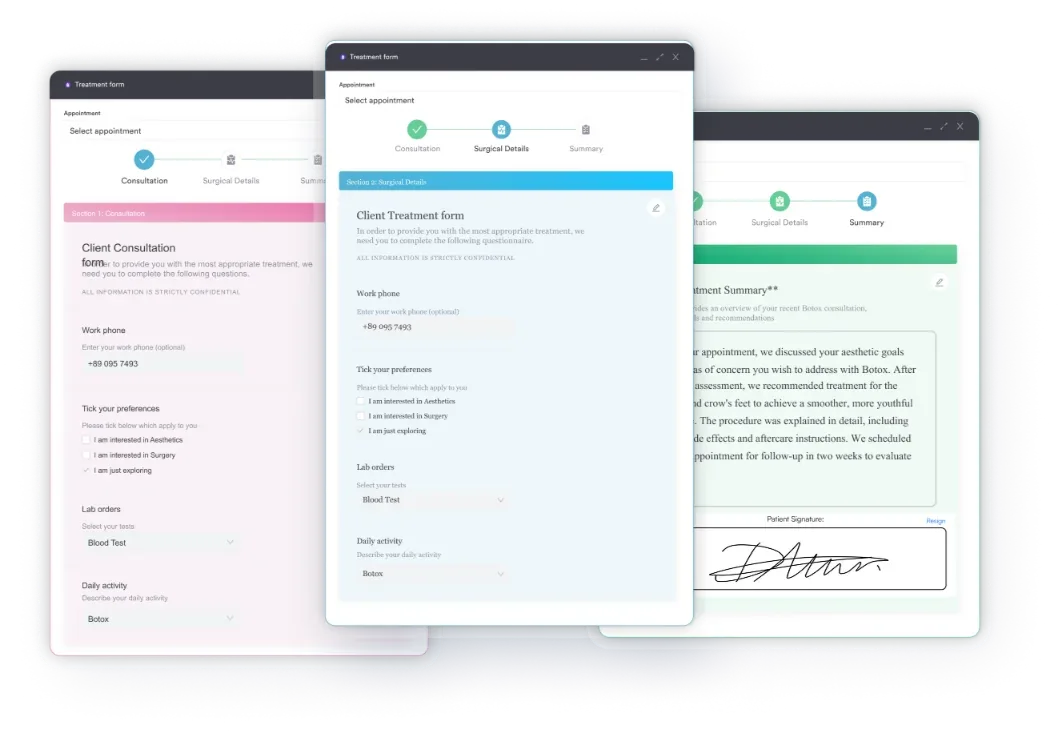

Pabau helps clinical teams capture accurate ICD-10-CM external cause codes, link historical injury records, and reduce denials on external cause claims. See how it works for your practice.

Pig-strike injuries are an occupational reality in agricultural settings, livestock farming, and veterinary medicine. Providers in rural emergency medicine.
Typical clinical presentations where W55.42XS applies include:
In each case, the residual condition code (the nature-of-injury S-code) is the principal diagnosis, with W55.42XS added as a secondary external cause code to indicate the origin of the problem. Occupational health providers should also consider the Y99.0 external cause status code to distinguish work-related incidents from recreational ones for workers’ compensation reporting purposes.
External cause sequela coding generates a predictable set of errors. Coders in practices unfamiliar with Chapter 20 guidelines often make the same mistakes on every animal-contact claim.
Practices using AI-assisted clinical documentation can reduce transcription-layer errors by prompting clinicians to record causal language during the encounter rather than reconstructing it at the billing stage. The same discipline matters for the nature-of-injury codes that must accompany W55.42XS.
Run a quarterly audit of all Chapter 20 (V00-Y99) claims. Pull any claim where an external cause code was listed as primary, where the 7th character was absent, or where no nature-of-injury S-code accompanied the external cause code. These three patterns account for the majority of external cause coding rejections.
The W55 category carries a single Excludes1 note that restricts certain code combinations. It applies at the category level and affects all W55 codes, including W55.42XS.
Per the ICD-10-CM Official Guidelines maintained by CDC/NCHS, the Excludes1 note at the W55 level lists: animal being ridden (see transport accidents), bitten or struck by dog (W54.-), bitten or struck by rodent (W53.-), and contact with marine mammals (W56.-). None of these apply to a pig-strike encounter, so W55.42XS carries no code-specific exclusions beyond this category-level note.
The HIPAA mandate requires that all covered entities use the correct ICD-10-CM code set for healthcare transactions. Submitting a non-billable parent code (W55.42) instead of the full 7-character code (W55.42XS) constitutes a non-compliant transaction for payers subject to HIPAA. For teams working to build consistent HIPAA-compliant coding workflows, standardizing encounter-type documentation at the front desk is the most cost-effective control.
External cause coding errors on sequela encounters are entirely preventable with the right documentation habits. W55.42XS is a billable, clinically specific code, but it only works when the clinical record establishes the causal chain from the original pig-contact event to the residual condition being treated today.
Pabau’s claims management tools help practices build those habits into every encounter workflow, from intake through claim submission. To see how Pabau handles external cause code documentation in practice, book a demo with the team.

Billing an external urethral clamp? HCPCS code A4356 covers the external urethral clamp under coverage criteria set by LCD L33803.
Billing a bedside drainage bag? HCPCS code A4357 covers the bedside urinary drainage bag, generally limited to two bags per month.
Looking for guidance on other ICD-10-CM external cause codes? Y09 walks through the sequencing rules for another Chapter 20 external cause code.
ICD-10 Code W55.42XS is a billable ICD-10-CM diagnosis code meaning “Struck by pig, sequela.” It classifies the external cause of a late-effect injury that arose after a pig-strike incident, once the original acute injury has healed. The code sits in Chapter 20 (External Causes of Morbidity, V00-Y99) and is valid in the FY2026 code set.
W55.42XS is billable. The parent code W55.42 (without the 7th character) is non-billable and will be rejected on submission. You must use the full 7-character code W55.42XS for sequela encounters, W55.42XA for initial encounters, or W55.42XD for subsequent encounters.
No. Per ICD-10-CM Chapter 20 coding rules, external cause codes (V00-Y99) are never listed as the principal or first-listed diagnosis. W55.42XS must always be a secondary code; the nature-of-injury code describing the residual condition (e.g., chronic pain, scar contracture) takes the principal position.
W55.42XD (subsequent encounter) applies when the patient is still receiving active treatment for the original pig-strike injury. W55.42XS (sequela) applies when the original injury has fully healed and the current visit addresses a downstream complication or late effect of that injury. The distinction must be supported by clinical documentation, not assumed from time elapsed.
Requirements vary by payer. Many commercial payers and state Medicaid programs encourage or require Chapter 20 codes for injury-related encounters, while some treat them as supplemental. Workers’ compensation payers typically require place-of-occurrence (Y92) and external cause status (Y99) codes alongside W55.42XS for occupational injury claims.