ICD-10 Code Y76.0: Diagnostic obstetric and gynecological devices
ICD-10 Code Y76.0: Definition and billable status ICD-10 Code Y76.0 is a valid, ...

Last Updated: Oct 23, 2026
Billable Code Specific Code
V00.892D is the billable ICD-10-CM code for pedestrian on other pedestrian conveyance colliding with stationary object, subsequent encounter.
Let Pabau's smart automation suggest the right codes, reduce claim denials, and keep your practice compliant—effortlessly.
Automate repetitive tasks and focus on what matters most—your patients.
Reduce coding errors and ensure compliance with the latest regulations.
Clean claims, fewer denials, and faster reimbursements.
Powerful insights and reporting to help your practice thrive.
HIPAA compliant SOC 2 certified GDPR-compliant Trusted by 4,000+ clinics worldwide

V00.892D describes a pedestrian on another type of pedestrian conveyance colliding with a stationary object — a wall, post, tree, curb, or parked vehicle — not a collision with another rider, at a subsequent encounter.
The code sits inside the V00.89 residual subcategory, where the sixth digit signals the accident type: V00.891 is a fall, V00.892 is colliding with a stationary object, and V00.898 is any other accident.
V00.892D is a billable, specific ICD-10-CM external cause code valid for FY2026, always reported alongside a principal injury diagnosis and never as a standalone primary code.
The 7th character D means subsequent encounter: active treatment for the injury is complete and the patient is receiving routine follow-up care; use V00.892A for the initial encounter and V00.892S for a sequela.
Hoverboards, electric kick scooters, and Segways fall under the separate V00.84 standing micro-mobility subcategory rather than V00.89 — practice management software like Pabau that captures the exact conveyance and encounter phase in the visit note helps coders avoid this kind of misclassification.
ICD-10 Code V00.892D is a billable, specific ICD-10-CM diagnosis code valid for HIPAA-covered transactions in FY2026. Per the CDC/NCHS ICD-10-CM web tool, the code became effective October 1, 2025. It carries a full clinical description: “Pedestrian on other pedestrian conveyance colliding with stationary object, subsequent encounter.” The code sits within the V00-Y99 range of external causes of morbidity, meaning it always functions as a supplementary code alongside a principal injury diagnosis. External cause codes describe the circumstances that caused an injury, not the injury itself, so submitting V00.892D as a standalone primary diagnosis code is incorrect and will trigger a claim edit.
The phrase “other pedestrian conveyance” is ICD-10-CM’s residual, not-elsewhere-classified label for personal, non-motorized mobility devices that do not have their own dedicated V00 subcategory. ICD-10-CM classifies roller skates, skateboards, non-motorized push scooters, and wheeled shoes (Heelys) under the separate rolling-type subcategory (V00.1x); ice skates and sleds sit under the gliding-type subcategory (V00.2x); snow skis and snowboards sit under the flat-bottomed subcategory (V00.3x); and powered wheelchairs, baby strollers, motorized mobility scooters, and standing micro-mobility devices — electric scooters, hoverboards, and Segways — each have their own dedicated subcategory under V00.81 through V00.84. V00.89 is what is left over: a pedestrian conveyance accident where the Tabular List does not name the specific device elsewhere, or the record does not document it precisely enough for a coder to select one of those more specific codes. Medicare billing rules for this code differ from commercial payer rules, including the documentation asked for. A shared coding reference also standardizes how two coders handle the same borderline case.
Within V00.89, the sixth digit tells coders which type of accident occurred: V00.891 is a fall from the conveyance, V00.892 is the conveyance rider colliding with a stationary object, and V00.898 is any other accident type. A stationary object includes a wall, fence post, tree, parked or stopped vehicle, curb, or similar fixed obstacle — the clinical distinction that matters for V00.892D is that the object the patient struck was not moving.
Coders should confirm the device type against the Tabular List before assigning V00.89, since several common pedestrian conveyances already have their own dedicated code elsewhere in the V00 category:
V00.89 applies when the conveyance genuinely does not fit any of the categories above, or when the documentation does not identify the specific device.
V00.892D codes the scenario where a single rider on such a conveyance strikes something that is not moving — for example, a rider losing control and hitting a parked car, a fence, or a lamp post. It does not describe a collision between two riders. Document the mechanism precisely: the device type if known, the object struck, and which party the patient was. Physical therapy and sports medicine practices see a steady share of these follow-up visits, which is exactly where the 7th character needs the closest attention.
Per the CDC/NCHS ICD-10-CM Tabular List, the V00 category carries a Type 1 Excludes note. It does not include: collision with another person without a fall (W51); a fall due to a person on foot colliding with another person on foot (W03); a fall from a non-moving wheelchair, non-motorized scooter, or motorized mobility scooter without collision (W05.-); a pedestrian conveyance collision with another land transport vehicle (V01-V09); or a pedestrian on foot falling on ice and snow (W00.-). If the patient collided with a car, bicycle, or other land transport vehicle rather than a stationary object, the correct code range is V01-V09, not V00.
Those codes split further by the pedestrian’s own status, by traffic or nontraffic location, and by the encounter character. A motorcycle or moped that hits someone on foot away from a public road maps to V02.00XA at the initial encounter.
V06.90XA is the initial-encounter code for a person on foot hit by an animal-drawn vehicle or a ridden animal. A pedal cycle is coded to V01 instead. Use V06.90XA when the record never states whether the accident was traffic or nontraffic.
The 7th character is the element coders most commonly get wrong on V00.892 claims. ICD-10 Code V00.892D carries “D” as its 7th character, which the ICD-10-CM Official Guidelines define as “subsequent encounter.” This means the patient is receiving care after the active treatment phase has ended. The CMS ICD-10 coding resources page and the Official Guidelines Section I.C.20 govern when each character applies.
A critical distinction: the 7th character reflects the encounter type from the provider’s perspective, not the patient’s overall care timeline. A patient can have multiple “initial encounter” visits if they are still in the active treatment phase across different providers. Once that phase ends, all follow-up visits use D.
In software built for occupational therapy, these codes provide the incident context behind each treatment plan.
Coders frequently ask how to distinguish between the A, D, and S variants when a patient presents weeks after a conveyance accident. The answer depends on the treatment status, not the calendar date. The same logic applies to other injury codes with a subsequent-encounter variant.
One practical rule: if the visit note documents “follow-up for laceration sustained when the patient’s pedestrian conveyance struck a parked car” and the wound is healing without complication, use V00.892D. If the note documents “chronic pain in right wrist, history of pedestrian conveyance collision with a stationary object 18 months ago, now presenting with functional limitation,” use V00.892S. Sequela requires that the original injury has resolved and the current problem is a consequence of the past event.
Document the exact object struck and the conveyance’s collision status in the visit note for every V00.892D encounter. Vague language like ‘scooter accident’ is insufficient. Specify the conveyance type if known, name the stationary object involved (wall, parked car, curb, tree), confirm the ‘subsequent encounter’ status explicitly, and note what active treatment phase has concluded. This prevents 7th character disputes during payer audits.
V00.892D belongs to the V00-Y99 range, the ICD-10-CM chapter dedicated to external causes of morbidity. Per the Official Guidelines Section I.C.20, external cause codes are always supplementary. They provide mechanism-of-injury detail but cannot stand alone as a principal or first-listed diagnosis.
Key guidelines governing the use of V00.892D include the following. Reviewing HIPAA-covered transaction requirements for claim submission also applies when a claim attaches external cause codes, since payer edits can reject claims where mandatory injury codes are missing.
The AHA Coding Clinic and the ICD-10-CM Official Guidelines for Coding and Reporting (maintained jointly by CMS and NCHS) are the authoritative sources for any sequencing dispute. When a payer questions the placement of V00.892D, cite Section I.C.20 of the current guidelines.
Understanding the parent-child hierarchy helps coders select the correct subcategory when documentation is ambiguous. V00.892D resolves to a very specific leaf node within a multi-level classification tree. This hierarchy follows the same logical structure used across ICD-10-CM for injury and external cause codes.
The parent code V00.892 is not billable on its own; it requires the 7th character to become a valid, reportable code. Submitting V00.892 without the D, A, or S extension will trigger a claim edit. Always select the fully extended code.
The sixth digit within V00.89 is what distinguishes the three sibling codes from one another:
The ICD-10-CM Alphabetic Index and Tabular List recognize several alternate descriptions that map to V00.892D. When documentation uses informal or variant phrasing, coders can use these synonyms to confirm code selection. Rehabilitation-related procedure codes.
These synonyms are useful during clinical documentation review. If the chart uses any of these phrasings and the encounter is a follow-up visit, V00.892D is the correct code assignment. Cross-reference unusual conveyance descriptions against the official Tabular List and Alphabetic Index before finalizing the code.
Incomplete documentation is the leading cause of external cause code denials. For V00.892D, the clinical record must support three things: the mechanism of injury, the conveyance type, and the encounter phase. Good clinical documentation captures all three elements at every follow-up visit, not just at the initial encounter.
Required documentation elements for a valid V00.892D claim include the following:
Common coding errors on V00.892D claims cluster in two areas. First, coders continue using V00.892A at follow-up visits simply because they used it at the initial encounter, without reassessing the 7th character. Second, practitioners confuse V00.892D with V00.892S when a patient returns months later with residual symptoms, using D when S is clinically appropriate. Using digital intake forms at each follow-up visit helps capture the treatment phase status explicitly, giving coders the documentation clarity they need. Practices managing ongoing injury cases can also benefit from medical intake forms that prompt clinicians to record encounter type at every visit.
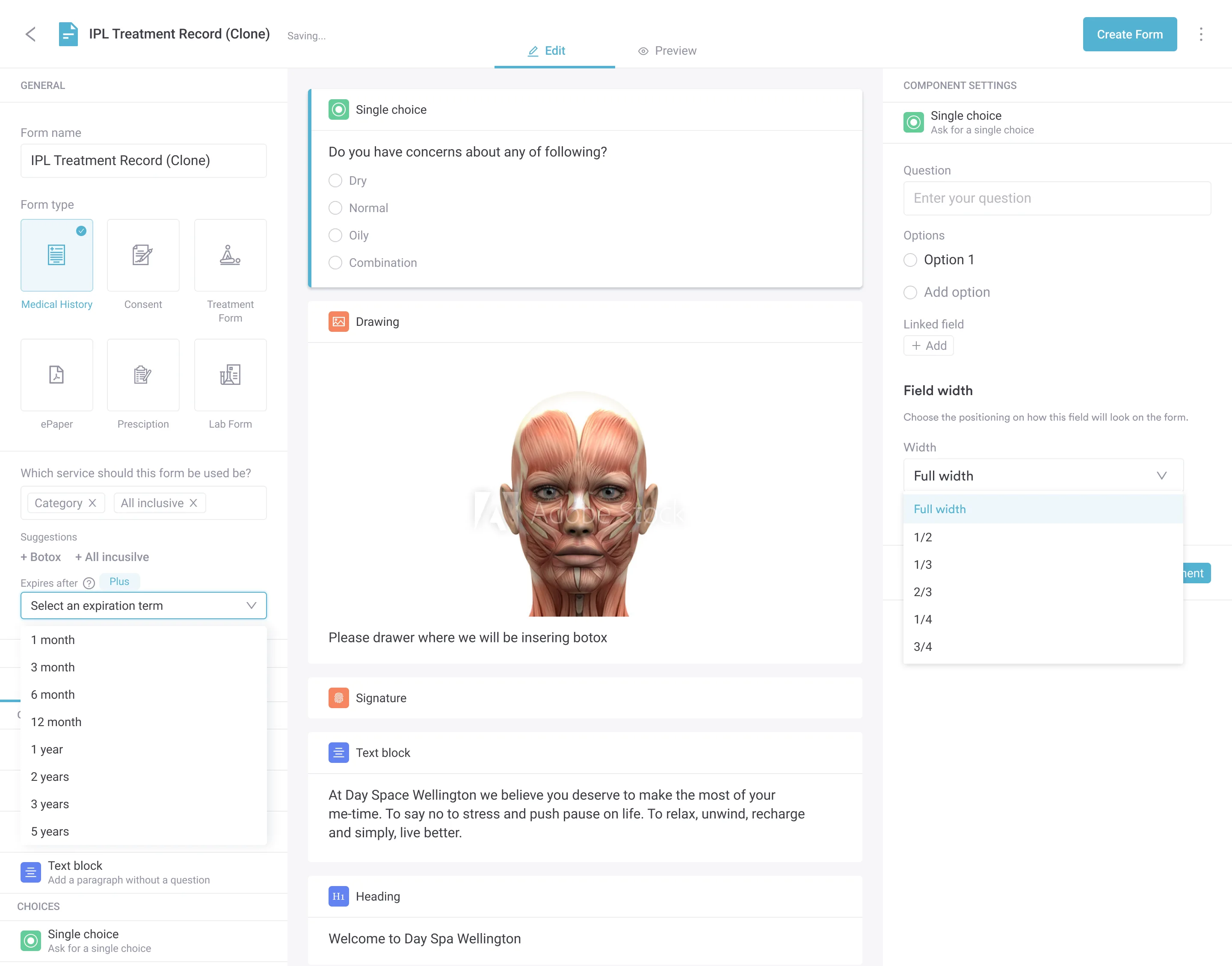
For coders managing injury episodes across multiple providers, consistent clinical documentation is what keeps the record accurate at every touchpoint. Practice management software like Pabau centralizes each visit note in one patient record, so the person coding the claim can see whether the injury is still in active treatment or has moved into the follow-up phase, rather than relying on what a clinician documented weeks earlier.
Review the 7th character at every claim submission, not just the initial one. Create a follow-up visit checklist that includes: confirm injury code is still appropriate, reassess 7th character (A, D, or S), attach external cause code with matching 7th character. This three-step check eliminates the most common V00.892D denial pattern before the claim leaves the practice.
Many practices track injury follow-up visits the same way they track routine care: a note in the chart, a diagnosis code pulled from memory, and no consistent record of whether the encounter is still “active treatment” or has moved into the follow-up phase. That is exactly where coders miscode V00.892D claims — a coder defaults to the initial-encounter character because that is what they used last time, without anything in the record flagging that the treatment status has changed.
Practice management software like Pabau gives clinicians a structured visit note at every follow-up appointment, with fields that prompt for the mechanism of injury, the object involved, and whether active treatment has concluded. Because every visit note lives in one patient record, the person assigning the diagnosis code afterward can see the full sequence of encounters rather than relying on what a clinician documented weeks earlier.
The result is a chart that already answers the question a coder would otherwise have to chase down: is this patient still in active treatment, or is this the follow-up visit that calls for the subsequent-encounter character? For practices handling a steady volume of injury follow-up visits, that consistency reduces the back-and-forth between clinical and billing staff that slows down claim preparation.

Pabau’s customizable visit notes prompt clinicians to record the mechanism of injury, the object involved, and the treatment phase at every follow-up encounter, so coders have the detail they need to select the correct 7th character.

V00.892D is a narrower code than its title suggests: a single rider on a pedestrian conveyance striking something that was not moving, at the follow-up stage of care. Once that scenario is clear, most of the coding difficulty disappears — the work shifts from puzzling over which V00 subcategory applies to making sure the chart actually says what happened.
That is the part worth fixing first. A note that names the conveyance, the object struck, and the treatment phase at every visit gives a coder everything needed to choose between A, D, and S without guessing. Skip that step, and the same 7th character gets carried forward out of habit, which is where most of these claims run into trouble.
Book a demo to see how Pabau’s visit notes and clinical documentation tools help your practice capture that detail consistently, visit after visit.

Need another example of how the sequela character works? ICD-10 code S06.344S shows how a healed cerebral hemorrhage gets the S character once the injury has fully resolved.
Want to see the initial-encounter side of the same three-way split? ICD-10 code T20.79XA covers active-treatment documentation for a third-degree corrosion injury.
Coding another follow-up visit for an unspecified injury? ICD-10 code S09.399A explains the specificity requirements for billing an unspecified inner-ear injury.
ICD-10 Code V00.892D is a billable ICD-10-CM external cause code describing a pedestrian riding another type of pedestrian conveyance who sustains an injury after colliding with a stationary object — such as a wall, post, tree, curb, or parked vehicle — at a subsequent (follow-up) encounter. The code is valid for FY2026 claims and always serves as a supplementary code alongside a principal injury diagnosis.
Yes, V00.892D is a billable and specific ICD-10-CM code valid for HIPAA-covered transactions in FY2026 (effective October 1, 2025). However, coders cannot use it as a principal or standalone diagnosis code; they must sequence it after the specific injury diagnosis it supports.
No. V00.892D is an external cause code from the V00-Y99 range and can never serve as a principal or primary diagnosis. Coders must always report it secondary to a specific injury code (such as a fracture or laceration code) that identifies what the patient actually sustained.
Report V00.892D alongside the specific injury code (principal diagnosis), a place-of-occurrence code (Y92 range) if documented, and an activity code (Y93 range) when available. The 7th character of the injury code and V00.892D must match: if the fracture carries a “subsequent encounter” designation, the external cause code must also carry D. Some payers and state regulations also require an activity status code (Y99).