ICD-10 Code S42.444P: Medial epicondyle fracture, right humerus
ICD-10 Code S42.444P: full descriptor and code validity ICD-10 Code S42.444P car...

Last Updated: Oct 13, 2026
Billable Code Specific Code
V05.92XS is the billable ICD-10-CM code for pedestrian on skateboard injured in collision with railway train or railway vehicle, unspecified whether traffic or nontraffic accident, sequela.
Three details decide whether V05.92XS is the right code. Those are the conveyance, the traffic status, and the encounter type. Change any one of them and the code changes with it.
External cause codes from Chapter 20 never stand alone. The sequela condition is reported first, and V05.92XS follows it as a supplementary code.
Let Pabau's smart automation suggest the right codes, reduce claim denials, and keep your practice compliant—effortlessly.
Automate repetitive tasks and focus on what matters most—your patients.
Reduce coding errors and ensure compliance with the latest regulations.
Clean claims, fewer denials, and faster reimbursements.
Powerful insights and reporting to help your practice thrive.
HIPAA compliant SOC 2 certified GDPR-compliant Trusted by 4,000+ clinics worldwide

ICD-10 Code V05.92XS covers a pedestrian on a skateboard hit by a railway train or vehicle. The record does not document traffic or nontraffic status, and the visit treats a late effect.
V05.92XS is a valid, billable ICD-10-CM code for FY2026 claims, confirmed against the NCHS tabular list.
The XS ending marks a sequela encounter. Use it only for a late effect, never during initial or subsequent acute care.
A documented public road puts the case on V05.12XS instead, and private property or a rail yard puts it on V05.02XS.
Practice management software like Pabau validates administrative claim fields, including member ID and authorization codes, before a claim is submitted.
The table below is the at-a-glance check before a claim goes out. Every field reflects the FY2026 ICD-10-CM tabular list in the CDC ICD-10-CM web tool. For practices handling injury claims.

The long description of V05.92XS encodes four separate facts. Each one drives code selection, so changing any of them moves the coder to a different V05 code.
V05.92XS carries the 7th character S, which designates sequela, also called a late effect. It is one of three encounter-type endings in the V05.92 subcategory, and picking the wrong one triggers claim edits. The same logic governs other sequela codes such as S56.125S.
The three 7th character options for V05.92 are:
One sequela rule outranks the rest. Report the specific late-effect condition as the principal or first-listed diagnosis, then V05.92XS after it. The ICD-10-CM Official Guidelines put the external cause code second, never first.
Other external cause codes close on S for the same reason. X74.01XS reports a late effect, not an encounter where treatment is ongoing.
When a patient presents months after a railway collision with post-traumatic nerve pain or scarring, check the record for the original incident. If it confirms the skateboard mechanism but no location type, V05.92XS is correct. If a public road is documented, use V05.12XS instead.
A patient management system keeps external cause documentation consistent, which insurers and lawyers eventually ask for.
ICD-10-CM is maintained by the National Center for Health Statistics, part of the CDC. Knowing where V05.92XS sits helps a coder move to a parent or sibling code when the clinical picture changes.
The X in the 6th position is a placeholder. ICD-10-CM uses it to hold position when a code needs a 7th character but has only five of its own. That is standard across the V00-V09 codes, and the X carries no clinical meaning.
Placeholder X characters run well past the transport range. W57.XXXA carries three of them ahead of its 7th character.
V05.9 holds one code per pedestrian conveyance, all sharing the unspecified traffic status. Coders working railway cases should read the whole set, since the 5th character is what separates them. The same 7th character logic applies to injury codes elsewhere.
Only V05.90XS describes a pedestrian on foot. V05.91XS describes a pedestrian on roller-skates, and V05.92XS describes a pedestrian on a skateboard. The 5th character carries the conveyance, so short code descriptions are an easy place to slip.
The micro-mobility codes break the pattern. V05.931 and V05.938 already carry six characters, so they take no X placeholder before the 7th.
V05 carries no Includes or Excludes notes of its own. The notes that reach it sit at the V00-V09 block level. They matter when a case looks like a pedestrian collision but is not one.
Navigating to a code here starts in the Index to External Causes, not the main alphabetic index. Y65.0 is located the same way.
Accurate medical documentation forms at intake capture the vehicle type and location these notes turn on.
ICD-10-CM defines traffic and nontraffic precisely. The word unspecified in V05.92XS is not a default setting. Reaching for it when the record supports something narrower is a documentation accuracy error.
How ICD-10-CM draws the line:
Use the framework below once you know both the conveyance and the location.
Good SOAP note documentation at the first visit captures the location detail. That saves a coder from defaulting to unspecified months later at a sequela encounter.
Location is one axis of specificity. The object involved is another, and Y77.3 depends on it.
External cause codes are not mandatory nationally. The ICD-10-CM Official Guidelines require reporting only where a state mandate or a specific payer asks for it. Check local rules before assuming a claim needs one.
Secondary placement holds across the whole chapter. Y63.1 follows the condition it explains, just as V05.92XS does.
Sequela visits cluster in rehabilitation and follow-up settings. That is where physical therapy practices see the most coding errors.
Key sequela coding rules for V05.92XS:
Documentation that forces a coder onto V05.92XS usually looks the same. Emergency notes record the mechanism but not the location, police reports never reach the chart, and transfer records drop the accident circumstances.
Practices using clinical record management tools that carry injury details forward from the first visit avoid most of that. Strong HIPAA compliance habits also help when an audit targets external cause specificity.
Auditors look for a documented link between the earlier event and the condition billed now. Y83.5 rests on that link too.
The traffic and nontraffic question recurs across the V00-V99 transport range. It shows up in adjacent injury codes too.
Query providers at or near the initial encounter for accident location. One line reading occurred at public road-level crossing moves the case to V05.12XS. That code is more specific and easier to defend in an audit.
V05.92XS has been in the ICD-10-CM tabular list since the US adopted ICD-10-CM in October 2015. It is valid for FY2026 with no change to its description or classification. The risk with a stable code is specificity, not obsolescence. Coders default to it when V05.12XS or V05.02XS would be more accurate.
V05.92XS carries no Excludes notes at the code level, and neither does the V05 category. The only exclusions that reach it are the V00-V09 block notes covered above.
A sequela visit for a railway collision often lands months after the injury, in a different chart and sometimes a different practice. The coder is left reading whatever the first encounter recorded. Rehabilitation and sports medicine teams feel this most, because their caseload is almost entirely follow-up.
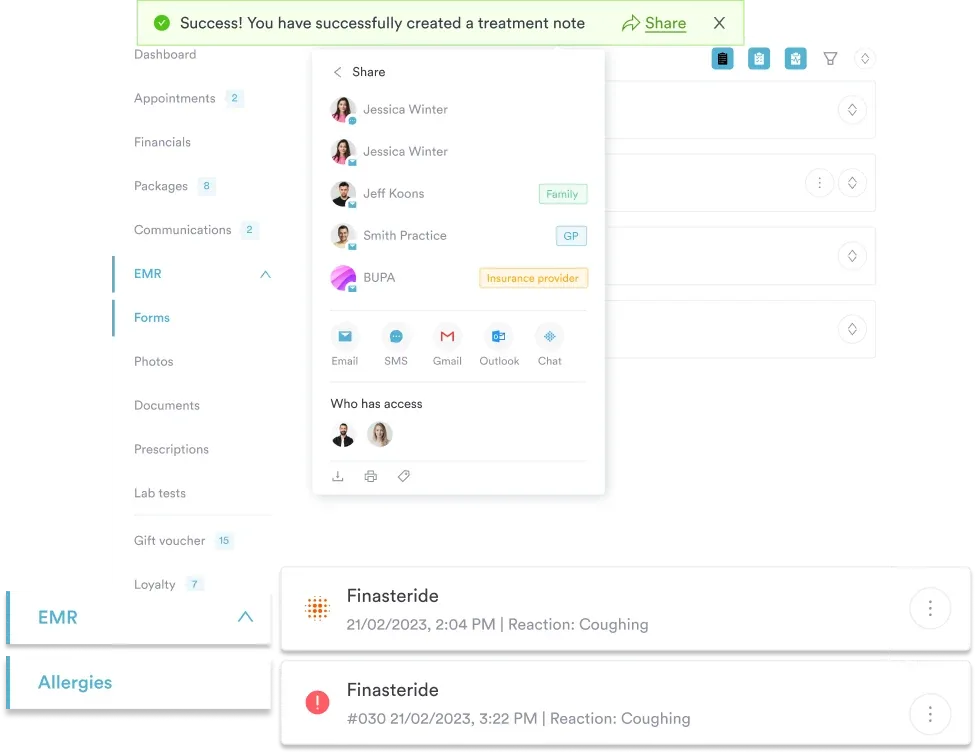
That is where practice management software changes the picture. Pabau keeps the injury mechanism, the accident location, and the encounter history on a single patient record. Intake forms capture location detail while it is still fresh, and the record travels with the patient into every follow-up.
The coder can then see what the first encounter documented, rather than guessing. Pabau also validates claim fields before submission. An injury claim will not bounce over a missing member ID or authorization code.

Pabau keeps the injury mechanism and accident location on one patient record from the first visit through long-term follow-up. Coders see what was documented, and claim fields are checked before submission.

V05.92XS is the right code only when the record genuinely cannot say where the collision happened. Reach for it by habit and you are coding a documentation shortfall, not a clinical fact.
The fix sits at the first encounter, not the sequela visit. One line about the accident location gives the coder V05.12XS or V05.02XS a year later, and an audit trail to match. Book a demo to see how Pabau keeps that detail on the record from the first visit to the last.

Working through another fracture sequela? S22.022G walks through the delayed-healing 7th character on a thoracic burst fracture.
Coding a malunion at a follow-up visit? S52.692R covers the malunion 7th character on a distal ulna fracture.
Billing a sterile needle supply? Sterile needle billing guide HCPCS code A4215 covers a sterile needle of any size billed as a supply item.
Billing a diluent or flush supply? Diluent and flush billing guide HCPCS code A4216 covers sterile water, saline, or dextrose diluent billed in 10 ml units.
Want a longer view of subsequent-encounter coding? S55.899D shows how the D character works on a forearm blood vessel injury.
V05.92XS is a billable external cause code. It covers a pedestrian on a skateboard injured in a collision with a railway train or railway vehicle. The record does not document traffic or nontraffic status, and the visit treats a sequela. It supplements the diagnosis code for the late-effect condition.
Yes. V05.92XS is a valid, billable, specific ICD-10-CM code for FY2026 submissions. It is a complete seven-character code and needs no further digits.
Yes. V05.92XS is valid for FY2026 ICD-10-CM submissions with no change to its description or classification. You can confirm it in the CDC ICD-10-CM web tool or the annual CMS update files.
Report the late-effect condition first, for example post-traumatic neuropathy or scarring. Then assign V05.92XS as the supplementary external cause code for the original mechanism. Do not use V05.92XA or V05.92XD, which cover active treatment and the healing phase.
No. Place of occurrence (Y92), activity (Y93), and external cause status (Y99) codes belong to the initial encounter only. They are not repeated at a sequela visit.