ICD-10 code S61.201A: Open wound of left index finger without nail damage
ICD-10 code S61.201A covers a left index finger wound of unstated type ICD-10 co...

Last Updated: Oct 16, 2026
Billable Code Specific Code
V51.2XXD is the billable ICD-10-CM code for person on outside of pick-up truck or van injured in collision with pedal cycle in nontraffic accident, subsequent encounter.
Let Pabau's smart automation suggest the right codes, reduce claim denials, and keep your practice compliant—effortlessly.
Automate repetitive tasks and focus on what matters most—your patients.
Reduce coding errors and ensure compliance with the latest regulations.
Clean claims, fewer denials, and faster reimbursements.
Powerful insights and reporting to help your practice thrive.
HIPAA compliant SOC 2 certified GDPR-compliant Trusted by 4,000+ clinics worldwide

V51.2XXD describes a person on the outside of a pick-up truck or van injured in a collision with a pedal cycle during a nontraffic accident, subsequent encounter.
The 7th character ‘D’ signals routine follow-up care during healing – not the first emergency visit, which uses ‘A’, and not a sequela visit, which uses ‘S’.
External cause codes like V51.2XXD are never reported as the principal diagnosis – they always accompany the injury code describing the actual harm.
Pabau’s claims management software helps practices attach and track external cause codes accurately across follow-up encounters, reducing claim errors.
ICD-10 Code V51.2XXD is a billable ICD-10-CM diagnosis code with the full description: Person on outside of pick-up truck or van injured in collision with pedal cycle in nontraffic accident, subsequent encounter. It’s valid for dates of service on or after October 1, 2015, and remains active in the current CDC/NCHS ICD-10-CM tabular list.
This code sits in the V00-Y99 external cause code block, specifically within V50-V59 (occupant of pick-up truck or van injured in transport accident). It’s not a condition code – it’s an external cause code, meaning it tells the payer and the medical record how and where the injury occurred, not what the injury is. The injury itself (fracture, laceration, sprain) must be coded separately and sequenced first.
Follow-up visits for transport-related injuries often go undercoded: the provider documents the injury, treatment continues, but the external cause code gets dropped, and the record loses detail that payers and population health analysts rely on. For practices managing trauma and injury follow-up.
The 7th character extension is one of the most frequently misapplied elements in ICD-10-CM external cause coding. Getting it wrong on a transport accident claim can trigger denial or a request for additional documentation.
| 7th Character | Code | Encounter type | When to use |
|---|---|---|---|
| A | V51.2XXA | Initial encounter | First time patient receives active treatment for the injury (emergency visit, first urgent care appointment) |
| D | V51.2XXD | Subsequent encounter | Routine care during the healing or recovery phase after active treatment has been provided |
| S | V51.2XXS | Sequela | Complications or late effects that arise as a direct result of the original injury |
A common error is applying “A” (initial encounter) to every visit related to the accident. The initial encounter designation applies only to the first encounter where active treatment is delivered. Once the patient transitions to routine follow-up – physical therapy sessions, wound checks, cast management, or medication monitoring – the 7th character switches to “D.” For coders managing high volumes of injury follow-up.
The “S” character is reserved for sequela visits, where the patient presents with a late effect directly caused by the original injury – for example, chronic joint instability developing months after the pedal cycle collision. The sequela code accompanies the code describing the sequela condition itself.
Understanding the parent category helps coders confirm they have selected the right specificity level. V51.2XXD sits within a structured hierarchy:
The “XXX” placeholder characters in position 5 and 6 are structural fillers required by ICD-10-CM when a code does not have enough specificity characters of its own to reach the 7th character position. They carry no clinical meaning but must be included exactly as shown for the code to be valid. For reference on parallel code structures in other transport accident categories, the AAPC Codify ICD-10-CM lookup allows coders to browse adjacent V-code ranges quickly.
Strong medical record keeping tools keep the incident detail behind an injury searchable months after the visit.
V51.2XXD is one of several codes within the V51 category. Selecting the correct occupant position is critical – each subcategory represents a different person’s role in the vehicle at the time of the accident.
A passenger riding inside the pick-up truck or van moves to the V51.1 subcategory, and a late-effect visit takes V51.1XXS. The S ending makes it a sequela code, so it does not replace V51.2XXD during the healing phase.
When the collision partner is a railway train rather than a pedal cycle, the case leaves V51 altogether. A person hurt while boarding or alighting a pick-up truck or van then takes V55.4XXD at the subsequent encounter.
The nontraffic designation is particularly important for payers and injury surveillance systems. A nontraffic accident occurs on premises other than a public roadway – a private driveway, a parking area, or an off-road path. The distinction must be documented by the treating provider; coders cannot infer it from the chart. When provider documentation is ambiguous, querying the provider before submitting is always the appropriate step. Understanding how to apply ICD-10 coding for adjacent situational diagnoses builds the same documentation discipline needed here. A rejected electronic claim never reaches adjudication, so it does not appear in denial reporting. Keeping a code lookup current matters more than keeping it comprehensive.
Always verify nontraffic vs. traffic status directly from provider documentation before assigning V51.2XXD. If the encounter note does not specify the accident location type, query the provider – payers can and do audit this distinction, and an incorrect traffic/nontraffic designation can trigger denial or recoupment.
Claims submitted on or after October 1, 2015 must use ICD-10-CM codes. V51.2XXD is a valid billable code under the CMS ICD-10 coding and billing framework. Several billing rules apply consistently across external cause codes in the V-block.
V51.2XXD is never reported as the principal or first-listed diagnosis. External cause codes supplement the injury or condition code – they do not replace it. The sequencing order for a subsequent encounter following a pedal cycle collision would typically be:
External cause code reporting varies by payer. Medicare and most state Medicaid programs treat external cause codes as secondary or supplementary – they are not required for claim processing in all jurisdictions. Workers’ compensation and liability payers, by contrast, frequently require external cause codes to establish accident circumstances for coverage determination. Always verify payer-specific requirements before omitting the code.
For V51.2XXD to be assigned correctly, the medical record must contain:
Practices managing high volumes of injury follow-up benefit from standardized digital intake forms that prompt providers to document accident location type and patient position at the time of injury. This removes ambiguity at the point of care rather than requiring retrospective chart queries. Reviewing patient compliance documentation workflows can further tighten up follow-up visit records.
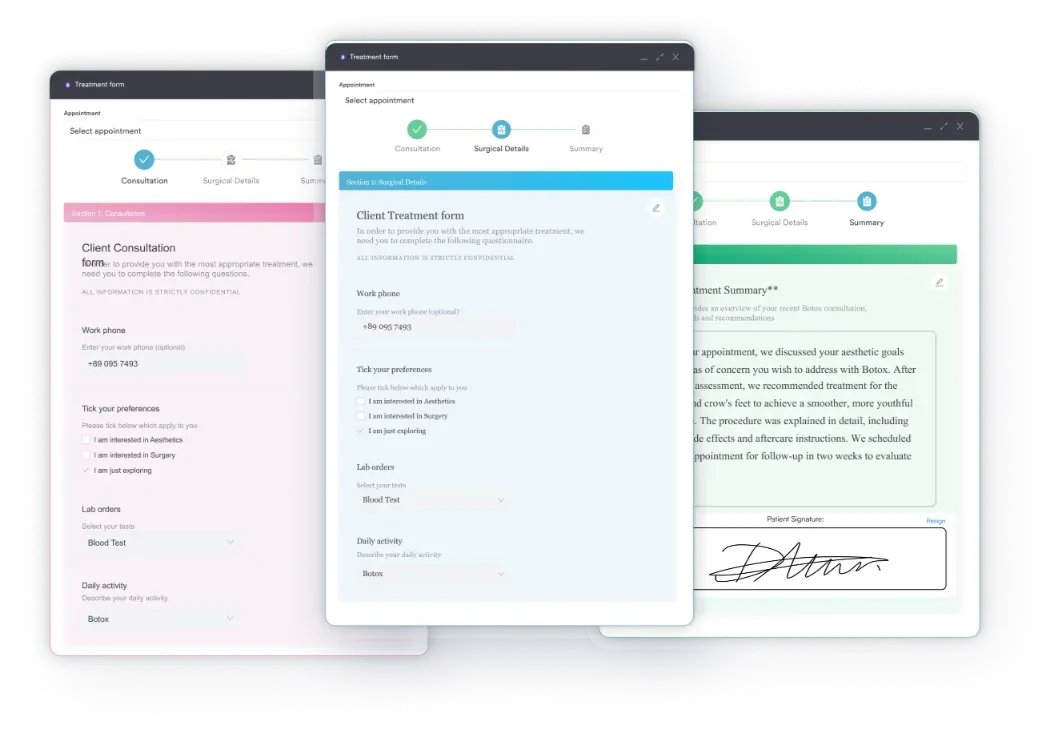

Pabau’s claims management tools help practices track external cause codes across multiple encounters, flag incomplete documentation before submission, and maintain audit-ready records for every patient visit.

Three errors account for the majority of claim issues involving V51.2XXD and similar external cause codes.
Using “A” (initial encounter) for every visit tied to the accident is the single most common mistake. Once active treatment is complete and the patient moves into the recovery phase, all subsequent visits use “D.” Using “A” repeatedly can trigger a duplicate claim review or a request for documentation that the visit was, in fact, the first encounter.
External cause codes are supplementary by design. A claim listing V51.2XXD in the first diagnosis position will typically be rejected or returned for correction. Always sequence the injury code first, then add V51.2XXD in a secondary position. Coders who regularly handle injury codes alongside other ICD-10 diagnosis code references apply this sequencing principle consistently across code categories.
Selecting V51.2XXD (nontraffic) when the record does not clearly specify the accident location is a documentation risk. If the provider note is silent on whether the accident occurred on or off a public road, the coder must query – not assume. Practices with strong physical therapy practice compliance requirements often use structured encounter templates to capture this detail at the point of care, making it available for coding without a query.
Run a quarterly audit of V-code external cause submissions to check 7th character consistency. Compare each external cause code’s encounter designation (‘A’, ‘D’, or ‘S’) against the visit date sequence in the patient record. A sudden jump back to ‘A’ after several ‘D’ encounters is a red flag for coding inconsistency or incorrect date-of-injury documentation.
External cause codes like V51.2XXD are the backbone of injury surveillance, workers’ compensation claims, and liability coverage determinations. Getting the 7th character right, sequencing the code correctly, and grounding the nontraffic designation in documented provider notes are the three actions that protect both the claim and the medical record’s accuracy.
Pabau’s claims management software gives practice teams the structure to track injury codes across multiple encounters, flag missing documentation fields before submission, and maintain the audit trail that payers and compliance reviewers expect. To see how it works for your practice, book a demo.

Billing lancets for home testing? HCPCS code A4259 covers lancets billed per box of 100 for patients testing blood glucose at home.
Billing a punctal plug procedure? HCPCS code A4263 covers the supply code for a permanent punctal plug insertion procedure.
Looking for a broader ICD-10 reference? Intraparenchymal hemorrhage ICD-10 codes walks through the I61.x codes with sequencing and documentation guidance for practices.
ICD-10 Code V51.2XXD is a billable external cause code for a person on the outside of a pick-up truck or van injured in a collision with a pedal cycle during a nontraffic accident, subsequent encounter. It is used alongside the primary injury code, never as the principal diagnosis.
All three describe the same accident type but reflect different phases of care: A for the initial active treatment visit, D for subsequent follow-up during healing, and S for sequela visits where a late effect of the original injury is being treated.
No — external cause codes are always supplementary. V51.2XXD must follow the injury code describing the actual harm; placing it first will typically result in claim rejection.
The record must confirm the patient was on the outside of the vehicle, the collision involved a pedal cycle, the accident was nontraffic (off a public roadway), and the visit is a follow-up during recovery. Any missing element warrants a provider query before assigning the code.
Not universally — Medicare and many Medicaid programs treat them as supplementary, while workers’ compensation and liability payers often require them to establish accident circumstances. Always verify the payer’s specific requirements before omitting the code.