ICD-10 code S61.201A: Open wound of left index finger without nail damage
ICD-10 code S61.201A covers a left index finger wound of unstated type ICD-10 co...

Last Updated: Oct 16, 2026
Billable Code Specific Code
W90.1XXA is the billable ICD-10-CM code for exposure to infrared radiation, initial encounter.
Most radiation-related billing errors don't start with the wrong code. They start with incomplete documentation at the point of encounter. ICD-10 Code W90.1XXA captures a specific clinical event. Getting every character right, including the 7th, determines whether the claim processes cleanly or comes back as a denial.
Let Pabau's smart automation suggest the right codes, reduce claim denials, and keep your practice compliant—effortlessly.
Automate repetitive tasks and focus on what matters most—your patients.
Reduce coding errors and ensure compliance with the latest regulations.
Clean claims, fewer denials, and faster reimbursements.
Powerful insights and reporting to help your practice thrive.
HIPAA compliant SOC 2 certified GDPR-compliant Trusted by 4,000+ clinics worldwide

ICD-10 Code W90.1XXA describes exposure to infrared radiation, initial encounter, and is a billable external cause code valid for reimbursement in the 2026 ICD-10-CM edition.
W90.1XXA is an external cause code and must always be reported alongside a primary diagnosis code, never as a standalone diagnosis.
The 7th character A denotes an initial encounter; use W90.1XXD for subsequent encounters and W90.1XXS for sequela, each requiring distinct documentation.
Practice management software like Pabau helps practices document external cause codes such as W90.1XXA accurately at the point of care, reducing coding errors.
ICD-10 Code W90.1XXA is a billable, specific ICD-10-CM diagnosis code meaning Exposure to infrared radiation, initial encounter. It is valid for submission for reimbursement purposes. It has been in effect since October 1, 2015 (FY2016), unchanged through the 2026 ICD-10-CM edition, per the CDC/NCHS ICD-10-CM web tool.
Infrared radiation sits within the nonionizing radiation spectrum. As defined by the CMS ICD-10-CM code files, the W90 category covers exposure to other nonionizing radiation, distinguishing it from ionizing radiation categories elsewhere in ICD-10-CM. W90.1XXA is an external cause code, not a principal diagnosis: it documents the cause of an injury or condition, not the condition itself. Coders sequence it alongside the burn diagnosis and, where applicable.
The table below summarizes the key attributes of W90.1XXA as recorded in the 2026 ICD-10-CM edition.
The 7th character is not cosmetic. It drives the encounter-type classification that payers use to determine whether a claim is appropriate for the date of service. Choose the wrong character and the claim may deny as a duplicate or trigger a medical necessity query.
The three valid 7th character extensions for W90.1 are:
A practical decision guide: if the treating clinician is making new clinical decisions for the exposure-related condition, use A. If the visit is routine follow-up for the same condition with no new treatment plan, use D. If the patient presents with a complication that developed after the original condition healed, use S. The same decision logic applies to other injury codes.
With software for managing patients, the circumstances behind an injury stay documented alongside its treatment.
W90.1XXA sits within the external causes of morbidity chapter, the broadest category covering events that injure patients from outside the body. The full hierarchical path is:
The “XX” placeholder characters in positions 5 and 6 are required by ICD-10-CM coding convention. They hold space for potential expansion in future editions without changing the core code logic. Coders must include both placeholder X characters to reach the mandatory 7th character position. The AAPC ICD-10-CM code lookup confirms the placeholder requirement for all W90.1 subcodes. Reviewing the code hierarchy alongside T31.52 helps coders apply the same structural logic to related burn codes.
Understanding the sibling codes prevents miscoding when a patient’s radiation exposure source differs from infrared. All W90 subcodes follow the same 7-character structure.
For practices offering laser or light-based aesthetic treatments, W90.2XXA and W90.1XXA often come up together in coding audits. Practices using laser clinic software can structure their clinical notes templates to prompt coders to select the correct radiation subcode at documentation.
EHR systems and clinical documentation platforms may display alternate descriptions for W90.1XXA. All of the following map to the same ICD-10-CM code:
Confirm the code against the official tabular list when working from EHR auto-suggestions, as approximate synonyms may not always map one-to-one with the most clinically precise code.
W90.1XXA applies when a patient presents with a condition caused by infrared radiation exposure, and the encounter is the first active-treatment visit. Common scenarios include:
In each scenario, W90.1XXA never stands alone. Per the ICD-10-CM Official Guidelines for Coding and Reporting (Section I.C.20), external cause codes are always additional/secondary codes. Using W90.1XXA as a standalone primary diagnosis will result in claim rejection. This principle is consistent across all external cause codes V00-Y99, including W36.1XXA for an aerosol can explosion.
Flag your W90.1XXA encounters for documentation review. Coders should verify that the primary diagnosis code is sequenced first, the 7th character matches the encounter type documented in the clinical note, and the clinical narrative explicitly mentions infrared radiation as the cause. Missing any one of these will trigger a claim edit.
Accurate coding for W90.1XXA relies on the clinical note capturing three specific elements. Without all three, the external cause code lacks the documentation support it needs to survive a payer audit.
POA (present on admission) status: external cause codes including W90.1XXA are generally exempt from the POA indicator requirement per CMS guidance. Verify against your facility’s current payer contracts, since individual payer policies vary. Maintaining medical office compliance requirements includes regular documentation audits for external cause code completeness. Practices can strengthen compliance by using digital intake forms that prompt patients to describe the radiation source at intake, creating a contemporaneous documentation trail. Batch submissions group many claims into one claim file, and one malformed record can hold up the batch. Accounts receivable aging shows which codes are slow to pay long before anyone calls it a denial problem.

The CMS/NCHS ICD-10-CM Official Guidelines for Coding and Reporting cover the complete rules for external cause codes. CMS and the CDC/NCHS publish an updated edition every year, alongside the code set.
Practices that use structured EHR workflows catch external cause code errors before claims are submitted, not after a denial arrives. Pabau’s compliance tools keep the clinical note and coding fields together in one record. Coders can confirm the external cause code and 7th character before the note leaves the chart. This reduces the handoff errors that cause codes to be dropped or miscoded.

When a clinician documents an infrared radiation exposure encounter in Pabau, the structured client records retain the encounter narrative alongside the associated codes. This gives coders the documentation they need to assign the correct 7th character without chasing paper charts.
For practices with high volumes of laser or light-based treatments, W90.1XXA and W90.2XXA appear regularly. Maintaining a paperless clinical documentation workflow reduces the risk of encounter-type mismatches between the note and the submitted code. The HIPAA-compliant documentation workflows built into Pabau also support the audit trail that payers expect when external cause codes appear on a claim.
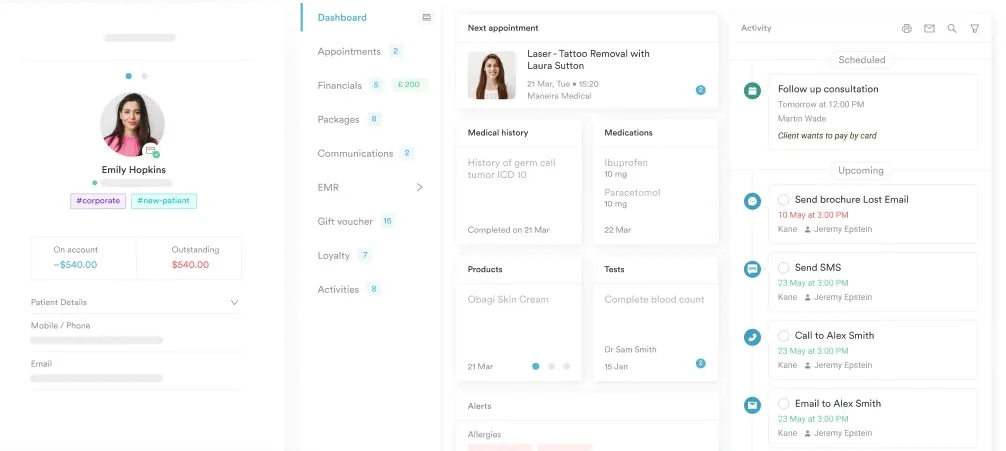

Pabau helps practices structure clinical notes and capture secondary diagnosis codes accurately at every encounter, reducing coding errors before they reach the payer.

W90.1XXA is a billable external cause code with specific sequencing and 7th character rules that directly affect claim outcomes. Three factors determine whether the code survives audit: correct encounter type, secondary-code sequencing, and clear documentation of the infrared source in the clinical note. Practices that standardize their documentation workflow for external cause codes see fewer claim edits and faster reimbursement cycles.
Pabau’s structured documentation tools help practices capture these details at the point of care. Book a demo to see how Pabau supports accurate external cause code documentation for your practice.

Coding another 7th-character extension scenario? S22.42XG shows how encounter-type characters apply to a different injury category.
Need a refresher on musculoskeletal diagnosis coding? M16.2 covers an osteoarthritis diagnosis coders often pair with orthopedic claims.
Billing a urinary leg bag? HCPCS code A4358 covers the vinyl urinary drainage bag with the tube and straps included.
Billing an ostomy faceplate claim? HCPCS code A4361 covers the ostomy faceplate, billed as one unit for each faceplate supplied.
Billing an ostomy belt to Medicare? ostomy belt billing guide This guide covers the HCPCS code, DME accessory rules, and the top reasons A4367 claims get denied.
W90.1XXA is a billable ICD-10-CM external cause code meaning “Exposure to infrared radiation, initial encounter.” It is used as a secondary code alongside a primary diagnosis to document that infrared radiation caused the patient’s condition. It is valid in the 2026 ICD-10-CM edition and has been in effect since FY2016.
Yes, W90.1XXA is a billable and specific ICD-10-CM code valid for submission for reimbursement purposes. It cannot be used as a standalone primary diagnosis. It must always accompany a primary diagnosis code that describes the condition caused by the infrared radiation exposure.
The 7th character A signifies an initial encounter, meaning the patient is receiving active treatment for the condition caused by infrared radiation exposure. Use W90.1XXD for subsequent (follow-up) encounters and W90.1XXS when coding a sequela, which is a late complication arising after the original condition has healed.
Use W90.1XXA when the clinician is initiating or continuing active treatment decisions for an infrared radiation injury. Switch to W90.1XXD for routine follow-up visits once active treatment has ended. Reserve W90.1XXS for late-effect complications, such as scarring or pigment changes, that develop after the original radiation injury has fully resolved.
External cause codes, including W90.1XXA, are generally exempt from the present on admission (POA) indicator requirement per CMS guidance. However, individual payer contracts may vary, so practices should verify POA requirements with their specific payers and facility billing teams.
W90.1XXA is most often paired with burn codes (T20-T32 for thermal burns by body region and degree) or skin reaction codes such as L55 or L59. Occupational injury codes are another common pairing. The primary diagnosis always sequences first; W90.1XXA follows as the external cause. The specific pairing depends on the clinical presentation documented by the treating clinician.