ICD-10 Code Y76.0: Diagnostic obstetric and gynecological devices
ICD-10 Code Y76.0: Definition and billable status ICD-10 Code Y76.0 is a valid, ...

Last Updated: Oct 23, 2026
Billable Code Specific Code
S90.812D is the billable ICD-10-CM code for abrasion, left foot, subsequent encounter.
ICD-10 code S90.812D captures a left foot abrasion at the subsequent encounter stage, the point where a patient returns for wound checks, dressing changes, or monitoring after the initial injury visit.
Medical coders and billers in primary care, urgent care, and wound care settings assign it whenever documentation shows the abrasion is healing rather than being treated for the first time. Getting the 7th character right determines whether the claim reflects an initial encounter (A), ongoing recovery (D), or a late complication (S).
Let Pabau's smart automation suggest the right codes, reduce claim denials, and keep your practice compliant—effortlessly.
Automate repetitive tasks and focus on what matters most—your patients.
Reduce coding errors and ensure compliance with the latest regulations.
Clean claims, fewer denials, and faster reimbursements.
Powerful insights and reporting to help your practice thrive.
HIPAA compliant SOC 2 certified GDPR-compliant Trusted by 4,000+ clinics worldwide

ICD-10 code S90.812D is a billable diagnosis code for abrasion of the left foot at a subsequent (follow-up) encounter, valid for FY2026 claims.
The 7th character D means the patient has completed active treatment and is now in the healing or recovery phase, making it distinct from S90.812A (initial encounter) and S90.812S (sequela).
Re-using the initial encounter code S90.812A for follow-up wound checks is one of the most common coding errors for superficial foot injuries, and it leads to claim denials.
Pabau’s claims management software helps practices attach the correct encounter-specific ICD-10 codes to each visit, reducing denial rates on injury follow-up claims.
Most claim denials for superficial foot injury follow-ups trace back to one mistake: the coder used the initial encounter code on the second or third visit.
ICD-10 code S90.812D is the billable diagnosis code for “Abrasion, left foot, subsequent encounter.” It sits within the S90 category (Superficial injury of ankle, foot and toes) under Chapter 19 of ICD-10-CM, which covers injury, poisoning, and certain other consequences of external causes.
The parent code S90.812 is non-billable without a 7th character. Adding “D” makes the code complete and submittable.
This reference covers the 7th character assignment rules, related codes, documentation requirements, and the billing workflow for subsequent encounter visits.
Understanding where ICD-10 code S90.812D sits in the classification tree helps coders assign it correctly and spot adjacent codes when laterality or injury type changes.
The second digit “1” in S90.81 indicates the foot (as opposed to the ankle or toes), and “2” specifies the left side. Adding the 7th character completes the clinical picture by indicating the encounter type.
The 7th character is where most ICD-10 code S90.812D errors originate. Per CMS ICD-10-CM Official Guidelines, Section I.C.19 specifies three 7th character values for traumatic injury codes. Each maps to a distinct phase of clinical care.
A common misconception is that “subsequent” means the patient’s second visit. It actually refers to the phase of care, not the visit count. A patient who has a wound check on their third visit, their seventh visit, or their twentieth visit is still in “subsequent encounter” status as long as the abrasion is actively healing.
When the condition has fully resolved but complications persist (such as a contracture scar), the code transitions to S90.812S. The same A/D/S structure applies to related external cause codes.
Document the phase of care explicitly in your clinical note, not just the injury. A note that says ‘wound healing well, dressing changed, patient returning in one week’ clearly supports the subsequent encounter designation and gives coders the context they need to assign D correctly.
Several Jane App competitors handle S-code documentation and progress notes without extra admin for your front desk.
Using the correct code is only half the work. The documentation in the patient record must justify the subsequent encounter designation. Without it, payers have grounds to downcode or deny the claim. Review clinical documentation best practices before updating your templates.
At minimum, the clinical note for a visit coded S90.812D should include all of the following elements:
Pabau’s patient records allow clinicians to pull forward injury details from the initial encounter and add encounter-specific notes at each follow-up, keeping the documentation chain intact without re-entering the baseline information each time.
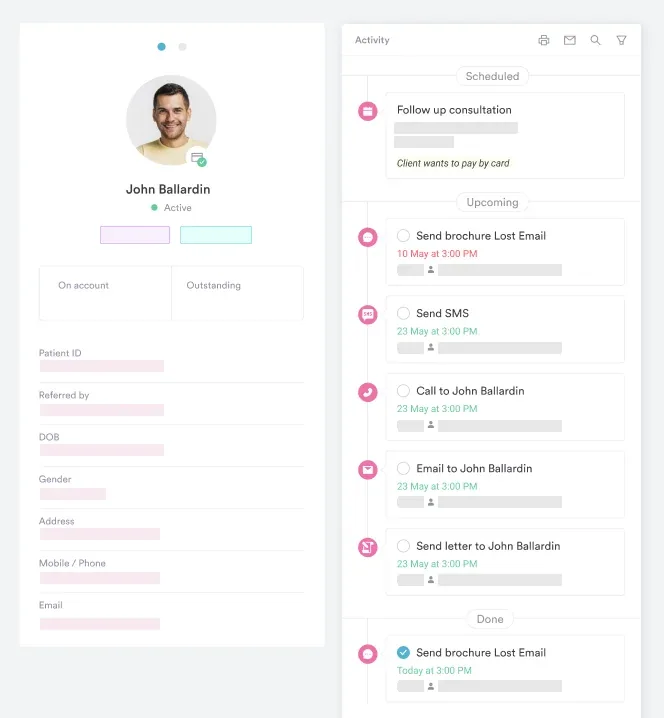
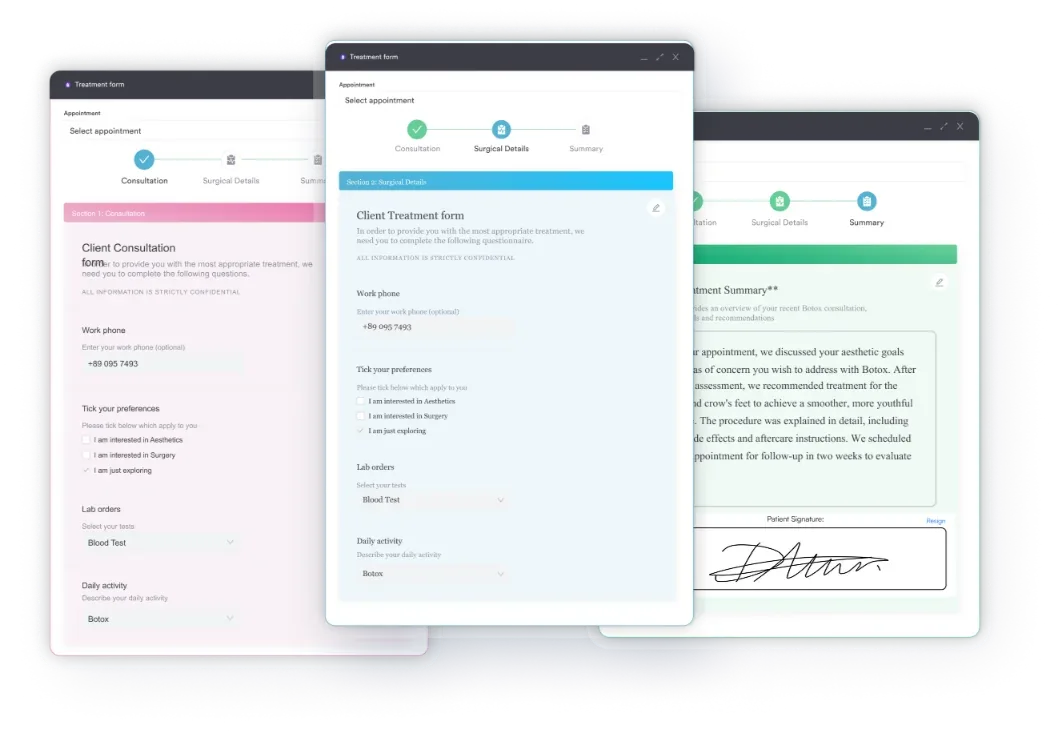
Good digital intake forms capture the mechanism of injury at first presentation, which becomes the source document coders reference when assigning external cause codes at all subsequent visits.
S90.812D rarely stands alone in a coder’s workflow. Knowing the adjacent codes reduces laterality errors.
Legacy systems still referencing ICD-9 codes should note that S90.812D maps from ICD-9-CM 917.0 (Abrasion or friction burn of foot and toe(s), without mention of infection), the foot and toe superficial-injury category in the 910-919 range.
This is an approximate General Equivalence Mapping, not a one-to-one match. Practices transitioning legacy claims data should confirm the crosswalk in the CMS GEMs archive rather than assume automatic equivalence.
Injury code sequencing follows a specific logic under ICD-10-CM Chapter 19. The same principal-versus-secondary hierarchy applies across other trauma codes.
Outpatient: S90.812D is typically the principal diagnosis when the wound check is the reason for the visit. List it first, then any external cause code.
Inpatient: The injury code may be secondary to a complication (infection, delayed healing) that becomes the reason for admission. In those cases, the complication code takes principal position and S90.812D codes as an additional diagnosis.
Per ICD-10-CM Official Guidelines, external cause codes are not mandatory but are strongly recommended for injury codes. They help payers understand mechanism of injury and support workers’ compensation and liability claims. Common external cause codes that pair with S90.812D include:
Always use the external cause code’s 7th character D when pairing with S90.812D to maintain consistency throughout the claim.

Pabau helps wound care and skin practices manage the full patient episode from initial presentation through healing, with integrated claims management that attaches the right encounter-phase ICD-10 codes at each visit.

Two billing context questions come up frequently for S90.812D in facility settings: whether POA reporting applies, and which MS-DRG the code groups to.
Injury codes in the S00-T88 chapter are generally exempt from POA reporting requirements. S90.812D, as a subsequent encounter code, reflects a condition being managed after the initial treatment episode, not a condition present at the time of hospital admission.
Facilities should verify this exemption against their payer’s current POA exempt list, as payer policies can vary from the CMS default. The CMS ICD Code Lists page includes the annually updated POA exempt code list.
For inpatient claims, S90.812D groups within MDC 09 (Diseases and disorders of the skin, subcutaneous tissue and breast), specifically MS-DRG 604 (Trauma to the skin, subcutaneous tissue and breast with MCC) or MS-DRG 605 (Trauma to the skin, subcutaneous tissue and breast without MCC), depending on the presence of a major complicating condition.
A subsequent-encounter abrasion is low acuity on its own and rarely drives an inpatient stay. DRG assignment typically only comes into play when a complication such as infection or delayed healing is also present.
For most outpatient wound care visits, MS-DRG grouping does not apply, and the visit is billed under the applicable E/M CPT code with S90.812D as the supporting diagnosis.
The ICD-10 code identifies the diagnosis; the CPT code identifies what was done. For subsequent encounter wound care visits, the two must be clinically consistent. Pabau’s claims management software validates code pairing before submission, flagging mismatches before they reach the payer.
Common CPT pairings for S90.812D visits include the following:
Use the AAPC Codify ICD-10-CM lookup to verify medical necessity crosswalks between S90.812D and these CPT codes before submitting to Medicare or commercial payers. Practices billing wound dressing supplies alongside the visit should also confirm the HCPCS code.
Check your payer’s local coverage determination (LCD) before billing debridement CPT codes alongside S90.812D. Some payers require documentation of wound size in square centimeters and evidence of non-healing before approving debridement codes for superficial abrasions. A note that says only ‘wound looks better’ will not satisfy those requirements.
Superficial foot injury codes generate a predictable set of denials. Each error below has a direct documentation or workflow fix.
A patient presents to a primary care practice with a superficial abrasion to the left foot dorsum sustained during a hiking trip. At the initial visit, the provider cleans the wound, applies a dressing, and codes the encounter S90.812A with an external cause code for activity-related injury.
The patient returns one week later for a wound check. The ankle and foot injury assessment at this follow-up confirms no structural involvement and satisfactory granulation tissue. The provider performs a dressing change and schedules the patient for discharge from wound care at the next visit.
This encounter is correctly coded S90.812D. The dressing change is billed under 97602, with S90.812D as the supporting ICD-10 diagnosis.
At the third visit, the wound is fully healed. The patient mentions the area feels tight. If a contracture or scar complication is documented, that visit transitions to S90.812S with an additional code for the sequela condition, such as L90.5 for scar conditions of skin.
If the wound is clean and resolved with no complications, no further coding under S90.812 is needed.
Accurate 7th character assignment on injury codes is one of the smallest details with the largest billing consequences. Using S90.812A when the patient is well into the healing phase, or submitting without any 7th character at all, generates denials that require rework, delay reimbursement, and erode coder credibility with payers.
Pabau’s integrated approach to patient records and billing workflows helps practices maintain the documentation trail from initial presentation through wound resolution, making it straightforward to assign the right encounter-specific ICD-10 code at every visit. To see how Pabau handles injury episode documentation and claims management in a live practice environment, book a demo. Eligibility, referral status and time thresholds all sit inside the Medicare Benefits Schedule descriptor rather than the code itself. Revenue cycle management treats coding, submission and collection as one process rather than three handoffs.

Billing a contact lens fitting? Contact lens fitting billing guide covers the prescription and fitting of corneal contact lenses for both eyes.
Billing an unlisted eye procedure? Unlisted ophthalmological service billing guide explains the code payers review individually, since it carries no fixed fee schedule.
Coding an unusual mechanism of injury? V96.11XS shows how the same external-cause and sequela framework extends to less common injury claims.
ICD-10 code S90.812D is the billable diagnosis code for “Abrasion, left foot, subsequent encounter.” It is valid for FY2026 claims and used when a patient returns for follow-up care (wound checks, dressing changes, or monitoring) after receiving initial active treatment for a left foot abrasion.
The 7th character D indicates a subsequent encounter, meaning the patient has completed active treatment and is now in the healing or recovery phase. It does not mean the second visit; it refers to the phase of care, so it may apply across many follow-up visits until the injury resolves.
S90.812A is for the initial encounter while active treatment is underway. S90.812D is for subsequent visits during the healing phase. S90.812S is for sequela encounters where a late complication (such as scarring) from the healed abrasion is now being treated. Only one 7th character applies per encounter.
Injury codes in the S00-T88 chapter, including S90.812D, are generally exempt from Present on Admission (POA) reporting. Verify against the current CMS POA exempt code list and your specific payer’s policy, as payer requirements can differ from the CMS default.
Use S90.812D when the clinical record clearly documents the left foot as the injured site. Use S90.819D (unspecified foot) only when laterality is genuinely unknown or undocumented. Defaulting to unspecified when documentation supports laterality is a coding accuracy error that auditors flag in routine reviews.
It depends on the encounter. A left foot abrasion is coded to the S90.812 family: S90.812A for the initial encounter, S90.812D for a subsequent (healing) encounter, and S90.812S for a sequela. The base code S90.812 is not billable on its own, so a 7th character must be added.