ICD-10 Code S42.444P: Medial epicondyle fracture, right humerus
ICD-10 Code S42.444P: full descriptor and code validity ICD-10 Code S42.444P car...

Last Updated: Oct 13, 2026
Billable Code Specific Code
O71.9 is the billable ICD-10-CM code for obstetric trauma, unspecified.
Let Pabau's smart automation suggest the right codes, reduce claim denials, and keep your practice compliant—effortlessly.
Automate repetitive tasks and focus on what matters most—your patients.
Reduce coding errors and ensure compliance with the latest regulations.
Clean claims, fewer denials, and faster reimbursements.
Powerful insights and reporting to help your practice thrive.
HIPAA compliant SOC 2 certified GDPR-compliant Trusted by 4,000+ clinics worldwide

ICD-10 code O71.9 is the billable diagnosis code for obstetric trauma, unspecified (Obstetric trauma NOS) within Chapter 15 of ICD-10-CM
Valid for FY2026 claim submission under HIPAA-covered transactions, effective October 1, 2025
Use O71.9 only when the clinical record documents obstetric trauma but does not specify the type; always code to the highest level of specificity available
Practice management software like Pabau supports ICD-10-CM code assignment at point of care, reducing manual transfer errors in obstetric billing workflows
ICD-10 code O71.9 designates obstetric trauma, unspecified, and is the residual code for the O71 (Other obstetric trauma) subcategory when clinical documentation records a traumatic event during labor or delivery but does not specify its exact nature. For OB/GYN practices billing labor and delivery complications, confirming billable status before claim submission is a standard first step.
The ICD-10-CM Official Guidelines for Coding and Reporting (Section I.C.15) require providers to assign obstetric diagnosis codes to the highest specificity supported by documentation. O71.9 is appropriate only when trauma is confirmed but the type cannot be identified from the medical record. The code became effective on October 1, 2025 as part of the CMS FY2026 ICD-10-CM update.
The table below summarizes the key attributes of ICD-10 code O71.9 for quick reference during claim preparation or documentation review.
The ICD-10-CM tabular list carries one official Applicable To note for this code. Coders and billers should reproduce this term exactly in documentation review to confirm O71.9 is the appropriate assignment.
NOS codes are legitimate billing entries, not shortcuts. Payers accept them when documentation genuinely lacks specificity. What triggers a denial is assigning a NOS code when a more specific option is supported by the record.
Always review the operative note, delivery summary, and attending physician documentation before finalizing the code. The CDC/NCHS ICD-10-CM web tool allows coders to search inclusion terms and applicable notes for all FY2026 codes.
Before assigning O71.9, search the delivery record and operative note for any mention of laceration depth, uterine rupture, or perineal injury. Even a single descriptive word in the chart can support a more specific O71.x code and reduce payer scrutiny.
A fertility clinic platform documents the treatment history that gives these pregnancy codes their clinical context.
Understanding where O71.9 sits in the classification tree helps coders navigate the O71 subcategory and select the correct specificity level. The hierarchy from broadest to most specific runs as follows.
O71 is a three-character parent category that groups obstetric injuries not classified elsewhere in Chapter 15. O71.9 is the final code in the O71 sequence, functioning as the “catch-all” when no specific subcategory applies.
Practices using structured patient records with encounter-level documentation fields can reduce the frequency of NOS assignments by capturing trauma type at the point of care rather than in retrospective coding.
Before assigning O71.9, review the full O71 subcategory. Each sibling code covers a specific obstetric trauma type. Assigning a sibling code when supported by documentation reduces audit risk and strengthens claim accuracy.
Pelvic organ and joint injuries (O71.5 and O71.6) come up often in practices offering pelvic health software, where structured injury documentation helps coders capture the same specificity across the whole O71 range.
Note the distinction between O71.89 (Other specified obstetric trauma) and O71.9. O71.8 itself is a non-billable parent code that requires a fourth character; O71.89 is its billable catch-all, used when the trauma is documented and identifiable but does not match any other O71.x subcategory. O71.9 applies only when the trauma type itself is unspecified in the record.
Coders frequently confuse these two; choosing incorrectly can trigger a query from the compliance team or a payer request for clarification. The AAPC Codify ICD-10-CM lookup allows quick cross-checking of sibling codes within the O71 range.
The ICD-10-CM Official Guidelines emphasize coding to the highest degree of specificity supported by documentation. O71.9 should be a last resort, not a default. When the operative note identifies a cervical laceration, the record supports O71.3 rather than the NOS code.
Also consider whether perineal laceration codes from the O70 category (O70.0-O70.9) may be more appropriate. O70.x covers perineal lacerations, which are the most common form of obstetric trauma. If the record specifies a perineal tear, O70.x applies rather than O71.9.
Coders working through labor and delivery claims also frequently encounter O76 for fetal heart rate abnormalities noted during the same encounter.
O71.9 is a billable ICD-10-CM code valid for FY2026 claim submission. It is accepted in HIPAA-covered transactions for the fiscal year effective October 1, 2025 through September 30, 2026. Individual payer policies govern reimbursement amounts; confirm coverage with each plan before submitting. The WHO ICD-10 browser provides the international reference classification context for O71.9.
Practices relying on integrated claims management software can link diagnosis codes to procedure codes at the point of encounter, reducing the risk of mismatched submissions and supporting a complete audit trail. For further guidance on maintaining HIPAA compliance in clinical software, review the applicable regulatory requirements before configuring your coding workflows.
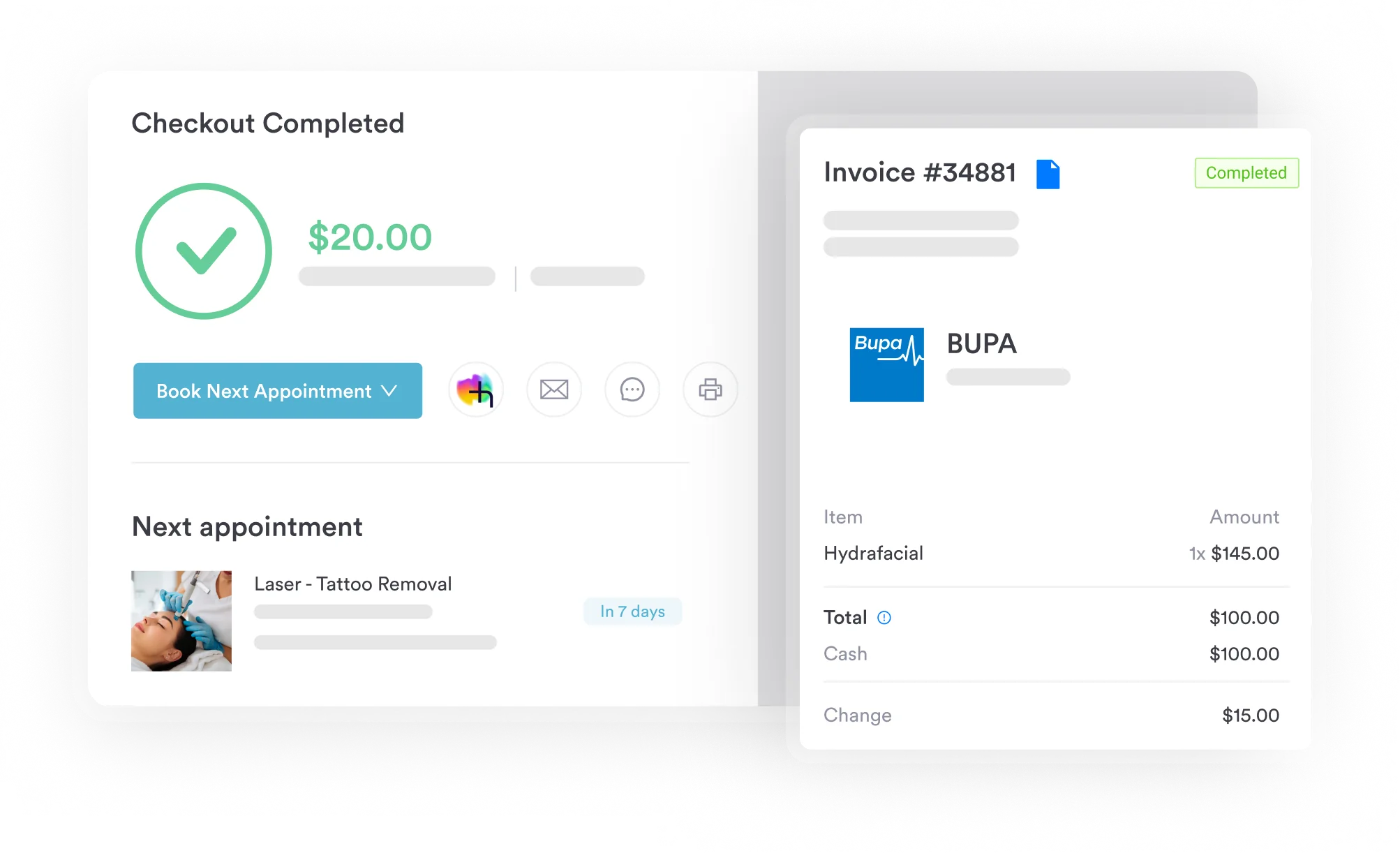

Pabau’s integrated claims management tools let OB/GYN teams assign ICD-10-CM codes at point of care, link diagnosis codes to CPT procedure codes, and submit clean claims – all within a single workflow.

Because O71.9 is an unspecified code, payers scrutinize it more closely than a specific O71.x subcode. The delivery note or operative report should establish that a traumatic injury occurred during labor or delivery and should reflect true clinical ambiguity, not a coder’s shortcut around a chart that contains enough detail to support a more specific code.
Payers most often request records when O71.9 appears on a claim with a high-level CPT code, when it is the sole diagnosis on an obstetric claim, or when a practice reports it at a noticeably higher rate than its specialty peers.
Keeping the delivery note, any provider query response, and the final diagnosis in the same encounter record helps a claim withstand that kind of review.
The most common error is treating O71.9 as a default whenever a delivery note is vague, rather than as a last resort. If a chart mentions trauma but leaves out the type, a provider query usually resolves the ambiguity and points to a more specific code.
Coders who skip the query step risk both undercoding the encounter and drawing payer attention to an unusually high volume of unspecified claims.
O71.8 is a non-billable parent code and cannot be submitted on its own; its billable catch-all is O71.89. Coders sometimes submit O71.8 directly, triggering an automatic claim rejection, or use O71.9 when the record supports O71.89 because the trauma type is named even though it does not fit a specific subcategory.
Checking whether the note identifies any trauma type at all is the fastest way to tell the two apart.
O71.9 covers obstetric trauma outside the perineum and vulva; perineal lacerations during delivery have their own dedicated category, O70 (Perineal laceration during delivery), with degree-specific subcodes. Coders who default to O71.9 for a documented perineal tear miss the more accurate O70.x code and understate the severity of the injury on the claim.
Pairing O71.9 with a repair code the documentation doesn’t support is a recurring denial trigger. For example, reporting CPT 59300 when the same physician who delivered the baby also performed the repair leads to an improper unbundling denial, since that repair is included in the global delivery code.
Confirming which provider performed the repair, and matching it against the CPT descriptor, prevents this mismatch before the claim goes out.
Obstetric trauma rarely occurs in isolation. The table below lists ICD-10-CM codes frequently assigned on the same claim as O71.9, based on standard clinical coding practice for labor and delivery complications. Always verify co-coding is clinically supported before submission.
Medical coders working in EHR-integrated billing environments can cross-reference co-occurring diagnosis codes within a single encounter note, reducing the chance of submitting incomplete claims.
ICD-10 code O71.9 supports medical necessity for obstetric trauma repair procedures. The CPT codes below represent common procedure pairings in labor and delivery billing. Pairings should reflect documented procedures; do not assign a CPT code for a procedure not performed. Frame all CPT assignments as common practice rather than guaranteed reimbursement, as individual payer policies vary.
Verify CPT pairing against your payer’s LCD/NCD policies before finalizing, since mismatched CPT-ICD pairs are a common source of claim rework for obstetric billing teams. Postpartum complications raise similar specificity questions.

When pairing O71.9 with a CPT repair code, document the specific procedure performed in the operative note. Vague entries like ‘repair performed’ without anatomical detail risk medical necessity denials. A structured note template prompting location, technique, and materials supports both billing and audit defense.
CMS and the National Center for Health Statistics (NCHS) publish the ICD-10-CM Official Guidelines for Coding and Reporting annually. Section I.C.15 governs obstetric codes. Key requirements relevant to O71.9 include:
Practices managing multi-provider OB/GYN workflows benefit from digital intake forms that prompt attending physicians to record trauma details at the point of care. Structured documentation reduces retrospective querying and supports cleaner first-pass claim submission. For teams reviewing their overall compliance posture.
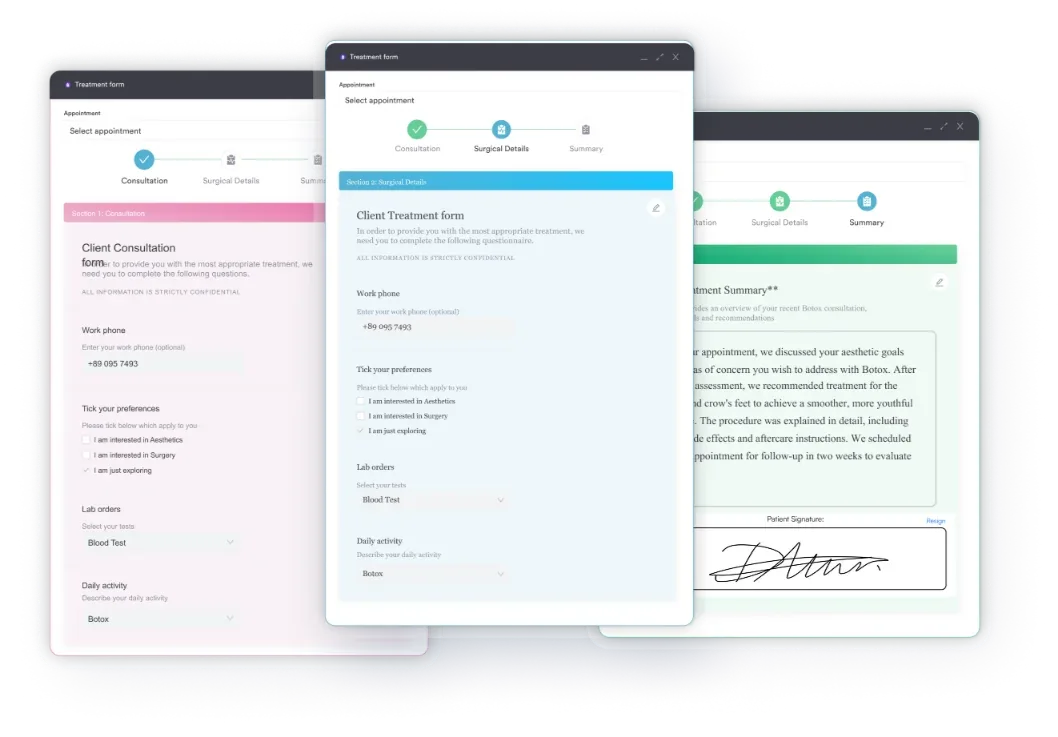
Standalone coding reference tools require manual transfer of codes into a separate billing system. Pabau integrates ICD-10-CM diagnosis code assignment directly within the clinical encounter, so OB/GYN teams can assign O71.9 and related codes without switching applications.
For OB/GYN practices evaluating purpose-built software, Pabau’s platform handles documentation, billing, and compliance in a single system. The same specificity principles apply across obstetric coding more broadly.
ICD-10 code O71.9 is a valid, billable FY2026 diagnosis code for obstetric trauma, unspecified. It belongs in a claim only when documentation confirms trauma occurred but does not specify the type. Always exhaust the O71.0-O71.7, O71.81, O71.82, and O71.89 sibling codes before defaulting to the NOS option, and consider a provider query when the record is ambiguous.
Pabau helps obstetric practices reduce NOS code frequency by embedding ICD-10-CM code selection and structured documentation into the clinical workflow. To see how it handles labor and delivery billing end to end, book a demo with the Pabau team.

Coding a colonoscopy follow-up visit? personal history of colon polyps code explains why this code replaces the polyp diagnosis once the polyp has been removed.
Coding a related musculoskeletal complication from delivery? M71.9 covers unspecified bursopathy, relevant when O71.6 pelvic joint and ligament damage is also documented.
Looking for guidance on postpartum infectious complications? K67 covers disorders of the peritoneum in infectious diseases, a differential to rule out alongside obstetric trauma.
ICD-10 code O71.9 is the billable diagnosis code for obstetric trauma, unspecified (also documented as Obstetric trauma NOS). It belongs to the O71 (Other obstetric trauma) subcategory within Chapter 15 of ICD-10-CM and is assigned when a traumatic event during labor or delivery is confirmed but the specific type of trauma is not documented.
Yes. O71.9 is a billable, specific ICD-10-CM code valid for FY2026 claim submission under HIPAA-covered transactions, with an effective date of October 1, 2025.
O71.89 (Other specified obstetric trauma) applies when the trauma type is documented and identifiable but does not fit any specific O71.x subcategory; it’s the billable catch-all under the non-billable O71.8 parent code. O71.9 applies only when the trauma type itself is unspecified in the medical record. Choosing O71.89 over O71.9 requires that the record describe the trauma in some form.
NOS stands for “Not Otherwise Specified.” In the context of O71.9, it means obstetric trauma is documented in the clinical record but the type, mechanism, or anatomical location is not described. NOS is an official Applicable To note for O71.9 in the ICD-10-CM tabular list.
Use O71.9 only when documentation confirms trauma but provides no further detail. If the record mentions a laceration, rupture, hematoma, or pelvic organ injury, a more specific O71.x or O70.x code applies. A provider clarification query before coding often yields enough detail to avoid O71.9 altogether.
Yes. O71.9 is valid for FY2026 claim submission, effective October 1, 2025 through September 30, 2026, per the CMS annual ICD-10-CM release.
Common CPT pairings include 59300 (episiotomy or vaginal repair, by other than attending physician), 59350 (hysterorrhaphy of ruptured uterus), and 59400 (routine obstetric care with vaginal delivery, when O71.9 is a secondary diagnosis). 59300 is only reportable when a different provider than the delivering physician performs the repair. Always verify pairings against payer-specific policies and the documented procedure before submitting a claim.
The O71 category covers O71.00 through O71.9, including uterine rupture before and during labor (O71.0-O71.1), postpartum uterine inversion (O71.2), obstetric laceration of cervix (O71.3), high vaginal laceration (O71.4), injury to pelvic organs (O71.5), pelvic joint and ligament damage (O71.6), obstetric hematoma (O71.7), laceration of uterus not elsewhere classified (O71.81), other specified trauma to perineum and vulva (O71.82), other specified obstetric trauma (O71.89), and unspecified trauma (O71.9). O71.8 itself is a non-billable parent code that requires one of its fourth-character subcodes.