

ICD-10 Code S42.444P: Medial epicondyle fracture, right humerus
ICD-10 Code S42.444P: full descriptor and code validity ICD-10 Code S42.444P car...

Last Updated: Oct 13, 2026
Billable Code Specific Code
M89.9 is the billable ICD-10-CM code for disorder of bone, unspecified.
Let Pabau's smart automation suggest the right codes, reduce claim denials, and keep your practice compliant—effortlessly.
Automate repetitive tasks and focus on what matters most—your patients.
Reduce coding errors and ensure compliance with the latest regulations.
Clean claims, fewer denials, and faster reimbursements.
Powerful insights and reporting to help your practice thrive.
HIPAA compliant SOC 2 certified GDPR-compliant Trusted by 4,000+ clinics worldwide

ICD-10 code M89.9 is the billable ICD-10-CM code for disorder of bone, unspecified, valid for FY2026 from October 1, 2025.
M89.9 is the only code in the M89 category that bills at four characters, because every sibling needs a site character.
Use M89.9 only when the note documents a bone disorder without naming the type or the site.
Bone pain alone belongs with pain in limb (M79.6-) or R52, and polyarthritis, unspecified is M13.0, not M89.9.
Postprocedural (M96.-) and periprosthetic fracture (M97.-) codes carry Excludes2 notes, so they can be reported alongside M89.9.
ICD-10 Code M89.9 is the billable ICD-10-CM diagnosis code for disorder of bone, unspecified. It has been valid for reimbursement since October 1, 2025 under the FY2026 code set. Assign it when the record documents a bone disorder but the type, site, and laterality are all missing.
Character length is what settles most M89.9 decisions. M89.9 bills at four characters, while every other code in the M89 category needs a fifth character for the site. If the provider named a location, a sibling code is almost certainly the right answer.
This reference covers the classification hierarchy, the appropriate-use criteria, the excludes notes, and the documentation a payer expects. It also sets every M89 sibling against M89.9 in one table, so you can choose between them in a single pass. Verified against the FY2026 ICD-10-CM tabular list per the CDC/NCHS ICD-10-CM web tool.
M89.9 sits at the end of the M89 category as its terminal unspecified code. Reading the tree downward is the fastest way to spot a more specific alternative before you commit to the claim.
The M89 category covers bone pathology well beyond the familiar inflammatory and metabolic disorders. The same top-down check applies elsewhere in the chapter.
These provider phrasings all land on M89.9 in the ICD-10-CM alphabetic index. Recognizing them saves a query when the note uses informal language.
When a note says only “bone NOS” or “unspecified bone condition”, check the M89 siblings before you default to M89.9. The AAPC Codify ICD-10-CM lookup cross-references clinical wording against the official index entries.
A chiropractic platform connects each spinal or joint diagnosis to its treatment schedule and outcomes.
Use M89.9 only when the provider documents a bone disorder and the record names neither its type nor its site. Official ICD-10-CM guidelines require the most specific code the documentation supports. That makes M89.9 a last-resort assignment rather than a default.
Query the referring provider whenever the disorder type is clinically determinable but simply undocumented. A one-line clarification usually turns an unspecified claim into a specific one.
The guidelines are maintained jointly by CMS and NCHS. They are explicit that an unspecified code is wrong when documentation or a clarification query could produce a specific diagnosis. Site-specific codes such as M45.8 follow the same rule.
Run the full M89 subcategory list before you settle on M89.9. The options start with M89.0 algoneurodystrophy, M89.1 physeal arrest, M89.2 other disorders of bone development, and M89.3 hypertrophy of bone. Then check M89.4 other hypertrophic osteoarthropathy, M89.5 osteolysis, M89.6 osteopathy after poliomyelitis, and M89.7 major osseous defect. M89.8X covers other specified disorders of bone. Reaching M89.9 should take at least one pass through all of them.
The exclusion notes that constrain M89.9 sit at the M89 category level, so they apply to every code in the category. They decide whether a second code can ride along on the same claim.
Excludes2 means the excluded condition is not part of M89.9, so both codes may be reported together. That holds when the patient has both conditions and both are documented and treated.
For the M89 block, the Excludes2 conditions include postprocedural musculoskeletal disorders (M96.-) and periprosthetic fracture around an internal prosthetic joint (M97.-). A documented postlaminectomy deformity coded M96.3 can therefore sit on the same claim as M89.9.
Check the current FY2026 tabular list for the exact Excludes2 entries, since exclusion scope can shift between fiscal years. Complication codes outside the M chapter work the same way. A bone graft infection coded T86.832 sits alongside the bone disorder rather than replacing it. Re-audit your code-pairing rules each October.
Reporting M89.9 alongside an Excludes1 condition produces a payer edit or an outright denial. Unlike an Excludes2 pairing, an Excludes1 error cannot be cleared with a modifier. The fix is to identify the correct primary diagnosis and reassign.
Use a sibling code instead of M89.9 the moment the note names the disorder type or the anatomic site. The table below pairs each M89 code with its distinguishing feature and its billable status. The last column names the documentation trigger that should send you there.
Read the final column first. Coders searching for the ICD-10 code for bone disorder usually land on M89.9, then find the note names a type after all. M89.9 is correct only once every sibling above has been ruled out.
M89 sits inside the musculoskeletal ICD-10 chapter (M00-M99), alongside two codes that look like near-twins. The disorder of bone unspecified ICD-10 entry is M89.9. M85.9 covers bone density and structure.
All three are the modern split of a single ICD-9 code, 733.90, so a legacy crosswalk can drop you on the wrong one. Read the clinical detail rather than the mapping table when a converted code arrives from an old system.
Punctuation is not part of the code. Lookup tools and claim scrubbers index the same entry under M89 9, M899, and M89.9. Dropping the decimal point does not find a different code, and electronic claims carry it that way anyway.
A bony prominence has no single ICD-10 code, because a prominence is a physical finding rather than a diagnosis. If the provider documents bone overgrowth at a named site, hypertrophy of bone (M89.3-) is the more specific option. M89.9 stays in play only while the underlying disorder is unnamed.
M89.9 legitimately applies when the provider knows a bone disorder is present but cannot yet name which one. These are almost always encounters where the workup is still open.
One code gets mixed up with M89.9 more than any other. Polyarthritis, unspecified is M13.0, which sits in the inflammatory polyarthropathies block (M05-M14). Polyarthritis is joint inflammation across several joints, so M89.9 never substitutes for it.
Physical therapy and sports medicine practices meet these presentations weekly. Teams using a physical therapy EMR should build a documentation checklist that prompts for the bone disorder type at first assessment. That cuts the need for M89.9 at follow-up.
Payers scrutinize M89.9 harder than a specific code, so the record has to show why specificity was unavailable. The four elements below are what an auditor looks for.
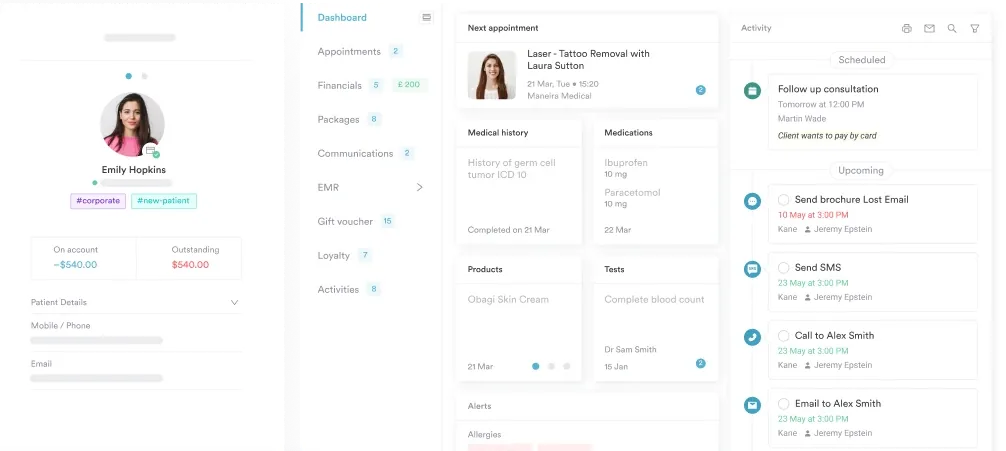
Structured client record documentation lowers the risk of an M89.9 denial by capturing the rationale in the note at the time of service.
Osteopathy practices treating undifferentiated bone pathology alongside structural complaints should document the bone disorder separately from any somatic dysfunction code (M99.-). The two are distinct and may be reported together.
Musculoskeletal audits surface the same six M89.9 mistakes over and over. Knowing them in advance saves the rework.
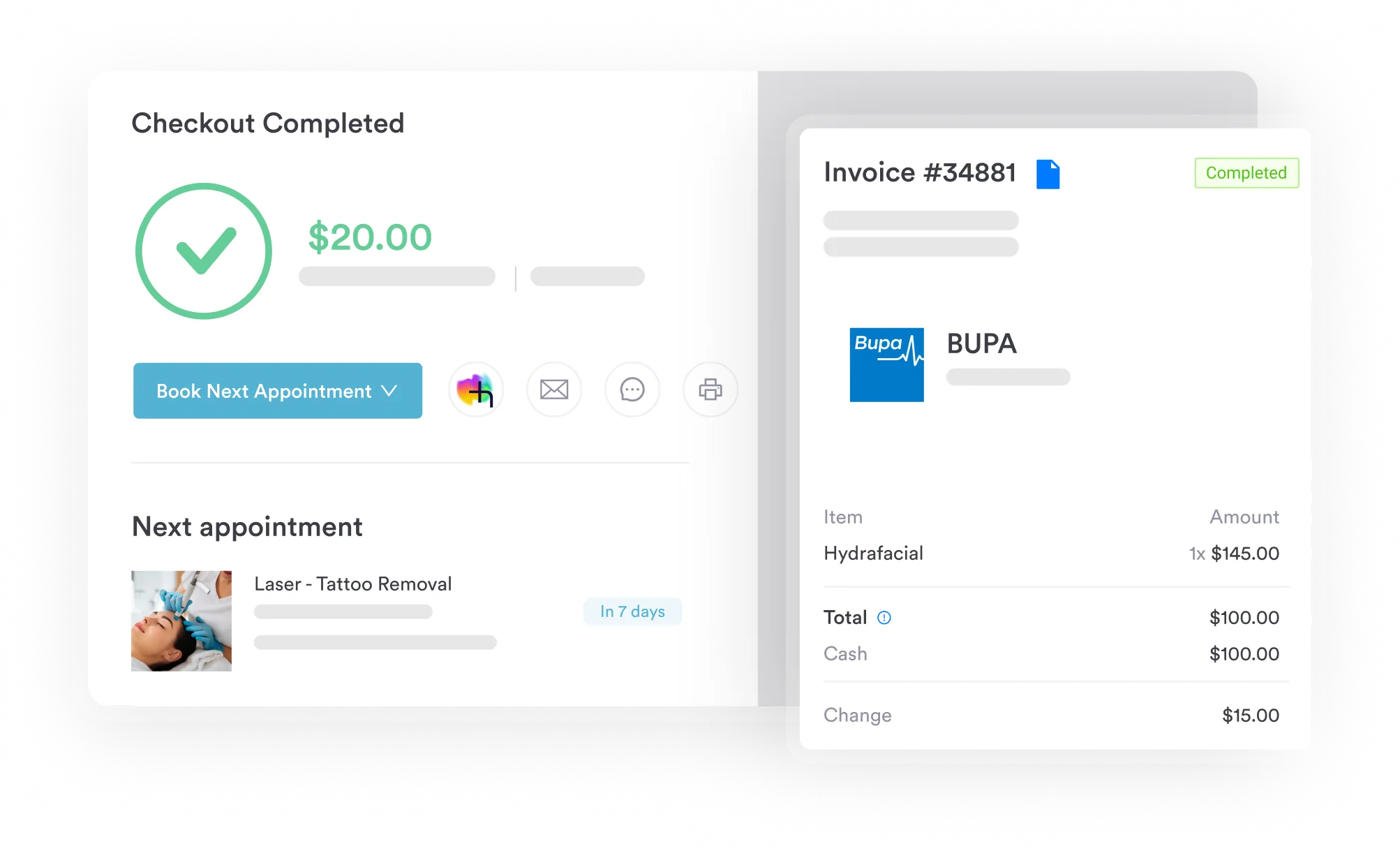
Teams using claims management software can set a follow-up task against every M89.9 encounter, so the code gets revisited when results arrive. The Check ICD-10 tool verifies code validity and exclusion notes before submission.
Set a 30-day follow-up task on every M89.9 claim. When the biopsy result, imaging report, or specialist letter lands, check whether the diagnosis can move to a specific M89 subcode. Leaving M89.9 on later claims once the type is known is one of the most common findings in musculoskeletal chart audits.
M89.9 carries no structural change in the FY2026 update cycle. The code stays active and billable from October 1, 2025, with the description and hierarchy it held in prior fiscal years. No new excludes notes, cross-references, or instructional notes were added for it.
Confirm current status against the CMS annual update files, which are published each spring ahead of the October effective date. Practices billing across several specialties can track code-level changes with practice management software that folds in the annual ICD-10-CM update.
Most M89.9 trouble starts in the note, not in the coding. The note arrives without a disorder type, the coder assigns the unspecified code, and nobody revisits it once the biopsy result lands.
Practice management software like Pabau keeps the clinical note, the diagnosis code, and the claim on one patient record. Note templates can prompt for the disorder type, the site, and the laterality while the patient is still in the room. When a result comes back weeks later, the coder is reading the same record the clinician wrote in.
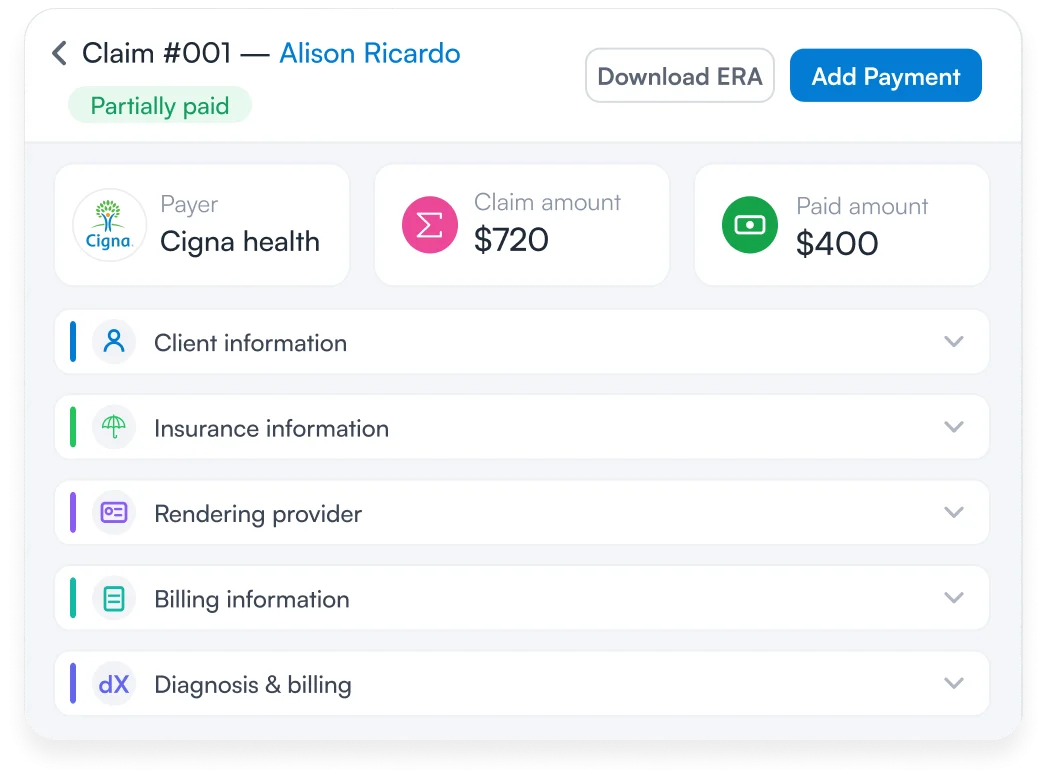
The outcome is fewer M89.9 claims leaving the practice when a specific M89 subcode was available all along. Digital intake forms collect prior bone diagnoses and imaging status before the appointment, so your coder starts with more than a single referral line.

Pabau ties every claim to the clinical note behind it, so an unspecified code like M89.9 is easy to find and correct once results arrive. Musculoskeletal and orthopedic teams spend less time reworking denials.

M89.9 earns its place when the documentation genuinely stops short of a type or a site. The risk is habit. Coders reach for it because a query feels inconvenient, then leave it on the claim after the answer arrives.
The check that prevents most of this takes seconds. Ask whether the note names a site, because a site means a five-character sibling exists and M89.9 no longer applies.
Pabau keeps every submission and its clinical note on one record, so an M89.9 claim is easy to find and correct. Book a demo to see how it fits your musculoskeletal billing workflow.

Need the seventh-character rules for a fracture code? S52.131B shows how encounter type and healing status change the code you submit.
Billing a biopsy while pathology is still pending? CPT code 20200 covers the documentation and modifier rules for a superficial muscle biopsy.
Coding injections alongside a bone diagnosis? CPT code 20551 sets out the units, modifiers, and payer rates for tendon origin injections.
Coding a healed ring finger sprain? ring finger sprain sequela S63.615S identifies a sprain of the left ring finger where the current encounter treats a late effect.
Coding a follow-up index finger sprain? index finger sprain follow-up S63.631D covers a follow-up visit for a sprain of the interphalangeal joint of the left index finger.
M89.9 is the ICD-10-CM diagnosis code for disorder of bone, unspecified. It is billable, and it applies when a bone disorder is documented without a named type. Named types such as algoneurodystrophy, hypertrophy, and osteolysis have their own M89 subcodes.
Yes. M89.9 is a valid billable ICD-10-CM code, effective October 1, 2025 for FY2026. It supports a reimbursement claim when the documentation justifies an unspecified bone disorder. It is also the only M89 code that bills at four characters.
Use M89.9 only when the documentation does not name the type of bone disorder. A clarification query to the provider should be your first move instead. If the note gives the type, the site, or the laterality, assign the specific M89 subcode.
The ICD-10-CM code for unspecified bone disorder is M89.9. It sits in category M89, other disorders of bone, within block M86-M90, osteopathies and chondropathies. The chapter is M00-M99, diseases of the musculoskeletal system and connective tissue.
The excludes notes for M89.9 apply at the M89 category level. Postprocedural musculoskeletal disorders (M96.-) and periprosthetic fracture around an internal prosthetic joint (M97.-) carry Excludes2 notes. Both codes may be reported together when both conditions are documented. Check the FY2026 tabular list for the complete list before you submit.
The most common error is using M89.9 for bone pain alone, which maps to pain in limb (M79.6-) or R52. Coders also apply it when a metabolic bone disease code (M80-M83) fits better. The third is leaving M89.9 in place after results confirm the disorder type.
M89.9 covers a bone disorder of unknown type, while M85.9 covers a disorder of bone density and structure. Both are unspecified codes in the same chapter. ICD-9 code 733.90 mapped to both, plus M94.9 for cartilage, so legacy crosswalks often pick the wrong one.




