ICD-10 code T87.52: Necrosis of amputation stump, left upper extremity
ICD-10 code T87.52 at a glance: Left arm, not left leg ICD-10 code T87.52 is the...

Last Updated: Oct 26, 2026
Billable Code Specific Code
S52.242J is the billable ICD-10-CM code for displaced spiral fracture of shaft of ulna, left arm, subsequent encounter for open fracture type IIIA, IIIB, or IIIC with delayed healing.
Start with the bone, because that is where secondhand references go wrong most often. The S52.2 subcategory belongs to the shaft of the ulna, and radius shaft fractures belong to S52.3. Any source that describes S52.242J as a radius fracture has the anatomy wrong.
This code is billable and valid for reimbursement submission under the current ICD-10-CM fiscal year tabular list. Verify the current status each October when CMS releases annual updates via the CMS ICD-10 codes page.
Let Pabau's smart automation suggest the right codes, reduce claim denials, and keep your practice compliant—effortlessly.
Automate repetitive tasks and focus on what matters most—your patients.
Reduce coding errors and ensure compliance with the latest regulations.
Clean claims, fewer denials, and faster reimbursements.
Powerful insights and reporting to help your practice thrive.
HIPAA compliant SOC 2 certified GDPR-compliant Trusted by 4,000+ clinics worldwide

ICD-10 code S52.242J covers a displaced spiral fracture of the shaft of the ulna, left arm. It applies at a subsequent encounter for an open fracture type IIIA, IIIB, or IIIC with delayed healing.
The bone is the ulna, not the radius. S52.2 is the ulna shaft block, while radius shaft fractures sit in S52.3, so the displaced spiral left radius equivalent is S52.342.
The 7th character J pairs a severe open wound with slow healing. Nonunion of the same injury takes character N, and a type I or II wound takes character H.
Documentation has to carry four facts: bone and side, spiral pattern with displacement, Gustilo-Anderson wound type, and healing status at this visit.
Practice management software like Pabau captures the diagnosis code and pairs it with the CPT procedure code at the point of billing. Claims then leave with matching detail.
The table below provides the structured quick-reference data coders and billers need before submitting a claim with ICD-10 code S52.242J.
Each character in the ICD-10-CM alphanumeric string carries a specific clinical meaning. Read S52.242J from left to right and the full clinical picture emerges.
The sixth position does double duty here, which is easy to miss. It fixes both the side and the displacement, so a nondisplaced spiral fracture of the left ulna shaft is S52.245, not S52.242. Reading that digit as laterality alone is a common source of error.
The decimal point is a formatting convention, not a clinical character. The code is always written S52.242J in documentation, but payers accept the string without the decimal in electronic claim formats. When in doubt, follow your clearinghouse’s formatting requirements.
The 7th character is where most fracture coding errors occur. It has to match three things at once. Those are the episode of care, the open wound grade, and the healing status recorded at that visit.
Character J signals all three. The patient is past active treatment. The original wound was graded Gustilo-Anderson type IIIA, IIIB, or IIIC. The fracture is also uniting more slowly than expected. Change any one of those facts and the character changes with it.
Forearm fracture codes carry a 16-character extension set. The table below shows every valid option for S52.242 and what each one asserts about the encounter.
Delayed healing (J) vs. nonunion (N): these are separate clinical findings, and the difference is time-dependent. Delayed healing means union is still expected but is running behind the normal timeline for that bone.
Nonunion means the healing process has stopped and will not complete without intervention. Other ulna shaft codes carry that finding in their own 7th character. The treating clinician has to state which one applies.
Delayed healing (J) vs. malunion (R): malunion means the fracture has united, but in an abnormal position. It is a positional finding rather than a timing one, so a note describing angulation or rotational deformity after union points to R, not J.
Sequela (S) vs. subsequent encounter (J): a subsequent encounter covers ongoing active or monitoring care for the fracture itself. Sequela applies when the patient presents with a condition that follows a healed fracture, such as post-traumatic stiffness. Do not use S while the fracture is still the primary clinical concern.
Clinics tracking fracture and sprain recovery in Jane often start comparing Jane App alternatives as caseloads grow.
The Gustilo-Anderson classification is the standard reference for grading open fractures. ICD-10-CM maps directly to it when assigning 7th characters, splitting the extensions into a type I or II group and a type III group. Getting the grade wrong creates a mismatch with the operative note, which triggers medical necessity review.
S52.242J applies only to type IIIA, IIIB, and IIIC wounds. If the record documents a type I or type II wound with delayed healing, the correct 7th character is H instead. Using J for a type I or II injury overstates the severity of the original trauma, and payers do check that against the operative report.
The type III grade also explains why delayed healing is common in these patients. High-energy wounds strip periosteum and disrupt the blood supply around the fracture, so union takes longer even when fixation is sound.
A spiral fracture of the ulnar shaft is caused by a twisting force through the forearm rather than a straight blow. Falls with the arm trapped or rotating, machinery injuries, and contact sports collisions all produce this pattern. In sports medicine practice, it usually follows a fall onto an outstretched, rotating arm.
Displacement means the fracture ends have moved out of anatomical alignment. Combined with a type III open wound, that almost always means the patient was treated surgically at the initial encounter. By the time S52.242J applies, the patient has been in care for weeks or months.
Characteristic findings at a delayed healing encounter include:
The ulna carries less axial load than the radius, but it governs forearm rotation and stabilizes the distal radioulnar joint. Slow union in the ulnar shaft therefore shows up as lost rotation and weak grip rather than pain on weight bearing.
S52.242J sits four levels down the tabular list. The chain runs S52 for fracture of forearm, then S52.2 for the ulna shaft. From there it narrows to S52.24 for the spiral pattern, then S52.242 for displaced and left. Only the seven-character version is billable.
Every code in this table needs a 7th character before it can go on a claim. The unspecified-arm options exist for records that genuinely lack laterality, and payers treat frequent use of them as a documentation problem.
Fractures at either end of the ulna fall outside this chain. An olecranon fracture takes a code in the S52.0 block.
The pattern itself sets the subcategory. An oblique fracture line on the same left ulna shaft moves the claim to S52.23 instead. At a later visit, with a type I or II open wound healing normally, that displaced fracture takes S52.232E.
The ICD-10-CM official guidelines (Section I.C.19.c) tie the 7th character to the episode of care. The severity of the original injury does not change it.
A patient first treated elsewhere, now presenting to your practice for ongoing management, still receives a subsequent encounter character. Active treatment ended when that first phase of care ended.
Key documentation requirements to support S52.242J:
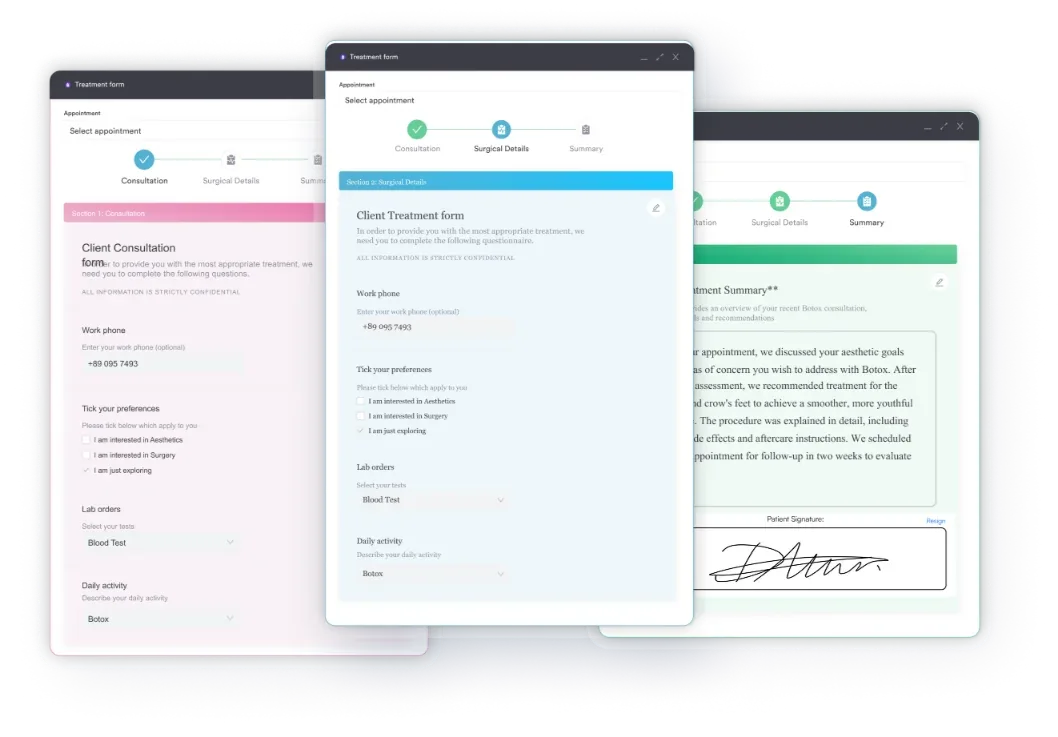
Payers may request supporting documentation if this code appears on a claim without a corresponding operative note or imaging order. Capturing these details in digital patient intake forms and structured clinical notes at each visit reduces audit exposure.
Record the Gustilo-Anderson type at every subsequent encounter, not just the initial visit. Auditors reviewing a type III claim look for that grade repeated consistently across the record. One follow-up note that omits it can push the claim toward an unspecified open fracture code and a medical review.
S52.242J is one code in a large family. The table below covers the encounter variants coders switch between as care progresses, plus the two neighbors most often confused with it. For a searchable reference, the AAPC Codify ICD-10-CM lookup is a reliable commercial tool.
Both forearm bones are often broken together in high-energy trauma. When that happens, report the ulna code and the radius code separately, each with its own 7th character. A single forearm code does not exist for that scenario.
Five mistakes account for most denials on this code. Each one is easy to catch during a pre-submission check.
S52.242J appears on claims for subsequent-encounter management of an open ulnar shaft fracture that is healing slowly. Every CPT code paired with it should describe work on the ulna or the forearm, not the wrist or the carpal bones. Payers check medical necessity alignment between diagnosis and procedure, so the selected CPT has to reflect what happened at the visit. Adjustment and remark codes on the ERA separate a contractual write-off from a genuine denial.
Using Pabau’s claims management software helps practices capture both the diagnosis and the procedure code consistently at the point of documentation.
Two families of CPT codes are commonly attached to this diagnosis in error. Wrist and carpal procedures such as 25628, open treatment of a carpal scaphoid fracture, describe a different bone entirely. Nonunion repair codes 25400 and 25405 belong with S52.242N. They treat a fracture that has stopped healing rather than one that is still healing slowly.
CPT pairings are not prescriptive. Local Coverage Determination and National Coverage Determination policies govern which procedures Medicare and Medicaid reimburse for a given diagnosis. Always verify payer-specific policies before submitting.
Physical and occupational therapists treating a slow-healing ulnar shaft fracture bill with subsequent encounter codes throughout the course of care. The distinction that matters most in physical therapy practice management is the encounter type. A visit for the fracture itself takes character J, while a sequela visit takes character S.
Use S52.242J when:
Switch to sequela (S52.242S) when:
Watch for a mid-course character change too. Once the physician documents that healing has stopped, the code moves from J to N. Update therapy claims from the next date of service.
Medicare Part B and most commercial payers accept subsequent encounter fracture codes as primary diagnoses for outpatient rehabilitation claims. The record has to support ongoing active treatment. Some payers require a physician’s order or care plan renewal after 30 days.
Habilitation services differ from this rehabilitation work, since habilitation builds skills a patient never had. State Medicaid waiver programs bill those hours under HCPCS code T2013. That code has no national rate and needs a current waiver authorization number on the claim.
Practices handling high volumes of post-fracture rehab should review the physical therapy clinic requirements in their state. That keeps billing aligned with payer expectations and scope of practice rules.
A code like S52.242J depends on four facts that live in four different places. The bone and side sit in the radiology report. The wound grade sits in the original operative note. The healing status sits in today’s assessment, and the procedure sits in the visit record. Reassembling those at billing time is where detail gets lost.
Practice management software like Pabau keeps them together instead. Structured clinical note templates prompt for wound type, laterality, and healing status at every fracture follow-up. The same detail gets recorded the same way each visit. The diagnosis code stays attached to the encounter it came from.
Claims then draw from that record rather than from memory. Coders see the diagnosis and the procedure side by side before submission. That is where a wrist CPT code paired with an ulna diagnosis becomes obvious. Practices catch the mismatch before the payer does, so fewer claims come back for review.

Pabau gives orthopedic and rehabilitation practices one place to document visits and capture ICD-10 diagnosis codes. You can pair them with CPT procedure codes before claims go out, so you see fewer coding errors and fewer denials.

S52.242J leaves no room for approximation. The bone is the ulna and the side is the left arm. The pattern is a displaced spiral fracture of the shaft. The wound was graded type IIIA, IIIB, or IIIC, and the fracture is healing slowly rather than failing to heal. Change any one of those and a different code applies.
Practices that record encounter type, bone, wound grade, laterality, and healing status at every visit avoid most of these denials without extra effort. Pabau’s practice management software supports structured clinical notes and diagnosis code entry in one workflow.
The documentation that defends the billing is built into the visit. To see how it works in a fracture care or rehabilitation practice, book a demo.

Coding another ulnar shaft fracture? ICD-10 code S52.253K covers the displaced comminuted pattern with malunion, and walks through the same 7th character logic.
Working on the radius side of the forearm? ICD-10 code S52.131B sets out how an open radial neck fracture is documented at the initial encounter.
Reporting the wound rather than the bone? ICD-10 code S51.801S explains when a forearm open wound is coded as a sequela in its own right.
Billing surgery for a stalled union? CPT code 20902 breaks down bone graft reporting, which often follows a delayed healing diagnosis.
Looking at noninvasive bone healing adjuncts? CPT code 20979 covers low intensity ultrasound stimulation and how payers assess it.
ICD-10 code S52.242J is a billable diagnosis code for a displaced spiral fracture of the shaft of the ulna, left arm. It applies at a subsequent encounter for an open fracture type IIIA, IIIB, or IIIC with delayed healing. Each character carries a specific detail. The S52 category is the forearm, the fourth character is the ulna shaft, and the fifth is the spiral pattern. The sixth marks displacement on the left side, and J marks a severe open wound that is uniting slowly.
It is an ulna fracture. The S52.2 subcategory covers fractures of the shaft of the ulna, while fractures of the radius shaft sit in S52.3. The displaced spiral left radius equivalent of this code is S52.342, so any reference that describes S52.242J as a radius fracture has the bone wrong.
The 7th character J designates a subsequent encounter for an open fracture type IIIA, IIIB, or IIIC with delayed healing. It asserts three things at once. The patient is past the initial active treatment phase. The original wound was graded Gustilo-Anderson type III, and the fracture is uniting more slowly than expected. It is distinct from H (open type I or II with delayed healing), G (closed with delayed healing), and N (open type III with nonunion).
Delayed healing means union is still expected but is running behind the normal timeline for that bone. Nonunion means the healing process has stopped and will not complete without intervention. Malunion means the fracture has united, but in an abnormal position. For an open type III ulnar shaft fracture, those three findings map to the 7th characters J, N, and R.
The parent code is S52.242, a displaced spiral fracture of the shaft of the ulna, left arm. It does not specify encounter type or healing status. S52.242 is not billable on its own, because a valid 7th character has to be appended first. It sits under S52.24, spiral fracture of shaft of ulna. That in turn sits under S52.2 and the S52 forearm category in Chapter 19.
Pair it with procedures on the ulna or the forearm. Use 25545 for open treatment of an ulnar shaft fracture with internal fixation. Use 25574 or 25575 when both forearm bones are treated. Other common pairings are 20974 for noninvasive bone growth stimulation, 73090 for a two-view forearm X-ray, and 97110 for therapeutic exercise. Carpal and wrist procedures such as 25628 do not belong with this diagnosis. The nonunion repair codes 25400 and 25405 belong with S52.242N.
Yes. Medicare Part B and most commercial payers accept subsequent encounter fracture codes as primary diagnoses for outpatient rehabilitation claims. The record has to show that therapy relates directly to active management of the fracture. The referral should reference the ulnar shaft fracture, and the therapy notes should tie treatment goals to the delayed healing finding. Some payers require a care plan renewal after 30 days.