ICD-10 Code S42.444P: Medial epicondyle fracture, right humerus
ICD-10 Code S42.444P: full descriptor and code validity ICD-10 Code S42.444P car...

Last Updated: Oct 13, 2026
Billable Code Specific Code
I51.5 is the billable ICD-10-CM code for myocardial degeneration.
Let Pabau's smart automation suggest the right codes, reduce claim denials, and keep your practice compliant—effortlessly.
Automate repetitive tasks and focus on what matters most—your patients.
Reduce coding errors and ensure compliance with the latest regulations.
Clean claims, fewer denials, and faster reimbursements.
Powerful insights and reporting to help your practice thrive.
HIPAA compliant SOC 2 certified GDPR-compliant Trusted by 4,000+ clinics worldwide

ICD-10 code I51.5 describes myocardial degeneration, a billable and specific ICD-10-CM code valid for FY2026 (effective October 1, 2025)
I51.5 falls under the I51 category block (Other forms of heart disease, I30-I5A) and carries an Excludes1 note for myocardial degeneration due to hypertension, which is coded to I11.- instead (or I13.- with chronic kidney disease)
The legacy ICD-9-CM equivalent is code 429.1, though the ICD-10-CM version carries more specificity in documentation requirements
Pabau’s claims management software supports accurate ICD-10 code submission and audit-ready clinical documentation for cardiology practices
ICD-10 code I51.5 is a billable, specific ICD-10-CM code used to indicate a diagnosis of myocardial degeneration for reimbursement and HIPAA-covered transaction purposes. It became effective October 1, 2025 under the FY2026 ICD-10-CM update cycle, published jointly by CMS and the National Center for Health Statistics (NCHS).
Myocardial degeneration refers to degenerative changes in the muscle tissue of the heart wall (the myocardium). It is not the same as cardiomyopathy, heart failure, or ischemic disease. When physician documentation specifically describes degenerative myocardial changes without attributing them to one of those more specific conditions, I51.5 is the appropriate code.
The table below summarizes the key reference data for ICD-10 code I51.5, verified against the CDC/NCHS ICD-10-CM tool for FY2026.
Myocardial degeneration describes pathological deterioration of the heart muscle, including fatty infiltration, fibrous replacement, and cellular breakdown that impair myocardial contractility. Unlike cardiomyopathy, it’s used when the degenerative process is documented without a known etiology that would warrant a more specific code.
Coders who also work with I15.2 in chronic disease contexts will recognize a similar challenge: residual or NOS (not otherwise specified) language often ends up in I51.5 when documentation is incomplete.
The condition appears in two main clinical settings. First, as a secondary finding in elderly patients with multi-morbidity where generalized organ degeneration is noted. Second, as an incidental pathology finding during post-mortem or imaging review. In both cases, the physician must explicitly state “myocardial degeneration” or an accepted synonym in the notes for I51.5 to be supported.
Managing hypertension and heart disease long-term is exactly what GP clinic software with recalls and reviews is for.
The Tabular List’s official “Applicable To” entries for ICD-10 code I51.5 are fatty degeneration of heart or myocardium, myocardial disease, and senile degeneration of heart or myocardium. The ICD-10-CM Alphabetical Index also indexes several other clinical terms directly to I51.5. Each may appear in physician documentation and map to this code.
When any of these terms appear in the clinical notes, I51.5 is a valid coding choice, provided the Excludes1 note (below) doesn’t redirect the coder to category I11 or I13. Documenting “fatty degeneration of the heart” without further specification maps directly here.
These synonyms are one area where HIPAA compliance requirements for medical offices intersect with coding accuracy: the diagnosis code on the claim must match the documented condition.
Flag any chart where hypertension and myocardial degeneration are both documented. Per the FY2026 ICD-10-CM Official Guidelines, that combination is not coded as I51.5 alone — coders must assume a causal relationship and assign a code from category I11 (or I13 with chronic kidney disease), even if the physician has not explicitly linked the two conditions. Build a coder note into your cardiology templates to query the attending only when documentation states the conditions are unrelated.
ICD-10 code I51.5 carries one Excludes1 note that coders must check before assigning it. Understanding this note protects against claim denials and audit risk. The same principal-vs-secondary sequencing logic applies when coding I40.0, where the underlying cause must also be sequenced correctly.
I51.5 has an Excludes1 note, meaning the codes below must never be reported together with I51.5 for the same documented condition:
In plain terms: don’t use I51.5 on its own to describe myocardial degeneration that’s a manifestation of hypertension. That relationship gets captured under category I11 instead (or I13 if chronic kidney disease is also documented).
There’s a nuance coders need to apply alongside the Excludes1 note. The FY2026 ICD-10-CM Official Guidelines (Section I.C.9.a.1) direct that when a patient has both hypertension and a heart condition classified to I50.- or I51.4 through I51.9, coders should assume a causal relationship and assign a code from category I11, even without the physician stating the heart condition is “due to” hypertension.
That range covers I51.4, I51.5, I51.7, I51.81, I51.89, and I51.9, and the presumption applies the same way across all of them. It doesn’t change depending on which I51.x code is documented.
The guideline’s only additional-code instruction is to add a code from category I50 to identify the type of heart failure, when heart failure is present as a secondary diagnosis. That’s about heart-failure specificity, not a separate rule for I51.5. Once I11 (or I13, with chronic kidney disease) is assigned, I51.5 itself needs no additional code.
If the physician documents that the myocardial degeneration is unrelated to the patient’s hypertension, code I51.5 separately alongside the applicable hypertension code (I10 or a code from I15). This is consistent with the HIPAA compliance checklist principle that the most clinically accurate code takes priority.

Pabau’s claims management software helps cardiology practices submit accurate ICD-10 codes, maintain audit-ready documentation, and reduce claim denials. See how it fits your workflow.

For inpatient claims, ICD-10 code I51.5 maps to Medicare Severity Diagnosis Related Groups (MS-DRGs) that govern reimbursement under the inpatient prospective payment system. Specific DRG assignments and relative weights are updated annually by CMS. Always verify current figures against the CMS MS-DRG definitions manual for the applicable fiscal year.
I51.5 generally maps to the heart and vascular disorders MS-DRG groupings. The precise DRG assignment depends on whether a major complication or comorbidity (MCC) or complication/comorbidity (CC) is present as a secondary diagnosis. The same principal diagnosis code can produce three different DRG assignments: with MCC, with CC, or without either, each carrying a different relative weight and payment rate.
POA reporting is required for inpatient claims submitted to Medicare and Medicaid. ICD-10 code I51.5 is not on the CMS POA exempt list, meaning coders must assign a POA indicator for this code on inpatient claims. The standard POA indicators apply:
For myocardial degeneration, the “U” indicator is common when the condition is identified on imaging or pathology review conducted after admission. Accurate POA reporting for I51.5 requires the admitting physician to clarify in the notes whether the degenerative changes were present before or at the time of admission.
Practices using timestamped documentation tools see fewer POA-related denials, since the record shows exactly when a finding was noted relative to admission.

The legacy ICD-9-CM code 429.1 (Myocardial degeneration) is the predecessor to I51.5. According to the AAPC’s crosswalk resources and CMS General Equivalence Mappings (GEMs), this is a near-direct translation. However, there are scope differences coders should note:
Practices handling retrospective data analysis or appeals involving pre-2015 claims will encounter 429.1. For crosswalk verification, consult the ICD-10Data code lookup, which lists the GEM mapping for I51.5 directly. Practices researching other codes in the same I30-I5A block.
The I51 category covers complications and ill-defined descriptions of heart disease. Selecting the most specific code is mandatory under ICD-10-CM Official Guidelines, published by WHO as the international standard and adapted by CMS/NCHS for US reporting. The table below shows the full I51 block to help coders choose correctly.
I51.9 (Heart disease, unspecified) is a common default when documentation is insufficient. Coders should query back to the attending before using I51.9 when more specific language exists in the notes. I51.5 is preferable to I51.9 whenever the physician has documented degenerative changes, even without full etiological clarity.
The same pattern shows up in M99.9: vague documentation defaults to the least-specific catch-all code. For practices managing similar specificity challenges across multiple specialties.
Accurate assignment of ICD-10 code I51.5 depends heavily on how the physician documents the encounter. Coders cannot assign what the notes do not support. These practical documentation standards reduce queries and denial risk.
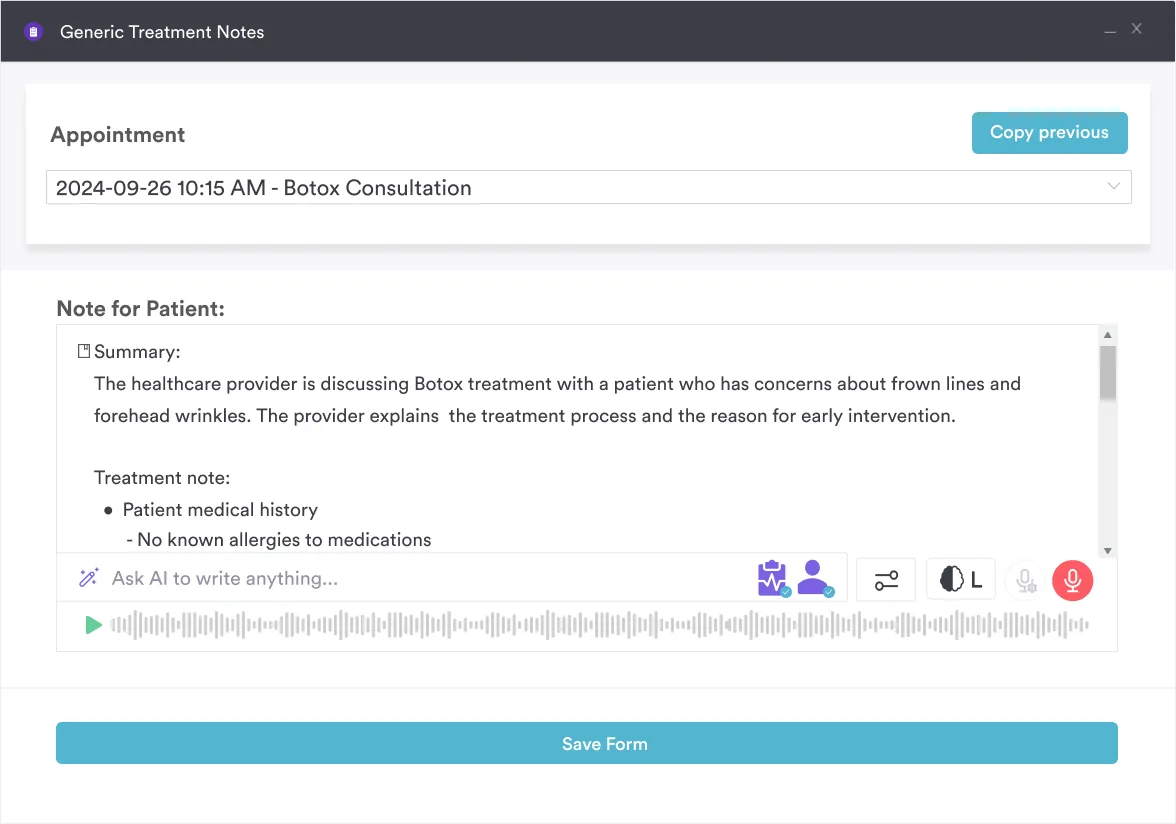
Practices using AI-assisted documentation tools can reduce the number of coder queries generated per encounter. Practice management software like Pabau builds this in: its AI-assisted clinical documentation supports structured note capture at the point of care.
This gives clinicians the specific language coders need without adding to documentation burden.
Most coding errors for codes like I51.5 trace back to documentation, not the code lookup itself. The physician uses imprecise language, the coder can’t assign the right code, and the claim either goes out wrong or triggers a query loop that delays payment.
Practice management platforms with integrated clinical documentation catch this earlier in the process. When documentation templates prompt cardiologists to specify degeneration type, etiology, and admission timing, the notes arrive at coding with the language already in place.
Standalone code-lookup tools can’t offer that integration. For practices evaluating this approach.
Pabau supports this workflow end-to-end: structured clinical notes capture the condition terminology, AI-assisted documentation reduces transcription time, and the claims management layer handles submission. This documentation-to-billing structure isn’t unique to cardiology: mental health EMR software and metabolic health EMR software apply the same approach in their own specialties.
ICD-10 code I51.5 is a straightforward billable code when the documentation supports it. The most common failure points are synonym recognition (particularly the Alphabetic Index terms like cardiomalacia and myocytolysis), the Excludes1 relationship with hypertensive heart disease (I11.-/I13.-), and missing POA indicators on inpatient claims. Getting those three right covers the majority of I51.5 coding errors. The billing cycle for one claim can run weeks, and most of that time is spent waiting on a payer. Practices still filing on paper carry this code on the CMS-1500 form, in the service lines.
Pabau’s structured clinical documentation and claims management software help cardiology and primary care practices build the documentation habits that keep I51.5 and similar diagnostic codes coding cleanly. To see how Pabau fits a cardiology or multi-specialty workflow, book a demo.

Coding an acute gastric ulcer with bleeding? ICD-10 code K25.0 guide explains the three documentation elements needed to avoid a downcoded claim.
Billing an injectable alongside a cardiology visit? J3300 walks through the HCPCS code and how it’s billed separately from the E/M visit.
Coding anesthesia for a cardiac catheterization? 01991 explains how CPT anesthesia codes are billed alongside the diagnostic ICD-10 code.
ICD-10 code I51.5 is a billable ICD-10-CM code used to report a diagnosis of myocardial degeneration, a degenerative condition of the heart muscle wall. It is valid for FY2026 HIPAA-covered transactions and applies when physician documentation specifies degenerative changes to the myocardium without attributing them to a more specific condition like cardiomyopathy or ischemic heart disease.
Yes, I51.5 is a billable and specific ICD-10-CM code effective for FY2026 (since October 1, 2025). It can be used as a principal or secondary diagnosis on HIPAA-covered claims when myocardial degeneration is documented in the clinical notes.
The ICD-9-CM predecessor to I51.5 is code 429.1 (Myocardial degeneration). The crosswalk is near-direct: ICD-9-CM 429.1 already excluded myocardial degeneration due to hypertension via a plain “Excludes” note. ICD-10-CM I51.5 formalizes that as an explicit Excludes1 note (to I11.-/I13.-) and adds requirements that did not exist under ICD-9-CM, including POA indicator reporting for inpatient claims and MCC/CC-driven MS-DRG splitting.
I51.5 carries an Excludes1 note for myocardial degeneration due to hypertension, which is coded to I11.- (Hypertensive heart disease) instead, and for myocardial degeneration due to hypertension and chronic kidney disease, coded to I13.-. Per the FY2026 ICD-10-CM Official Guidelines, when both hypertension and myocardial degeneration are documented, coders assume a causal relationship and assign category I11 (no additional I51.5 code needed) unless the physician documents the conditions are unrelated.
I51.5 maps to heart and vascular disorders MS-DRG groupings under the CMS inpatient prospective payment system. The specific DRG code and relative weight depend on whether a major complication or comorbidity (MCC) or complication/comorbidity (CC) is present as a secondary diagnosis. Verify current DRG assignments against the CMS MS-DRG Definitions Manual for the applicable fiscal year.
Physicians should use specific terminology such as “myocardial degeneration,” “fatty degeneration of the heart,” or “myocardial fatty change” in the clinical notes. Vague terms like “cardiac changes” do not cleanly map to I51.5. For inpatient cases, the notes must also indicate whether the condition was present at admission to support accurate POA indicator assignment.