

ICD-10 code S61.201A: Open wound of left index finger without nail damage
ICD-10 code S61.201A covers a left index finger wound of unstated type ICD-10 co...

Last Updated: Oct 16, 2026
Billable Code Specific Code
F73 is the billable ICD-10-CM code for profound intellectual disabilities.
Let Pabau's smart automation suggest the right codes, reduce claim denials, and keep your practice compliant—effortlessly.
Automate repetitive tasks and focus on what matters most—your patients.
Reduce coding errors and ensure compliance with the latest regulations.
Clean claims, fewer denials, and faster reimbursements.
Powerful insights and reporting to help your practice thrive.
HIPAA compliant SOC 2 certified GDPR-compliant Trusted by 4,000+ clinics worldwide

ICD-10 Code F73 is a valid, billable diagnosis code for Profound intellectual disabilities, valid for HIPAA-covered transactions.
Inclusion terms specify an IQ level below 20-25 and Profound mental subnormality as the diagnostic threshold for F73.
F73 sits within the F70-F79 Intellectual Disabilities category; coders must document adaptive behavior deficits alongside IQ criteria.
Pabau’s clinical documentation tools and claims management software help practices capture the structured records needed for accurate F73 billing.
ICD-10 Code F73 is the billable ICD-10-CM diagnosis code for Profound intellectual disabilities. It is classified under Chapter F01-F99 (Mental, Behavioral and Neurodevelopmental disorders) within the F70-F79 Intellectual Disabilities block. F73 is valid for submission on HIPAA-covered transactions and is listed as an active code in the CDC/NCHS ICD-10-CM web tool for fiscal year 2026.
As the ICD-10 code for profound intellectual disability, F73 describes individuals with significantly impaired intellectual and adaptive functioning at the most severe end of the spectrum. Practitioners using practice management software like Pabau in mental health settings encounter the F73 diagnosis code primarily in neurodevelopmental, psychiatric, and long-term care contexts.
| Field | Details |
|---|---|
| ICD-10-CM Code | F73 |
| Full Description | Profound intellectual disabilities |
| Billable Status | Yes, billable and specific |
| Valid for HIPAA transactions | Yes |
| Code System | ICD-10-CM (U.S. Clinical Modification) |
| Chapter | F01-F99 (Mental, Behavioral and Neurodevelopmental disorders) |
| Category Block | F70-F79 (Intellectual disabilities) |
| Effective Date | Active in FY2026 |
The official ICD-10-CM inclusion terms for F73 establish two synonymous descriptors that coders must recognize.
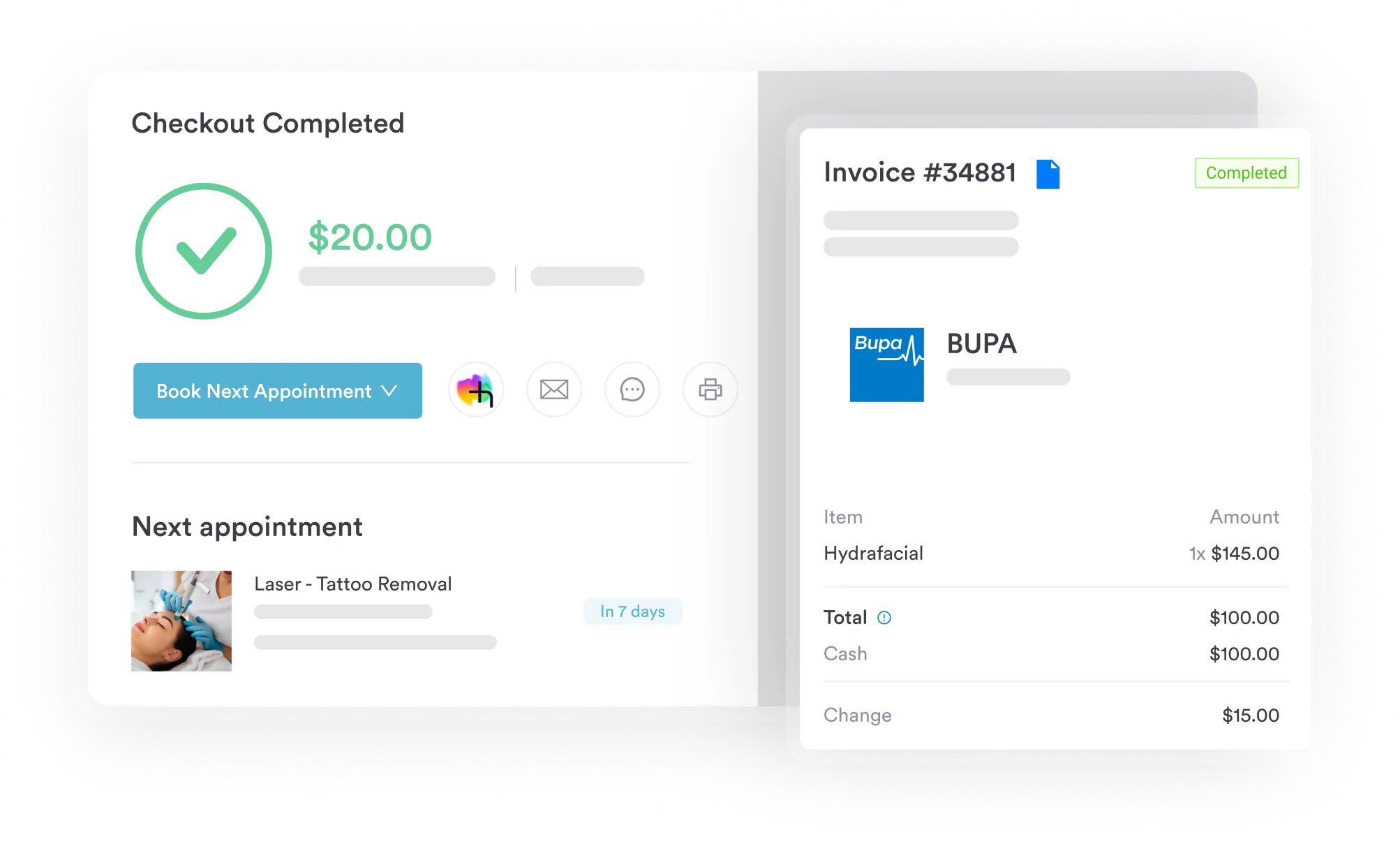
An IQ below 20-25 corresponds to an adult mental age below three years, with severe limitations in self-care, continence, communication, and mobility. These individuals typically have little or no capacity for independent living and require comprehensive, continuous support across all daily activities. This distinguishes F73 from F72 (Severe intellectual disabilities, IQ 20-25 to 35-40), where some minimal self-care capacity may be present. Missing a provider identifier or a diagnosis code sends a reimbursement claim straight back, so a reimbursement receipt lists both.
Immobility associated with this level of support need also raises the risk of skin breakdown. Pressure ulcers (ICD-10 Code L22) frequently appear as a comorbid diagnosis in long-term care documentation for F73 patients.
A critical coding point: IQ scores alone are necessary but not sufficient for F73. Current diagnostic standards, including DSM-5 criteria, require concurrent deficits in adaptive behavior. Coders should verify that the clinical record documents both the psychometric testing result and a formal assessment of adaptive functioning before assigning F73.
Terminology note: The WHO’s ICD-10 originally used the phrase “Profound mental retardation” as the code descriptor. ICD-10-CM replaced this with “Profound intellectual disabilities,” reflecting the terminology update adopted broadly since the late 2000s.
The term “mental retardation” is now considered deprecated and should not appear in clinical documentation. ICD-11 takes this a step further, reclassifying the equivalent concept under “Disorders of intellectual development.”
Document adaptive behavior findings explicitly, not just IQ scores. Reference the specific assessment tool used (such as the Vineland Adaptive Behavior Scales), the domains assessed, and the level of support required. Payers auditing F73 claims will look for this level of clinical specificity in the record.
F73 is one of the six severity-level intellectual disability ICD-10 codes in the F70-F79 block. Understanding the full range helps coders select the correct specificity level and avoid upcoding or downcoding errors.
| Code | Description | IQ Range |
|---|---|---|
| F70 | Mild intellectual disabilities | 50-55 to approximately 70 |
| F71 | Moderate intellectual disabilities | 35-40 to 50-55 |
| F72 | Severe intellectual disabilities | 20-25 to 35-40 |
| F73 | Profound intellectual disabilities | Below 20-25 |
| F78 | Other intellectual disabilities | Variable or unspecified |
| F78.A1 | SYNGAP1-related intellectual disability | N/A — defined by genetic etiology, not IQ range alone |
| F78.A9 | Other genetic related intellectual disability | N/A — defined by genetic etiology, not IQ range alone |
| F79 | Unspecified intellectual disability | Use only when severity cannot be determined |
F78.A1 (SYNGAP1-related intellectual disability) is notable as a relatively new addition reflecting genetic specificity in ICD-10-CM coding. When a known genetic cause for intellectual disability is confirmed through testing, F78.A1 should be coded in addition to the appropriate severity code (F70–F73). The two codes are not mutually exclusive; F78.A1 captures the etiology while F73 captures the severity level.
Coders working on autism spectrum disorder coding will often encounter F73 as a comorbid diagnosis. Intellectual disability and autism co-occur frequently; both diagnoses should be coded when documented and clinically established.
Coding F73 without adequate clinical documentation is the fastest path to a claim denial or a post-payment audit finding. The CMS ICD-10 coding guidelines require that the diagnosis assigned reflect the provider’s documented assessment of the patient’s condition.
For F73 specifically, documentation should capture the following elements before the code is assigned.
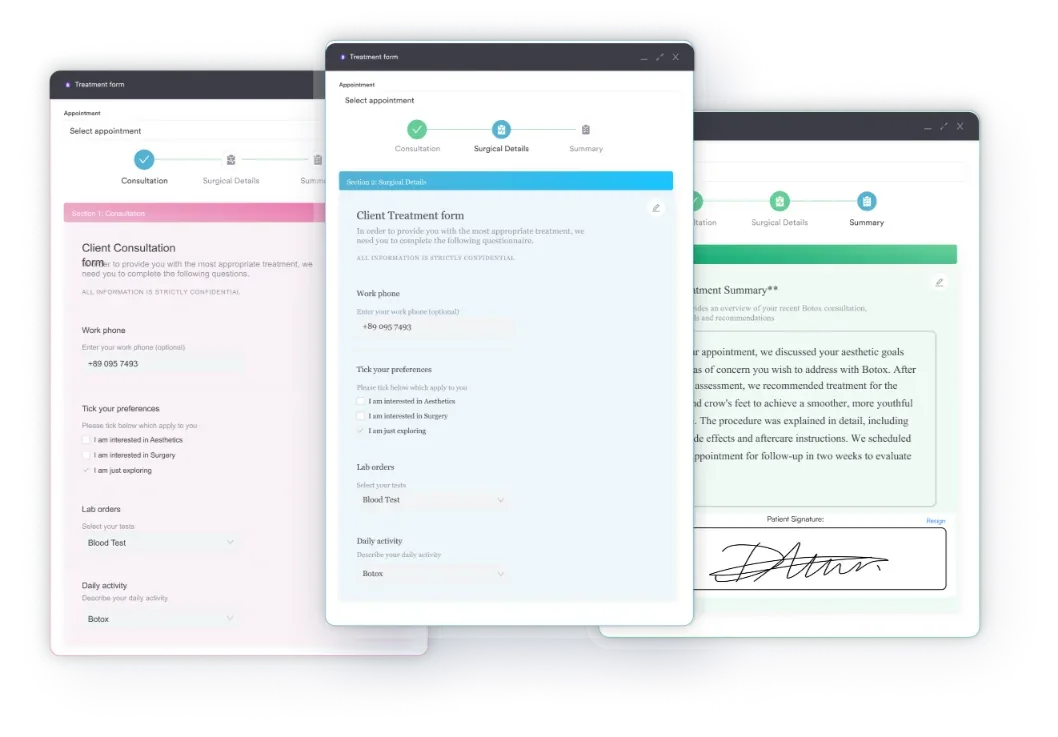
Practices using digital intake forms can structure their assessment templates to capture these required data points consistently, reducing incomplete records before claims are submitted.
Pabau’s template library extends the same structured approach across specialties, from procedural consent forms such as the eyelid surgery consent template to behavioral health tools like the anxiety fact sheet, keeping documentation consistent regardless of care area. Coders working across these specialty templates can also keep a free coding guide covering CPT, ICD-10, and HCPCS ranges close at hand.
An ICD-10-CM lookup tool provides additional crosswalk references showing which CPT codes commonly pair with F73 encounters. For example.

Pabau helps practices working with complex patient populations capture structured assessments, manage records, and submit claims with fewer errors. See how it works for your practice.

Profound intellectual disability rarely appears as an isolated diagnosis. Most patients with F73 have one or more comorbid conditions that require separate coding.
Common comorbidities seen alongside F73 include seizure disorders, cerebral palsy, autism spectrum disorder. Each must be coded independently when documented. There is no Excludes1 or Excludes2 note between F73 and these conditions in ICD-10-CM, meaning they can and should be reported together.
When a comorbid psychiatric presentation has a confirmed physiological cause but does not fit a named category, ICD-10 Code F59 (Unspecified mental disorder due to known physiological condition) may apply alongside F73.
Sequencing rule: F73 is sequenced based on the focus of the encounter. If the visit is primarily for the intellectual disability itself (such as an annual assessment or care planning review), F73 is the principal diagnosis.
If the visit addresses a comorbid condition with intellectual disability as a background factor, the comorbid condition leads and F73 follows as an additional diagnosis.
Coders documenting neurological comorbidities may also reference delusional disorder coding guidance for examples of sequencing complex behavioral health diagnoses alongside F73.
For practices managing HIPAA compliance for medical offices, accurate comorbidity coding also reduces audit risk. Related vitamin-deficiency codes such as ICD-10 Code E54 (ascorbic acid deficiency) may appear as comorbidities in patients with profound intellectual disabilities who have nutritional support needs. Inconsistencies between the documented diagnoses and submitted codes are a primary trigger for post-payment review.
When a patient with F73 has an acute comorbidity requiring treatment at the same visit, sequence the acute condition first. F73 reports as an additional code to provide clinical context for the level of care required. This sequencing also supports medical necessity justification for higher-complexity E&M codes when the complexity of the patient’s overall condition influences the clinical decision-making.
F73 is a valid diagnosis code for reimbursement purposes on HIPAA-covered transactions, but claim approval depends on the medical necessity documentation in the record, not the code alone. Payers review whether the services rendered are appropriate given the documented diagnosis severity.
Prior authorization: Many payers require prior authorization for ongoing assessment, behavioral therapy, and care coordination services in patients with profound intellectual disabilities. The prior authorization request typically requires clinical documentation of the IQ assessment result, adaptive functioning level, and the specific service being requested. Verify payer-specific requirements before scheduling high-cost services.
Modifier considerations: When services are modified due to the patient’s cognitive and behavioral profile (for example, extended evaluation time or the need for a caregiver interpreter), document this in the record. Some payers recognize modifiers supporting complexity, though clinical documentation always anchors the justification.
Preventive care stays part of comprehensive management for these patients. Routine immunizations.
ICD-10 vs ICD-11 transition: ICD-11 replaces the F70-F79 block with “Disorders of intellectual development” and eliminates severity codes tied solely to IQ, emphasizing adaptive function instead. As of the current U.S. implementation timeline, ICD-10-CM remains the required system for HIPAA-covered transactions.
The WHO ICD browser provides the international reference classification context, while CMS maintains the U.S. clinical modification. Practices should monitor behavioral health coding updates through the same CMS update cycle, as intellectual disability codes are updated on the same annual FY schedule.
Practices with robust claims management software can automate pre-submission validation to catch coding errors before claims reach payers, reducing denial rates on complex neurodevelopmental cases.
Claim errors on F73 fall into predictable patterns. Addressing them at the point of documentation, before billing, is more efficient than managing denials after submission.
Practices using clinical documentation tools with structured fields for assessment results can enforce these requirements at data entry, rather than relying on retrospective chart audits. Linking assessment tool results directly to the diagnostic code in the workflow reduces the most common source of claim errors.
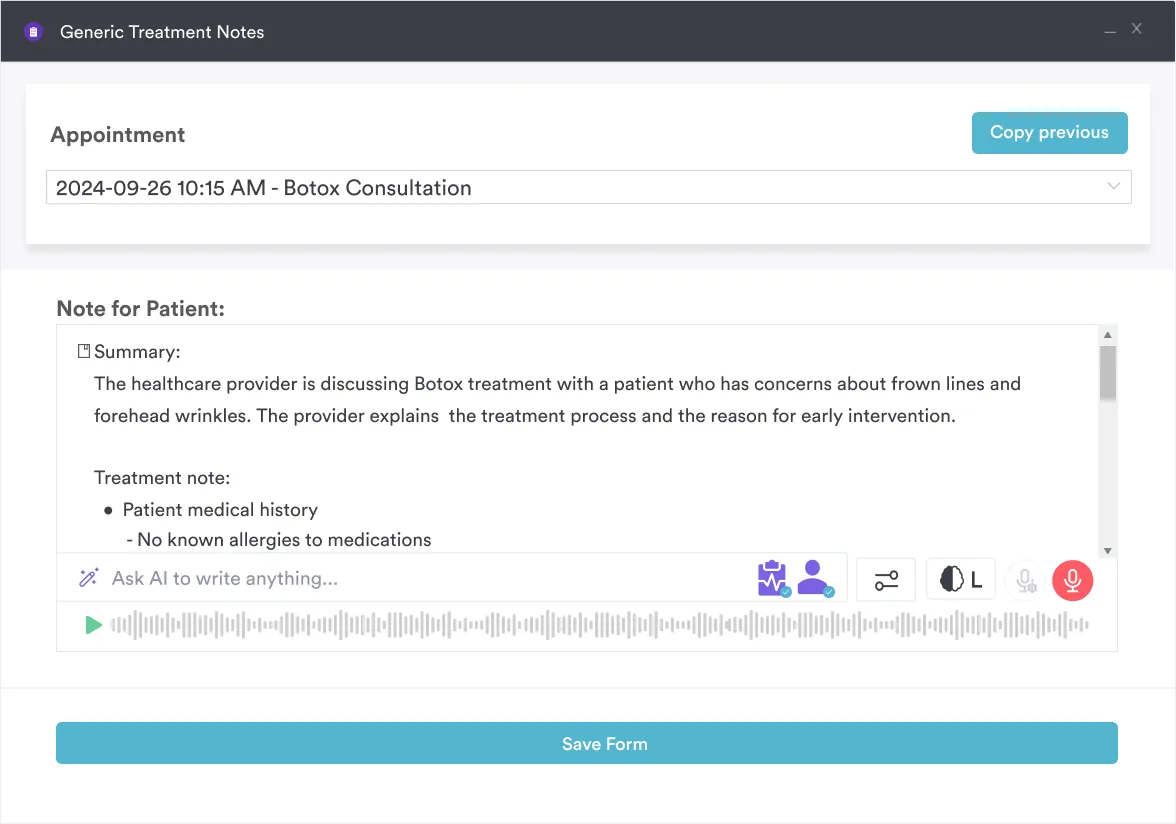
For practices exploring AI-assisted clinical note generation, these tools can help clinicians produce structured notes that consistently capture the key diagnostic elements required for F73, reducing the burden of manual documentation compliance checks.
Practices that keep coding, documentation.
Practices handling behavioral health coding alongside F73 can also benefit from reviewing eating disorder worksheets for recovery and the internet addiction test template, both illustrating how structured clinical templates support consistent documentation for co-occurring conditions.
Accurate F73 coding requires documentation that captures both cognitive and adaptive functioning. Complete records support clean claims; incomplete records lead to denials and audit findings.
Pabau’s psychiatry EMR software gives practices working with neurodevelopmental populations the structured documentation frameworks and integrated claims workflows needed to code F73 and related diagnoses with confidence. To see how Pabau supports complex patient documentation, book a demo.

Billing an audiometry exam? HCPCS code S0618 covers audiometry for a hearing aid evaluation, with coverage that varies by payer.
Need to tell F73 apart from an unspecified diagnosis? ICD-10 Code F79 covers when to use the unspecified intellectual disability code instead of a severity-specific code like F73.
Billing a breast reconstruction procedure? HCPCS code S2068 covers unilateral breast reconstruction with a DIEP or SIEA flap for Medicaid and commercial payers.
ICD-10 Code F73 is the billable ICD-10-CM diagnosis code for Profound intellectual disabilities, defined by an IQ level below 20-25 and significant deficits in adaptive functioning. It is classified under the F70-F79 Intellectual Disabilities block within Chapter F01-F99 of ICD-10-CM and is valid for HIPAA-covered claim submissions.
F72 applies to Severe intellectual disabilities, with an IQ range of 20-25 to 35-40, while F73 applies to Profound intellectual disabilities with an IQ below 20-25. Individuals coded under F73 typically require comprehensive, continuous support across all daily activities, whereas some limited self-care capacity may be present in F72.
Yes. ICD-10-CM contains no Excludes note preventing F73 from being coded alongside autism spectrum disorder codes. When both diagnoses are clinically established and documented, both should be reported. The sequencing depends on the primary focus of the encounter.
No. An IQ score below 20-25 is a necessary criterion, but current diagnostic standards require concurrent documentation of deficits in adaptive behavior. Coders should verify the record includes both a formal psychometric evaluation result and an adaptive behavior assessment before assigning F73.
Yes. F73 remains an active, billable code in the ICD-10-CM FY2026 update. ICD-11 introduces a restructured classification for intellectual disabilities, but ICD-10-CM remains the required system for HIPAA-covered transactions in the United States. Practices should continue using F73 until CMS formally transitions to ICD-11.
There is no current code under that name. “Mental retardation” is deprecated terminology, and ICD-10-CM classifies the condition across the F70-F79 intellectual disabilities block by severity. For the profound level once labeled “profound mental retardation,” the correct code is F73.



