ICD-10 code S61.201A: Open wound of left index finger without nail damage
ICD-10 code S61.201A covers a left index finger wound of unstated type ICD-10 co...

Last Updated: Oct 16, 2026
Billable Code Specific Code
L22 is the billable ICD-10-CM code for diaper dermatitis.
Diaper dermatitis ICD-10 code L22 is the billable ICD-10-CM diagnosis code for diaper rash: irritant contact dermatitis localized to the diaper area. It is valid for FY2026 and takes no additional digits. Practice management software like Pabau's dermatology EMR prompts for those documentation elements at the point of care, so the right code leaves the practice the first time.
Let Pabau's smart automation suggest the right codes, reduce claim denials, and keep your practice compliant—effortlessly.
Automate repetitive tasks and focus on what matters most—your patients.
Reduce coding errors and ensure compliance with the latest regulations.
Clean claims, fewer denials, and faster reimbursements.
Powerful insights and reporting to help your practice thrive.
HIPAA compliant SOC 2 certified GDPR-compliant Trusted by 4,000+ clinics worldwide

ICD-10 Code L22 is a billable ICD-10-CM diagnosis code for diaper dermatitis, covering diaper rash, diaper erythema, napkin dermatitis, and psoriasiform diaper rash.
L22 is valid for FY2026 and applies to irritant dermatitis localized to the diaper area in both infants and incontinent adults.
When Candida infection is also present, coders may add B37.2 (candidiasis of skin and nail); sequence B37.2 first when the yeast infection is the condition chiefly treated.
Practice management software like Pabau helps dermatology and pediatric practices document L22 encounters accurately and reduce coding-related claim denials.
ICD-10 Code L22 is the official ICD-10-CM diagnosis code for diaper dermatitis (diaper rash). The CDC/NCHS ICD-10-CM web tool classifies L22 as billable and specific, so you can submit it directly on a claim without additional characters. Clinically, it describes irritant dermatitis localized to the diaper contact area, occurring most often after prolonged contact with urine, feces, or retained soap. In everyday terms, the diaper rash ICD-10 code clinicians look up is L22.
The code sits within the L20-L30 block (Dermatitis and eczema) under Chapter 12 (L00-L99) in the ICD-10-CM tabular list. It applies to both infants and incontinent adults, though the adult scenario has a more specific alternative covered below. Knowing where L22 falls in this hierarchy matters for sequencing and for distinguishing it from adjacent contact dermatitis codes.
The ICD-10-CM tabular list specifies three conditions captured under the “Applicable To” notes for L22. Coders should use this code whenever the clinician documents a diagnosis matching any of these terms.
The WHO ICD-10 title lists the code as “Diaper [napkin] dermatitis,” so napkin dermatitis and napkin rash refer to the same L22 condition. Some sources also list informal synonyms including “dermatitis of the newborn,” “diaper candidiasis,” and “infection of diaper area.” These are colloquial terms, not official “Applicable To” entries. When Candida is clinically confirmed alongside diaper dermatitis, the dual-coding scenario discussed below applies rather than relying on the synonym label alone.
Knowing the code’s place in the hierarchy helps coders cross-reference adjacent codes and apply correct sequencing logic. The full classification path for ICD-10 Code L22 is shown in the table below.
For a broader look at how ICD-10-CM chapter classifications organize diagnosis codes across body systems, the WHO ICD-10 browser provides the full hierarchical view of L00-L99 and adjacent chapters. The CMS ICD-10 codes page publishes annual FY2026 update files, including the tabular list and alphabetic index confirming L22’s billable status.
A skin clinic platform keeps medical skin diagnoses and their treatment courses documented in one record.
CMS confirms ICD-10 Code L22 as billable for reimbursement claims with a date of service on or after October 1, 2015. It has remained valid through FY2026 with no revisions or retirement notices. Because L22 is a single-level, specific code with no subcategories, coders submit it without additional character extension.
Practices using claims management software can attach L22 as the primary or secondary diagnosis code depending on the encounter’s principal condition. When diaper dermatitis is the reason for the visit, it sequences as principal. When it is an incidental finding during a well-child visit, it sequences as secondary.
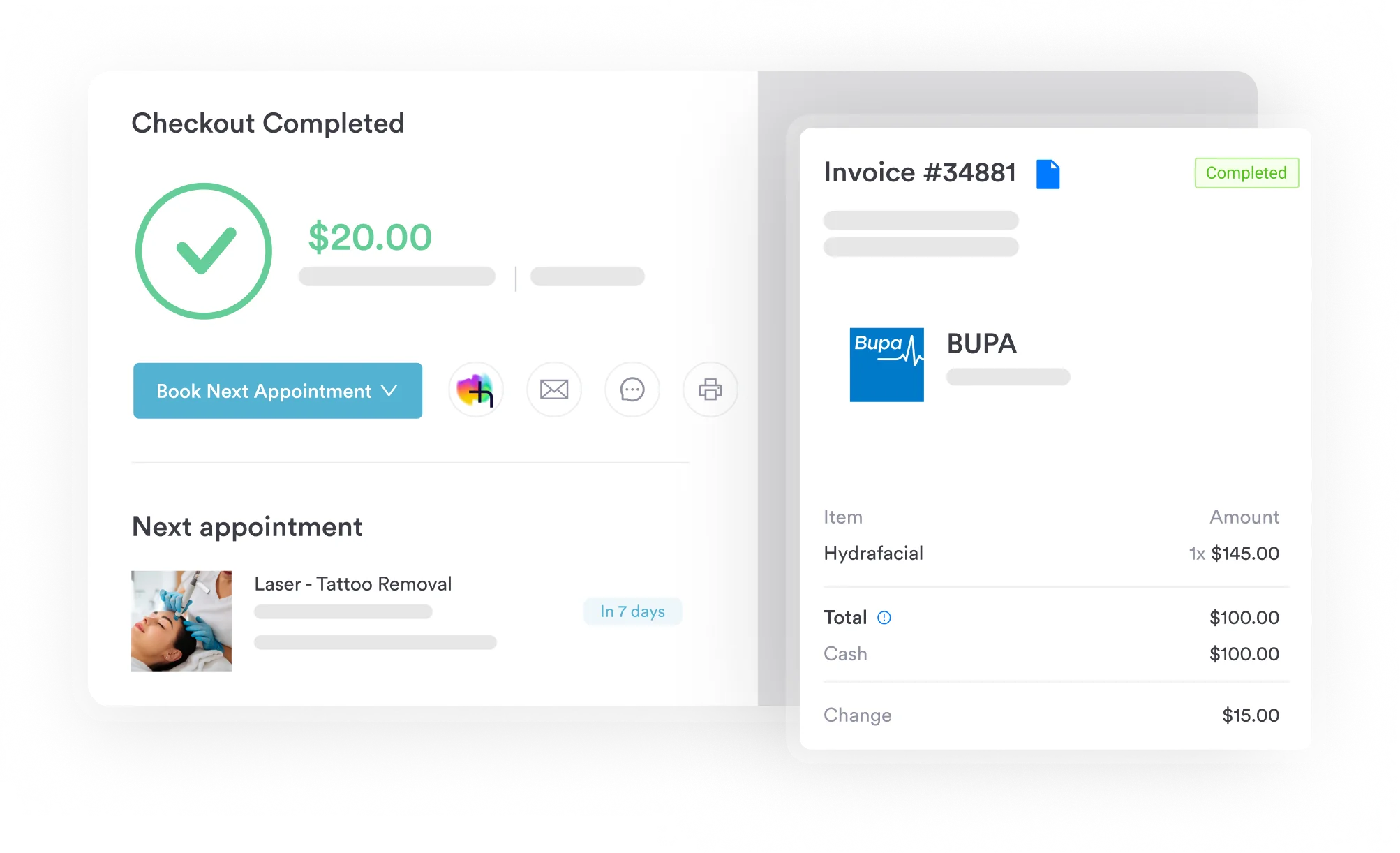
Audit your superbill templates to confirm L22 appears alongside commonly paired evaluation and management codes. Practices that pre-load condition-specific ICD-10 pairings reduce manual selection errors at point of care and cut claim correction time significantly.
Adjacent codes in the L20-L30 block are a common source of miscoding, because clinicians and coders sometimes apply them interchangeably when their clinical meanings differ. Getting the right neighbor code matters as much as landing on ICD-10 Code L22 itself.
This is the most clinically significant distinction for coding teams. L24.A2 (Irritant contact dermatitis due to fecal, urinary, or dual incontinence) is the preferred code when the patient is an adult with incontinence-associated dermatitis (IAD). L22, by contrast, describes dermatitis in the context of diaper use, which is primarily a pediatric scenario.
When the clinician documents the adult patient’s skin breakdown as resulting from prolonged contact with incontinence pads or briefs, L24.A2 is the more specific code. Using ICD-10 Code L22 for adult IAD is not technically incorrect given the code’s broad definition, but payer audit notes increasingly support L24.A2 as the preferred specificity. Document the patient’s age and the incontinence product in use to support whichever code the coder selects.
Coders working across related ICD-10 diagnostic codes in the L20-L30 range should be aware of these frequently confused alternatives.
Both L25.9 and L30.9 include Type 2 Excludes notes that explicitly list diaper dermatitis (L22), confirming that L22 should be coded instead of these unspecified options when the diaper area is the documented site. That is why an “ICD-10 code for diaper rash unspecified” search still resolves to L22 rather than a generic dermatitis code.
ICD-10 Code L22 falls within Medicare Severity Diagnosis Related Groups (MS-DRG v43.0) for inpatient hospital reimbursement. The specific DRG depends on whether the coder assigns diaper dermatitis as the principal diagnosis or as a complication/comorbidity (CC) or major complication/comorbidity (MCC) alongside another principal condition.
For outpatient and office-based settings where diaper dermatitis is most commonly encountered, MS-DRG groupings are less directly relevant. Practices should verify current DRG groupings against CMS MS-DRG v43.0 tables before making inpatient coding decisions.

Pabau helps dermatology and pediatric practices document ICD-10 encounters accurately, attach the right codes at the point of care, and submit cleaner claims. See how it works for your team.

Accurate documentation separates a supportable L22 claim from one that attracts a denial or audit request. The clinical note must establish three things: the anatomical site (diaper area), the mechanism (irritant contact), and the absence of conditions that would require a different or additional code.
Teams using digital intake forms can pre-build skin condition templates that prompt clinicians to document these elements at the point of care, reducing retrospective chart amendments. Consistent ICD-10 documentation standards across all condition types help practices maintain audit readiness.
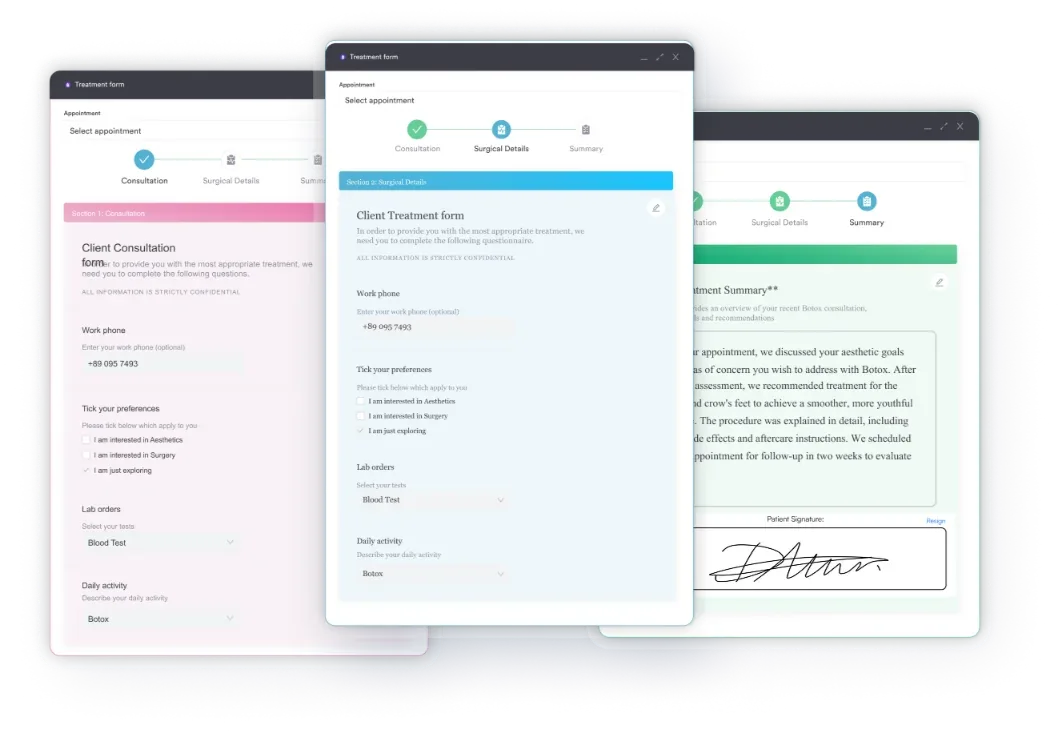
Build a diaper dermatitis-specific EHR template that prompts for site, mechanism, secondary infection status, and patient age. Practices that standardize documentation at the encounter level report significantly fewer post-submission coding queries from payers.
When a clinician confirms candidal diaper dermatitis (diaper dermatitis with a confirmed Candida infection), the question is whether to report L22 alone or add B37.2 (candidiasis of skin and nail). The answer, and the sequence, turn on the documentation. A confirmed fungal or yeast diaper rash is not the same coding scenario as simple irritant L22.
Report both codes when the note documents Candida superinfection as a separately identified condition. ICD-10 Code L22 captures the diaper dermatitis and B37.2 captures the candidiasis. Sequencing follows the condition chiefly responsible for the encounter: when the yeast infection is the primary condition treated, pediatric coding references commonly list B37.2 first and L22 second; when irritant diaper dermatitis is primary and Candida is a documented complication, L22 leads. CMS guidelines give no single dual-coding instruction for this pairing, so verify against your MAC’s local coverage determination and current CMS guidance before submitting the diaper candidiasis ICD-10 combination routinely. A Medicare claim is adjudicated against local coverage policy, which varies by contractor. A shared coding reference also standardizes how two coders handle the same borderline case.
Use structured skin assessment tools to document the findings that separate secondary Candida from primary irritant dermatitis. Satellite papules or pustules beyond the main rash margin, skin fold involvement, and failure to respond to barrier cream alone all support adding B37.2 to the encounter record.
ICD-10 Code L22 converts directly to ICD-9-CM code 691.0 (Diaper or napkin rash), according to the CMS General Equivalence Mappings published on icd10data.com. This is a one-to-one forward mapping with no ambiguity, making historical record conversion straightforward for practices managing pre-2015 patient files.
All reimbursement claims for dates of service on or after October 1, 2015, must use the ICD-10-CM code L22. Payers reject claims using 691.0 for encounters after the ICD-10 transition date. The ICD List lookup tool and the AAPC Codify ICD-10-CM lookup both include crosswalk data confirming this direct conversion.
Diaper dermatitis is a high-frequency, low-complexity diagnosis that nonetheless generates disproportionate coding friction when documentation is vague or when coders default to unspecified dermatitis codes instead of the specific L22. The adult incontinence distinction (L22 vs L24.A2) and the dual-coding question with B37.2 are the two areas where documentation discipline has the most direct impact on claim accuracy.
Pabau’s clinical record documentation tools help dermatology and pediatric practices build encounter templates that capture the site, mechanism, and secondary infection status needed to support L22 with confidence. To see how Pabau structures ICD-10 coding workflows end to end, book a demo with the team.

Coding lupus without organ involvement noted? Unspecified lupus erythematosus code applies as the fallback when the chart names no organ involvement, otherwise use a more specific M32.1x code.
Coding a case of drug-induced scleroderma? Drug-induced systemic sclerosis code identifies scleroderma traced to a specific drug or chemical exposure and requires a second code from the T36-T65 range.
Coding an autoimmune overlap presentation? Overlap syndromes diagnosis code covers presentations spanning two or more autoimmune diseases without meeting full criteria for any single one.
L22 documents and bills diaper dermatitis (irritant contact dermatitis in the diaper area), covering diaper rash, diaper erythema, napkin dermatitis, and psoriasiform diaper rash. It applies to pediatric patients and adults using diapers or incontinence products.
Yes. L22 is fully billable and specific, valid for dates of service on or after October 1, 2015. No additional character extension is required.
Yes. L22 stands as the principal diagnosis when diaper dermatitis is the reason for the encounter. It moves to a secondary position when it is incidental to another principal condition, such as a well-child visit or a treated Candida infection.
L24.A2 is the preferred code for adult incontinence-associated dermatitis. L22 remains the standard code for pediatric diaper rash.
Report L22 for the diaper dermatitis and B37.2 for the candidiasis. Sequence the code for the condition chiefly treated first: pediatric references often place B37.2 first when the yeast infection is primary. Documentation must distinguish the two conditions, and current CMS guidance should be verified before submitting this combination routinely.
A confirmed fungal diaper rash is captured with B37.2 for the Candida infection alongside L22 for the underlying diaper dermatitis. Document the satellite lesions or skin-fold involvement that confirm the yeast component.
L22 applies to newborns and infants; there is no separate newborn-specific code. Document the diaper area as the site and irritant contact as the mechanism to support it.
L22 maps one-to-one to ICD-9-CM 691.0 (Diaper or napkin rash). All claims from October 1, 2015 onward must use L22.
L22 falls within MS-DRG v43.0. The specific DRG depends on whether L22 is coded as the principal diagnosis or a comorbidity. Verify against current CMS grouper tables for the exact assignment.