ICD-10 Code S42.444P: Medial epicondyle fracture, right humerus
ICD-10 Code S42.444P: full descriptor and code validity ICD-10 Code S42.444P car...

Last Updated: Oct 13, 2026
Billable Code Specific Code
C13.0 is the billable ICD-10-CM code for malignant neoplasm of postcricoid region.
Hypopharyngeal cancers account for roughly 3-5% of head and neck malignancies and carry some of the poorest five-year survival rates in that category, which makes accurate subsite coding important for both reimbursement and cancer registry data quality.
Practice management software like Pabau. This reduces downstream errors before a claim ever leaves the practice.
Let Pabau's smart automation suggest the right codes, reduce claim denials, and keep your practice compliant—effortlessly.
Automate repetitive tasks and focus on what matters most—your patients.
Reduce coding errors and ensure compliance with the latest regulations.
Clean claims, fewer denials, and faster reimbursements.
Powerful insights and reporting to help your practice thrive.
HIPAA compliant SOC 2 certified GDPR-compliant Trusted by 4,000+ clinics worldwide

ICD-10 Code C13.0 is the billable diagnosis code for malignant neoplasm of postcricoid region, a subsite of the hypopharynx
C13.0 is valid for FY2026 HIPAA-covered transactions and groups under MS-DRG v43.0
Use C13.0 only when pathology reports specifically identify the postcricoid region; choose C13.9 for unspecified hypopharynx malignancies
Pabau’s claims management software supports accurate ICD-10-CM code capture and claim submission workflows for oncology and specialist practices

The table below summarizes the key administrative facts coders need before submitting any claim for malignant conditions.
The hypopharynx is the lowermost portion of the pharynx (throat), extending from the level of the hyoid bone down to the opening of the esophagus. It sits immediately behind the larynx and is divided into three anatomical subsites: the postcricoid region, the aryepiglottic folds/arytenoids, and the posterior hypopharyngeal wall.
The postcricoid region occupies the area immediately posterior to the cricoid cartilage. It forms the anterior wall of the hypopharynx at its lower end and connects the hypopharynx to the cervical esophagus. Because it lies at this junction, tumors here frequently involve both the hypopharynx and the upper esophagus, which has direct implications for staging, surgical planning, and coding specificity.
Squamous cell carcinoma (SCC) is the predominant histological type in this region, consistent with hypopharyngeal malignancies broadly. According to the WHO ICD-10 reference, postcricoid carcinoma is distinctly classified because its anatomical behavior, treatment approach, and prognosis differ from other hypopharyngeal subsites.
For coders, the postcricoid location matters because assigning C13.0 rather than the non-specific C13.9 reflects higher documentation quality and ensures the claim accurately represents the pathology documented in the operative or pathology report. The same specificity principle applies across other diagnostic categories.
C13.0 is one of five billable subcodes within the C13 parent category. Selecting the right subcode depends entirely on the anatomical subsite documented by the treating clinician or pathologist. The AAPC ICD-10-CM code lookup and the official CMS tabular list both present these subcodes in the following hierarchy.
A coder’s first question should always be: does the clinical documentation specify the anatomical subsite? If the operative note or pathology report identifies the postcricoid region, C13.0 is the correct code. If the physician documents only “hypopharynx cancer” without further subsite detail, C13.9 applies. This same specificity discipline reduces audit risk for codes like H65.31 and supports accurate MS-DRG assignment.
Understanding the official notations in the ICD-10-CM tabular list is essential before assigning C13.0. These notes define what the code includes and what it explicitly does not cover.
The Applicable To section at the C13 parent level identifies clinical terms that map to the hypopharynx category as a whole. For C13.0 specifically, the code applies when the documented malignancy arises in the postcricoid area, including the pharyngoesophageal junction area when the predominant site is the postcricoid region rather than the cervical esophagus.
The C13 parent category carries Excludes1 and Excludes2 notes that apply to all subcodes, including C13.0. Excludes1 means the excluded code can never be used at the same time as C13.0. Excludes2 means the excluded condition may coexist and both codes can be reported together when clinically documented.
The aryepiglottic fold distinction is the most common source of error in this code family. The fold has two aspects: the hypopharyngeal aspect (C13.1) and the laryngeal aspect (C32.1). Always confirm which anatomical surface the pathologist describes before selecting between these two codes.

When C13.0 is the principal diagnosis on an inpatient claim, it groups under the MS-DRG v43.0 system, typically within DRGs 011-013 (tracheostomy for face, mouth, and neck diagnoses, or laryngectomy, split by CC/MCC status) or DRGs 146-148 (ear, nose, mouth, and throat malignancy, split by CC/MCC status).
According to CMS ICD-10 coding resources, the specific DRG assignment depends on secondary diagnoses, procedures performed, and patient complications or comorbidities (CCs/MCCs). Practices should verify the exact DRG assignment against the current CMS IPPS final rule tables for FY2026, because DRG weights and grouping logic are updated annually.
For head and neck malignancies involving the pharynx, MS-DRGs typically fall within the ear, nose, mouth, and throat chapter of the DRG classification. Treatment context matters, since a patient admitted for radiation treatment planning carries a different DRG than one admitted for surgical resection (pharyngolaryngectomy).
Verify MS-DRG assignments for C13.0 claims directly against the CMS IPPS Final Rule Addenda files each October. DRG weights and logic change annually, and a stale reference can result in systematic undercoding or overbilling audit exposure across your oncology claims.
The ICD-10-CM Official Guidelines for Coding and Reporting (Section I, C, Chapter 2) govern how neoplasm codes are selected and sequenced. For C13.0 specifically, coders and clinicians should apply the following step-by-step process. Keeping a medical coding cheat sheet nearby for CPT, ICD-10, and HCPCS codes speeds up that step-by-step process.
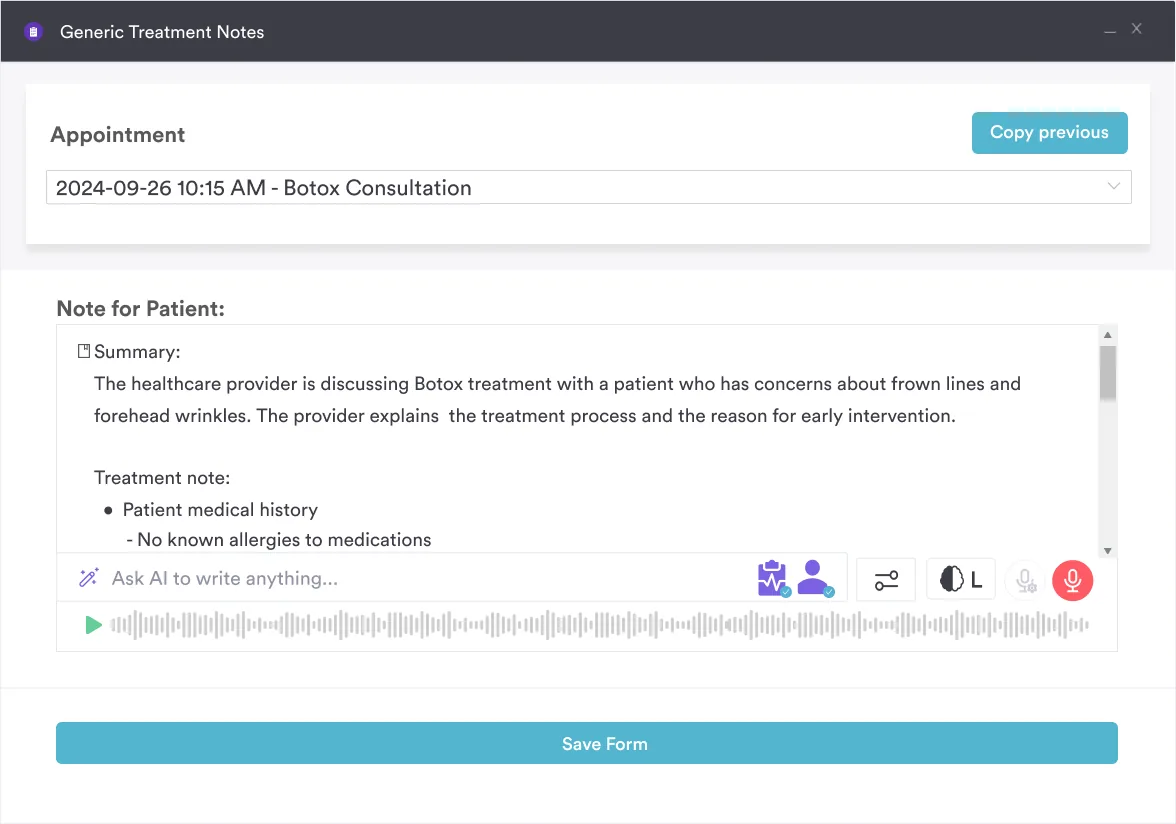
Thorough physician documentation drives every step of this process. Practices that use Pabau Scribe, our AI scribe, can capture structured notes that include anatomical subsite detail, reducing the need for query-back loops between coders and clinicians.
Head and neck cancer coding spans the C00-C14 block of ICD-10-CM. Understanding where C13.0 sits within this broader structure helps coders navigate between adjacent codes and avoid misassignment, particularly for tumors near anatomical boundaries.
The postcricoid region’s proximity to the esophagus creates a recurring coding challenge. When the surgical or endoscopic report documents that the primary tumor originates in the postcricoid region but also involves the cervical esophagus, clinical judgment and documentation quality determine whether C13.0 or C15.3 (malignant neoplasm of cervical esophagus) becomes the principal code.
If both sites are equally involved and the origin is ambiguous, C13.8 (overlapping sites) may be the most defensible choice pending a physician query.
Oncology and ENT practices managing these complex cases benefit from structured patient records that link pathology reports, operative summaries, and staging information directly to the encounter record. This integrated documentation approach supports both accurate patient care management and cleaner claim submission. A coding error surfaces as a cash flow problem weeks later, which is why the healthcare revenue cycle is measured end to end.
When a postcricoid tumor extends into the cervical esophagus, submit a physician query before coding. Document whether the primary site is the hypopharynx or the esophagus, because the answer determines not only the ICD-10-CM code but also the staging workup, surgical approach, and DRG grouping.
Accurate oncology coding requires more than knowing the correct code. It requires a documentation workflow that captures subsite-specific detail from the first clinical encounter through final billing. Missed or vague documentation is the leading cause of code uncertainty in head and neck malignancy cases.
Pabau supports oncology and ENT practices with compliance management workflows that flag incomplete documentation fields before claims are submitted. Structured note templates built around ICD-10-CM specificity requirements help clinicians capture anatomical subsite at the point of care, which directly feeds into clean claim preparation.
For practices managing high volumes of complex oncology claims.

Pabau helps oncology and ENT practices capture accurate ICD-10-CM codes at the point of clinical documentation, reducing claim rework and supporting compliant submission workflows.

Hypopharyngeal malignancies are low-volume but high-complexity from a coding standpoint. ICD-10 Code C13.0 is the correct, billable code for malignant neoplasm of the postcricoid region, valid for FY2026, and distinct from the other four C13 subcodes by virtue of a single documented anatomical detail: that the primary tumor arises posterior to the cricoid cartilage.
The most common errors with this code fall into three categories:
Structured documentation workflows, physician queries, and annual DRG verification eliminate the majority of these issues. Head and neck resections like pharyngolaryngectomy often involve surgical teams already using plastic surgery EMR software, which keeps ICD-10-CM documentation consistent across the surgical and oncology teams handling the same case.

Coding a related head and neck pathology? M31.2 covers lethal midline granuloma, a rare condition with its own subsite-specificity challenges.
Need a procedure code for supportive oncology care? J0702 covers betamethasone injections, commonly billed alongside cancer treatment plans.
Coding a lasting finger tendon injury? Finger extensor tendon injury coding covers how S66.399S marks a sequela, the lasting consequence of a healed finger tendon injury.
ICD-10 Code C13.0 is the billable ICD-10-CM diagnosis code for malignant neoplasm of postcricoid region, a subsite of the hypopharynx located posterior to the cricoid cartilage. It is valid for FY2026 HIPAA-covered transaction submission and falls within the C00-C14 block of the ICD-10-CM neoplasm chapter.
Yes. C13.0 is a fully billable, four-character ICD-10-CM diagnosis code valid for submission on HIPAA-covered transactions for fiscal year 2026 (October 1, 2025 through September 30, 2026). It is confirmed as billable across CMS, CDC/NCHS, and AAPC authoritative sources.
C13.0 specifies malignancy in the postcricoid region of the hypopharynx, while C13.9 indicates an unspecified hypopharynx malignancy. Use C13.0 when the pathology report or operative note explicitly identifies the postcricoid subsite. Use C13.9 only when clinical documentation does not specify the anatomical location within the hypopharynx.
C13.0 groups under the MS-DRG v43.0 system when it is the principal diagnosis on an inpatient claim. The specific DRG depends on secondary diagnoses, the presence of CCs or MCCs, and procedures performed. Verify the exact DRG assignment against the current CMS IPPS Final Rule tables annually, as grouping logic changes each fiscal year.
There is no single ICD-10-CM code for “throat cancer” because the throat encompasses multiple anatomical structures, each with its own code. Common options include C13.0-C13.9 for hypopharynx, C10.x for oropharynx, C14.0 for pharynx unspecified, and C32.x for larynx. The correct code depends on the specific anatomical subsite documented by the treating clinician or confirmed by pathology.
The C13 category covers all hypopharynx malignancies: C13.0 (postcricoid region), C13.1 (aryepiglottic fold, hypopharyngeal aspect), C13.2 (posterior wall), C13.8 (overlapping sites), and C13.9 (unspecified). Adjacent codes include C10.x for oropharynx, C14.0 for pharynx unspecified, C15.3 for cervical esophagus, and C32.1 for the laryngeal aspect of the aryepiglottic fold.