ICD-10 Code S42.444P: Medial epicondyle fracture, right humerus
ICD-10 Code S42.444P: full descriptor and code validity ICD-10 Code S42.444P car...

Last Updated: Oct 13, 2026
Billable Code Specific Code
A99 is the billable ICD-10-CM code for unspecified viral hemorrhagic fever.
Let Pabau's smart automation suggest the right codes, reduce claim denials, and keep your practice compliant—effortlessly.
Automate repetitive tasks and focus on what matters most—your patients.
Reduce coding errors and ensure compliance with the latest regulations.
Clean claims, fewer denials, and faster reimbursements.
Powerful insights and reporting to help your practice thrive.
HIPAA compliant SOC 2 certified GDPR-compliant Trusted by 4,000+ clinics worldwide

ICD-10 Code A99 is a billable diagnosis code for unspecified viral hemorrhagic fever, valid for reimbursement claims with dates of service from October 1, 2015 onward.
Use A99 only when no more specific viral hemorrhagic fever code in the A90-A98 range can be assigned based on the patient’s documented diagnosis.
A99 lacks subcategory expansions – it is a single terminal code, unlike A98 which has seven named subtypes (A98.0 through A98.8).
Pabau’s claims management software helps infectious disease practices assign and submit diagnostic codes accurately, reducing claim errors for rare conditions like viral hemorrhagic fever.
ICD-10 Code A99 designates Unspecified viral hemorrhagic fever. It belongs to Chapter 1 (Certain infectious and parasitic diseases, A00-B99) within the subcategory A90-A99 (Arthropod-borne viral fevers and viral hemorrhagic fevers), as maintained by the World Health Organization’s ICD-10 classification.
Viral hemorrhagic fevers are a group of severe illnesses caused by several distinct virus families. Common features include fever, fatigue, and bleeding or bruising. When laboratory results or clinical history don’t identify the responsible pathogen, A99 captures the presentation.
| Field | Detail |
|---|---|
| Code | A99 |
| Full description | Unspecified viral hemorrhagic fever |
| Chapter | Chapter 1: Certain infectious and parasitic diseases (A00-B99) |
| Subcategory | A90-A99: Arthropod-borne viral fevers and viral hemorrhagic fevers |
| Billable/Specific | Yes – billable for reimbursement |
| Valid from | October 1, 2015 (ICD-10-CM implementation) |
| Current year | Valid for FY 2026 |
| ICD-9-CM crosswalk | 078.89 |
| Subcodes | None – A99 is a single terminal code |
A99 is a billable ICD-10-CM code. Per the CMS ICD-10 coding guidance, reimbursement claims with a date of service on or after October 1, 2015 require ICD-10-CM codes. A99 meets that requirement and remains valid for FY 2026 without modification.
Unlike A98, which has seven subcategory expansions (A98.0 through A98.8), A99 has no further breakdown. It is a terminal code – there is nothing more specific to add at this level when the viral cause is genuinely unknown.
Flag A99 in your coding workflow for secondary review before submission. Payers may apply medical necessity scrutiny to unspecified infectious disease codes, particularly for conditions with known specific alternatives like Ebola (A98.4) or Marburg virus disease (A98.3). Document the clinical reason for unspecified coding in the chart.
The A90-A99 subcategory covers arthropod-borne viral fevers and viral hemorrhagic fevers under Chapter 1 of the ICD-10-CM tabular list. Understanding where A99 sits within this range is essential for accurate ICD-10 code selection across infectious disease presentations.
Several codes in this range have their own billable entries and should never be grouped under A99. Dengue fever (A90) and dengue hemorrhagic fever (A91) each have dedicated codes, so a confirmed dengue case is never coded as unspecified. The same holds for yellow fever (A95) and the arenaviral hemorrhagic fevers captured under A96.
A98 deserves particular attention because it sits immediately before A99 and contains named pathogens that are sometimes encountered in travel medicine or outbreak contexts. When the specific agent is confirmed, one of the A98 subcodes applies – not A99. For related ICD-10 diagnostic codes outside this range, see the broader A00-B99 chapter.
| Code | Description | Use A99 instead if… |
|---|---|---|
| A98.0 | Crimean-Congo hemorrhagic fever | Pathogen not laboratory-confirmed |
| A98.1 | Omsk hemorrhagic fever | Exposure history unclear |
| A98.2 | Kyasanur Forest disease | Clinical presentation atypical |
| A98.3 | Marburg virus disease | Pathogen not confirmed |
| A98.4 | Ebola virus disease | Pathogen not confirmed |
| A98.5 | Hemorrhagic fever with renal syndrome | Renal involvement not documented |
| A98.8 | Other specified viral hemorrhagic fevers | No named pathogen documented |

Pabau’s claims management software helps your team assign diagnosis codes accurately, track submission status, and reduce denials for complex infectious disease cases.

Many infectious conditions are triaged remotely first, making telehealth software a practical front door for these diagnoses.
The primary coding decision with A99 comes down to specificity. ICD-10-CM coding guidelines, maintained by the CDC/NCHS ICD-10-CM web tool, emphasize coding to the highest level of specificity supported by the clinical documentation. A99 is appropriate only when a more specific code genuinely cannot be assigned — the same specificity principle that directs unrelated bacterial infections in this chapter.
Three scenarios support A99 assignment:
A99 should not be a default or shortcut code. If the medical record contains a named viral agent that has an ICD-10-CM code, that specific code must be assigned. Using A99 when A98.4 (Ebola) or A98.3 (Marburg) is documented is a coding error that may trigger claim review. For a broader look at ICD-10 coding for hemorrhagic conditions, the same specificity-first principle applies across vascular and infectious contexts.
A99 is specific to viral hemorrhagic fever, so it is not the ICD-10 code for viral fever in the everyday sense. For a nonspecific febrile viral illness with no bleeding or hemorrhagic features, the correct code is B34.9 (viral infection, unspecified), or R50.9 (fever, unspecified) when no infectious cause is documented. Coders sometimes reach for A99 by habit when the chart only describes a routine viral fever, and that assigns a far more severe diagnosis than the record supports. Coding compliance rests on the note supporting the code, every time, not on the code being plausible. Coding compliance rests on the note supporting the code, every time, not on the code being plausible.
Match the code to what the chart actually documents:
| Documented diagnosis | Correct ICD-10-CM code | Why not A99 |
|---|---|---|
| Viral hemorrhagic fever, specific agent unknown | A99 | This is exactly what A99 is for |
| Fever, unspecified (no cause named) | R50.9 | No viral etiology or hemorrhagic feature documented |
| Viral infection, unspecified | B34.9 | Viral cause without hemorrhagic fever |
| Dengue fever (classical) | A90 | Named arbovirus with its own dedicated code |
| Dengue hemorrhagic fever | A91 | A specific hemorrhagic dengue code already exists |
| Unspecified arthropod-borne viral fever | A94 | Arboviral fever without hemorrhagic manifestations |
The distinction drives reimbursement. Payers flag A99 on claims where the documentation describes an acute febrile illness or a straightforward viral fever with no hemorrhagic component. If the record does not show bleeding, coagulopathy, or organ involvement consistent with hemorrhagic fever syndrome, R50.9 or B34.9 usually fits better than A99.
Supporting documentation is critical when submitting A99 for reimbursement. Payers reviewing unspecified infectious disease codes often look for evidence that specificity was not achievable, not simply overlooked.
The chart should include the following to support A99 assignment:
Using structured patient records within your practice management system reduces documentation gaps. When clinical notes follow a consistent structure, coders can locate the information they need to justify code selection without querying the provider for basic details. Practices handling travel medicine or infectious disease consultations benefit from standardized intake that captures exposure history at the point of care.
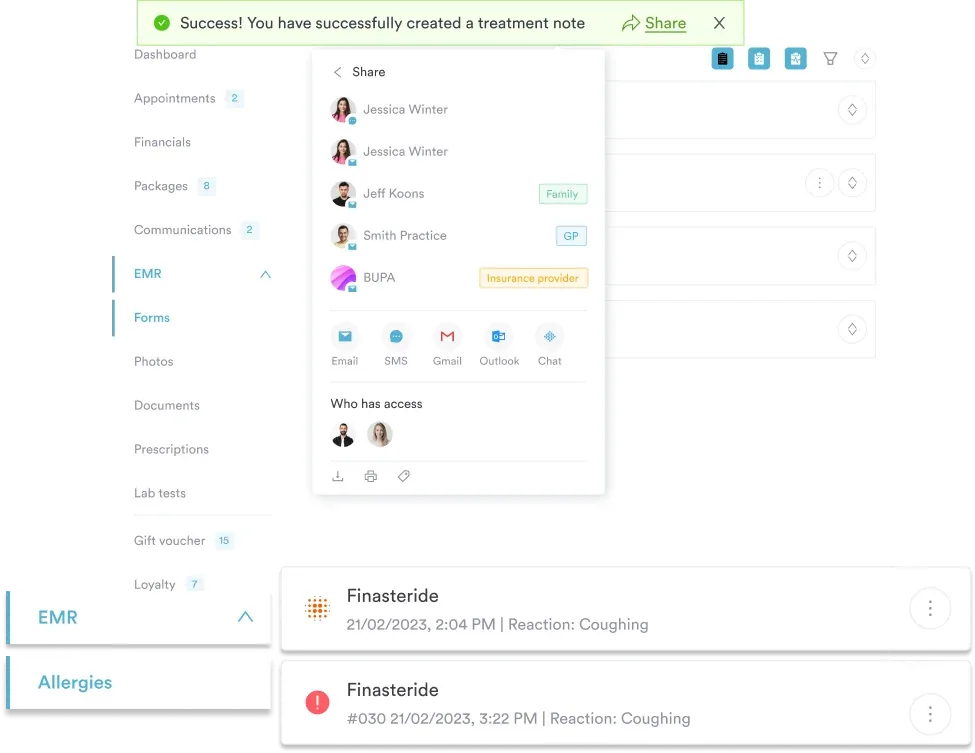
If your practice sees returning international travelers, build exposure and travel history fields into your intake workflow. This documentation supports code specificity across the entire A90-A99 range and reduces the likelihood of A99 being your only option at the time of claim submission.
Viral hemorrhagic fevers are nationally notifiable conditions in the United States. A diagnosis coded as A99, even when unspecified, may trigger public health reporting obligations under state and federal law. The CDC maintains reporting requirements for hemorrhagic fever viruses including Ebola, Marburg, Lassa, and related pathogens, and separate notifiable-disease rules govern other Chapter 1 infections such as psittacosis.
Practices treating suspected cases must maintain HIPAA-compliant reporting workflows.
Under HIPAA, covered entities must use ICD-10-CM codes for all covered electronic transactions. Standard ICD-10-CM lookup references provide useful cross-reference detail for the A90-A99 range, including synonyms and applicable notes that inform both coding and reporting decisions.
Practices managing rare or complex infectious disease diagnoses face a documentation challenge: the clinical picture often evolves faster than laboratory confirmation. Coding in that window requires systems that support interim code assignment, audit trails, and straightforward claim submission.
Pabau’s claims management software allows clinical teams to assign ICD-10-CM codes directly within the patient record, track submission status, and flag claims that require documentation review before submission. For clinics handling travel medicine or infectious disease consultations alongside other specialties, having coding and billing inside the same platform reduces the risk of mismatched diagnosis codes on claims.
A99 fills a necessary gap in the ICD-10-CM classification when viral hemorrhagic fever is clinically established but the pathogen remains unidentified. It is a legitimate, billable code – not a fallback for incomplete documentation.
The critical coding discipline with A99 is confirming that no more specific code in the A98.0-A98.8 range applies before assigning it. When documentation is structured to capture exposure history, laboratory status, and clinical findings at the point of care, coders can make that determination confidently. To see how Pabau supports accurate diagnostic coding workflows, book a demo.

Coding a hemorrhagic condition instead? Intraparenchymal hemorrhage ICD-10 codes details the I61.x code series along with documentation and billing best practices.
Need the code for autism spectrum instead? ICD-10 code for autistic disorder explains the F84.0 code, related autism spectrum codes, and tips for accurate billing.
Managing coding for your clinic? Claims management software from Pabau integrates diagnostic coding with billing submission to reduce errors and track claim outcomes.
ICD-10 Code A99 is the ICD-10-CM diagnosis code for Unspecified viral hemorrhagic fever. ICD-10-CM classifies it under Chapter 1 (Certain infectious and parasitic diseases, A00-B99) within the A90-A99 subcategory covering arthropod-borne viral fevers and viral hemorrhagic fevers. It is a billable, terminal code with no subcategory expansions.
Yes, A99 is a billable ICD-10-CM code valid for reimbursement claims with dates of service on or after October 1, 2015. It remains valid for FY 2026 without any modifications or retirement notices.
Use A99 when the causative viral agent has not been laboratory-confirmed, when no specific ICD-10-CM code exists for the identified agent, or when clinical documentation is insufficient to support a more granular code after provider query. If the medical record identifies a named pathogen that has a specific code (such as A98.4 for Ebola or A98.3 for Marburg), coders must use that code instead of A99.
The A90-A99 range includes Dengue fever (A90), Dengue hemorrhagic fever (A91), Other mosquito-borne viral fevers such as Chikungunya (A92), Other arthropod-borne viral fevers (A93), Unspecified arthropod-borne viral fever (A94), Yellow fever (A95), Arenaviral hemorrhagic fever including Lassa (A96), Other specified viral hemorrhagic fevers including Ebola and Marburg (A98), and Unspecified viral hemorrhagic fever (A99).
The ICD-9-CM predecessor code for A99 is 078.89 (Other specified diseases due to viruses). Reimbursement claims with dates of service before October 1, 2015 used this ICD-9 code; claims from that date forward require the ICD-10-CM code A99.
Acute viral fever without hemorrhagic features is not coded as A99. For a nonspecific viral illness, coders typically use B34.9 (viral infection, unspecified), or R50.9 (fever, unspecified) when no infectious cause is documented. Reserve A99 for viral hemorrhagic fever when the specific virus cannot be identified.
Dengue hemorrhagic fever has its own dedicated code, A91, so it is never grouped under unspecified viral hemorrhagic fever (A99). Classical dengue fever without hemorrhagic manifestations is coded A90. Because both dengue codes sit in the same A90-A99 range as A99, a confirmed dengue case always takes its specific code rather than the unspecified one.
Viral hemorrhagic fever is often shortened to VHF. It names a group of severe illnesses caused by several distinct virus families – including Ebola, Marburg, Lassa, dengue, and yellow fever – that damage blood vessels and can cause bleeding. When the responsible virus cannot be identified, the presentation is classified as unspecified viral hemorrhagic fever under A99.