How to ask patients for reviews: Timing, channels and scripts
Knowing how to ask patients for reviews comes down to four habits. Ask every pat...

Last Updated: Oct 8, 2026

Medical practice reputation management covers monitoring, collecting, and responding to patient reviews across Google, Healthgrades, and other platforms
Software covered: 1. Google Business Profile, 2. Healthgrades, 3. Zocdoc, 4. Yelp, 5. Facebook Reviews
HIPAA strictly prohibits confirming or denying patient identity in any public review response – even a thank-you reply
FTC’s updated 2023 Endorsement Guides ban review gating, making it illegal to filter negative feedback before publishing
Pabau’s automated review workflows collect patient feedback post-appointment and surface it to the right platforms without manual follow-up
Medical practice reputation management is no longer something practices can treat as optional. According to a Journal of Medical Internet Research study, patients who use online reviews to choose providers are increasing year over year, with review platforms now functioning as a primary discovery channel ahead of personal referrals for many demographics. A practice with a 3.2-star average is not competing on the same level as one with 4.7 stars, regardless of clinical quality.
Healthcare reputation management is harder than it looks because your reputation is not a single number. It lives across Google, Healthgrades, Zocdoc, Yelp, and Facebook at once, and each platform has its own audience, weighting, and response norms. Managing all of them by hand, while running a clinical schedule, is difficult to sustain.
This guide covers the strategies and systems that actually move the needle: how to collect reviews compliantly, how to respond to negative feedback without violating HIPAA, how to optimize your Google Business Profile, and how practice management software connects reputation to clinical workflows.
Medical practice reputation management operates at two distinct levels, and conflating them is one of the most common strategic mistakes. The same split shapes healthcare reputation management for clinics more broadly.
Practice-level reputation covers the facility as a brand: overall star ratings, wait time complaints, administrative experience feedback, and whether the practice appears at all in local search results. A 4-room dermatology group in Chicago needs its Google Business Profile to represent the practice, not just one clinician.
Provider-level reputation covers individual clinicians. Healthgrades and Zocdoc both surface individual physician profiles alongside practice profiles. A patient looking for a specific specialization may find one provider’s 2.8-star profile before they find the practice’s 4.6-star profile. Both matter and need separate attention, which is why physician reputation management is often run as its own track alongside the practice profile.
| Level | Platforms | Who owns it | Key metric |
|---|---|---|---|
| Practice-level | Google Business Profile, Yelp, Facebook | Practice manager / owner | Overall star rating, local search rank |
| Provider-level | Healthgrades, Zocdoc, Vitals | Individual clinician or admin | Individual star rating, review count |
The operational implication: your review collection system needs to route feedback to both levels, not just to Google. For help building the data foundation that makes this possible, see patient satisfaction surveys and reputation workflows.
The single most effective thing a practice can do for medical practice reputation management is ask patients to leave reviews. Practices that automate this step consistently outperform those that rely on organic, self-initiated reviews.
Two legal constraints shape how this works in healthcare:
What compliant review collection looks like in practice:
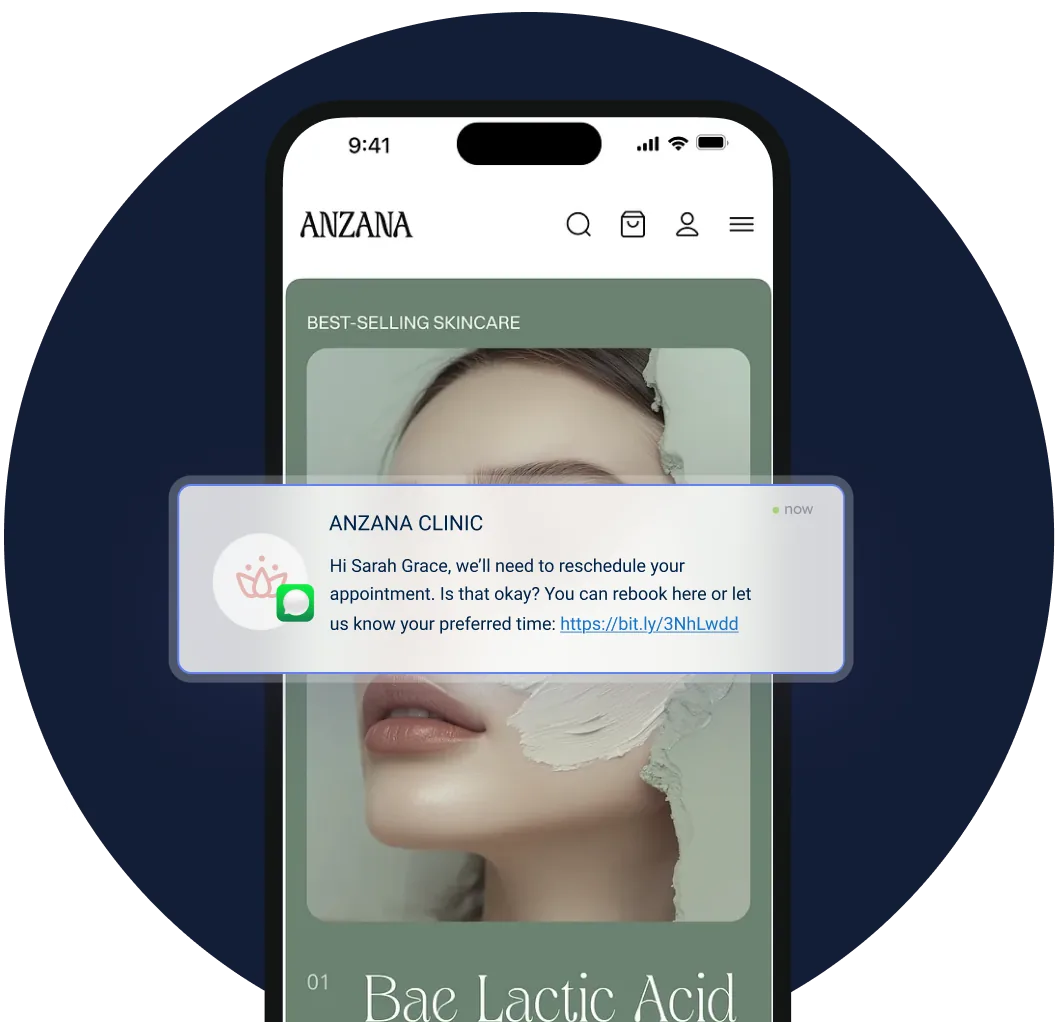
Post-appointment SMS campaigns inside practice management software like Pabau can be configured to fire automatically after appointments, with message templates that stay within HIPAA-safe language. The system handles the timing without clinical staff manually following up with each patient.
Responding to negative reviews is where most practices create their biggest compliance risk. The HHS Office for Civil Rights is clear: publicly confirming or denying that someone is a patient, or referencing any detail about their visit, constitutes a HIPAA violation. This applies even when the patient themselves disclosed their status in the review.
The correct approach is a neutral, non-confirmatory response that acknowledges the concern without engaging with the specific claim. Below are the structural rules:
This approach protects the practice legally while still demonstrating to other prospective patients that the practice is responsive and takes concerns seriously.
Draft three or four pre-approved HIPAA-safe response templates for your most common negative review scenarios: wait time complaints, billing disputes, bedside manner concerns, and appointment availability. Review them with legal counsel once, then rotate through them as needed. Consistent, fast responses matter more than uniquely worded ones.
Your Google Business Profile (GBP) is the most consequential single asset in local healthcare reputation management. It controls your local search rank, your star rating, your appointment booking link, and the first impression most prospective patients have of your practice.
According to Google’s own GBP documentation, profiles with complete information and recent reviews consistently rank higher in local search results than incomplete profiles with no activity. For multi-location practices, each physical location needs its own fully verified GBP listing.
The essential GBP checklist for healthcare practices:
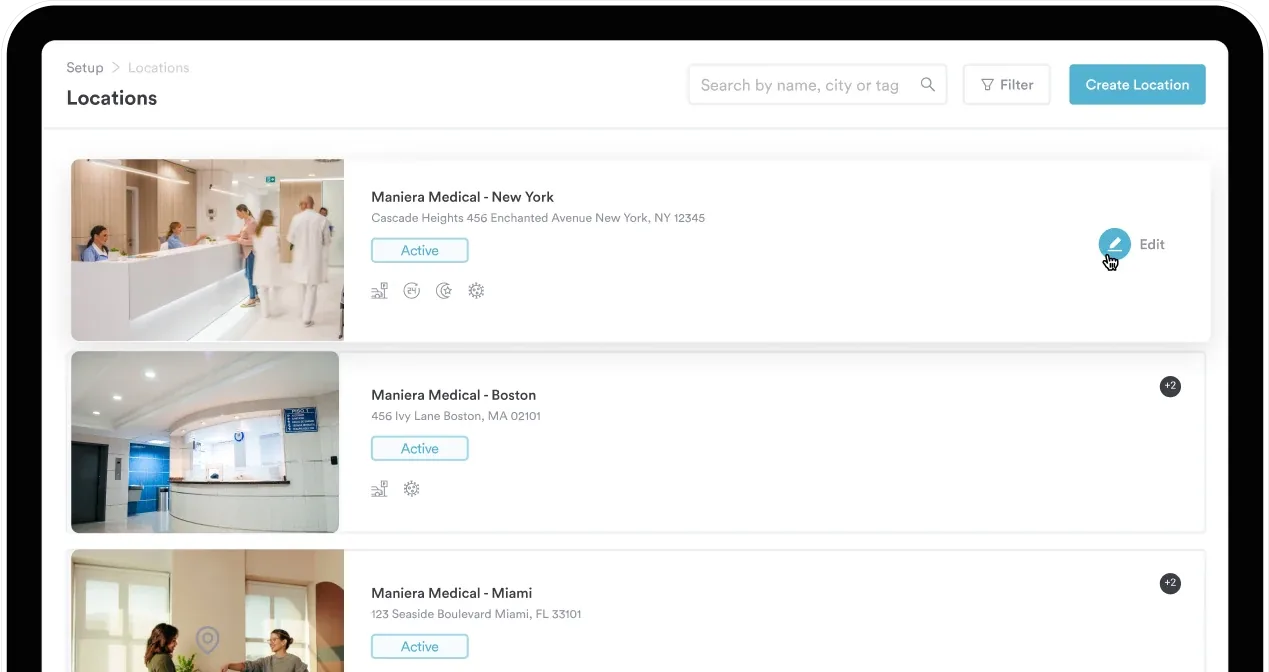
For practices running multi-location operations, GBP management needs to be standardized across all listings. Inconsistent NAP (name, address, phone) data across locations directly suppresses local search rank. Running reputation management across many sites takes centralized oversight of every location’s profile from one place.
Not every platform deserves equal attention. Prioritize based on where your specific patient population actually searches.
| Platform | Best for | Response capability | Priority |
|---|---|---|---|
| Google Business Profile | All practices, local search | Yes | Highest |
| Healthgrades | US physicians and specialists | Yes (claimed profiles) | High |
| Zocdoc | Practices using Zocdoc booking | Limited | High (if applicable) |
| Yelp | Cosmetic, aesthetic, spa-adjacent | Yes | Medium |
| Facebook Reviews | Community-based practices | Yes | Medium |
Healthgrades is particularly important for US-based specialists: the platform aggregates data from medical boards, hospital affiliations, and malpractice records alongside patient reviews. Claiming and maintaining your profile gives you the ability to respond to reviews and correct factual errors in credentials data.
For practices focusing on measuring patient satisfaction scores as a business metric, maintaining consistent review monitoring across these platforms gives you a more accurate picture than relying on a single source.

Pabau automates post-appointment review requests, centralizes patient feedback, and connects reputation data to your clinical scheduling – all within a HIPAA-aware workflow.

The difference between practices with strong online reputations and those with stagnant ratings usually comes down to workflow rather than clinical quality. Clinically excellent practices often underperform on review volume because they have no system to prompt patients at the right moment.
Practice management software solves this by embedding reputation touchpoints into the appointment lifecycle:
Pabau’s automated patient follow-up workflows handle steps 2 and 3 without manual intervention from clinical staff. The system identifies completed appointments and triggers the appropriate communication sequence based on the service type, which matters when different treatments have different follow-up windows. For a broader view of how review management software for practices integrates with scheduling and clinical data, the workflow architecture is worth evaluating before choosing a standalone reputation tool.
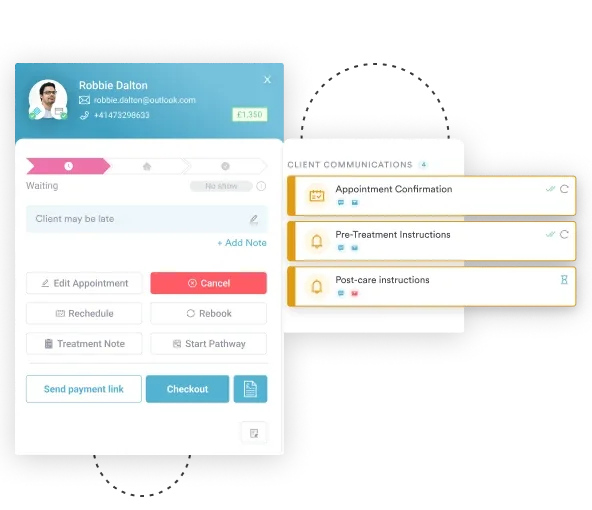
Beyond collection and response, reputation management requires ongoing monitoring. Google Alerts for your practice name and provider names catches mentions outside of formal review platforms. Many practices also set up monitoring for associated terms: the neighborhood, a specific treatment service, or a key clinician’s name plus the specialty.
For practices evaluating medical spa software or multi-specialty practice platforms, centralized reputation dashboards that surface new reviews across all platforms in a single view save significant time compared to checking each platform individually. The automated review collection feature inside Pabau aggregates review data so practice managers see the full picture without platform-switching.
Multi-specialty and multi-location groups face a harder version of this problem. Every added provider and site multiplies the practice-level and provider-level profiles someone has to watch. Searches for the best reputation management platforms for multi-specialty medical practices usually come down to one question: can the software route feedback to the right profile automatically, or does a coordinator do it by hand?
Evaluate healthcare review management software against the criteria standalone tools often miss:
A standalone reputation tool can cover monitoring and requests, but it sits outside the schedule, so someone still reconciles which patients were seen and by whom. Because Pabau connects scheduling, patient records, and communications in one system, it already knows who completed an appointment, so the review request and its routing run from the same place that booked the visit.
Reputation management is not just a defensive exercise. Practices that actively manage their online presence report measurable improvements in new patient acquisition, conversion from first inquiry to booked appointment, and patient retention rates.
The metrics worth tracking:
An internal survey can ask more than whether patients would recommend you. Rating the visit on opposite adjective pairs shows which part of the experience moved a star rating up or down.
Connecting review data to appointment and revenue data requires software that handles both. Standalone reputation tools give you the review metrics but cannot tell you whether a rating improvement correlated with a booking increase. A platform that manages scheduling, communications, and reputation in one system gives you that connection. For broader context on patient acquisition strategies that include reputation as a channel, the ROI case becomes clearer when review performance is tracked alongside new patient volume.
Many practices lose new patients because their online reputation does not reflect the quality of care they deliver. Systematic medical practice reputation management fixes that: compliant review collection, structured HIPAA-safe response protocols, and platform management that keeps your listings accurate and active.
Pabau’s automated workflows handle review requests, post-appointment follow-ups, and centralized feedback tracking without adding to clinical staff workload. To see how the system connects reputation management to scheduling and patient communications book a demo to walk through it with your team.

Turning star ratings into a growth channel? Healthcare reputation management explains why most patients now check reviews before booking.
Medical practice reputation management is the structured process of monitoring, collecting, and responding to patient reviews and online mentions across platforms like Google, Healthgrades, and Yelp to influence how prospective patients perceive a practice. It operates at both the practice level (overall brand) and the provider level (individual clinicians).
Yes, but only if you never confirm or deny that the reviewer is a patient, and never reference any clinical details, appointment information, or treatment history in your public response. HHS Office for Civil Rights guidance is clear that even a well-intentioned response can constitute a HIPAA violation if it implicitly acknowledges a patient relationship. Always invite the reviewer to contact the office privately to resolve concerns.
Send a post-appointment SMS or email to every patient within 24-48 hours of their visit, including a direct link to your Google Business Profile review page. Automated review request systems integrated with your practice management software produce the most consistent results. Do not filter which patients receive the request – under FTC rules, all patients must receive the same invitation.
Google Business Profile is the highest priority for all practices due to its direct impact on local search rankings. Healthgrades is essential for US physicians and specialists. Zocdoc matters if you use it for booking. Yelp and Facebook Reviews are relevant for aesthetic, wellness, and community-oriented practices. Prioritize claiming and maintaining profiles on Google and Healthgrades before expanding to others.
Review gating is the practice of screening patients before sending review links, directing only satisfied patients to public platforms while routing unhappy patients to internal feedback forms. The FTC’s updated 2023 Endorsement Guides explicitly prohibit this practice. All patients must receive the same review invitation regardless of their anticipated sentiment.
Google Business Profile and Healthgrades are the priority platforms for almost every group, with Vitals, Yelp, and Facebook added based on specialty. For a multi-specialty practice, the platform that matters most is the one managing all of them: choose review management software that integrates with your scheduling system and routes feedback to both the practice profile and each provider profile automatically, rather than a standalone tool a coordinator has to reconcile by hand.
Practice reputation management covers the facility as a brand: the overall star rating, local search visibility, and administrative experience. Doctor reputation management covers each individual clinician, whose Healthgrades and Zocdoc profiles carry their own ratings a patient may see before the practice’s. Someone searching for a specialist can land on a provider’s profile first, so both levels need monitoring and their own review flow.