Fertility clinic marketing: Strategies that attract & convert patients
Fertility clinic marketing is how a fertility practice attracts, educates, and c...

Last Updated: Oct 14, 2026

A med spa membership charges a flat recurring fee for set perks like discounted treatments and priority booking, turning one-off visits into predictable monthly revenue.
The most common way memberships lose money is pricing tiers below what the included services actually cost, so map staff time, product, and equipment costs before you set fees.
Memberships and spa loyalty programs solve different problems: A membership guarantees perks for a recurring fee, while a loyalty program rewards clients with points the more they book.
Practice management software like Pabau can run billing, renewals, and marketing for your membership program from the same system you already use for scheduling and payments.
A med spa membership turns one-off appointments into steady, recurring revenue, and it gives clients a reason to keep coming back. Membership and retail tools are among the features compared in our medical spa systems ranking. More than 90% of businesses now run some form of loyalty program, and med spas are quickly catching on.
If you are weighing one up, our guide to med spa loyalty programs breaks down the rewards, tiers, and math that keep it profitable.
For med spa owners, a well-run membership means predictable income and clients who come back every few weeks for another treatment. But creating and managing one takes careful planning.
So where should you start? To help you design, launch, and manage a profitable program, we have put together everything you need to know below.
The customer loyalty management market is valued at over $5.5 billion and is expected to surpass $24 billion by the end of 2028.
From Netflix for streaming shows and movies to Spotify for streaming music, these services offer tailored experiences, great value, and convenience — all at a flat monthly fee.
The trend is expanding to wellness and beauty industries, where med spa memberships are gaining popularity.
Clients are increasingly invested in their health and appearance, but they’re also looking for ways to make their self-care routines more sustainable and budget-friendly in the long term.
Here are a few reasons why memberships, in particular, are gaining traction:
Membership programs can be a great way for your med spa to earn more money and keep your customers happy.
For businesses, med spa memberships offer a steady stream of recurring revenue for the spa, helping them maintain financial stability, and growth. With predictable and steady income, you can better plan for staffing, ordering stock, or even ordering new equipment.
Additionally, they help build a loyal community of clients committed to their wellness and beauty routines. You improve client retention and don’t have to deal with the financial uncertainties of an irregular client base.
For customers, med spa memberships offer ongoing, cost-effective, and customized wellness journeys catering to their needs.
Aside from cost-effectiveness, a survey on brand loyalty found the most valuable membership benefits for customers are:
Amish Patel, the owner of Intrigue Cosmetic Clinic, has implemented his own monthly membership program through the Pabau practice management system that enables clients to build credit on their account.
One of the significant challenges you might face is decreased profitability per service. Offering discounted rates to members can lead to lower profits. So make sure you do the math beforehand, or hire an accountant who can do it for you.
Managing a membership program can be challenging, especially when it comes to administrative tasks.
People often use “membership” and “loyalty program” to mean the same thing, but they solve different problems. A membership charges a recurring monthly or yearly fee for a set bundle of benefits, like discounted treatments and priority booking. A med spa loyalty program rewards repeat behavior instead, letting clients earn points or perks the more they book.
A membership gives you predictable revenue from day one. A loyalty program costs you nothing until a client earns a reward, so it carries less risk but pays off more slowly. Plenty of med spas run both, using a membership for their regulars and a med spa loyalty program to nudge occasional clients toward their next booking. If you are deciding which fits your practice, our full guide to running a med spa loyalty program walks through the tiers and rewards in detail.
One move most program guides skip: layer your membership on top of the manufacturer rewards your clients already collect. Injectable brands run their own points schemes, such as Alle for Botox and Juvederm or Aspire for Dysport and Restylane, so a member can stack brand points and their membership discount on the same visit. Point that out at sign-up and the value becomes obvious without costing you a cent.
There are two common ways to structure the rewards. Points-based spa rewards programs give clients points for every booking, referral, or product purchase, which they redeem later. This model suits practices offering a wide range of services.
Flat-discount memberships are simpler: clients pay a set monthly fee and get a fixed discount or a bundle of included treatments. This works best when you specialize in a few core services, like injectables or facials. Whichever you choose, keep the rules easy to explain at the front desk.
If you run a med spa and want to keep your customers coming back, you should definitely consider starting a membership program. However, it’s critical to do the math and make sure it will turn a profit before you set one up.
To start, you need to know how much it costs to provide each service that will be part of the membership. This includes staff pay, supply costs, and equipment use.
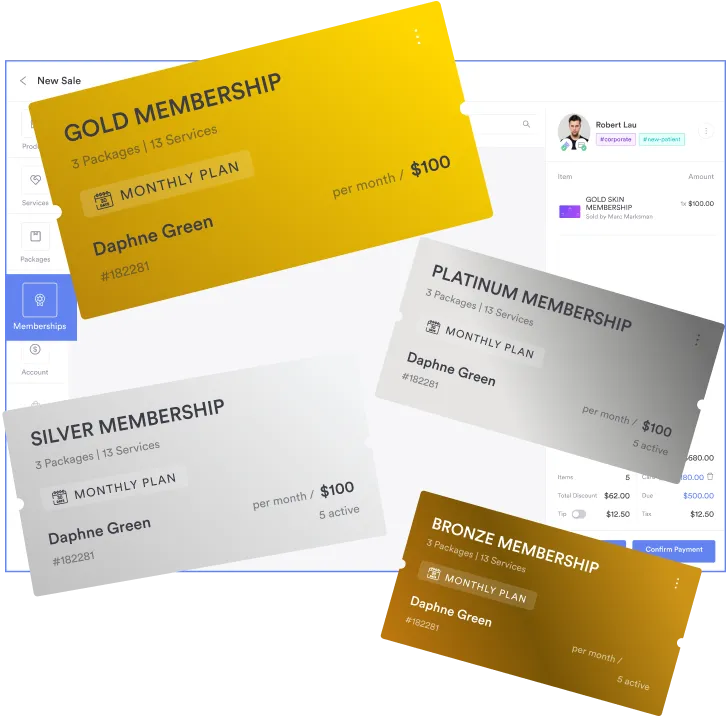
When setting your membership fees, make sure they are competitive, cover your costs, and leave some profit for you. Different membership levels can cater to different customers, from basic to premium. This meets different customer needs and gives you a chance to earn more by encouraging upgrades.
To make your membership program work well, it’s really important to know what the people you’re targeting like and need.
To understand what kinds of membership deals will make your customers happy and loyal, you can ask them through surveys and observe their purchase patterns and behavior. Demographics shift too — trending med spa treatments for men point to a member segment many programs still overlook.
Surveys are helpful because they let your customers tell you exactly what they think is good or bad about your membership program. You can use this information to adjust and improve your membership offers, making sure they’re something people really want and successfully converting your non-member clients.
A straightforward membership program is easier for clients and staff to understand and manage, which also helps reduce membership churn.
Keeping it simple helps avoid scaring off customers and makes things run smoother. When setting it up, be clear about what members get, how much it costs, and the rules.
Also, integrating the management of the membership program with the systems you already use, like your Point of Sale (POS) and booking systems, will help make everything run more smoothly.
Consider what you plan to include in your membership program. Will it feature multiple exclusive treatments, special pricing, member-only appointment times, or other unique benefits?
Decide on the rewards for your members, aka what kind of membership options to offer, how to price them, and how to structure them. You should decide if you’ll have monthly, yearly, or different levels of membership based on the rewards and frequency of the rewards. Remember to keep your language simple and familiar!
Research and select medical spa scheduling software that can also run your memberships, so booking, payments, and membership tracking live in one place. Consider how user-friendly it is for both you and your members, whether it fits your brand and membership model, and how well it integrates with your website and the other tools you use.
For example, practice management software like Pabau consistently ranks among the best medical spa software options for its scheduling, membership, and payment features built specifically for med spas. It gives your membership program a solid foundation.
Pabau helps you create and manage your membership programs. You can customize these programs to meet your client’s needs and preferences, ensuring they receive the best possible experience. Pabau is designed to handle the nuances of medical spa services, making it an ideal choice.
Your team can quickly find a customer’s membership info, such as when they first signed up, which membership pricing tier they’re on, when their membership package ends, all directly from the customer’s profile.
Pabau lets you manage your med spa’s membership programs from anywhere with internet access, including across multiple locations. So, you can easily manage your business using a smartphone, tablet, or laptop.
When developing a pricing strategy for your medical spa, research what your competitors offer in terms of membership: their offers, prices, and included services. That shows you where to differentiate.
To further stand out, focus on what makes your medical spa different, whether it’s your technology, your staff’s qualifications, or a holistic approach to treatments.
Additionally, offering different membership tiers with benefits such as discounts, guest passes, priority booking, and exclusive access to new treatments can help attract clients.
For example, if your med spa specializes in skincare, you could offer a monthly membership that includes one Hydrafacial and a discount on premium skincare products. For those more interested in comprehensive wellness, a yearly membership could provide a broader range of services such as laser hair removal, Botox injections, and access to exclusive wellness seminars.
How you promote your membership program is just as important as the pricing itself. This strategy involves reaching potential and current customers through multiple platforms for repeated exposure, which can increase brand recognition and encourage sign-ups.
Plus, analyzing the performance across different channels can provide valuable insights into where to focus future marketing efforts for the best return on investment.
To market your spa’s membership program:
Automation can greatly benefit a med spa membership program by simplifying operations and improving the client experience. Pabau offers several automation features that can help transform your program, from recurring billing to automated appointment reminders.
Automating booking, payment processing, and membership renewals can make things much easier. It frees up staff to focus on important aspects of the business, such as taking care of clients and improving services.
The system also sends out appointment reminders automatically. This helps clients remember their appointments, reduces no-shows and cancellations, and maximizes the spa’s resources.
Injectable members are the clearest case, because Botox results fade on a predictable schedule. A ready-made set of Botox reminder emails prompts them to rebook before their results wear off.
Take the headache out of membership renewals by fully automating the membership renewal and the monthly treatment charges that come with it, ensuring accurate and timely billing.
This automation offers clients a continuous membership without service interruptions or benefits. It guarantees steady recurring revenue for spas and a hassle-free payment experience for clients.
Finally, Pabau allows med spas to automate their marketing efforts, sending targeted and personalized emails and SMS messages to its members. It also maximizes the effectiveness of marketing campaigns, as messages can be tailored based on individual client data, leading to higher engagement and conversion rates.
If you are staring at a blank page, borrow from what already works. The strongest med spa membership ideas pair a clear monthly value with perks that cost you little but feel generous to clients. And a membership base that renews reliably strengthens your case if you later weigh when to franchise your med spa.
A few to build from:
Keep unused credits rolling over for a set window so clients never feel they have lost value, and revisit the mix each quarter based on what members actually use.
Most med spas start out tracking memberships in a spreadsheet, alongside a separate booking calendar and card terminal. That means someone on the team is manually checking who is due for renewal and re-running failed payments by hand.
Pabau keeps membership billing, client records, and scheduling in one system. Recurring billing charges the card automatically on the renewal date, and a failed payment flags on the client’s profile instead of quietly lapsing. Your team can see a member’s tier, sign-up date, and renewal date from the same screen they use to book an appointment.
Built-in reporting tracks active members, revenue, and cancellations, so you can see which tiers are working and adjust pricing or perks before a member drops off.

Pabau’s recurring billing and built-in reporting run your med spa membership program from the same system you use for scheduling and payments, so renewals process automatically and you can see which tiers are earning their keep.

A membership program only pays off if you price it against what your services actually cost to deliver, not against what feels generous to offer. Get that right, and a handful of core treatments become the predictable revenue line the rest of your calendar builds around.
Keep the structure simple enough that a new front-desk hire can explain it in one sentence, and automate renewals from day one, before manual billing becomes the reason members lapse.
The trade-off is worth naming: a membership discounts your margin on the treatments inside it, in exchange for revenue you can forecast months ahead. For most med spas managing seasonal demand, that trade is worth making. Book a demo to see how Pabau can run the billing, renewals, and reporting for your membership program.

Deciding between a membership or loyalty model? med spa membership program guide explains how memberships turn one-off visits into steady, recurring revenue for spas.
Setting your membership price points? Med spa charm pricing shows how psychological pricing cues can make a tier feel like a deal without cutting your margin.
Adding sclerotherapy to your treatment menu? sclerotherapy consent form template covers patient history, contraindications, and risk disclosures with a practitioner sign-off.
Offering acoustic wave therapy at your spa? shockwave therapy aftercare template covers post-treatment care, activity limits, expected side effects, and follow-up scheduling.
A membership charges a recurring monthly or yearly fee for a set bundle of benefits, like discounted treatments and priority booking, which gives you predictable revenue from day one. A loyalty program instead rewards repeat behavior, letting clients earn points or perks the more they book. It costs you nothing until a reward is earned, so it carries less risk but pays off more slowly. Many med spas run both.
Points-based programs give clients points for every booking, referral, or product purchase to redeem later, which suits practices offering a wide range of services. Flat-discount memberships are simpler: clients pay a set monthly fee for a fixed discount or a bundle of included treatments, which works best when you specialize in a few core services like injectables or facials. Keep the rules easy to explain at the front desk.
Most med spas handle billing for ongoing treatments like laser or skin rejuvenation through recurring billing. The client pays a fixed monthly fee, and the system charges the card automatically on the same date each cycle, whether the plan covers a course of laser sessions, skin rejuvenation, or a bundle of services. Membership management software tracks how many sessions remain in each package, so ongoing treatments draw down against what the client has already paid rather than creating a new invoice every visit.
Two stand out. Offering discounted rates can lower your profit per service, so map staff time, supply, and equipment costs before setting fees, and lean on exclusive perks like priority access rather than deep discounts. The other is admin time. Membership management software eases this by automating renewals, payment processing, and appointment bookings, freeing your team to focus on client care.
The biggest one is pricing tiers below what the included treatments cost to deliver, so every sign-up quietly loses money. Close behind are over-complicated tiers clients cannot follow, no minimum commitment so members cancel right after one discounted visit, and manual renewals that lapse the moment a card expires. Map your service costs first, keep the plans simple, and automate the billing.
Borrow from what already works. Tiered plans move clients from facials and light peels up to medical-grade treatments with bigger discounts. Banked credits let the monthly fee accrue as account credit for any service. You can also offer member pricing on injectables, priority booking for peak slots, birthday and milestone perks, and members-only events. Let unused credits roll over so clients never feel they have lost value.
Lead with the value, not the fee. Show clients what they already spend in a year against what a membership would cost, and let the savings speak for themselves. Train your front desk to raise memberships at checkout, promote them across email and social, and use in-spa signage so regulars see the offer every visit.
Yes, and it is an easy win. Injectable brands run their own points schemes, such as Alle for Botox and Juvederm or Aspire for Dysport and Restylane, so a member can stack brand points and their membership discount on the same visit. Point that out at sign-up and the value becomes obvious to the client without costing you a cent.
Yes. Practice management software like Pabau runs billing, renewals, and marketing from the same system you already use for booking and payments. Your team can pull a client’s membership details, sign-up date, pricing tier, and end date straight from their profile, and manage everything across multiple locations from any device. Built-in reporting shows how the program is performing so you can adjust as you go.