







Key Takeaways
Opening a med spa costs $50,000 to over $1 million, with $150,000 to $300,000 covering a typical two- or three-room location.
A medical director retainer typically runs $1,500 to $8,000 a month, on top of payroll for aestheticians, practitioners, and admin staff.
Memberships priced at $150 to $300 a month create predictable revenue that cushions rent, payroll, and the medical director retainer during slower weeks.
A well-run two-provider practice usually breaks even around month 10 to 14, then spends another two to three years paying back its launch costs.
Every med spa starts with a spreadsheet that doesn’t quite balance. The rent looks manageable, injectables look cheap per unit, then the medical director invoice lands and the math stops working.
A business plan for med spa owners fixes that before it happens. The financial section is the part that decides whether you open at all — what it costs to launch, what it costs to run each month, and where the money comes back.
This guide walks through both sides of that plan. First the startup costs and med spa operational costs, line by line, then the revenue levers — like memberships — that turn those costs into a profitable practice.
How much does it cost to run a medical spa?
The costs of running a med spa aren’t just about the one-time set-up costs. There are many ongoing expenses that will either minimize or maximize its profitability.
These expenses can fluctuate based on factors such as:
- Location: Rent amount varies by location — expect higher pricing in high-traffic urban areas than in suburban or rural spots
- Service offerings: Advanced treatments like lasers or premium injectables mean higher equipment, product, and skilled-staff costs
- Client volume: More regular clients is great, of course, but it also means you’ll have higher costs for staff, consumables, and product supplies
These costs add up every month, so building them into your plan before you sign a lease matters more than the one-time startup number ever will.
Beyond compliance, understanding the full scope of medical spa requirements helps ensure you’re prepared for staffing, operations, and long-term success.
How much does it cost to open a med spa?
Before you open a med spa, a detailed checklist of every startup cost is what keeps your budget — and your financing — grounded in reality. Opening a med spa runs anywhere from about $50,000 for a lean, single-room location to over $1 million for a premium build-out, with $150,000 to $300,000 covering a standard two- or three-room startup.
The spread comes down to your location, your service mix, and how much equipment you buy on day one. Here’s where the money goes.
Location and lease
Securing the right location for your med spa is a major upfront expense. You’ll also have to budget for rental payments every month.
Typically, it’s up to the landlords to decide the type of payment they want for the space, so here is a breakdown of the key costs involved:
- Lease deposits: In the US, prime commercial spaces may require up to six months’ rent upfront as a deposit, with leases ranging from $3,000 to $10,000 monthly.
- Monthly rent: The rent costs will vary depending on location, square footage, and traffic.
- Additional fees: Some leases include Common Area Maintenance (CAM) fees, property taxes, and insurance, adding $1,000-$5,000 per month.
Renovations and equipment
Reputable med spas need to offer clean, inviting, and professional spaces.
To transform your med spa into a functional, client-ready facility, you’ll need to invest upfront in renovations and high-quality equipment.
The cost of those things will depend on:
- The current space condition: If the space is completely empty you’ll need to deal with build-out costs — walls, plumbing, and electrical. Even a ‘finished’ space may need upgrades for med spa standards.
- The size of the space: Bigger space = more square footage to renovate and equip.
- The services you offer: You’ll need high-quality injectable supplies, consumables, machines, treatment chairs, and so on.
Depending on whether you’ll need to renovate the space and transform it to fit a med spa environment, costs can range from $50,000 to over $150,000.
Licensing and permits
In the US, all med spas must obtain licenses and permits to operate legally. Again, these are costs that widely vary based on location, the services you offer, and the regulations in the state you’re operating from.
Here are some of the licenses/permits you may need in your med spa:
☑️Business licenses and permits to operate legally
☑️Professional licensing for medical professionals
☑️Medical director licenses
☑️Health department permits
The average costs for these licenses and permits can range from $10,000 to $30,000.
Initial staffing and training
Staffing costs are one of the biggest expenses at med spas.
Not only are there the initial costs of recruiting a team, but you’ll also pay ongoing salary expenses every month. Providing quality training for your employees is a non-negotiable investment too, because
- Skilled injectors and estheticians ensure safer, high-quality treatments while building client trust, which keeps customers coming back.
- Even experienced staff need ongoing training to stay updated on industry trends, evolving protocols, safety and hygiene standards
Prioritizing hiring and training ensures your med spa is set up for long-term success.
Promoting med spa opening
A grand opening for a med spa that’s about to be open can set the tone for its success. However, it can get very pricey if you don’t plan carefully.
Before getting carried away with finding the perfect balloon arch backdrop to capture those med spa opening moments, put your business head on.
Let’s break down the costs you’ll need to factor in for an event:
- Local advertising: You’ll need to budget costs for print media, adverts in local newspapers or magazines, radio advertisements, and good old-fashioned advertising, such as mailing flyers or postcards.
- Social media campaigns: You’ll also need to set aside budget for social media ads to target beauty-conscious locals and even to hire a professional photographer or videographer to generate some buzz.
- Event costs: Med spa promotion costs for decorations, catering, a DJ, gift bags, or giveaways will add more expenses to your budget.
Legal and consulting fees
Navigating med spa business regulations requires expert help. This means paying attorneys and consultants for things like:
- Business formation
- Staff contracts
- Compliance
Legal help like this could cost anywhere from $1,500 to $2,000.
How to start a med spa: turning costs into a plan
Adding up costs isn’t a plan. To start a med spa that survives its first year, you have to turn those numbers into a working budget with a cushion built in. Our full guide on how to start a med spa covers the licensing and setup path — here’s how the money side fits together.
- Pick your operator profile first. A solo nurse practitioner opening one injectables room budgets very differently from a physician-led practice with lasers. Size the plan to the model you’re actually building.
- Separate one-time from recurring. Startup costs open the doors; med spa operational costs keep them open. Plan for both, not just launch day.
- Hold an operating reserve. Keep three to six months of running costs in the bank. Most practices that stall do so because monthly spending ran higher than projected, not because the launch failed.
- Line up funding early. Personal savings, an SBA 7(a) loan, or equipment financing each carry a different cost — model the repayments into your monthly plan before you sign.
- Project your break-even. A well-run two-provider practice usually covers its monthly costs around month 10 to 14, then works toward paying back the launch over two to three years.
The typical operational costs for a med spa
Once your med spa is open for business, it’s the operational costs that will shape its profitability. Let’s take a look at those costs, one by one.
Rent and utilities
Among other expenses, med spas have ongoing costs for leasing commercial space and utilities. Here’s an overview of those costs:
✅Rent: Commercial rent rates in the US vary based on location, property type, and market conditions. As of 2025, the national average full-service equivalent listing rate for office space for a 2,000-square-foot space would cost about $5,563 monthly.
✅Type of property: Office space averages approximately $38 per square foot per year, retail space around $18.09/year, and industrial space around $8 per year.
✅Utilities: The average utility cost for a small business in a commercial building is approximately $2.14 per square foot per month. For example, a 2,000-square-foot space = $4,280 per month.
Staff salaries and benefits
Payroll is the largest recurring expense at med spas. If you take a closer look at staffing requirements, ideally, a med spa has:
– A Medical Director (MD)
– Aestheticians
– Practitioners
– Administrative staff
If your med spa falls into the small-scale category with a headcount of less than five employees, you can expect to spend around $8,000-$12,000 monthly for payroll.
Payroll isn’t the whole staffing bill, though. A med spa also needs a medical director on file, and that retainer runs roughly $1,500 to $8,000 a month depending on your state. Pay too little and you get a “paper director” who never does the oversight, which is a fast track to a board complaint.
It also pays to track revenue per provider, since one injector can quietly bring in far more than another on near-identical pay.
Product replenishment
Your service offerings and client volume dictate how often you restock injectables, skincare, and consumables — costs that add up fast. Here’s the breakdown:
- Injectables: Botox costs $10-$30 per unit, with treatments averaging $300-$600. Hyaluronic acid fillers, depending on the brand, range from $400-$800 per syringe
- Skincare: Expenses for skincare products and cosmetics can range from $20,000 to $50,000 annually
- Disposable supplies: Costs for needles, syringes, gowns, and drapes are estimated at $7,500
As a rule of thumb, keep injectable cost of goods at or below 30 to 40 percent of the revenue those treatments generate. Waste is the usual reason it creeps higher — half-used syringes, reconstituted toxin past its window, or product that expires on the shelf after over-ordering.
Medical supplies
The quality of medical-grade supplies and equipment at med spas could decide the fate of the business. However, don’t jump in too quickly.
While investing in cutting-edge technology is important and can provide a USP for new businesses looking to stand out, it’s not always the right move early on.
High-cost equipment should be carefully evaluated — factoring in ROI, demand, and long-term value — before investment. Ongoing maintenance and upgrades also add to the cost, so it’s crucial to crunch the numbers.
Costs can include the following:
- Lasers
- Ultrasonic facial machines
- Facial beds
- Body sculpting machines
- Sterilization equipment
- Equipment and supplies for chemical peels and microneedling
- A kit for PRP
Insurance
At most med spas, the treatments offered might involve certain risks and complications.
That’s why getting professional liability insurance isn’t just a safety net — it’s a must. Having the right policies in place will protect the reputation of your business and your staff and provide your clients with peace of mind.
Here’s why:
– Covering malpractice claims: If a client experiences an adverse reaction and claims for negligence, insurance like this helps you cover legal fees, settlements, or damages.
– Protecting you against lawsuits: A client could claim for improper treatment and without insurance, a lawsuit could be financially devastating.
– Ensuring credibility: Insurance will reassure your clients that your business is professional and reputable, which helps with brand perception.
The cost of that insurance will vary based on your needs, but you can initially plan on budgeting around $2,000 to $5,000 annually.
Technology and software
Investing in the right technology, like a software management system, can drastically reduce admin costs and improve med spa efficiency.
Automating some of the manual tasks that eat up time — such as taking bookings over the phone or sending intake forms to clients — can be critical. It also means staff can focus on higher-value tasks like providing great customer service.
Key cost-saving areas include:
- Appointment booking and scheduling
- Patient record management
- Marketing
- Billing and invoicing
- Inventory management
- Staff schedule management
Finding a robust software solution with all these functionalities packed into one system can be a really worthwhile investment for new med spas.
Marketing and advertising
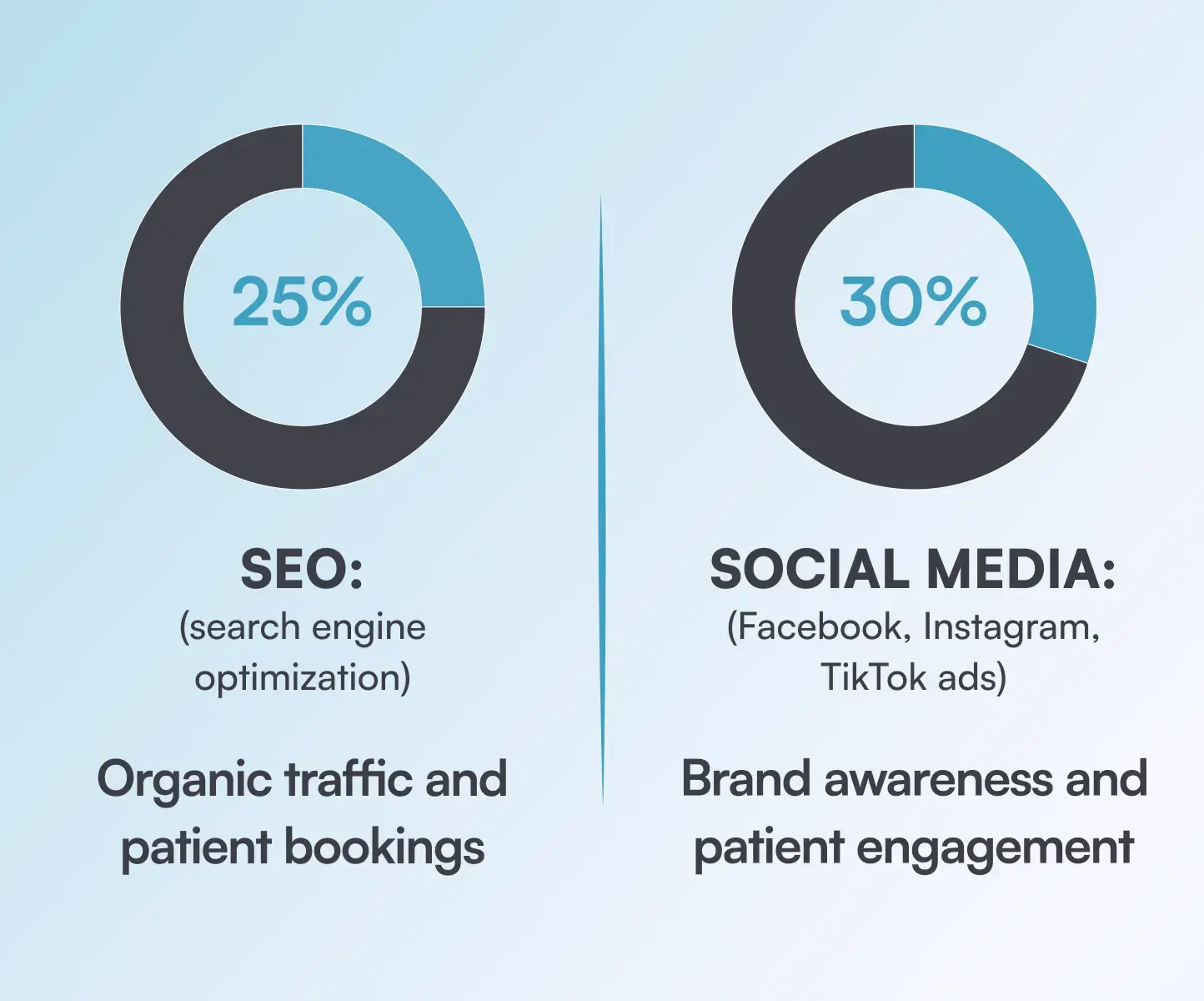
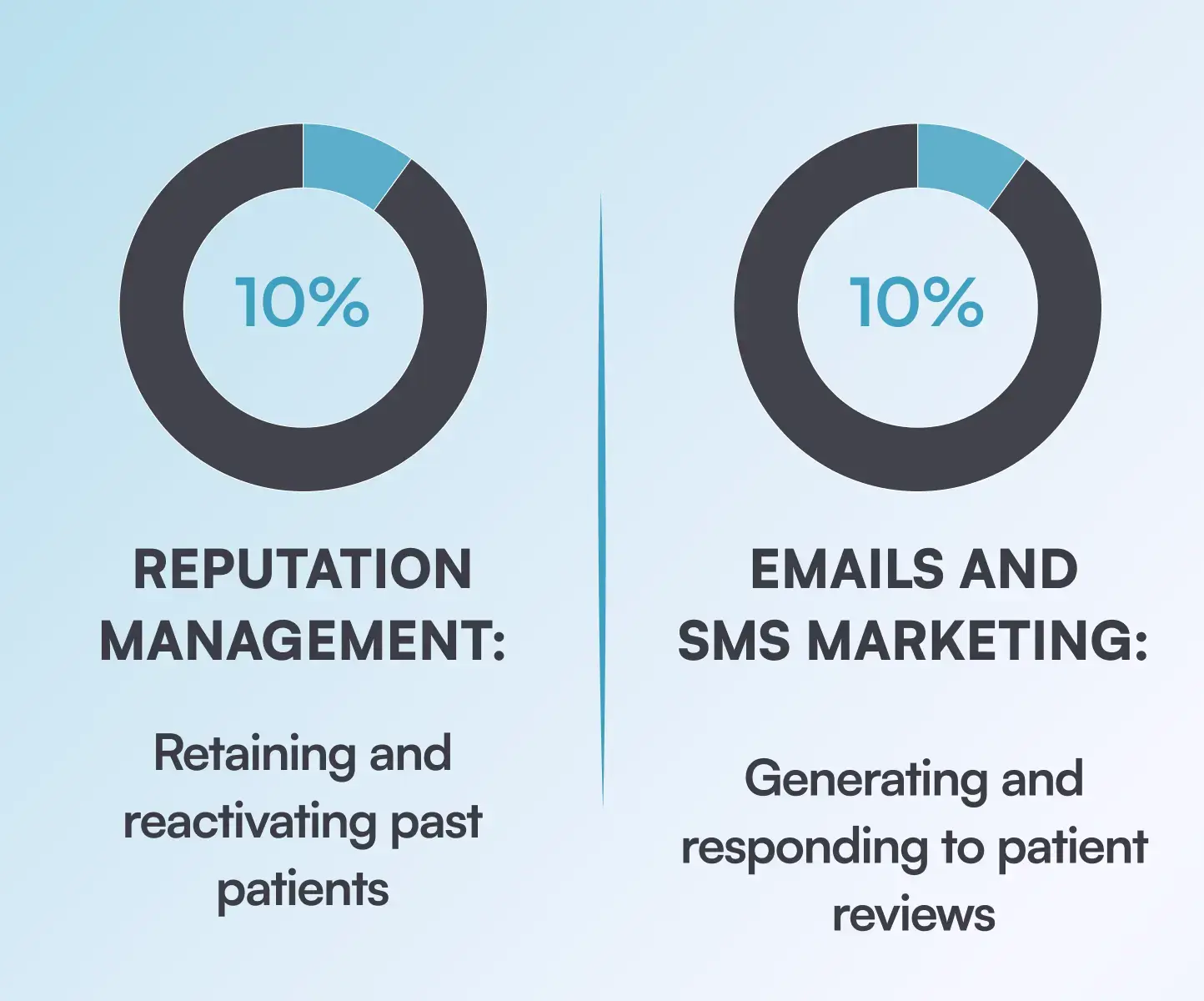
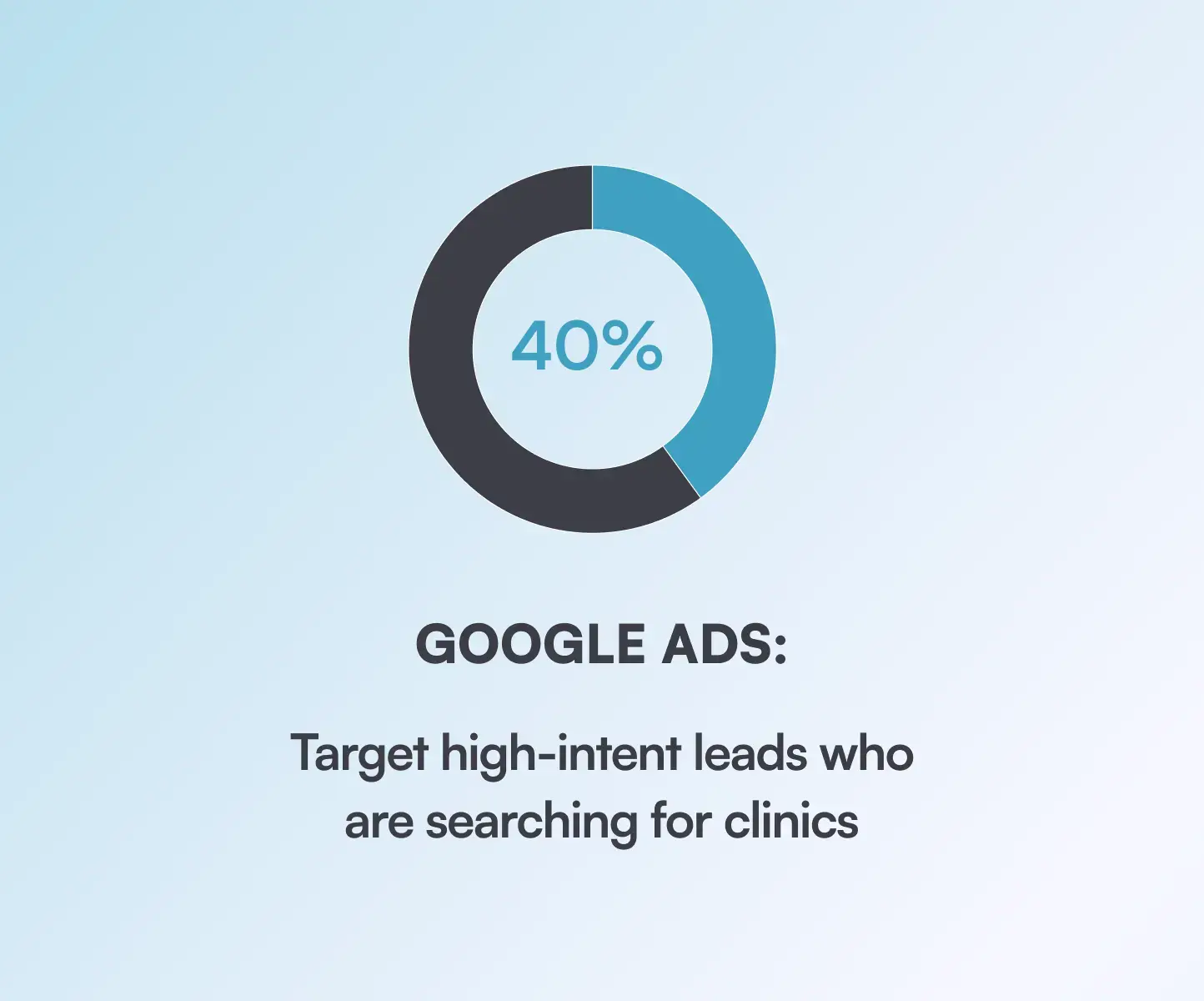
Consistent marketing is key to keeping those appointment slots full, with the average monthly marketing budget ranging between $1,600 and $15,000.
Of course, costs vary depending on how established the med spa is, along with revenue, specialty, location, service number, and competition.
Whether it’s digital ads, social media campaigns, or local promotions, here’sa recommended digital marketing budget allocation:


You may also want to factor in advertising costs for specific campaigns or events. For example, a new service launch or new membership program.
Med spa memberships and the revenue side of your plan
A business plan that only lists costs is half a plan. Revenue is what makes the numbers work, and med spa memberships are the steadiest source of it.
A typical membership charges $150 to $300 a month and bundles in a set amount of treatment — Botox or filler credits — plus a discount on everything else. Two hundred members at $200 a month is $40,000 in predictable revenue before a single walk-in books, which cushions rent, payroll, and the medical director retainer through slow weeks.
The catch is the math. If the treatments you include cost more in product and provider time than the fee brings in, you’re discounting your best services for the look of recurring revenue. Price each membership so the fee clears your cost per member by at least 25 to 30 percent.
Get that right and memberships lift your net margin — which sits around 20 to 25 percent for an average med spa and reaches 35 percent or more at the best-run practices.
Key factors affecting operational costs
The monthly operational costs of med spas aren’t set in stone. They shift based on several key factors, and understanding them can help you budget smarter.
Let’s dissect the most prominent ones:
- Location and lease: Med spas in cities like LA or New York require a bigger lease than those in smaller towns.
- Size of the facility: A larger space means higher rent, utilities, and maintenance costs.
- Utilities: Bills for electricity, water, internet, HVAC upkeep, and cleaning services.
- Equipment and supplies: Lasers, injectables, and skincare products, to keep up with demand.
- Furniture: Depending on the luxury level of decor you want for your med spa, those are expenses for treatment beds, waiting room chairs, and other office furniture and amenities.
- The number of treatment rooms: The more rooms you have to operate, the bigger the revenue potential will be, but it also means that you’ll need more staff and equipment = more costs.
- Staffing and salaries: The payroll for your nurses, practitioners, receptionists, and other staff is usually one of the biggest recurring expenses you’ll have.
- Software technology: Successful med spas use medical software for booking, payments, client management, and marketing, but these come with monthly fees.
- Unexpected repairs: You must consider issues that can unexpectedly drain your budget, like a broken laser machine or an urgent plumbing problem.
Frequently asked questions
Opening a med spa typically costs $150,000 to $300,000 for a standard two- or three-room location, though a lean single-room setup can start around $50,000 and a premium build-out can run over $1 million. The total depends on your location, service mix, and how much equipment you buy on day one.
A medical director retainer typically runs $1,500 to $8,000 a month, depending on your state's supervision requirements. Paying too little for this role risks a “paper director” who never does the oversight, which is a fast track to a board complaint.
A well-run two-provider med spa usually covers its monthly costs around month 10 to 14, then works toward paying back its launch costs over two to three years.
Most med spa memberships charge $150 to $300 a month, bundling in a set amount of treatment credits plus a discount on other services. Price each membership so the fee clears your cost per member by at least 25 to 30 percent.
Drive financial success for your med spa with Pabau
A med spa business plan only works if the numbers stay under control after opening day. That means a clear, live view of both your costs and the revenue coming back in.
A 360° approach will help you stay on budget, with no ‘surprise!’ costs.
For that, practice management software like Pabau can be your ally. It handles scheduling and booking, patient record management, marketing your business, and more. It can also help med spas drive financial success:
- Automated appointment confirmations and reminders: Avoid no shows and late cancellations and set up robust deposit rules so you don’t lose $$.
- Staff management tools: Set up a commission program, track hours worked with clock in and clock out functionality, and ensure your staff get paid!
- Integrated billing and payment processing: Reduce errors and chargebacks by automating invoices and payments
- Built-in marketing suite: No need for a third party tool. Run your marketing directly from Pabau with email and SMS campaigns, gift cards, etc.
- Inventory management: Track stock levels in real-time so you only restock what’s needed
Book a demo to see how Pabau can transform your med spa — the business you worked so hard to build!