

AI medical scribe for med spas and private practices
Notes that write themselves
Pabau’s AI medical scribe turns a spoken consultation into a structured clinical note without anyone typing it — directly inside the client record, sign-off-ready.
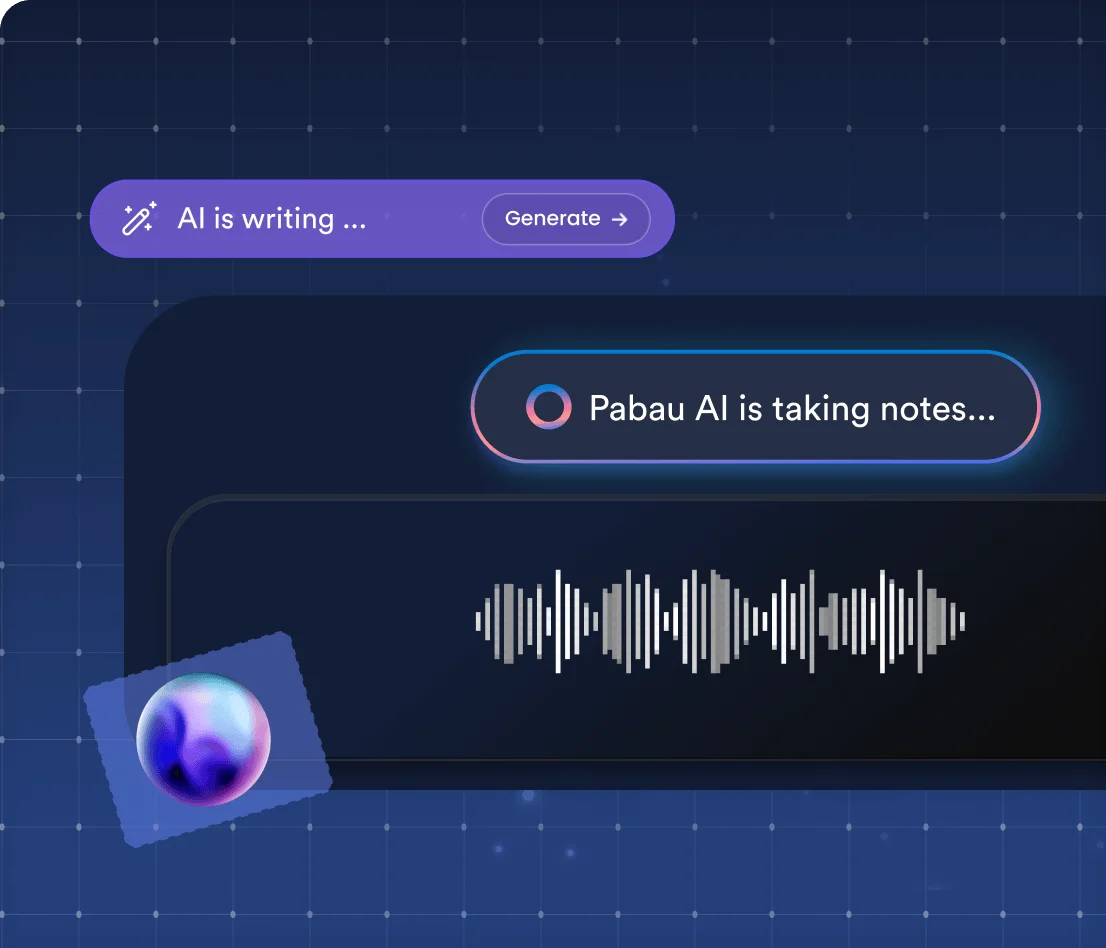


Part of Pabau, the practice management platform behind 4,000+ medical practices and medspas across the UK, US and globally



Say it once. Sign it off
Record it
Click Start on the appointment, then record live or upload a file. Either way the note links to the right patient.

Watch it build
The transcript appears as you speak, so pause any time and stop when the consultation is done.

Sign it off
Review, edit anything, finalize. It lands in the client card, version-tracked and traceable to the transcript.
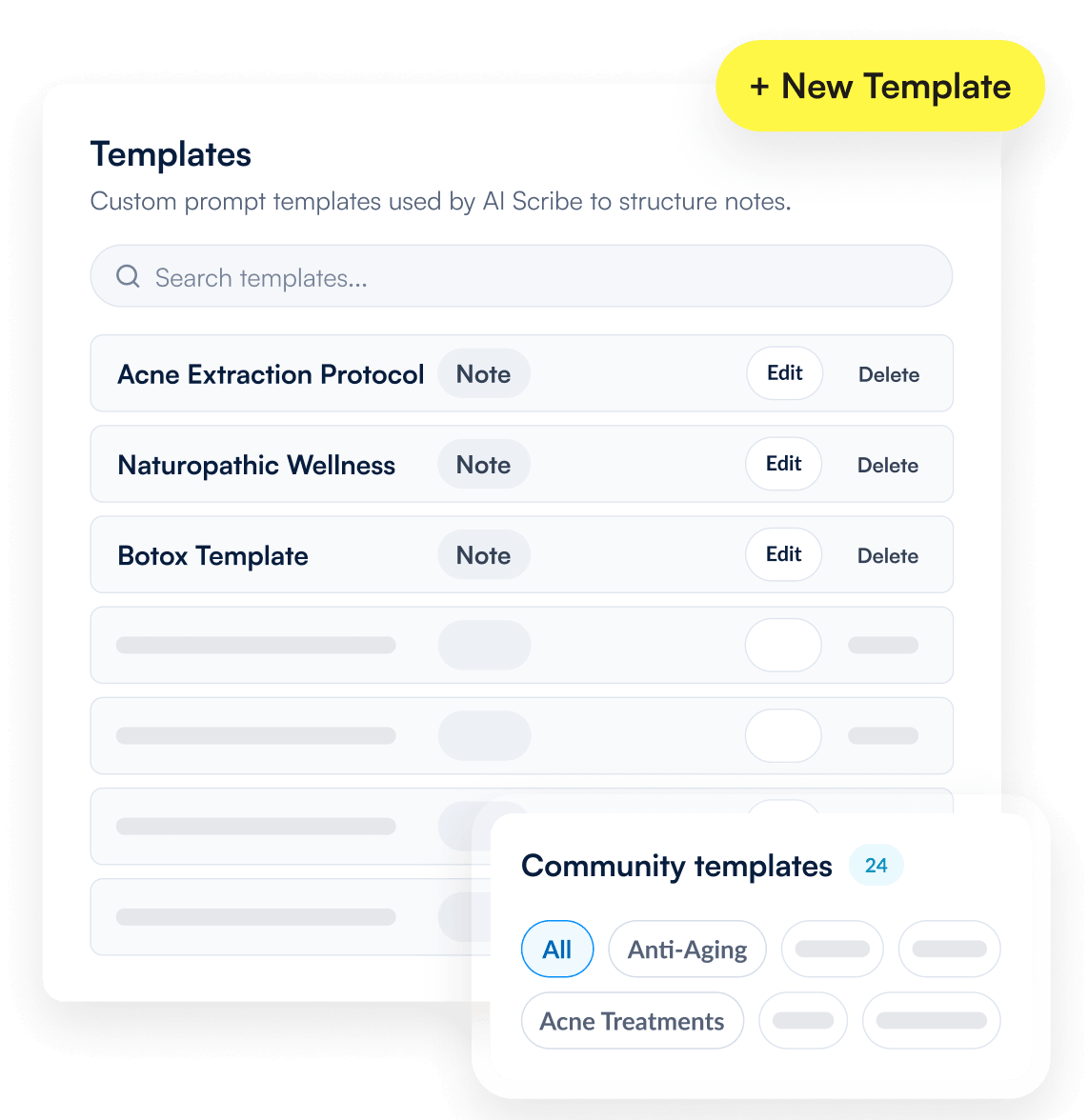
Notes in your practice's format, not a generic one
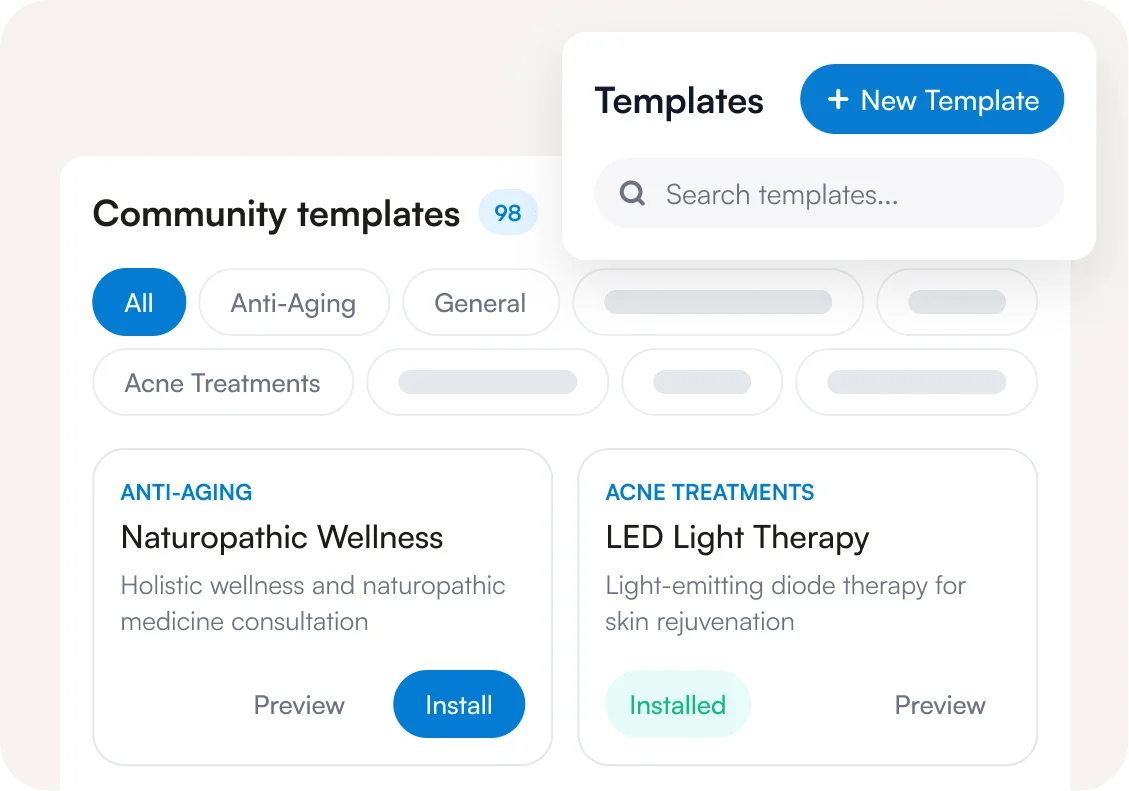
Install one of nearly a hundred ready-made templates, or build your own section by section. You decide what each section captures, and whether it lands as paragraphs, bullets or a narrative. The result is a note that sounds like your practice wrote it, because the structure is yours.
Ambient AI scribing before the patient leaves the room
Pabau Scribe listens while you talk and turns the conversation into a structured clinical note and treatment plan in one click. Ambient means it works in the background during the appointment, rather than from a recording you process afterward. No rushed note-taking between appointments, and no late-night charting.
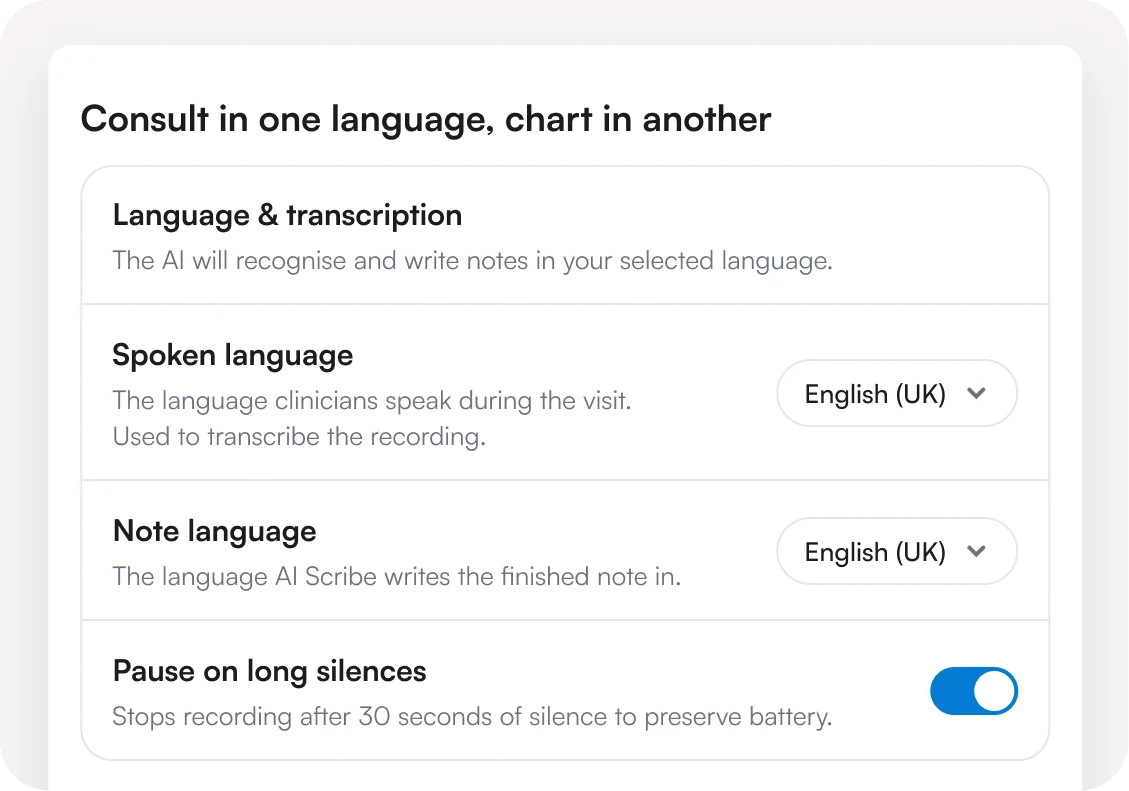
Consult in one language, chart in another
Set the language you speak in and the language the note is written in separately. Hold the consultation in the language your patient is most comfortable with, and still get a note in your practice’s working language. Multilingual teams stop translating their own paperwork, and the record reads the same no matter who ran the appointment.
Every line traceable to what was said
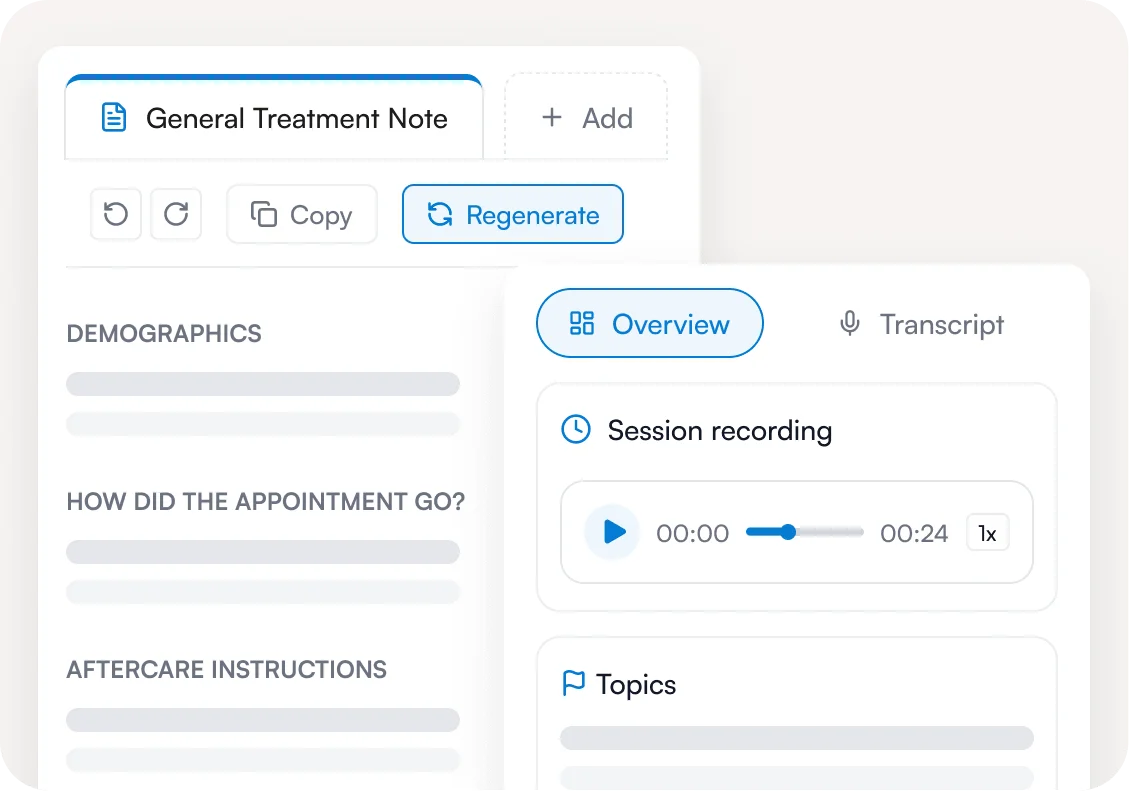
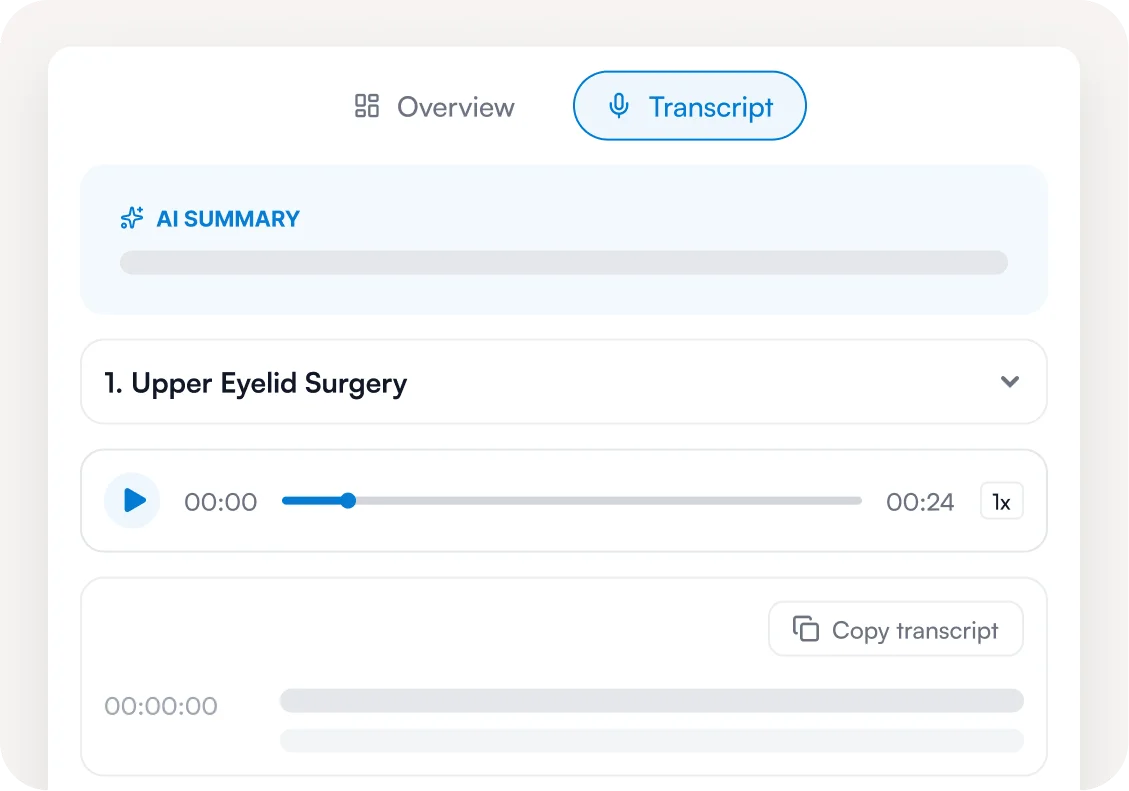
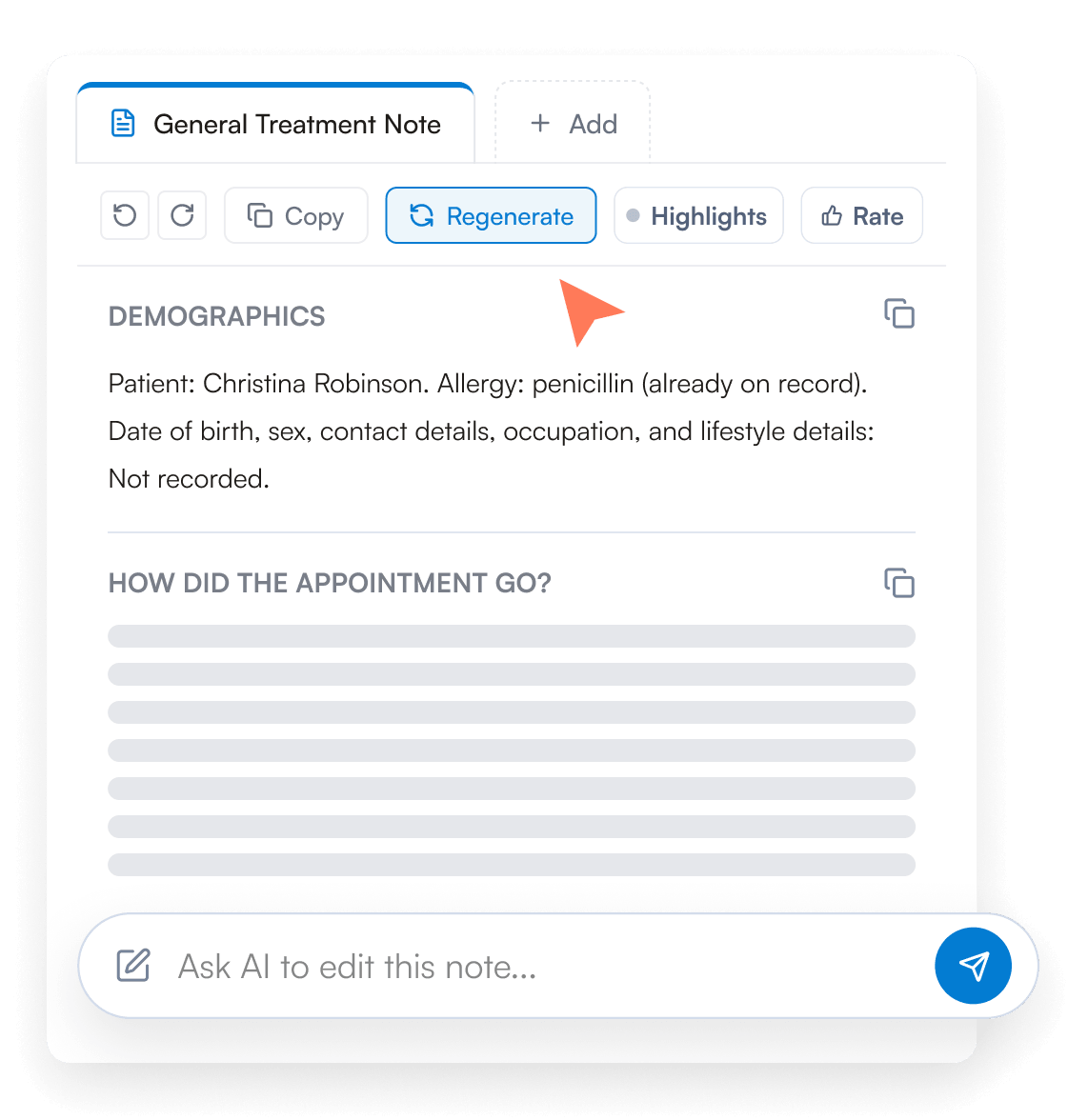
The finished note opens beside the transcript and the session recording. A topics panel breaks down what was covered and how long each part took. Edit any section by hand, ask the AI to adjust one, or select a line and regenerate it in place. It stays a draft throughout, and nothing reaches the patient record until a clinician signs it off.
One consultation, every document it should produce
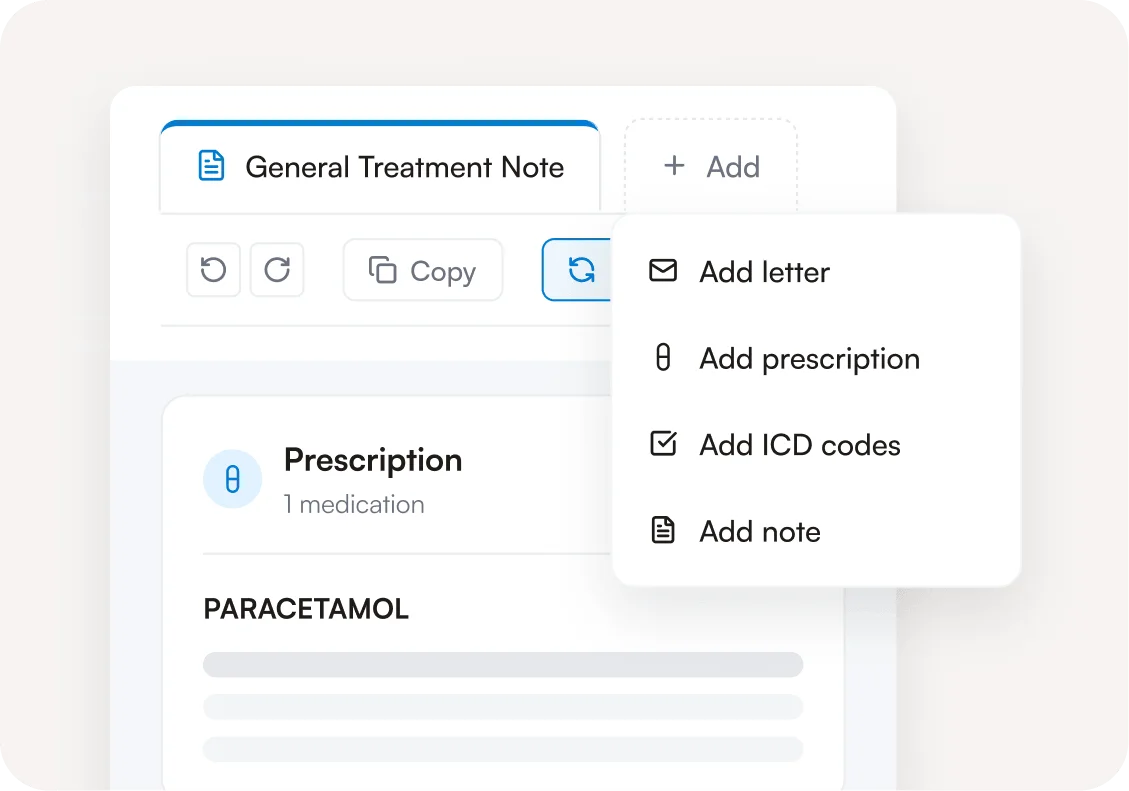
The same recording generates the referral letter, the prescription and the diagnostic codes. Drugs are pulled from the conversation with dose, frequency, route and duration ready to check. Suggested ICD-11 codes arrive with the reasoning behind each one, so you approve or reject them individually. Every output has its own review step, and each lands where it belongs. Letters go to communications, prescriptions to the record, approved codes to the problem list.
Decide who records, who reads, and how consent is captured
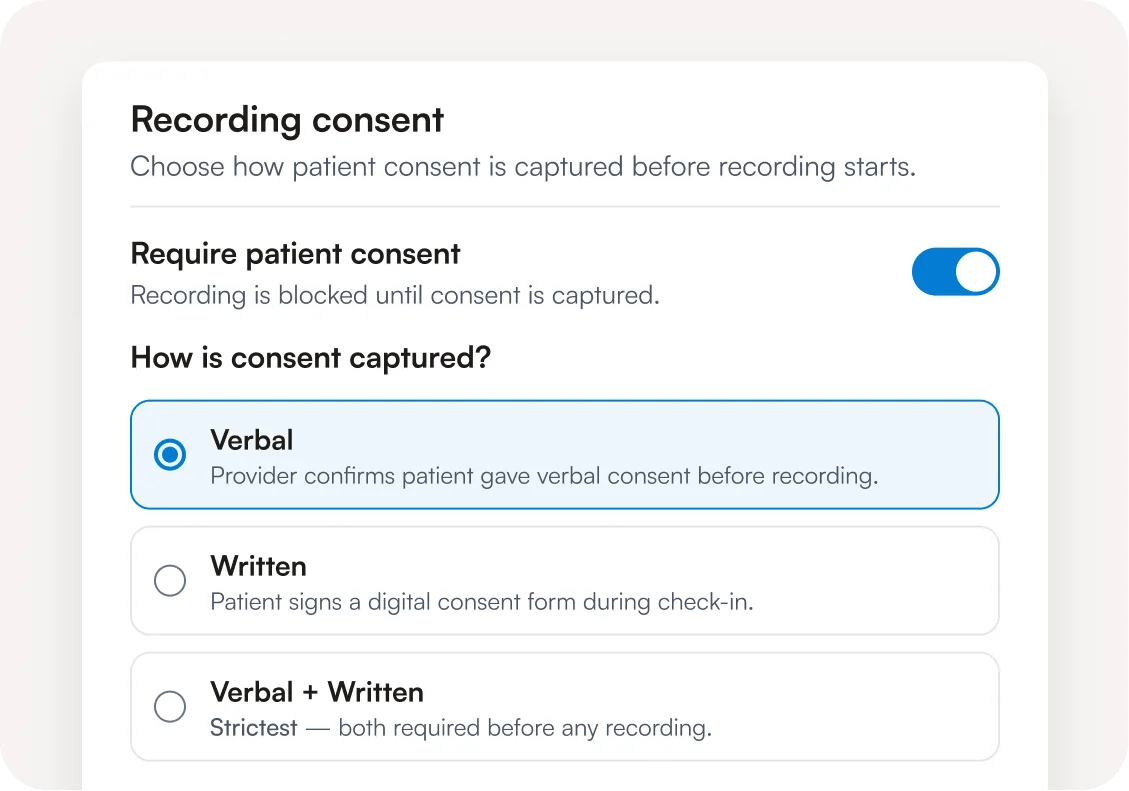
Recording can be blocked until patient consent is captured, verbally, in writing or both. Patient names can be masked in transcripts, and original recordings can delete themselves once the note is signed. You set how long transcripts are kept. Access is granted per clinician, so only the people you choose can run a session at all.
Which specialties Pabau Scribe writes for
The AI scribe market was built for hospitals and primary care. Pabau’s was built for the practices that run on Pabau, so the template library starts where you work.
Med spas and aesthetic clinics get consultation notes that carry injectable products, units and plotting. Dermatology and skin clinics get lesion and treatment-response structure. Fertility and IVF clinics get cycle and monitoring notes. Physical therapy, mental health, dental, wellness and longevity practices each have their own ready-made templates. Any of them can be edited or rebuilt section by section.
It works the same way for each role in the practice. It is an AI scribe for doctors dictating a full clinical note. It is also the scribe a nurse uses for an injectable treatment, and an esthetician for a course of facials. You grant access per clinician, so the people who need it have it and nobody else can start a session.
Can’t see your specialty? Generate a template from a form you already use, and the scribe will fill that form’s fields from the conversation.
A built-in AI scribe, with the record already underneath it
Most AI-powered medical scribes are point solutions. They do ambient scribing well, then hand the note over to whatever system holds your patient record. That handover is where the work reappears. A second login, an export step, a copy-paste. And a note that lives one place while the booking and the consent form live another.
Pabau Scribe writes into the record Pabau already keeps. The note attaches to the appointment it came from, next to the patient’s history, photos, forms, invoices and consent. Nothing gets exported, and there is no second system to reconcile at the end of the day.
That changes what the scribe can use as well as where it writes. It reads the patient’s history before the consultation starts. It checks a prescription against the allergies already on file. It pushes approved diagnostic codes onto the problem list your billing runs from. A standalone scribe cannot do that, because it does not hold the record.
Find out if Pabau is the right fit for you
Frequently asked questions
An AI medical scribe is software that listens to a consultation and turns the conversation into a structured clinical note. It uses speech recognition and natural language processing to produce SOAP notes, treatment plans and patient summaries without anyone typing them. Ambient scribes work in the background during the appointment, rather than from a recording made afterward.
Pabau Scribe is included in every Pabau subscription, with no per-seat scribe fee and no add-on tier. Pabau is priced by team size, and every plan includes full access to the platform. Pricing depends on your location and how many users you need, so ask our team for the figure that applies to your practice.
The ready-made template library covers med spas, aesthetic clinics, dermatology, fertility and IVF, private practice, wellness, physical therapy, mental health and dental. Each template can be edited or rebuilt section by section. You can also generate one from a form your practice already uses.
It uses speech recognition and natural language processing to turn the conversation into a structured note. The note is laid out in the sections and formats your practice has set up. The transcript and the original recording stay alongside it, so every line can be traced back to its source.
It does not need to. Pabau Scribe writes into Pabau’s own patient record, so there is no export step and no second system to reconcile. The note attaches to the appointment it came from, beside the patient’s history, forms, photos and invoices.
No. You click Start on the appointment and then talk to your patient as usual. The transcript builds in the background while you speak, and you can pause or stop it at any point.
Yes. Install one of the ready-made templates and adapt it, or build your own section by section. You can also generate a template automatically from a form you already use.
Yes. Link a prompt template to a form, and the generated note populates that form’s fields automatically. The note and the form are completed in one step.
Yes. As well as recording live, you can upload an audio file or an existing transcript, and Pabau Scribe will structure it the same way.
Not until it is signed off. The note stays a draft while you review and edit it. Once a clinician finalizes it, it saves to the client card as a treatment note, with the sign-off recorded in the audit trail.
That is your practice’s decision to configure. Consent can be required before any recording starts, captured verbally, in writing or both, and recording is blocked until it is given.
Yes. Pabau Scribe is built to meet HIPAA and GDPR requirements, with secure handling of medical records and patient data throughout. Recordings can be set to delete themselves after sign-off, and you control how long transcripts are kept.
Be present. Let the note write itself.
Every consultation, structured and signed off before you’ve moved on to the next.