Professional development record
A professional development record is a structured log of a healthcare practition...

4
Last Updated: Oct 8, 2026

Pabau is an all-in-one platform for clinic operations, patient management, and growth.
SimplePractice focuses on clinical documentation and telehealth for ongoing patient care.
Healthie leans into virtual care delivery and automation over traditional clinic workflows.
Zanda prioritizes reliable scheduling and admin for healthcare teams.
Looking for the best Jane App alternatives in 2026?
This guide compares leading options across features, pricing, and real user feedback. It also highlights common limitations that practices run into with Jane App.
| Software | Best for | Standout feature | Starting price |
|---|---|---|---|
| Pabau | Medical and aesthetic clinics | End-to-end clinic management and patient workflows | $69 per user/month |
| SimplePractice | Solo and small therapy practices | Telehealth and clinical documentation | $49/month |
| Cliniko | Small medical and allied health clinics | Flat per-practitioner pricing | $45/month |
| Healthie | Virtual-first and digital health teams | Automation and API-first infrastructure | $17/month |
| Practice Better | Program-led wellness practices | Care plans and ongoing programs | $25/month |
| Zanda | Allied health and therapy clinics | AI-powered notes and admin tools | €19/month |
| Fresha | Salons and non-medical wellness | Marketplace-driven booking | $19.95/month |
Pabau is a Jane App alternative for medical-first clinics. It’s built to manage the full care journey in one system:
That no-feature-gating approach is one reason growing clinics weighing Jane App against other tools, including alternatives to Carepatron, shortlist Pabau.
These are the features that most often push clinics to choose Pabau over Jane App.
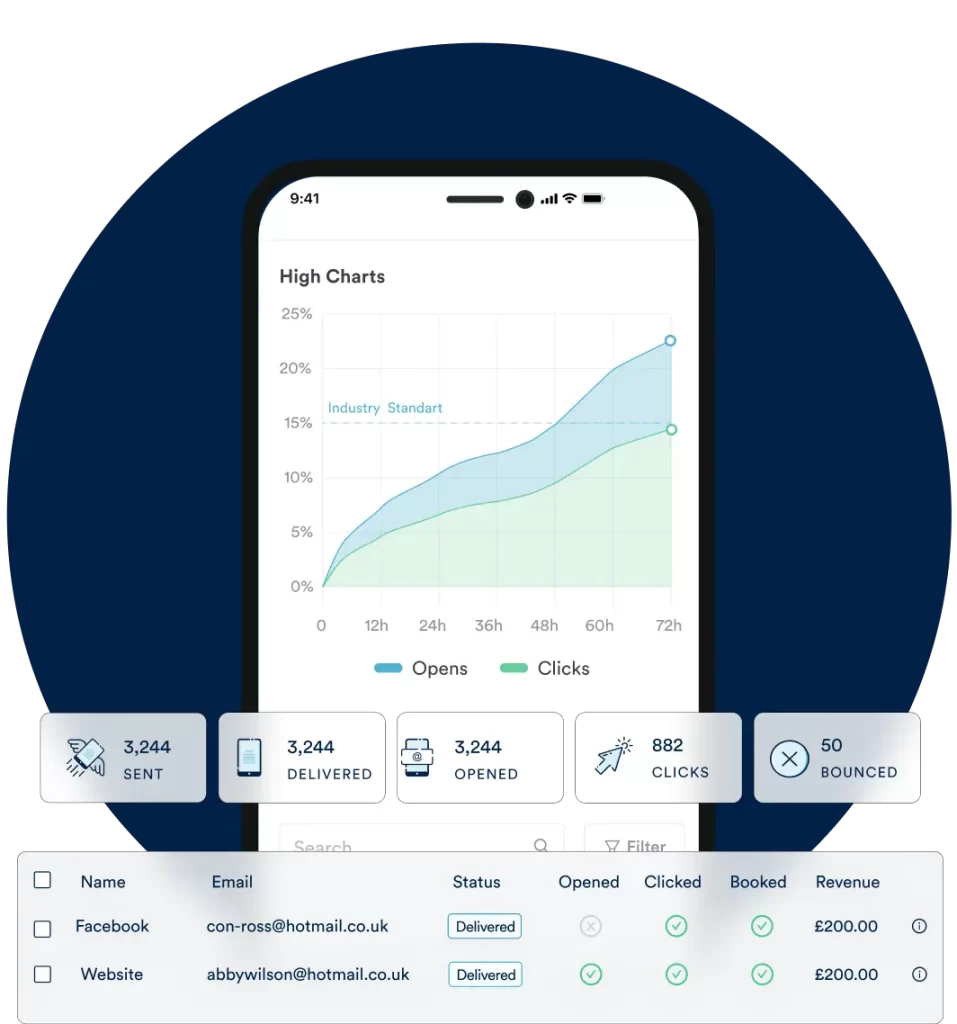
Pabau handles email and SMS campaigns directly inside the platform, with tools for:
Jane App doesn’t include native bulk email marketing. Clinics typically rely on third-party tools like Mailchimp for campaigns.
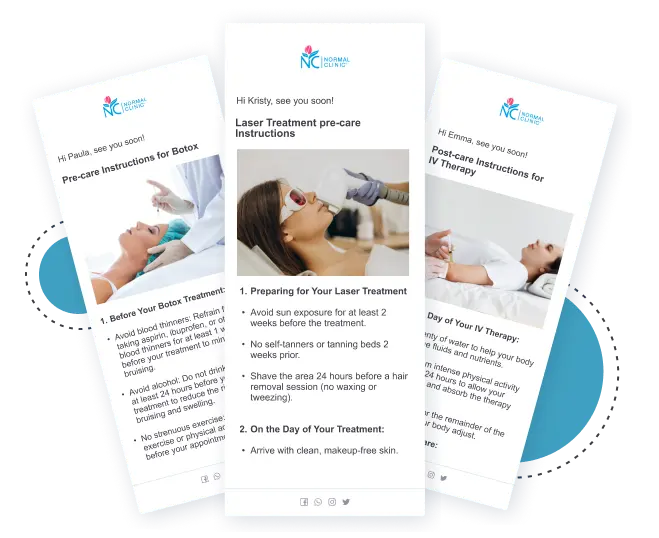
With Pabau, treatment-specific instructions are sent automatically as part of the booking flow.
You can:
Pabau’s built-in Pabau Scribe helps you draft or refine pre- and aftercare content. It’s useful when setting up new treatments or updating existing guidance.

Pabau includes medical-grade tools built for aesthetic and regulated treatments. Clinical functionality includes:
You access everything from a single client profile. The structure holds up as you scale across multi-location teams.

Online booking is fully customizable in Pabau’s core plan, with control over key booking rules. You manage:
Jane App locks professional booking tools, branding, and payment controls behind higher-tier plans.
| Plan / Tier | Price | Details |
|---|---|---|
| Starter | From $65/month | Per practitioner; billed monthly |
| Team / Group | Scales by location and user count | Volume-based pricing |
| Enterprise | Custom pricing | Contact sales for a quote |
All plans include access to core features. You can see the full breakdown on Pabau’s pricing page.
“Pabau offers 24/7 support, whether that’s via call, message, or video call. You’ll always have someone to help you out if you need. Pabau is very user-friendly and keeps all your business management needs under one roof.” – verified G2 reviewer
“Pabau has been a great system for running our clinic. The calendar and diary function work well, and having everything integrated into one system makes clinic admin much smoother.” – Olena K, verified G2 reviewer

SimplePractice is a popular Jane App alternative for solo providers and small healthcare teams.
It’s widely used in mental health, therapy, and wellness settings, especially by solo and small private practices. The platform focuses on documentation, telehealth, and core practice management rather than multi-location operations. In our TheraNest alternatives comparison, it also ranks as the easiest switch for solo therapists.
For practices that want a straightforward, clinician-first setup, it’s often one of the first platforms considered.
| Plan | Starting price | Best for |
|---|---|---|
| Starter | $49/month | Solo providers getting started |
| Essential | $79/month | Established solo practices |
| Plus | $99/month | Group practices and teams |
Telehealth and some billing features are tied to the higher plans.
| Plan / Tier | Price | Details |
|---|---|---|
| Starter | $49/month | Promo $24.50/mo first 3 months; 30-day free trial |
| Essential | $79/month | Promo $39.50/mo first 3 months |
| Plus | $99/month | Promo $49.50/mo first 3 months |
| Add-on: ePrescribe | $49/month | + $89 one-time setup fee |
SimplePractice offers a 7-day free trial with access to Plus features. Pricing increases as clinicians are added, and tools like ePrescribing and AI note-taking are paid add-ons.
“The reporting side is lacking compared to other EHRs for Therapy practices. There is also no way to use non-traditional insurance and still pull reports for how much that company owes.” – Emily J., Capterra reviewer
“We use it for our outpatient clients. It’s very easy to use and complete therapy notes. The customer support tickets are answered in a timely manner.“– Angela C, Capterra reviewer

Cliniko is a practice management software used by medical and allied health practices.
It’s used by clinics in over 95 countries, with strong adoption in the UK, Australia, and New Zealand.
Compared to Jane App, Cliniko is often chosen for simpler workflows and flat per-practitioner pricing.
| Practitioners | Starting price |
|---|---|
| 1 practitioner | $45/month |
| 2 to 5 practitioners | $95/month |
| 6 to 8 practitioners | $145/month |
Every feature, unlimited admin and reception logins, and unlimited locations are included at each level. Cliniko offers a 30-day free trial.
| Plan / Tier | Price | Details |
|---|---|---|
| Single Practitioner | $45/month | Per practitioner; annual pay = 1 month free/year; SMS add-on 10c/msg |
| 2-5 Practitioners | $95/month | Per tier (2-5 practitioners) |
| 6-8 Practitioners | $145/month | Per tier |
| 9-12 Practitioners | $195/month | Per tier |
| 13-25 Practitioners | $295/month | Per tier |
| 26-200 Practitioners | $395/month | Per tier |
Cliniko offers a 30-day free trial with no credit card required. All plans include every feature, unlimited locations, and unlimited admin users. Pricing scales only by the number of practitioners, with optional SMS charged separately.
“Very happy with the software. Easy for the user to book and plenty of features to warrant the subscription cost.” – Adam H., Capterra reviewer
“It has limited integration with our accounting system, and some reports could be slightly more detailed.” – Chelsea G., Capterra reviewer
Check out how Cliniko compares to Pabau.

Healthie is an EHR and practice management platform built around AI-native infrastructure.
It brings together patient engagement, virtual care, and automation.
Healthie+ extends the platform for larger teams that need deeper integrations, advanced workflows, and scalable back-office management.
| Plan | Starting price (billed annually) | Best for |
|---|---|---|
| Core | $17/month | Solo providers with basic needs |
| Essentials | $45/month | Growing practices |
| Plus | $115/month | Scaling practices |
| Group | From $135/month | Multi-provider teams |
Healthie offers a 14-day free trial on its Plus plan with no credit card required.
“This Platform offers many features to help keep my clinic operating in an organized manner. The lab add-on to a package was seamless, and I received payment via the portal without difficulty.” – Angela M., Capterra reviewer
“Customizing my schedule has been tedious. I wish that there was a mass availability customizer instead of having to manually set each day.” – Carlyn J., verified G2 reviewer

Considering Setmore over Jane App? Setmore alternatives and competitors ranks options from EMR-capable platforms to simple meeting schedulers.
Want an honest look at Setmore? Setmore review breaks down its user ratings, free plan, and setup time.
Need a SimplePractice alternative for aesthetics? SimplePractice competitors compares options for practices offering aesthetics, wellness, or physical therapy.
Practice Better is a practice management and EHR platform.
Unlike most Jane App alternatives that center on appointment scheduling and documentation, Practice Better is built around longer-term care delivery.
It supports structured plans, protocols, and ongoing client engagement rather than appointment volume alone.
| Plan | Starting price | Best for |
|---|---|---|
| Starter | $25/month (billed annually) | New solo practitioners |
| Professional | $69/month | Growing solo practices |
| Plus | $99/month | Established practices |
| Team | $155/month | Group practices |
Practice Better offers a 14-day free trial on paid plans and a free Sprout plan for students and early-stage practitioners.
“Very user-friendly, great foundation for group programs as well as 1:1, HIPAA compliant.” – verified G2 reviewer
“I wish it was prettier aesthetically, and I wish you could make a website with it so it was all integrated.” – Madison S., verified G2 reviewer

Zanda (formerly Power Diary) is a practice management software for healthcare professionals.
It covers core clinic operations like scheduling, records, and communication. The focus is on reliability, security, and reducing day-to-day admin.
Zanda’s pricing starts at around €19/month per practitioner and scales with your team size. Scheduling, records, and communication are bundled into each plan, while SMS messages are billed separately as a usage-based cost.
| Plan / Tier | Price | Details |
|---|---|---|
| Starter | $19/month | 1 practitioner; 1000-appointment limit; 1 user (promo ~$9.50/mo) |
| Growth (Solo) | $49/month | 1 practitioner base; unlimited appointments/users (promo ~$24.50/mo) |
| Growth (Group) | $49/month base + $19/mo per extra practitioner | e.g. 2 practitioners = $68/month standard |
| Add-on: Telehealth Pro | $9/month per practitioner | Unlimited telehealth calls |
Zanda offers a 14-day free trial with no credit card required and a 12-month money-back guarantee. Zanda pricing scales by practitioner count, with optional add-ons for SMS and telehealth.
“It has made it possible to manage and schedule my meetings with my clients effectively.” – Ansh J., Capterra reviewer
“I did not know about the fees associated with sending out texts through Zanda before I signed up. I would have liked to know about these costs.” – Penny T., Capterra reviewer

Fresha is a booking and payments platform built for salons and spas.
Its focus is online booking, payments, and marketplace visibility. Unlike most Jane App alternatives, Fresha is not an EHR and doesn’t support regulated care delivery.
Fresha keeps upfront costs low. Instead of a large monthly subscription, it charges a fee on new clients who find you through the Fresha marketplace, plus card processing on the payments you take. Optional paid tiers add multi-calendar and team-management tools.
| Plan / Tier | Price | Details |
|---|---|---|
| Independent | ~$10.80/month | Converted from MKD 600 @0.018; currency geolocated — verify manually |
| Team | ~$7.20 per team member/month | Converted from MKD 400 @0.018; currency geolocated — verify manually |
| Enterprise | Custom | For 20+ team members; contact sales |
Fresha includes a 14-day trial for the Independent and Team plans.
“I’ve used Fresha for my business for over a year. The platform itself is visually appealing, and clients enjoy the booking experience.” – Catherine N., Capterra reviewer
“One can find it difficult to navigate when you want to try to book an appointment. Also, the reporting aspect of Fresha is very hard to navigate.” – Juliet U., Capterra reviewer
See how Fresha compares to its top alternatives in 2026, including Pabau.
Jane App does a solid job with scheduling and clinical documentation.
Teams usually start exploring alternatives when they need stronger medical tools or fewer restrictions around core features.
Several key features sit behind Jane App’s higher tiers or paid add-ons.
Entry-level plans lack full online booking, and group telehealth comes with extra per-practitioner fees. For solo providers and small teams, that often means paying more just to access everyday functionality. Massage and chiropractic teams facing those per-practitioner fees often check what Noterro costs before switching.
With Pabau, advanced online booking, payments, and 1:1 video calls are available across plans. There are no upgrades or feature unlocks to access core tools.
Jane App’s templates work well for general wellness workflows. They start to fall short in medical and aesthetic settings where documentation needs to be more robust.
Clinics running regulated treatments often need tools like:
Pabau’s EMR is built for medical-first clinics, with records, photos, prescriptions, and safety checks connected inside a single client timeline.

Jane App doesn’t include built-in tools for email or SMS campaigns, promotions, or client segmentation. Clinics usually rely on third-party tools for recalls, outreach, and broader patient acquisition. That leaves practices piecing together medical aesthetics marketing strategies across several disconnected apps.
Pabau includes built-in marketing features such as:
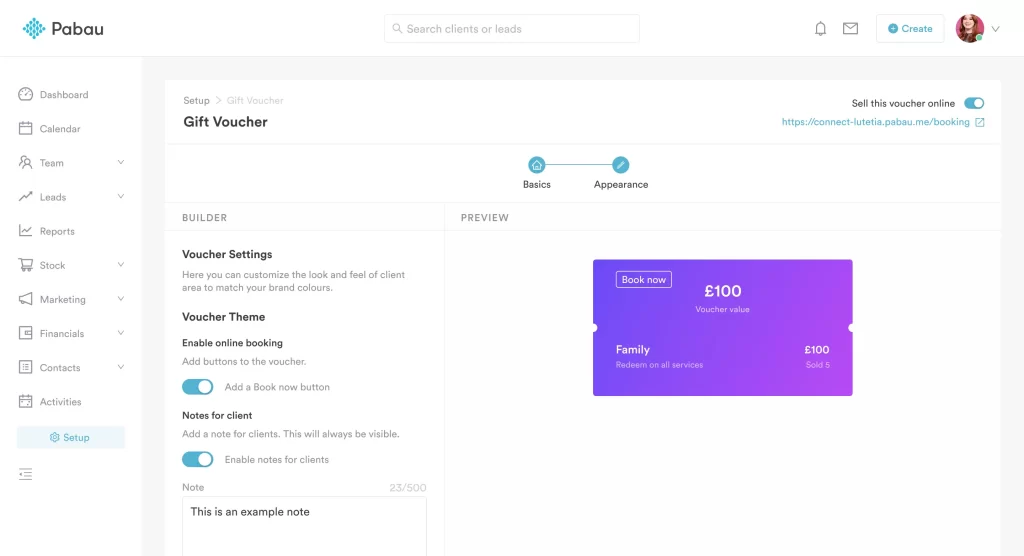
If you run regular recalls or promotions, Pabau’s Marketing Plus lets you automate campaigns and segment clients in one place. You schedule outreach once and stop relying on manual sends or third-party tools.
It depends on your practice. SimplePractice and Cliniko are the closest fits for therapy and allied health, while Practice Better suits program-led wellness care. For medical and aesthetic practices that want clinical depth, marketing, and payments in one system, practice management software like Pabau is the strongest all-in-one option.
True free plans are rare in clinical software. Fresha comes closest, since it skips a large monthly subscription and instead charges a fee on new marketplace clients plus card processing. Most clinic-first tools, including Jane App, run on paid monthly plans once you need records and compliance features.
The strongest fit is software built for medical-first care. Dermatology and skin clinics need charting for procedures, before-and-after photos, and treatment-linked consent, which general wellness tools rarely cover. Pabau’s dermatology EMR software keeps records, imaging, and safety checks in one client timeline, and the same depth supports med spas and aesthetic practices.
Carepatron is a lower-cost option that works for solo practitioners and general client management. It is lighter on medical-grade charting, inventory, and built-in marketing, so busy medical and aesthetic clinics often shortlist Pabau instead for deeper clinical and operational tools.
Yes. If you run regulated treatments, look for apps like Jane App that add medical-first tools, such as prescriptions, injectable tracking, and compliant consent forms. Pabau covers these alongside scheduling and payments, so med spas and aesthetic clinics run clinical and business workflows in one place.
Looking across Jane App alternatives, the split is clear.
Some tools do scheduling well. Others focus on clinical notes, telehealth, programs, or payments. Most cover one or two areas properly, then rely on add-ons or separate systems for the rest.
Pabau brings those core workflows into one platform:
For clinics that want fewer systems and one place to run care and operations, Pabau covers the full workflow. You can book a demo to see it in action as a Jane App alternative.
Next read: A full breakdown of Jane App pricing and plan differences.