Medicare charting cheat sheet
A Medicare charting cheat sheet is a one-page reference that lists what Medicare...

6
Last Updated: Oct 21, 2026

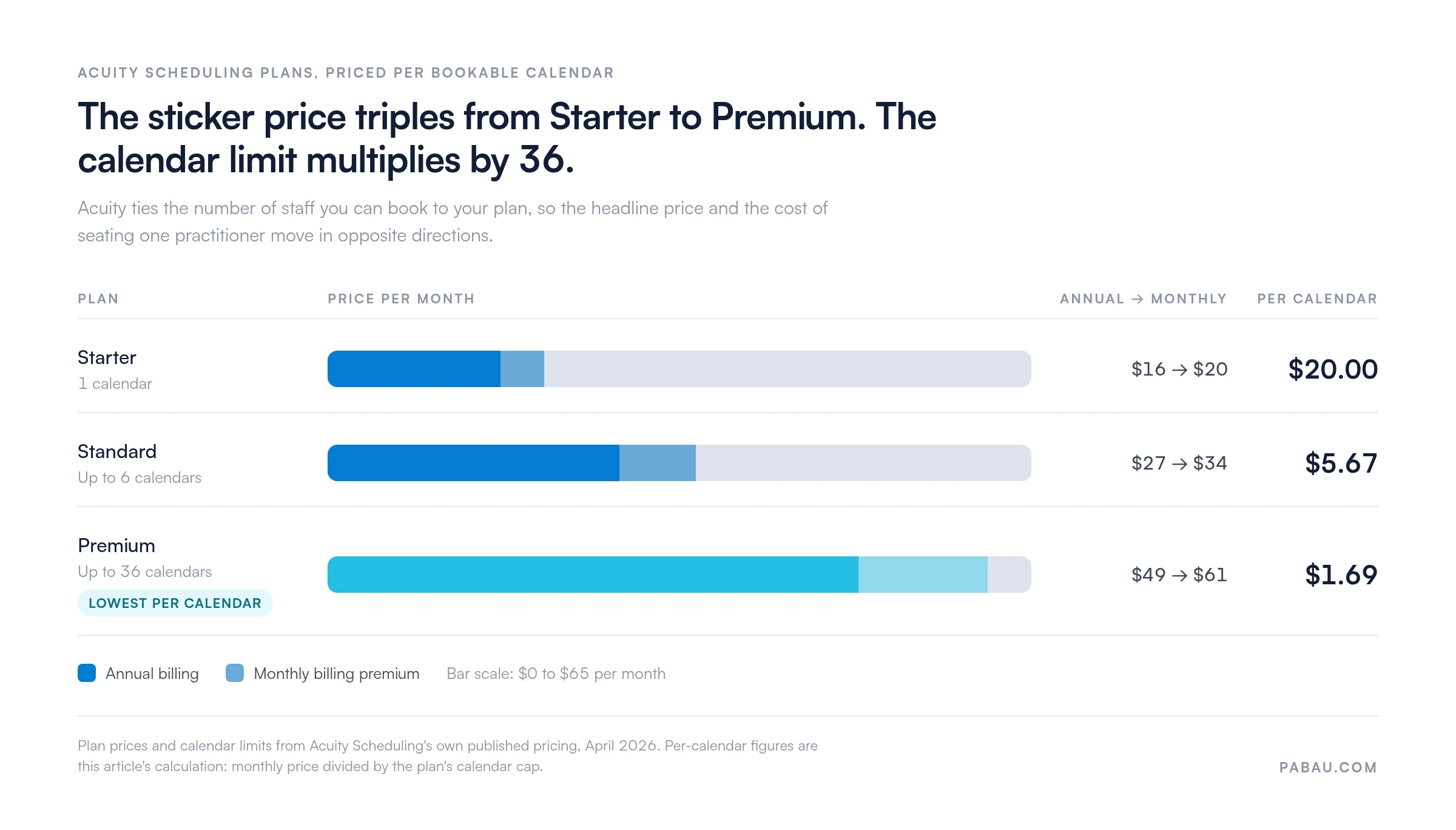
Acuity Scheduling starts at $20/month for Starter on monthly billing, or $16/month billed annually. Standard runs about $34 and Premium about $61.
Annual billing saves around 20% on every tier. There is a 7-day free trial but no permanent free plan.
Premium is the cheapest tier per practitioner. Its 36 calendars work out at roughly $1.69 each, against $20 on Starter.
The headline price only covers scheduling. A practice that also needs clinical records, invoicing, or a signed HIPAA agreement pays for those separately.
Practice management software like Pabau starts higher, at around $104/month for one user. That one subscription covers scheduling, records, forms, billing, and marketing, with every feature included at every tier.
Acuity Scheduling looks refreshingly simple on price. It has three tiers, a 7-day trial, and an entry plan at $16 a month on annual billing. For a solo coach, photographer, or single-room practice, that low, predictable number is a big part of the appeal.
But the sticker price is only part of the story. This guide breaks down what each tier costs, how monthly and annual billing differ, and what the money buys.
It also covers the extras that can quietly push your monthly bill higher. At the end, we compare the pricing of practice management software like Pabau, so you can weigh a scheduler against an all-in-one platform.
Acuity Scheduling is an online appointment booking tool owned by Squarespace. It is built for service businesses that want clients to book and pay for their own appointments without the back-and-forth. That covers coaches, consultants, fitness instructors, salons, photographers, and small studios.
Its strength is the booking page itself, which is clean, customizable, and easy to embed into almost any website. That focus is worth keeping in mind when you look at the price, because it tells you what you are paying for.
Acuity charges for scheduling and payments, not for clinical records, invoicing, or the wider admin a healthcare practice runs on. For businesses where the booking is the transaction, that is exactly right. For a practice with several practitioners, the published price rarely reflects the full toolset it ends up paying for.
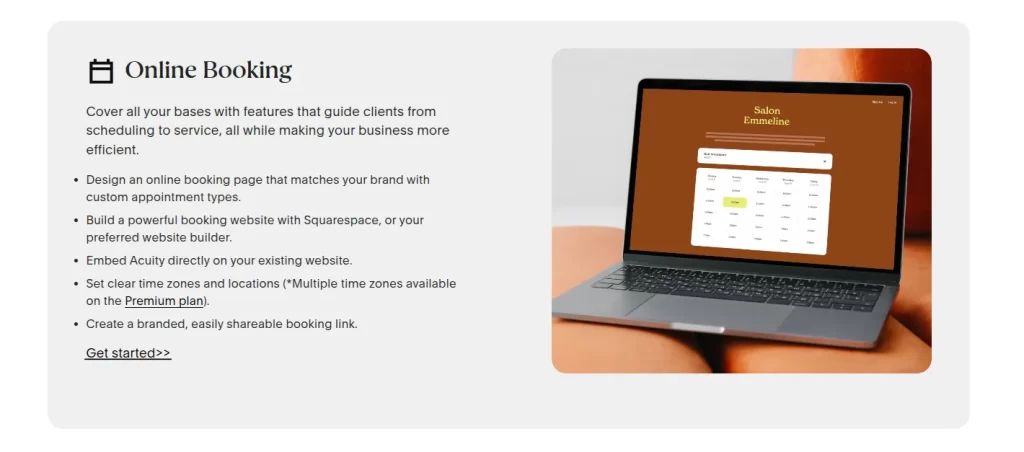
Acuity Scheduling plans come in three paid tiers. What you pay depends on which tier you choose and whether you bill monthly or annually.
Acuity’s own pricing page lists Starter at $20/month monthly or $16/month annually, Standard at $34 or $27, and Premium at $61 or $49.
Figures taken from Acuity Scheduling’s own published plan pricing in April 2026. Subscription prices change, so confirm the current numbers before you commit.
Read the same three prices per practitioner and the ranking flips. Starter costs $20 a month for its single calendar. Premium’s 36 calendars work out at roughly $1.69 each, so the most expensive plan is the cheapest way to seat a team.
The entry tier covers one bookable calendar, which makes it a fit for a single practitioner. It is the plan most solo operators land on, and for a simple booking-and-pay workflow it does the job. Starter includes:
Standard is where small teams start. It lifts the calendar limit to six, so several staff can be booked, and it unlocks packages, gift certificates, group appointments, and more reporting. Practices selling treatment bundles or session blocks, or running classes, generally need this tier rather than Starter.
Premium raises the calendar limit again and adds custom branding, advanced reporting, and priority support. It also carries the Business Associate Agreement a practice needs for HIPAA, which the two lower tiers cannot sign.
Premium is the highest of Acuity’s three published self-serve tiers. Acuity also offers a custom Enterprise plan above it. That one adds unlimited calendars and VIP account management, priced on request rather than published.
Every Acuity Scheduling tier is cheaper if you pay for a year upfront. The annual price works out around 20% below the monthly rate. Starter drops from $20 to about $16/month, Standard from $34 to $27, and Premium from $61 to $49.
If you are confident Acuity is the right long-term fit, annual billing is the cheaper route. If you are still testing the waters, the monthly option costs a little more but keeps you flexible.
Beyond that yearly saving, Acuity does not publish a standing promo code, so annual billing is the only built-in way to lower the price.
The Acuity Scheduling free trial runs for 7 days with full access to every feature. There is no permanent free plan. Once the trial ends, you need a paid tier to keep your booking page live.
Seven days is enough for a solo evaluator to set up services, connect payments, and take a few test bookings. Practices that want to test the tool against day-to-day patient workflows, intake forms, and HIPAA documentation often find a week runs out first.
The shared ownership raises one question a lot: is Acuity Scheduling free with Squarespace? It is not. A Squarespace website plan and an Acuity subscription are billed separately, so you pay for each.
The upside is that the two integrate tightly, and embedding your booking page into a Squarespace site takes barely a click.
The headline price is honest for a solo booking page. These are the reasons the total monthly cost climbs above it:
For the audience Acuity was built for, the pricing is genuinely competitive. A solo practitioner, coach, studio, or service business gets a reliable tool for $16 to $20 a month. That buys a clean booking page, payment processing, and basic intake forms. Coaches running recurring memberships or group programs benefit from a client management system built to handle those relationships without extra admin.
Its 4.8/5 rating across more than 5,600 Capterra reviews reflects how well it serves that group.
The value proposition changes once a business needs more than scheduling. Say you run a practice with several practitioners that also needs clinical records, invoicing, and HIPAA-aligned documentation. Acuity’s low starting price then covers one slice of the software you will pay for.
Practices and salons at that stage usually shortlist all-in-one platforms instead, which is what the Boulevard alternatives and Acuity Scheduling alternatives round-ups cover. Clinics weighing a dedicated EHR instead of an all-in-one platform can compare DrChrono’s pros and cons directly.
If Acuity’s limits are starting to show, the tool practices most often weigh it against is an all-in-one platform. Practice management software like Pabau prices the product differently, so the two are worth comparing on the same terms.
Pabau starts higher, from around $104/month for one user, and pricing scales with your team size and number of locations rather than with feature tiers. The number looks bigger next to Acuity’s $16 to $20, but the two are not buying the same thing.
Acuity’s price buys scheduling and payments. Pabau’s price buys scheduling, clinical records, digital intake forms with e-signature, invoicing, and patient marketing in one subscription. That is the toolset a practice would otherwise assemble from three or four separate products. Med spas evaluating AI medical scribe tools can compare options for turning clinical notes into structured records automatically.
Two things about the model are worth calling out. First, every feature is included at every tier. There is no starter plan that locks clinical notes or reporting behind an upgrade, so what you pay for is more users and locations.
Second, there is no free trial. Pabau works best when it is configured for how your practice runs. Instead of a trial you get a demo and structured onboarding with a dedicated coordinator, so you start with a system that already fits.
On cost, the practical takeaway is simple. If you only need a booking page, Acuity Scheduling is the cheaper and simpler choice. There is no reason to pay for more platform than your workflow needs.
Add up a scheduler, an EHR, a forms tool, and a billing system, though. The difference between that stack and one Pabau subscription narrows fast, and you stop juggling four bills and four logins.
Our side-by-side platform comparisons line up Pabau against individual schedulers on features as well as price.
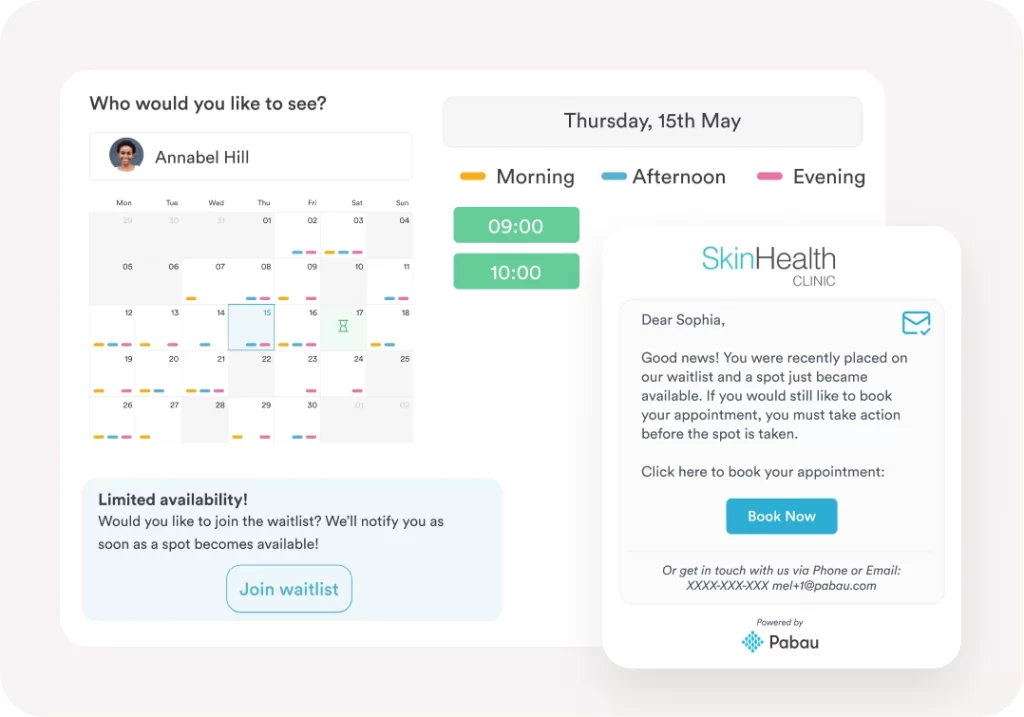

Pricing up Acuity Scheduling alongside the extra tools a practice needs? Book a demo of Pabau to see scheduling, records, and billing in one subscription.

Acuity Scheduling delivers a polished scheduling product at a price that works for solo practitioners and small service businesses. At $16 to $20/month to start, the pricing is easy to justify. Standard and Premium are a clear step up as your team grows.
The calculation changes the moment your practice needs clinical records, multi-practitioner billing, or a signed BAA. From there the published price stops telling the whole story, because you will be paying for other tools alongside it.
If that sounds like your practice, price up an integrated platform on a like-for-like basis before you commit. Book a demo to see what one subscription covers, and compare that total against Acuity plus the tools you would add.

Want the feature-by-feature breakdown, not just price? Pabau vs Acuity Scheduling covers how the two platforms differ for healthcare practices.
Ready to look past Acuity altogether? Acuity Scheduling alternatives compares the tools practices move to when scheduling alone stops being enough.
Pricing another scheduler at the same time? Mindbody pricing breaks down what its tiers cost a spa, studio, or wellness practice.
Considering DrChrono before you commit? DrChrono pros and cons covers the contract terms and support complaints worth knowing first.
Choosing an AI scribe for a med spa? Pabau Scribe vs Heidi AI compares how each one handles clinical notes and follow-ups.
Acuity Scheduling costs $20/month for Starter on monthly billing, around $34 for Standard, and around $61 for Premium. Annual billing lowers these to roughly $16, $27, and $49. Every plan includes unlimited services and payment processing. There is no permanent free plan, only a 7-day trial.
No. Acuity Scheduling is not free, and there is no permanent free plan. Every account starts with a 7-day free trial that unlocks all features. After that, a paid tier is required to keep your booking page live.
Starter costs $20/month on monthly billing or $16/month annually. It includes client self-scheduling, unlimited services and appointments, and one bookable calendar. You also get payment processing through Stripe, Square, or PayPal, client email notifications, and basic intake forms. Group appointments, packages, and advanced reporting require Standard or higher.
Yes, indirectly. The number of calendars you can book is tied to your plan. Starter allows one, Standard up to six, and Premium up to 36. A growing team is the most common reason a bill moves up a tier.
Acuity will sign a Business Associate Agreement, but it lists that as a Premium feature. Premium costs $49/month billed annually or $61/month billed monthly. Starter and Standard cannot sign a BAA, so a practice handling protected health information has to budget for Premium.
Acuity Scheduling is cheaper on the sticker price, starting at $16 to $20/month for scheduling. Pabau, an all-in-one practice management platform, starts at around $104/month for one user. That subscription includes scheduling, clinical records, digital forms, invoicing, and marketing, with every feature at every tier. Once you add an EHR, a forms tool, and a billing system on top of Acuity, the difference narrows.