Anger volcano worksheet: Free PDF for kids and teens
An anger volcano worksheet is a printable handout that pictures anger as a volca...

1
Last Updated: Oct 23, 2026

An AI EMR is an electronic medical record with artificial intelligence built in. The record does more than store patient data. The system helps write notes, suggest codes, and cut admin.
The headline feature is ambient scribing. The AI listens during the consultation and drafts a structured note into the patient record, so charts stop following you home.
The note-landing test separates an AI EMR from a bolt-on scribe. One writes into the structured chart, and the other hands you text to paste back.
The provider always reviews and signs the note. AI drafts it, and the clinician stays responsible for what enters the record.
Practice management software like Pabau builds AI into notes, booking, forms, and follow-ups in one system. That beats bolting a scribe onto a separate chart.
An AI EMR is an electronic medical record with artificial intelligence built in, so it helps create the record rather than only storing it. Clinicians lose hours every week to typing notes, chasing forms, and coding visits. An AI EMR is built to hand most of those hours back.
The label gets stretched, though. Plenty of systems marketed as AI EMRs are ordinary charts with a scribe bolted on the side. One question sorts them out, and this guide calls it the note-landing test. Does the AI’s output land automatically inside the structured chart, or get generated outside the record and pasted back in?
An AI EMR, also marketed as an AI-powered EHR, is a patient chart with artificial intelligence built in to help write the record. An electronic medical record, or EMR, is the digital version of a patient’s chart. The chart holds their history, treatment notes, medications, and results.
A traditional EMR is a filing cabinet with a login. The system stores what you type into it, and no more. An AI EMR adds artificial intelligence on top, turning that passive store into an active assistant.
Instead of waiting for you to fill it in, the system listens, reads, and writes alongside you. An AI EMR drafts notes from a spoken consultation and pulls structure out of messy inputs. The system also suggests billing codes and surfaces details you would otherwise go digging for.
A quick note on terms. In the US the chart is usually called an EMR, short for electronic medical record. In the UK you will more often hear EHR, or electronic health record.
Vendors use the two labels interchangeably, so the same features get sold as an AI-powered EHR. Large legacy EHR vendors are adding AI to their charts under that phrasing too.
AI works in an EMR across five jobs in one visit: reading intake forms, drafting the note, suggesting codes, flagging recalls, and sending follow-ups. That five-job breakdown is spread across the visit rather than bunched at the end of it.
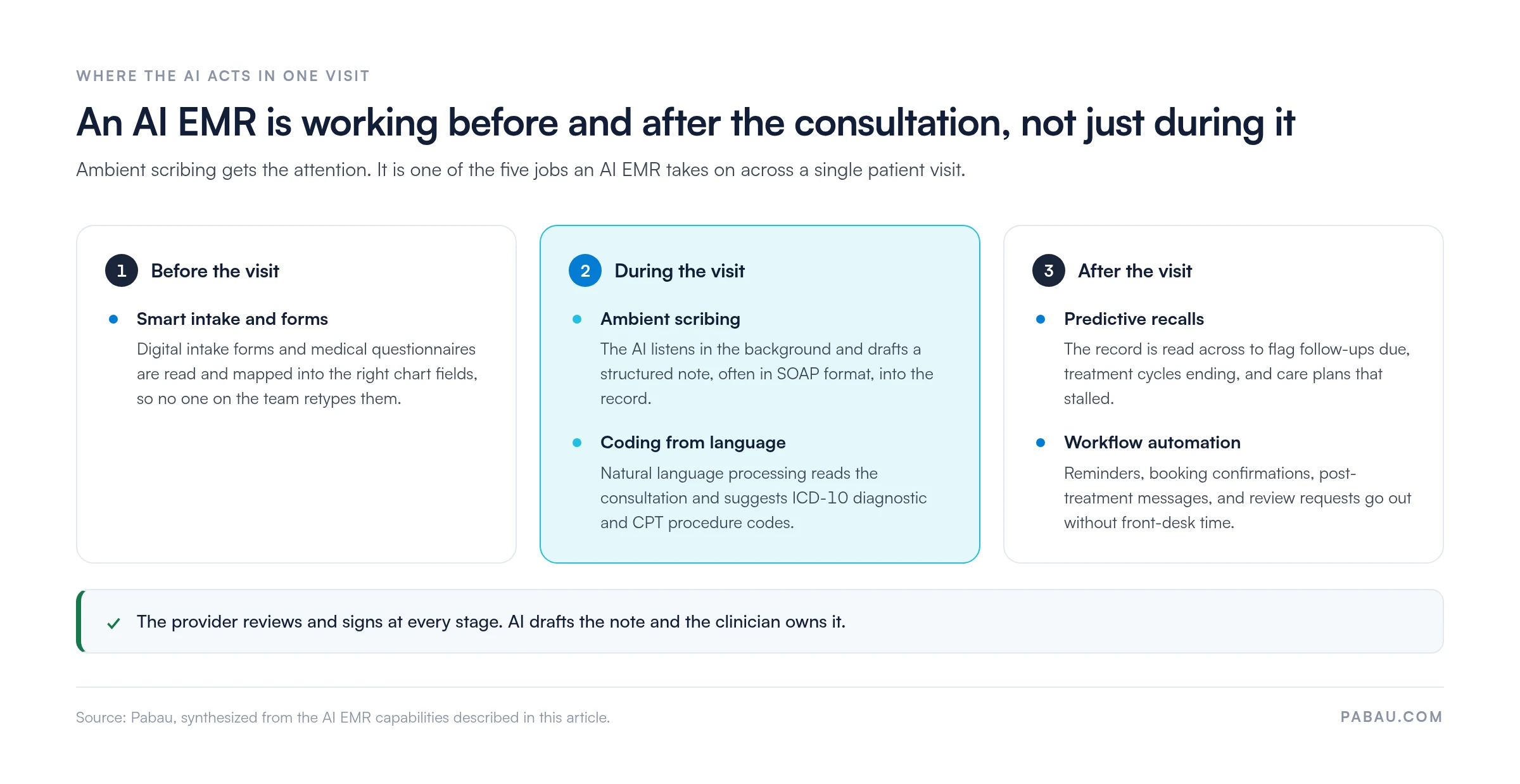
Ambient scribing is what most people mean when they say “AI EMR.” An ambient scribe listens to the consultation in the background and drafts a structured note straight into the patient record. The draft usually follows SOAP format: subjective, objective, assessment, and plan. No typing during the visit, and no writing it up at 9 PM. The clinician reviews and signs, and the AI does the first draft. Our rundown of the benefits for physicians goes deeper on what that changes day to day.
Under the hood, ambient scribing runs on natural language processing (NLP), the AI’s ability to understand spoken and written language. The same technology reads a consultation and suggests diagnostic codes like ICD-10 and procedure codes like CPT. Billing stops being a separate manual chore after the fact. Reviews of AI SOAP notes show this is where a lot of the time saving lands.
AI can also handle the paperwork before the patient walks in. Digital intake forms and medical questionnaires get read and mapped into the right chart fields automatically, instead of a team member retyping them. Our guide to AI patient intake covers how that works in practice.
Because an AI EMR can read across the whole record, the system flags what is worth acting on. That might be a patient due for follow-up, a treatment cycle ending, or a care plan that stalled halfway through. A record that puts information to work beats one that only stores it.
A flag is a prompt for the clinician to weigh. The clinician still judges whether a recall or a suggested code fits the patient, because the AI cannot see the context outside the chart. AI patient monitoring reaches past the chart, scoring wearable and sensor data between visits to flag patients whose condition is turning.
Beyond the chart, AI handles the repetitive admin that eats a front desk’s day. Appointment reminders, booking confirmations, post-treatment messages, and review requests all run on rules the practice sets once.
The note-landing test tells an AI EMR, an AI scribe, and a standard EMR apart. An AI EMR writes the note into the structured chart automatically. An AI scribe drafts it outside the record for you to paste back, and a standard EMR waits for you to type.
Those three labels get muddled in vendor marketing, so it is worth separating them:
In the practices we onboard, the note-landing test answers itself in the first week. If the team is reformatting notes after every visit, the AI is sitting outside the chart rather than inside it. That is a scribe, whatever the sales page called it.
Strip out the technology and the wins are the ones every busy practice cares about:
In an AI EMR, check where the AI sits in the workflow, how far coverage reaches beyond the chart, specialty fit, compliance, and onboarding. Not every AI EMR is built the same, and those five checks are the ones worth making before you commit.
A native scribe writes directly into the structured chart. A bolt-on drops unstructured text into a note that you then clean up. Watch a demo closely. If the AI generates text in a side panel that gets pasted back in, you are looking at a scribe attached to an EMR.
Small practices rarely have time to run separate AI tools for documentation, intake, and scheduling. A platform that extends AI across the whole patient journey removes the handoffs between systems, and the copying between them. Our roundup of AI practice management tools compares the platforms that reach past the note.
A generic AI EMR rarely beats one tuned to your work. Aesthetics, dermatology, and physical therapy each carry workflows that horizontal systems handle poorly out of the box. Before-and-after photo series, body charts, and treatment cycles are the usual sticking points. Ask a vendor to demo your specialty’s hardest chart rather than their standard one.
Any AI EMR you consider should sign a business associate agreement (BAA) and encrypt protected health information (PHI) in transit and at rest. The vendor should also keep audit logs and let you export your data. If a vendor will not commit to a documented export pathway, treat that as a yellow flag for a regulated workflow.
Patient consent covers the AI as well as the treatment. Recording or processing a consultation with AI normally needs the patient’s notice and consent. That permission is separate from the consent they sign for the procedure itself.
Clinician review before signing is a liability safeguard as much as a workflow step. The signed note is the legal record, so the provider owns any coding or clinical detail the AI got wrong.
Switching systems is rarely a weekend job, and onboarding matters more than a slick demo. A practice-sized platform should be live in weeks, while enterprise systems run into months. If you are moving records out of a legacy system, agree on the export format and the cutover date before you sign. That one conversation is what keeps a migration from stalling.
If you run a private practice or a med spa, the AI EMR question is rarely about picking a scribe. The harder question is how to get a whole day running from one system. That is what practice management software like Pabau is built for.
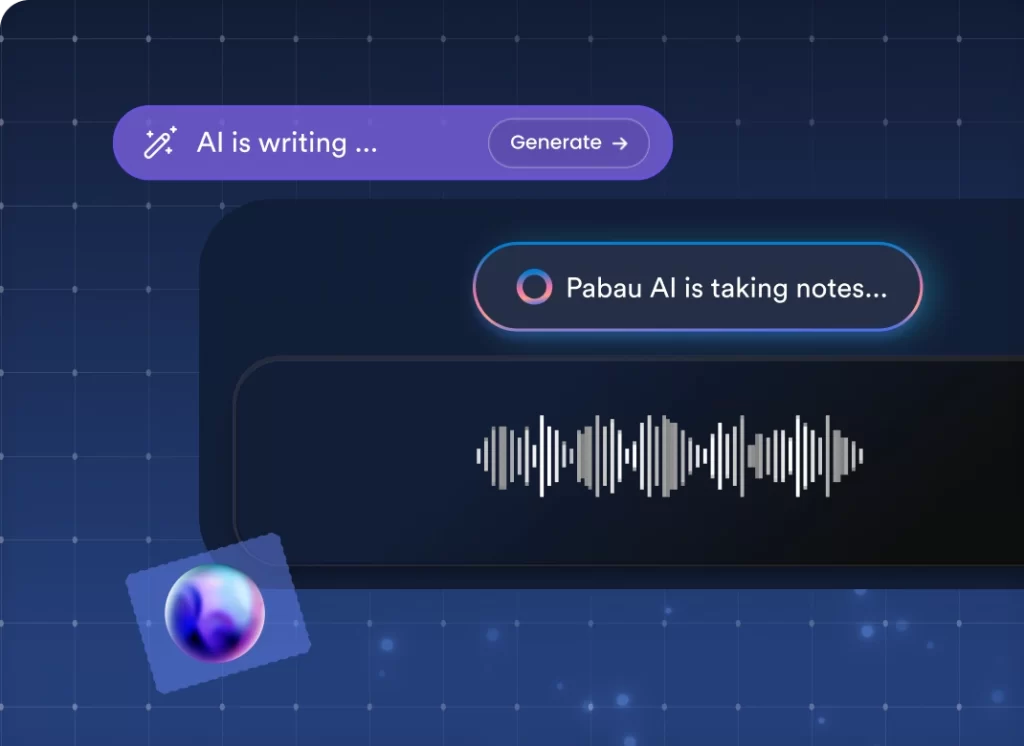
Pabau is an all-in-one practice management system. Clinical records, online booking, intake and consent forms, payments, marketing, and reporting sit in one place. That replaces a patchwork of tools that do not talk to each other.
The AI layer is Pabau Scribe, our AI scribe built for private practices. Pabau Scribe listens during the consultation and drafts a structured note straight into the patient record, with no copy-paste and no writing it up later.
Because the scribe lives inside the platform, the note connects to the rest of the record. The booking that created the appointment, the intake form the patient filled in, the payment, and the follow-up message all sit alongside it.
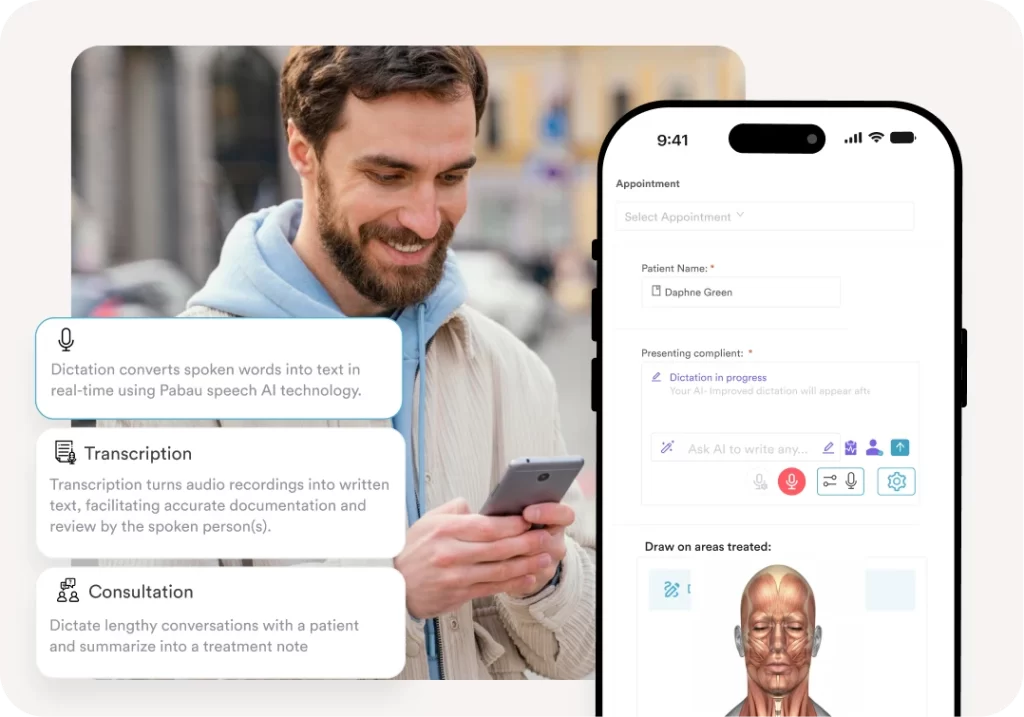
For aesthetics, that includes the parts generic systems miss. Before-and-after photo workflows tie to the record, treatment cycles are tracked, and consent is captured digitally rather than on paper. New practices also get structured onboarding and a dedicated coordinator, so the setup is done properly before the first patient is booked.

Book a walkthrough with a Pabau specialist. Bring your current documentation headaches and see how the AI scribe, intake, and booking work together in one system.

An AI EMR earns its keep by handing back time, and the note-landing test is the clearest way to judge one. If the note arrives in the structured chart without a paste step, the rest of the promise usually holds up. If it does not, you are buying a scribe with an EMR attached.
Pick on fit rather than on the demo. That means the AI in the right place, coverage beyond the chart, and workflows tuned to your specialty. Book a demo to see how Pabau drafts the note and runs the booking, intake, and follow-up around it.

Want to see AI documentation up close? AI SOAP notes: how they work and how to use them breaks down what the AI drafts and what you still review.
Worried about AI tools breaching HIPAA? HIPAA compliant AI tools ranks tools that keep AI use compliant, after a common failure like pasting notes into ChatGPT.
Want AI support during the visit too? Best AI medical scribe tools ranks AI medical scribes for independent and mid-size practices ahead of health-system platforms.
Curious how ambient AI drafts your notes? AI clinical documentation explains how ambient AI drafts notes during the visit and the compliance rules you cannot skip.
Is the calendar still run by hand? AI patient scheduling shows how automated booking, reminders, and waitlists take the load off a front desk.
An AI EMR is an electronic medical record with artificial intelligence built in. On top of storing the patient chart, it automates parts of the clinical workflow. The most common one is ambient documentation. The AI listens during the consultation, drafts a structured note, and writes it into the record. Some platforms extend AI into intake, coding, scheduling, and patient communication.
The most common use is ambient scribing, where the AI drafts a clinical note from the spoken consultation. It also suggests diagnostic and procedure codes, reads and files intake forms, and flags patients due for follow-up. It automates reminders and post-treatment messages too. In short, it takes on the repetitive documentation and admin that used to be done by hand.
An AI EMR is a full record system with AI built in. An AI scribe is a standalone tool that produces a note and sends it into whatever chart the provider already uses. AI EMRs handle the broader clinical workflow of orders, coding, and charts, while AI scribes specialize in documentation only. The practical tell is whether the note is written straight into the chart, or generated outside it and pasted back.
The major AI EMRs are HIPAA compliant when configured correctly. They sign a business associate agreement (BAA), encrypt protected health information (PHI) in transit and at rest, and maintain audit logging. It’s still worth confirming each vendor’s specific safeguards and data-export pathway before you commit.
Yes. Recording or processing a consultation with AI normally needs the patient’s notice and consent, separately from consent for the treatment. Most practices fold that permission into their existing notice of privacy practices or treatment-consent paperwork rather than adding a separate form. Practice management software like Pabau can capture the consent digitally alongside intake, so the record shows what the patient agreed to.
Yes. Every AI EMR requires the clinician to review and sign the AI-generated note before it becomes part of the legal medical record. The AI drafts. The provider stays responsible for clinical accuracy, coding, and the final signature.
Yes. Every major AI EMR supports patient data import from common legacy systems, though the migration isn’t always seamless. Confirm the export pathway from your current vendor and agree on a documented import format with the new one. Allow weeks rather than days for cutover.
Private practices and med spas tend to be better served by an integrated platform. A hospital-scale EHR with a scribe bolted on is usually a poor fit. The fit to look for is AI documentation paired with booking, intake, payments, and before-and-after photo workflows in one system. Practice management software like Pabau is purpose-built for exactly that shape of practice.