Book a demo Book a demo
Compare

Best AI patient scheduling software in 2026: 7 platforms compared

Key Takeaways

Key Takeaways

Pabau leads as the best AI patient scheduling software for aesthetic, wellness, and multi-specialty clinics, combining intelligent booking with Pabau Scribe AI documentation in one platform.

NexHealth and Notable dominate clinics that already have an EHR they cannot replace, layering AI-driven self-scheduling on top of Epic, Athenahealth, and Dentrix.

Mend’s AI no-show prediction and Hyro’s conversational scheduling are the strongest niche picks for telehealth-heavy practices and health systems with high call volume.

AI patient scheduling is no longer one feature; the right platform automates booking, intake, no-show prediction, and waitlist fill in a single workflow.

AI patient scheduling has moved past chat widgets and slot-filling tools. In 2026, the best AI patient scheduling software reads provider rules in real time, predicts no-shows, auto-fills cancellations from the waitlist, and routes intake forms before the patient ever speaks to staff. The right platform recovers hours of front desk time per provider per week while measurably lifting booking conversion.

This guide compares the seven platforms US clinics shortlist most often when they evaluate AI scheduling in 2026. We cover standout features, pricing, Capterra and G2 ratings, and the specific clinic types each tool serves best. For broader context, see how AI sits across the wider stack in our overview of AI healthcare software and how it changes the day-to-day in patient scheduling software.

Best AI patient scheduling software: quick comparison

Here is how all seven platforms compare at a glance across the decision dimensions clinics actually weigh.

Name Best for Standout AI feature Starting price Rating
Pabau Aesthetic, wellness & multi-specialty clinics AI booking + Pabau Scribe documentation in one From around $59-$65/month 4.7/5 (600+)
NexHealth Practices with an established EHR Real-time EHR-synced self-scheduling Contact for pricing 4.6/5
Notable Mid-to-large medical groups and health systems AI intake plus pre-visit automation Contact for pricing 4.4/5
Mend Telehealth-heavy and behavioral health groups AI no-show prediction with adaptive reminders Contact for pricing 4.3/5
Hyro Health systems with high inbound call volume Conversational AI booking by voice and chat Contact for pricing 4.6/5
Luma Health Multi-provider clinics scaling patient outreach AI-driven patient activation across the journey Contact for pricing 4.5/5
SimplePractice Solo therapy and mental health practitioners AI-assisted booking with telehealth bundled From $39/month 4.6/5

Pabau: best AI patient scheduling software for aesthetic, wellness, and multi-specialty clinics

Pabau is an all-in-one clinic management platform with intelligent scheduling, AI-assisted documentation through Pabau Scribe, and a full patient engagement engine in a single product. Unlike scheduling-only AI tools that bolt onto an EHR, Pabau pulls booking, intake, treatment notes, recall, and aftercare into one calendar event, so AI decisions cascade across the whole patient journey.

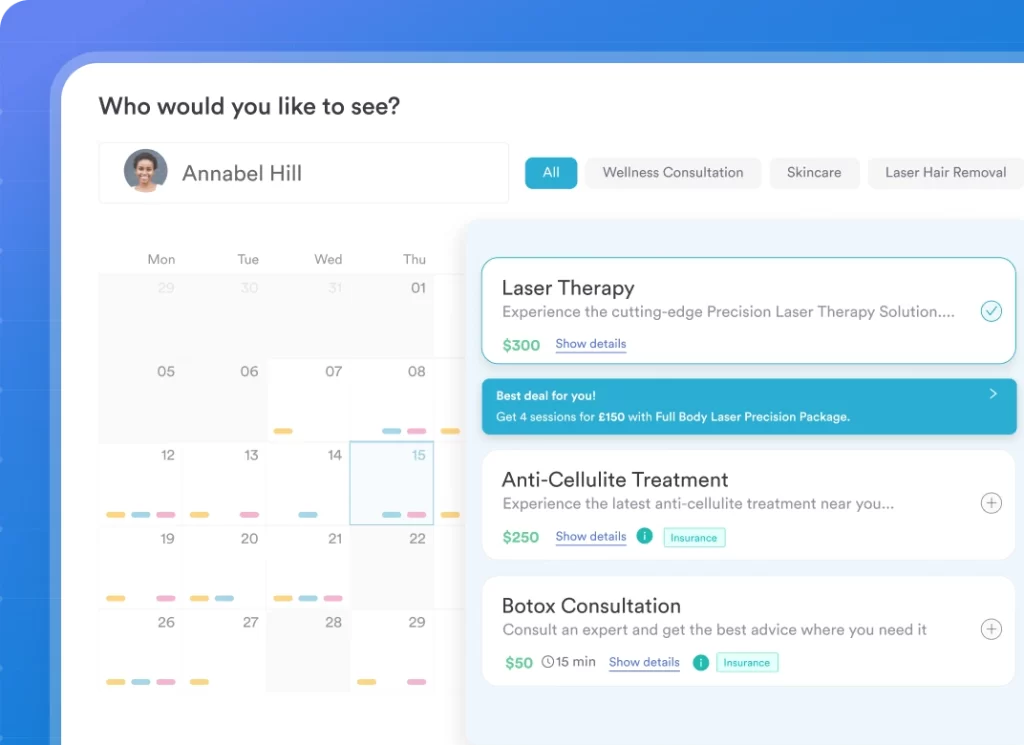
1Easy online appointment scheduling and booking

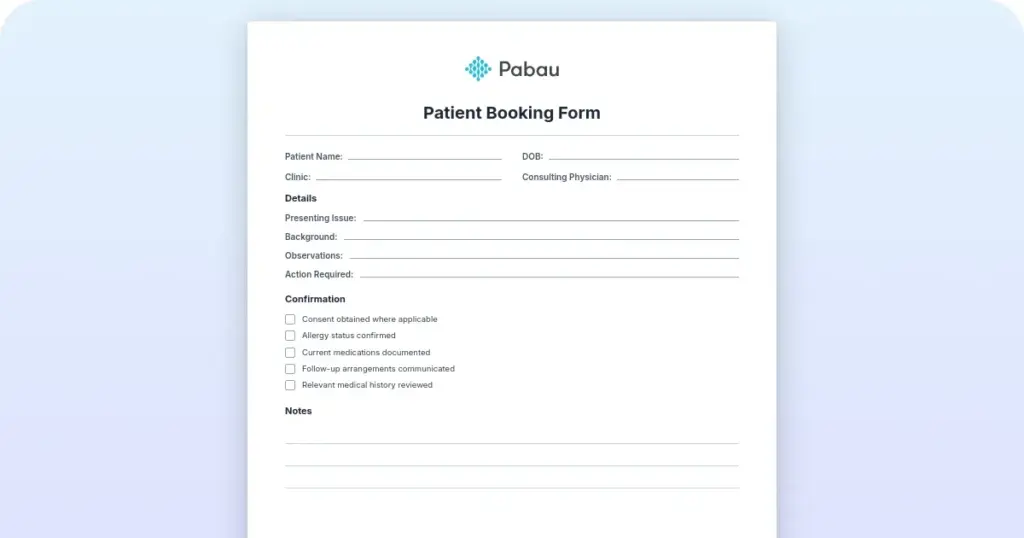
Clinics use Pabau to let patients self-book by service and provider in real time, capture intake and consent before the visit, auto-fill cancellations from the waitlist, and trigger pre-visit reminders that adjust based on patient response. The same engine powers AI-generated clinical notes through Pabau Scribe, so booking and documentation share one record.

Key features

  • Real-time self-scheduling: Patients book by service, provider, and location with rules-based availability and conflict checking.
  • AI no-show modeling: Reminder cadence adapts to historical patient behavior, with deposit prompts on higher-risk slots.
  • Automated waitlist fill: Cancellations trigger SMS to the next eligible patient, recovering revenue without staff intervention. See how this works inside Pabau in our waitlist management guide.
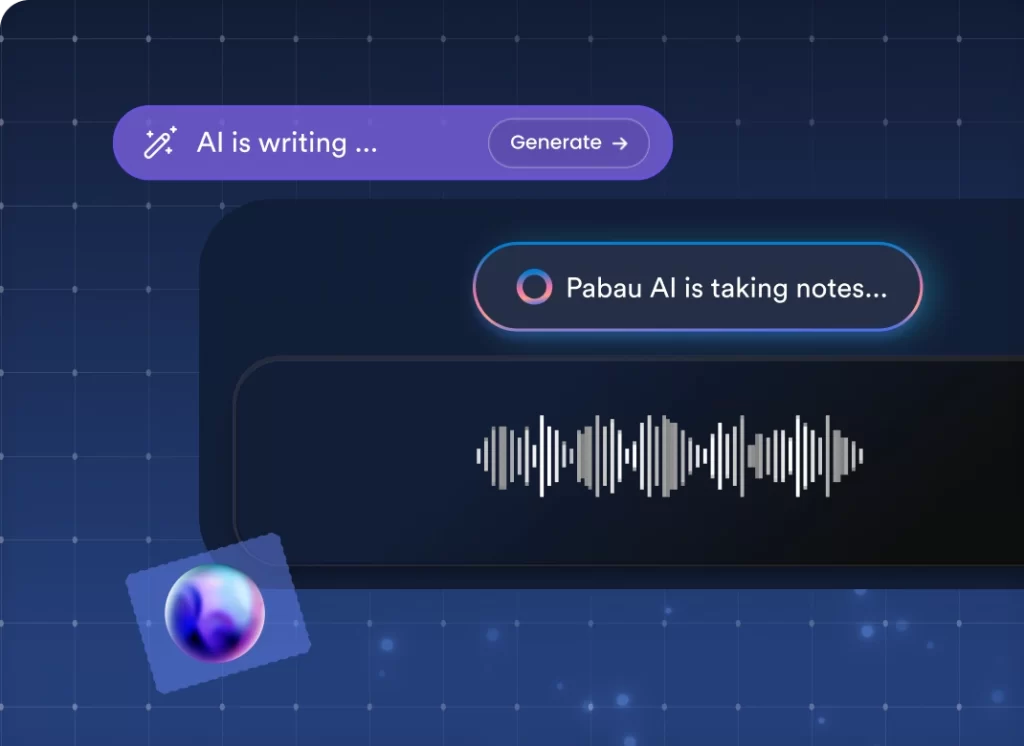
  • Pabau Scribe AI documentation: Generates structured SOAP, DAP, and BIRP notes during the visit, ready for review and sign-off.
  • Automation engine: Configurable workflows handle intake, consent, pre-care prep, and post-visit follow-up via the Pabau automation engine.
  • Branded online booking: Patients book from your domain, with deposits and packages captured at checkout via Pabau’s online booking.
  • HIPAA-compliant infrastructure: US data residency, BAA available, and full audit trails on every AI action.
  • Reporting on AI ROI: Dashboards quantify recovered slots, no-show reduction, and documentation time saved.

Pricing

Plan Price Who it is for Key features
Starter From around $59-$65/month depending on region Solo and single-location clinics Online booking, reminders, client records
Team / Medium / Group Tiered (see pabau.com/pricing) Growing and multi-location clinics Pabau Scribe, advanced automation, multi-location calendar
Enterprise Custom Large groups and franchise networks SSO, dedicated CSM, custom data residency

Where Pabau shines

  • AI lives across the whole patient journey, not just the booking screen. Scheduling, intake, documentation, and recall all run on one record, so an AI decision in one place updates the others.
  • Pabau Scribe closes the documentation loop. The same calendar event that captured the AI booking also drives note generation, eliminating the largest hidden cost of high-throughput scheduling.
  • Revenue recovery is automatic. Cancellations trigger waitlist outreach without staff intervention, which is where most clinics actually lose money.
  • Aesthetic and elective fit. Service-specific durations, deposits at booking, and package billing map directly to medspa, derm, and longevity workflows.
  • Multi-location ready. Centralized scheduling rules with location-level overrides for clinic groups standardizing patient experience across sites.

Where Pabau falls short

  • Overkill for scheduling-only needs. If you already have a working EHR and just want a scheduling layer, lighter tools will feel tighter.
  • Learning curve on automation depth. New users typically need onboarding support to configure multi-step workflows beyond defaults.
  • Optimized for private-pay. Insurance-heavy primary care will find financial workflows less tailored than insurance-first platforms.

Customer reviews

On Capterra, Pabau holds a 4.7 out of 5 rating across more than 600 verified reviews. On G2, it rates 4.7 out of 5 across 275 reviews. Reviewers consistently call out the depth of customizable scheduling, the time saved with Pabau Scribe documentation, and the operational impact of automated waitlists.

Pabau Scribe AI generating clinical notes and treatment summaries linked to the scheduled appointment

Who Pabau is best for

  • Aesthetic, medspa, and elective procedure clinics that want AI scheduling tied to deposits, intake, and clinical notes.
  • Multi-location private-pay groups that need centralized scheduling rules with local overrides.
  • Wellness, longevity, weight loss, and fertility practices replacing a stack of point tools with one platform.
  • Clinics that want booking, AI documentation, recall, and POS in one HIPAA-compliant system.

See Pabau’s AI patient scheduling in action

Watch how AI-driven booking, automated waitlists, and Pabau Scribe documentation work as one connected workflow. Book a 30-minute demo tailored to your clinic type.

Pabau clinic management platform demo

NexHealth: best AI patient scheduling software for EHR-integrated practices

NexHealth is a patient engagement layer that sits on top of an existing EHR, syncing scheduling and reminders with practice management systems like Epic, Athenahealth, Dentrix, and Eaglesoft in real time. AI-driven self-scheduling is its strongest play, particularly for dental and medical groups that want a modern booking experience without ripping out the core clinical system.

NexHealth

Key features

  • Real-time EHR sync: Booking and availability data flow live to the underlying EHR.
  • Smart self-scheduling: Provider rules, insurance filters, and visit type matching applied at the moment of booking.
  • Automated reminders: Multi-channel cadence with confirmation capture.
  • Digital intake forms: Pre-visit forms triggered automatically when a slot is booked.
  • Two-way patient messaging: Web inbox for staff with the patient’s appointment context attached.

Pricing

Plan Price Who it is for Key features
Custom Contact NexHealth for rates Practices with established EHR EHR sync, AI scheduling, intake, messaging

Where NexHealth shines

  • Real-time EHR integration is among the deepest in this category.
  • Patient-facing booking flow is clean and converts well on mobile.
  • Strong adoption in dental specialties and multi-provider medical groups.

Where NexHealth falls short

  • Adds cost on top of an existing EHR rather than replacing one.
  • No native clinical documentation or AI scribe.
  • Pricing is opaque and contract structure draws mixed feedback from smaller practices.

Customer reviews

According to Capterra reviewers, NexHealth holds a 4.6 out of 5 rating. Reviewers praise EHR sync reliability and the patient self-scheduling experience. The most common criticism is feature scope: NexHealth is an engagement layer, not a clinical system.

Who NexHealth is best for

  • Dental and medical practices running Epic, Athenahealth, Dentrix, or Eaglesoft as the system of record.
  • Multi-provider groups wanting AI-driven self-scheduling without replacing the EHR.

Notable: best AI patient scheduling software for mid-to-large medical groups

Notable focuses on the pre-visit workflow, layering AI assistants across intake, scheduling, insurance verification, and patient outreach for mid-to-large medical groups and health systems. The platform is designed for organizations where front desk labor is the primary bottleneck and scheduling lives downstream of intake and authorization.

Key features

  • AI patient intake: Automates pre-visit forms, history capture, and consent across visit types.
  • Insurance verification: Real-time eligibility and benefit checking tied to the scheduled slot.
  • Smart scheduling: Routes patients to appropriate provider and visit type using AI assistants.
  • Patient outreach campaigns: AI-driven recall and gap closure messaging at scale.
  • EHR integration: Direct connections to major US EHRs (verify current list at notable.health).

Pricing

Plan Price Who it is for Key features
Custom Contact Notable for enterprise rates Mid-to-large medical groups AI intake, scheduling, eligibility, outreach

Where Notable shines

  • Pre-visit automation depth is best-in-class for high-volume medical groups.
  • Insurance verification tightly coupled to scheduling reduces denial risk later in the cycle.
  • AI assistants are configurable per visit type rather than running as one generic model.

Where Notable falls short

  • Enterprise pricing and contract structure puts it out of reach for solo and small group practices.
  • Implementation typically requires several months and a dedicated internal project lead.
  • Less focus on aesthetic, wellness, or private-pay workflows.

Customer reviews

Notable does not have wide Capterra or G2 review counts, but enterprise customers cited in published case studies report meaningful reductions in front desk labor and double-digit improvements in pre-visit form completion. Limitations referenced focus on implementation complexity and the need for executive sponsorship.

Who Notable is best for

  • Multi-specialty medical groups, ACOs, and health systems with high front desk labor cost.
  • Organizations treating intake automation as a strategic project, not a quick tool deployment.

Mend: best AI patient scheduling software for telehealth-heavy practices

Mend combines AI no-show prediction with self-scheduling and integrated telehealth. The platform’s signature feature is its no-show model: appointments flagged as high-risk get additional outreach automatically, and the data feeds back into operational reporting so practices can measure the impact of the AI directly.

Key features

  • AI no-show prediction: Risk-scores every appointment and triggers adaptive outreach on high-risk slots.
  • Smart self-scheduling: Real-time online booking with EHR integration.
  • Integrated telehealth: Browser-based video visits with reminder links built in.
  • Digital intake: Pre-visit forms and consent delivered automatically.
  • Outcomes reporting: Dashboards quantify reduction in no-shows attributable to AI outreach.

Pricing

Plan Price Who it is for Key features
Custom Contact Mend for rates Telehealth-heavy practices AI no-show prediction, telehealth, scheduling

Where Mend shines

  • The no-show prediction model is mature and well-instrumented in reporting, which matters when justifying spend to a CFO. For broader context on why this matters, see how to improve patient no-show rate.
  • Telehealth is treated as a first-class workflow, not an add-on.
  • Strong fit for outpatient behavioral health, IOP, and PHP programs with high fixed staffing cost per session.

Where Mend falls short

  • Not designed for product-based, aesthetic, or in-clinic procedure workflows.
  • Less breadth on reputation, marketing, or commerce features compared to general-purpose platforms.
  • Integration setup with non-supported EHRs can require professional services.

Customer reviews

According to Capterra reviewers, Mend holds a 4.3 out of 5 rating. Praise centers on the visible no-show reduction and the simplicity of the patient-facing experience. Common limitations cited focus on EHR integration depth and pricing opacity.

Who Mend is best for

  • Behavioral health groups, especially IOP and PHP programs with daily group sessions.
  • Hybrid or telehealth-first practices in primary care, psychiatry, and chronic care.
  • Health systems and ACOs piloting no-show reduction as a quality metric.

Hyro: best AI patient scheduling software for conversational booking at scale

Hyro is a conversational AI platform that handles patient calls and chats, books appointments directly into EHR scheduling systems, and routes overflow to staff. It is widely adopted by health systems where inbound call volume swamps the front desk and a meaningful share of calls are simple scheduling requests.

Key features

  • Conversational AI by voice and chat: Patients book, reschedule, or cancel through natural conversation in English or Spanish.
  • EHR-aware scheduling: AI assistants honor real-time provider availability and visit type rules.
  • Call deflection analytics: Reports quantify call-handling cost reduction and patient self-service rate.
  • Multi-channel deployment: Web chat, phone IVR, and SMS supported out of the box.
  • Enterprise EHR connectors: Native integration with Epic and Cerner (verify current integrations at hyro.ai).

Pricing

Plan Price Who it is for Key features
Custom Contact Hyro for enterprise rates Health systems and large medical groups Conversational AI booking, IVR, deflection analytics

Where Hyro shines

  • Genuine conversational AI quality, including handling of complex multi-step booking requests.
  • Call deflection is measurable, which makes ROI math straightforward for finance teams.
  • Strong fit for health systems with established Epic or Cerner scheduling rules.

Where Hyro falls short

  • Enterprise-only pricing and scope; not viable for clinics with fewer than 20 providers.
  • No native clinical or commerce features beyond scheduling.
  • Implementation requires the practice to have well-defined scheduling rules already in the EHR.

Customer reviews

According to G2, Hyro holds a 4.6 out of 5 rating. Reviewers praise the conversational quality and the operational impact on call center volume. The most common limitations cited focus on the need for substantial upfront configuration and well-defined EHR scheduling logic.

Who Hyro is best for

  • Health systems and large medical groups with high inbound call volume.
  • Organizations measuring call deflection and self-service rate as operational metrics.
  • Practices already standardized on Epic or Cerner scheduling.

Luma Health: best AI patient scheduling software for end-to-end patient activation

Luma Health positions AI scheduling inside a broader patient activation suite that covers outreach, scheduling, intake, payments, and post-visit follow-up. The platform is most often selected by multi-provider clinics that want one vendor handling the patient journey end-to-end rather than stitching together point tools.

Key features

  • AI patient activation: Personalized outreach across SMS, email, and voice tied to scheduling outcomes.
  • Smart self-scheduling: Rules-based booking with EHR sync.
  • Care navigation: AI assistants guide patients through pre-visit steps and care plans.
  • Patient payments: Integrated payment collection tied to the scheduled visit.
  • Broad EHR coverage: Athenahealth, eClinicalWorks, NextGen, and more (verify current list at lumahealth.io).

Pricing

Plan Price Who it is for Key features
Custom Contact Luma Health for rates Multi-provider medical groups AI outreach, scheduling, intake, payments

Where Luma Health shines

  • End-to-end coverage from outreach through post-visit is genuinely broad rather than marketing language.
  • Strong EHR integration ecosystem for non-Epic medical groups.
  • AI assistants are positioned around care navigation, not just slot filling.

Where Luma Health falls short

  • Optimized for medical groups, not aesthetic or wellness clinics.
  • Pricing typically anchored at mid-market and enterprise, not solo or small practice.
  • Implementation time and change management can be substantial in larger deployments.

Customer reviews

According to G2, Luma Health holds a 4.5 out of 5 rating. Reviewers praise the breadth of the platform and the impact on patient activation metrics. Limitations cited focus on the need for clear internal ownership during configuration and rollout.

Who Luma Health is best for

  • Multi-provider medical groups consolidating outreach, scheduling, and payments under one vendor.
  • Health systems with non-Epic EHRs prioritizing broad integration coverage.
  • Practices treating patient activation as a strategic metric, not just an ops task.

SimplePractice: best AI patient scheduling software for solo therapists and mental health

SimplePractice is the default practice management platform for solo and small-group therapists, counselors, and behavioral health practitioners in the US. AI scheduling features are bundled with telehealth, progress notes, and insurance billing, wrapped around the therapy workflow specifically rather than a general clinic model.

Key features

  • Online self-scheduling: Client portal supports new and returning client booking with intake automation.
  • AI-assisted reminders: Multi-channel cadence with telehealth links included.
  • Telehealth integration: HIPAA-compliant video sessions inside the platform.
  • Documentation and billing: Progress notes, treatment plans, and insurance claim submission built in.
  • Recurring appointment patterns: Handles weekly or biweekly therapy cadences cleanly.

Pricing

Plan Price Who it is for Key features
Essential From $39/month Solo therapists Scheduling, reminders, basic notes
Plus / Group Tiered (see simplepractice.com) Growing solo and small group practices Telehealth, insurance billing, advanced documentation

Where SimplePractice shines

  • Scheduling, telehealth, notes, and billing in one product purpose-built for behavioral health.
  • Recurring appointment handling is more polished than general-purpose tools.
  • Large practitioner community generates strong peer support and template sharing.

Where SimplePractice falls short

  • Not designed for aesthetic, elective, or product-based clinical environments.
  • AI scheduling capability is lighter than dedicated AI-first platforms.
  • No inventory, POS, or commerce capability for clinics selling products or memberships.

Customer reviews

On Capterra, SimplePractice holds a 4.6 out of 5 rating. On G2, it rates 4.5 out of 5. Reviewers cite scheduling reliability and telehealth integration as the strongest aspects.

Who SimplePractice is best for

  • Solo therapists, counselors, and licensed clinical social workers.
  • Small group behavioral health practices billing Medicare and commercial insurance.
  • Mental health practitioners who need telehealth-ready scheduling out of the box.

Pro Tip

Before you commit to any AI scheduling platform, run the demo through three real scenarios: (1) a new patient booking their first visit on a mobile browser at 9pm, (2) an existing patient rescheduling 12 hours out, and (3) the waitlist auto-filling the canceled slot. The platform that handles all three without a staff member touching the keyboard is the one that will actually move your numbers.

How to choose the best AI patient scheduling software for your practice

The right AI patient scheduling software depends more on your clinical model and operational bottleneck than on which tool has the most AI features on its homepage. Use these five filters to narrow the list before booking demos.

  1. Care model fit. Aesthetic and elective clinics need AI scheduling tied to deposits and aftercare. Insurance-billed medical groups need intake and eligibility automation. Therapy practices need recurring appointment handling and telehealth. Identify your model before comparing AI feature lists.
  2. All-in-one vs. layer on top of an EHR. NexHealth, Notable, Mend, Hyro, and Luma Health add AI scheduling on top of an existing EHR. Pabau and SimplePractice consolidate booking, notes, and engagement in one product. Pick based on whether you can replace the EHR or have to live with it. The operational case for consolidating is laid out in clinic automations for revenue growth.
  3. Operational bottleneck. AI scheduling tools differ in what they actually optimize: call deflection (Hyro), no-show prediction (Mend), pre-visit automation (Notable), self-scheduling conversion (NexHealth), or end-to-end activation (Luma Health). Pabau covers booking, intake, documentation, and recall in one workflow. Match the tool to the bottleneck. For more on the no-show side specifically, see our proven methods to reduce no-shows.
  4. HIPAA, BAA, and data residency. Anything booking PHI needs a signed BAA and clear US data residency. Verify both before signing, including how the AI model is trained and whether your data leaves the platform.
  5. Total cost of ownership. Enterprise AI scheduling tools price by provider, location, or message volume. All-in-one platforms bundle more in the base subscription. Map the full stack cost over 12 months including the integrations and tools you would still need alongside the AI layer.
Continue your research

Continue your research

Want to fix scheduling fundamentals first? How to schedule patients effectively breaks down the operational practices that AI can amplify – and the ones that no AI will fix.

Curious how AI tools change the patient experience? AI and patient experience covers the touchpoints where AI shifts perception of your clinic – for better or worse.

Evaluating booking platforms more broadly? Streamline appointment booking looks at the friction points worth removing before adding any new technology.

Weighing the broader AI question? Pros and cons of AI in healthcare covers the trade-offs that matter beyond the marketing claims.

Conclusion

Choosing the best AI patient scheduling software comes down to one question: which platform automates the most of your booking-to-care-delivery flow without forcing you to glue together three other tools? For aesthetic, wellness, and multi-specialty private-pay clinics, Pabau delivers the most complete answer, combining AI-driven booking, automated waitlists, integrated patient communication, and Pabau Scribe documentation in a single HIPAA-compliant system.

If you want to see how AI patient scheduling performs inside a real clinic workflow, book a Pabau demo and we’ll walk through your specific patient journey, from first online booking to AI-generated clinical note.

Frequently Asked Questions

What is AI patient scheduling software?

AI patient scheduling software automates the process of booking, confirming, and managing patient appointments using machine learning and conversational AI. Modern platforms predict no-show risk, route patients to the right provider and visit type, auto-fill cancellations from the waitlist, and trigger pre-visit intake without staff intervention.

How much does AI patient scheduling software cost?

Solo and small-practice tools start around $39 to $65 per month, while enterprise platforms like Notable, Hyro, and Luma Health price by provider, location, or message volume and typically require annual contracts. All-in-one clinic platforms like Pabau bundle AI scheduling into the base subscription starting from around $59 to $65 per month depending on region.

Is AI patient scheduling software HIPAA compliant?

It depends on the vendor. To be HIPAA compliant for US clinics, the platform must offer a signed Business Associate Agreement (BAA), encrypt PHI in transit and at rest, and apply administrative safeguards including access controls and audit logs. Always confirm BAA availability and clarify how the AI model handles your data before signing.

How much can AI scheduling reduce no-shows?

Published vendor benchmarks and peer-reviewed studies consistently show AI-driven scheduling and adaptive reminders reduce no-show rates by 20% to 40% compared to baseline. The biggest impact comes from layering risk-scored outreach, multi-channel reminders, and a deposit policy on high-value or high-risk visits.

What is the best AI patient scheduling software for small clinics?

Pabau is the strongest fit for small aesthetic, wellness, and multi-specialty private-pay clinics because AI scheduling, intake, documentation, and recall live in one platform. Solo therapists are usually better served by SimplePractice. Multi-provider medical groups should evaluate NexHealth or Mend depending on whether the priority is EHR sync or no-show reduction.

Can AI patient scheduling software integrate with my EHR?

Most platforms in this category are built specifically to integrate with major US EHRs including Epic, Athenahealth, eClinicalWorks, Dentrix, Eaglesoft, and NextGen, though the depth of integration varies significantly. NexHealth, Notable, Mend, Hyro, and Luma Health are designed as engagement layers on top of an existing EHR, while Pabau replaces the EHR entirely for private-pay clinics.

×