Pabau Engage inbox

Pabau Engage is here: every patient conversation in one inbox.

Learn more
Clinical guides

System disorder ATI

Avatar photo Maja Popovska
Last Updated: October 20, 2026

The system disorder ATI template is a one-page study form that nursing students fill out for a single medical condition. It walks you through 12 fields, from pathophysiology and expected findings to nursing care, client education, and complications.

The form comes from Assessment Technologies Institute, known as ATI Nursing Education, and many US nursing programs assign it. You can download a blank copy below. This guide then explains each field, the order to fill them in, and worked examples for five common NCLEX conditions.

Download your free ATI system disorder template

A blank, ready-to-print template with all 12 fields. It runs from alterations in health and pathophysiology through medications, nursing care, client education, and complications.

Download template
Key takeaways

Key takeaways

The system disorder ATI template is a 12-field Active Learning Template for studying one medical condition, from pathophysiology through client education.

Fill the fields in order, and write nursing care, client education, and complications last, because those three draw on the fields above them.

Split risk factors into modifiable and non-modifiable, and record expected findings as subjective and objective data.

Pabau, the practice management platform we build, turns the same field-by-field structure into digital forms and patient records for working practices.

Found our content helpful?

What is the system disorder ATI template?

The system disorder ATI template is a study document you complete for one specific medical condition. You work through 12 structured fields that cover its full clinical picture. It belongs to ATI’s Active Learning Template family, which also includes the Basic Concept, Nursing Skill, Therapeutic Procedure, Diagnostic Procedure, and Medication templates.

The format is condition-centric. You pick a diagnosis, say COPD or heart failure, and fill each field from textbooks, clinical guidelines, and evidence-based nursing sources. According to the National Council of State Boards of Nursing (NCSBN), the NCLEX-RN tests clinical judgment across client-need categories. The template’s fields cover much of that content, so many programs use it.

Instructors assign it before clinical rotations, after lectures on new conditions, or as exam preparation. Completing it makes you pull scattered information into one clinical snapshot, which is the same skill you use at the bedside.

What goes in each of the 12 fields

Each field has a specific purpose and a defined scope. Here is what goes in each one.

SectionWhat to document
Alterations in healthThe medical diagnosis or condition name and a brief definition
PathophysiologyThe disease mechanism, meaning what goes wrong at the cellular or organ-system level
Risk factorsModifiable and non-modifiable factors that increase likelihood of the condition
Expected findingsSubjective (patient-reported) and objective (measurable) signs and symptoms
Lab testsRelevant laboratory values with normal ranges and expected deviations for this condition
Diagnostic proceduresImaging, biopsies, or other tests used to confirm or stage the diagnosis
MedicationsPrimary drug classes, mechanism of action, key nursing considerations, and monitoring parameters
Therapeutic proceduresNon-pharmacological treatments such as oxygen therapy, dialysis, wound care, and physical therapy
Interprofessional careOther disciplines involved in care (respiratory therapy, dietetics, social work, pharmacy)
Nursing carePriority nursing assessments and interventions, using ABC, Maslow’s hierarchy, or the nursing process to set priorities
Client educationWhat the patient needs to understand about their condition, medications, and self-management
ComplicationsPotential adverse outcomes if the condition is poorly managed, with early warning signs

How to fill it out, step by step

Fill the fields in order, so each later section can build on what you’ve already written. The map below groups the 12 fields into five steps and shows which earlier fields the last three draw on.
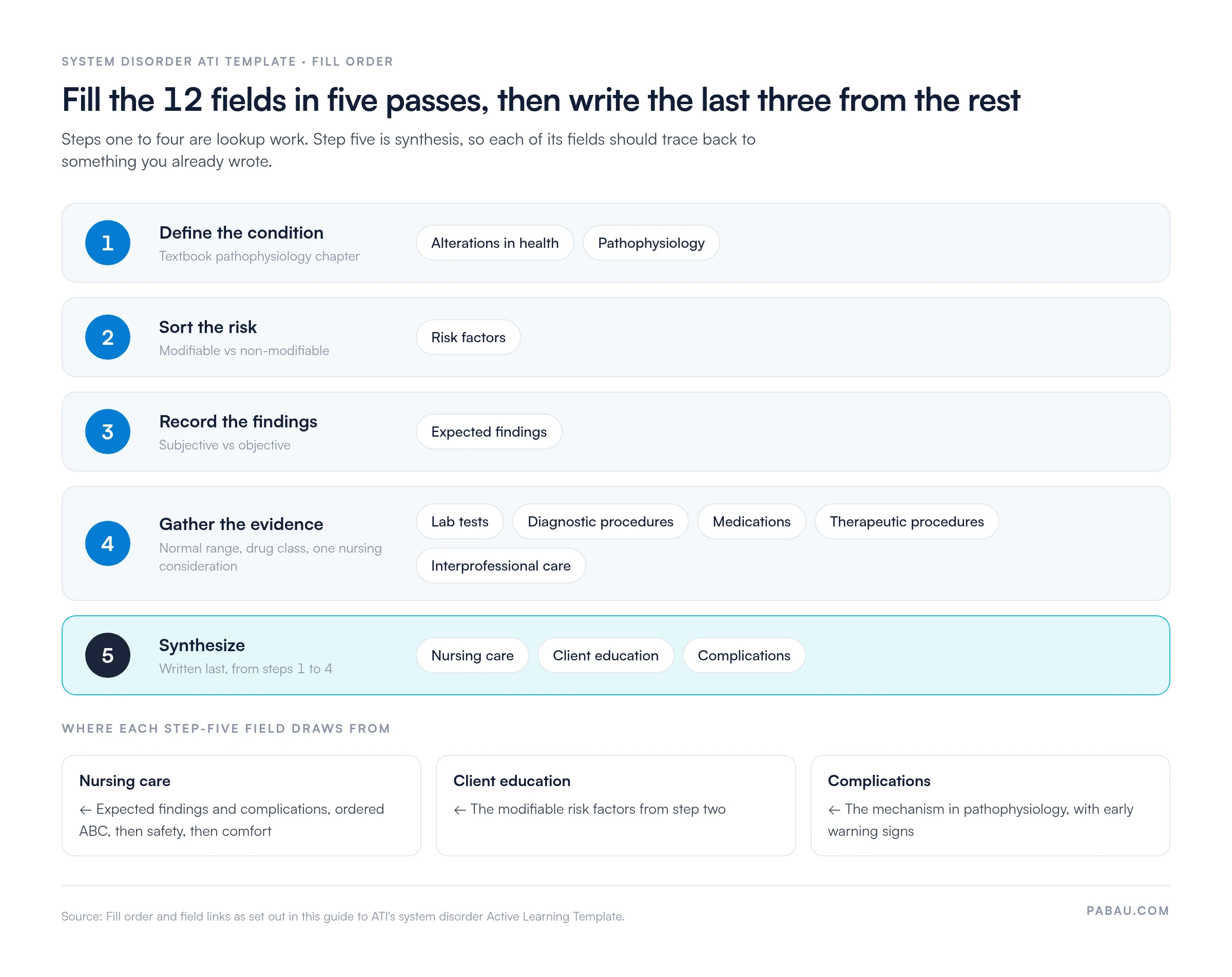
Fill-order map for the 12 fields of the system disorder ATI template in five steps: 1 alterations in health and pathophysiology, 2 risk factors, 3 expected findings, 4 lab tests, diagnostic procedures, medications, therapeutic procedures and interprofessional care, 5 nursing care, client education and complications, which draw on findings, modifiable risk factors and pathophysiology
Steps one to four are lookup work, while step five is written from what you already recorded. Fill order and field links follow the steps in this guide.
  1. Start with Alterations in Health and Pathophysiology. Write the condition name, then summarize the disease mechanism in two to three sentences. Use your textbook’s pathophysiology chapter as the primary source. Keep language precise. Write “alveolar destruction reduces gas exchange surface area” rather than “the lungs don’t work properly.”
  2. Populate Risk Factors using a modifiable/non-modifiable split. Listing risk factors as one undifferentiated block misses the clinical point. Separate what the patient can change (smoking, diet, activity) from what they cannot (age, genetics, sex). This framing appears frequently in NCLEX priority questions.
  3. Document Expected Findings with subjective and objective columns. Subjective data comes from the patient (“I feel short of breath”). Objective data comes from assessment (“SpO2 88%, respiratory rate 24”). Keeping them distinct sharpens assessment skills and reflects how the NCLEX separates subjective and objective data in clinical scenarios.
  4. Complete Lab Tests, Diagnostic Procedures, Medications, Therapeutic Procedures, and Interprofessional Care from evidence-based sources. For lab values, always note the normal range alongside the expected deviation. For medications, record the drug class, not just the brand name. Include at least one nursing consideration, such as monitoring potassium for loop diuretics.
  5. Write Nursing Care, Client Education, and Complications last. These three sections pull together the fields above them. Priority nursing interventions should reference the expected findings and complications you already documented. Client education should address the modifiable risk factors you identified earlier, so the whole template stays consistent.

Worked examples for five NCLEX conditions

The template applies to any medical condition. The table below shows key data points for five frequently tested NCLEX conditions, so you can see how the same structure adapts across body systems.

ConditionKey pathophysiologyPriority nursing interventionCritical complication
COPDChronic airflow limitation from airway inflammation and emphysematous alveolar destructionPosition upright, controlled oxygen (1-2 L/min), pursed-lip breathing coachingRespiratory failure, cor pulmonale
Heart failureReduced cardiac output triggers compensatory fluid retention and neurohormonal activationDaily weights, fluid restriction monitoring, monitor for signs of pulmonary edemaPulmonary edema, cardiogenic shock
PneumoniaAlveolar consolidation from infection impairs gas exchange and triggers systemic inflammatory responseSemi-Fowler’s positioning, encourage coughing and deep breathing, administer antibiotics as orderedSepsis, pleural empyema
Diabetes mellitus (type 2)Insulin resistance and relative insulin deficiency lead to chronic hyperglycemia and end-organ damageBlood glucose monitoring, hypoglycemia recognition and treatment, foot inspectionHyperosmolar hyperglycemic state (HHS), diabetic ketoacidosis (DKA)
HypertensionIncreased peripheral vascular resistance elevates blood pressure, stressing cardiac and renal systemsAccurate BP measurement technique, medication adherence education, low-sodium diet counselingHypertensive crisis, stroke, renal failure

For a full walk-through of one condition, see our cystic fibrosis ATI template. Use it to check your structure, and keep the content your own. If COPD is on your list, the COPD nursing care plan expands the Nursing Care field into a full plan.

How it differs from other ATI templates

ATI offers six Active Learning Template types. Each serves a distinct educational purpose. Choosing the wrong one wastes time and misses the clinical focus your instructor expects.

ATI template typePrimary focusUse it when…
System disorder ATIFull disease picture, from pathophysiology through complicationsStudying a medical condition (COPD, diabetes, schizophrenia)
Basic concept ATIFoundational nursing concepts and principlesReviewing concepts like infection control, pain management, or safety
Nursing skill ATIStep-by-step skill performance and safety considerationsPreparing for a clinical skill lab (urinary catheterization, NG tube insertion)
Therapeutic procedure ATITreatment-focused pre-, intra-, and post-procedure nursing careStudying a specific procedure like dialysis, blood transfusion, or chemotherapy
Diagnostic procedure ATIPre/post-procedure care for diagnostic testsPreparing patients for a colonoscopy, MRI, cardiac catheterization, or bronchoscopy
Medication ATIDrug class, mechanism of action, and nursing considerationsStudying a specific drug

Tips for using it in NCLEX prep

The template pays off when you reason through each field yourself. Four habits get the most out of it.

  • Do not copy from a completed example. Finding a filled-in template online and transcribing it defeats the purpose. Look up each field independently so the information moves into long-term memory through retrieval practice.
  • Link complications back to pathophysiology. For every complication you list, trace it directly to the mechanism you documented earlier. If you cannot make that connection, your pathophysiology entry needs more detail.
  • Use the Nursing Care section for priority-setting practice. Write interventions in order of clinical urgency, starting with the ABC framework, then safety, then comfort. Priority questions on the NCLEX-RN test this kind of ordering.
  • Revisit completed templates before clinical rotations. A template you completed six weeks ago reads differently after you have seen the condition at the bedside. Add notes from the patients you cared for, so the textbook picture links to a case you remember.

Pro Tip

Build a template library organized by body system. Group cardiac conditions together (heart failure, MI, hypertension), respiratory conditions together (COPD, pneumonia, asthma), and so on. When NCLEX questions present a patient scenario, you can quickly cross-reference related conditions from the same system cluster to reason through priority interventions.

How Pabau carries this structure into patient records

The habits this template builds are the ones a well-run practice expects in its records. Findings, interventions, patient education, and follow-up each get their own place, so the next clinician can see what was done and why.

Pabau, the practice management platform we build, gives practices digital intake forms and a clinical record system organized into structured fields. Assessment findings, treatment plans, medications, and education sit in set sections instead of free-text notes.
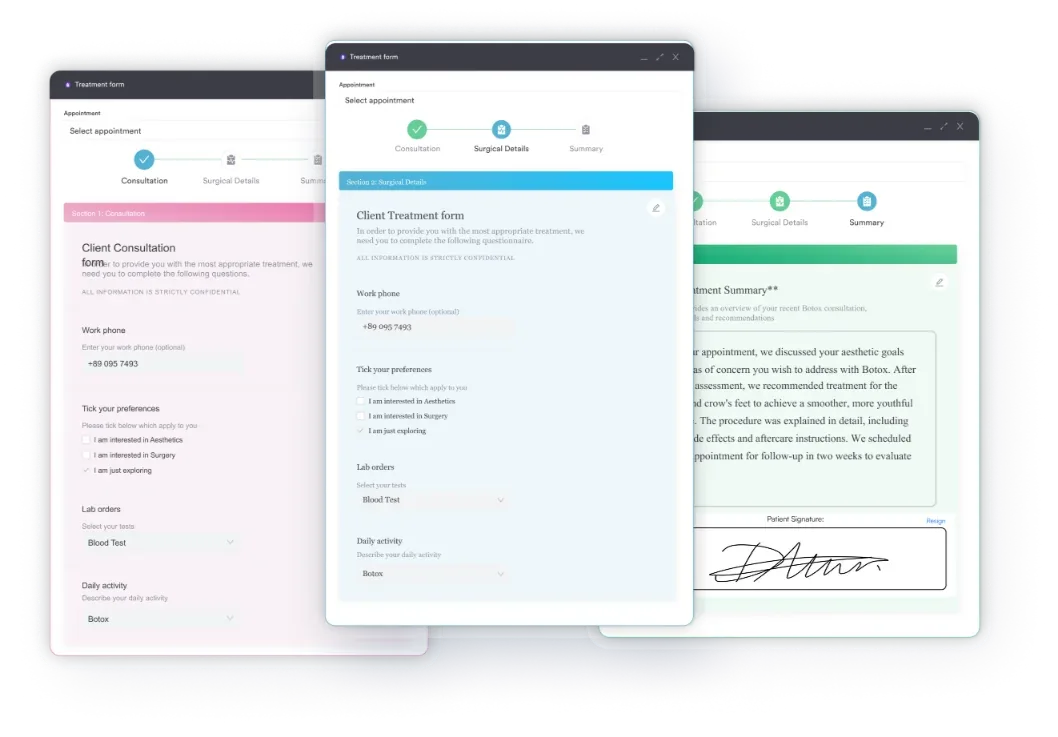
Customizable consent and intake forms
Pabau’s customizable intake forms let a practice set the fields every assessment must cover, much like the sections of an ATI template.

Pabau Scribe, our AI medical scribe, drafts structured notes from the consultation. Clinicians spend less time typing, and each note still covers the same sections.
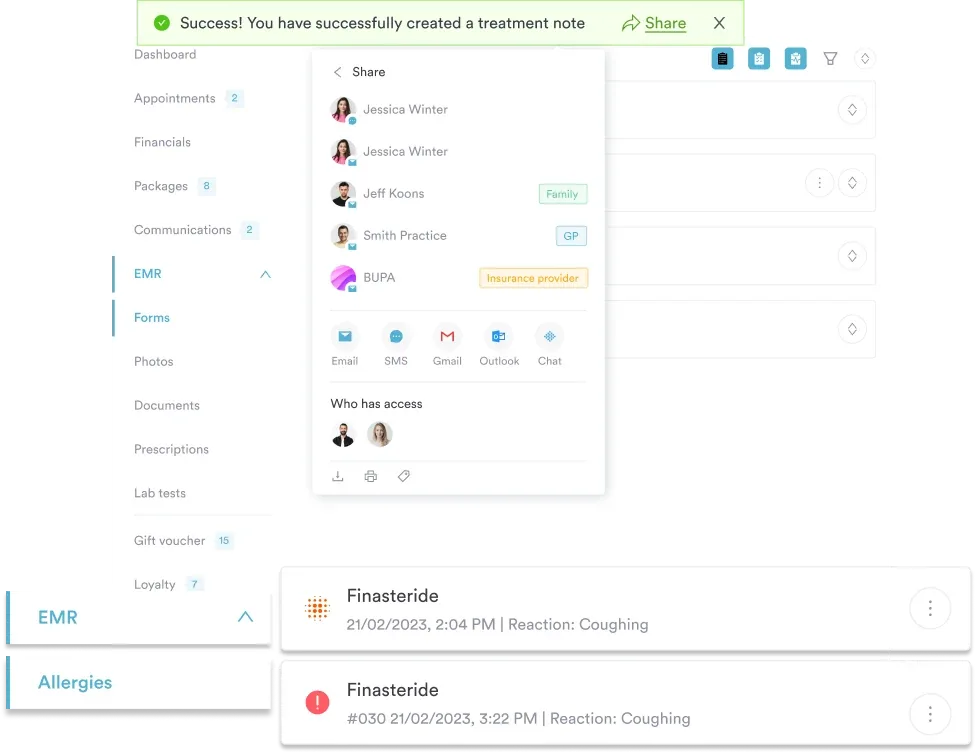
Comprehensive EMR & patient record management
Pabau’s patient records keep findings, medications, and education in one file, so each visit is documented with the structure the ATI template teaches.

The American Association of Colleges of Nursing (AACN) stresses that new graduate nurses need both clinical reasoning and skill with digital health records. The template builds the first skill, and structured digital records build the second.

Give every patient record the same structure

Pabau’s digital forms and patient records give your team a set field for each part of the record, from intake to follow-up. Every clinician documents to the same standard.

Pabau clinical documentation platform

Conclusion

The system disorder ATI template is the most condition-focused study tool in the ATI active learning library. It makes you hold one condition in mind at once, from cellular mechanism to patient education.

Start with the conditions your next exam or rotation covers, and fill the fields in the order above. Then check that every complication traces back to your pathophysiology entry. Where it doesn’t, that’s the topic to study again before test day.

For practices, that same discipline is what keeps patient records complete and easy to hand over. Book a demo to see how Pabau’s structured forms keep every clinician documenting the same way.

Continue your research

Continue your research

Want to sharpen how you write up patient care? Nursing documentation covers the formats and habits that keep nursing notes clear and defensible.

Studying a respiratory condition? Nursing lung assessment walks through the findings that feed the Expected Findings field for COPD and pneumonia.

Need a care plan for a renal condition? Chronic kidney disease nursing care plan sets out diagnoses, interventions, and expected outcomes for CKD.

Working through diabetes or thyroid disorders? Endocrine system assessment explains the history and exam findings to record for endocrine conditions.

Frequently asked questions

What is an ATI system disorder template?

An ATI system disorder template is a structured Active Learning Template that nursing students use to document one medical condition across 12 fields. The fields are alterations in health, pathophysiology, risk factors, expected findings, lab tests, and diagnostic procedures. The rest are medications, therapeutic procedures, interprofessional care, nursing care, client education, and complications. It builds the clinical reasoning that NCLEX-RN preparation calls for.

How do you fill out a system disorder Active Learning Template?

Start with the Alterations in Health and Pathophysiology fields, using your textbook as the primary source. Then split Risk Factors into modifiable and non-modifiable, and record Expected Findings as subjective and objective data. Fill the lab, medication, and procedure sections from evidence-based references. Complete Nursing Care, Client Education, and Complications last, drawing on the fields above them.

Where can I download a blank ATI system disorder template?

You can download a free blank system disorder ATI template from this page using the download button above. The PDF includes all 12 sections and is ready to print or complete digitally.

What is the difference between the system disorder and basic concept ATI templates?

The system disorder ATI template is condition-specific. You use it to document a single medical diagnosis from pathophysiology through complications. The basic concept ATI template covers broader nursing concepts, such as infection control or pain management theory, that aren’t tied to one diagnosis. Use the system disorder template when your assignment names a specific condition, and the basic concept template when you’re reviewing a nursing principle.

How does the template help with NCLEX preparation?

It builds clinical reasoning by having you document the full clinical picture of a condition in one place. Its fields touch several NCLEX-RN client-needs categories, including Physiological Adaptation, Pharmacological and Parenteral Therapies, Reduction of Risk Potential, and Health Promotion and Maintenance. Completing one for each high-yield condition gives you a personal reference library and practice in priority-setting.
Found our content helpful?
Avatar photo
Maja Popovska
Content Writer

Maja is a Senior Content Writer at Pabau, where she covers everything from practice management and compliance to medical aesthetics and patient experience. Off the clock: binging true crime docuseries, baking and dreaming about travel.
×