A COPD nursing care plan documents the nursing process using NANDA-approved diagnoses to guide systematic patient assessment, intervention planning, and outcome evaluation for chronic obstructive pulmonary disease.
The six primary nursing diagnoses for COPD include impaired gas exchange, ineffective airway clearance, activity intolerance, deficient knowledge, risk for infection, and anxiety, each with specific evidence-based interventions and measurable goals.
Evidence-based interventions address oxygenation, airway management, energy conservation, patient education on inhaler technique and smoking cessation, infection prevention, and psychosocial support for respiratory-related anxiety.
Practice management software like Pabau offers digital forms and Echo AI documentation features that help nurses structure care plans efficiently, automate clinical note generation, and maintain consistent NANDA-formatted records across patient encounters.
Download your free COPD nursing care plan
A comprehensive template covering NANDA-approved nursing diagnoses for COPD, complete with assessment frameworks, evidence-based interventions, rationale, measurable goals, and discharge planning checklists ready for clinical use.
COPD is one of the most common reasons for a respiratory admission, and one of the more likely diagnoses to bring a patient back through the doors within a month. A COPD nursing care plan is what protects against that: a structured, NANDA-based document that turns an assessment into a diagnosis, a diagnosis into a measurable goal, and a goal into interventions the whole shift can follow.
Skip the oxygen target that actually fits the patient, or write a goal too vague to evaluate, and the plan turns into paperwork instead of protection.
This template walks through the six NANDA diagnoses nurses reach for most in COPD, how they play out at the bedside, and the mistakes worth catching before a plan gets signed off.
Found our content helpful?
How a COPD care plan actually works at the bedside
A COPD nursing care plan follows the nursing process: assess, diagnose, plan, implement, and evaluate (ADPIE). It turns clinical assessment data into NANDA-approved nursing diagnoses, sets measurable patient outcomes, and pairs each outcome with specific, rationale-driven interventions.
The framework itself is NANDA-I (North American Nursing Diagnosis Association International), the standard nursing-diagnosis taxonomy that keeps assessment findings, goals, and interventions consistent and evidence-based across care settings. That same NANDA-I structure supports a nursing care plan for impaired memory in patients with overlapping cognitive risk.
Assessment: Subjective (patient reports of shortness of breath, activity limitations) and objective data (oxygen saturation, respiratory rate, breath sounds via auscultation)
NANDA diagnosis: A standardized problem statement linking clinical evidence to a recognized nursing diagnosis
Goals: Measurable, time-bound outcomes written in patient-centered language (e.g. “Patient will maintain SpO2 above 88% during ambulation”)
Interventions: Specific, evidence-based nursing actions with scientific rationale
Evaluation: Criteria to measure whether goals were met or need adjustment
The plan bridges formal documentation requirements (Joint Commission, CMS standards) with the practical workflow nurses use at the bedside, in outpatient clinics, or during home visits. Digital tools like digital forms let nurses populate the template efficiently and maintain comprehensive patient records that support continuity of care.
At shift change, the plan is what actually gets handed off. An incoming nurse should be able to read it and know what’s been tried, what’s working, and what to reassess next.
Digital forms
COPD pathophysiology: What’s actually happening in the lungs
COPD is a progressive inflammatory airway disease characterized by airflow obstruction from emphysema (alveolar destruction) and/or chronic bronchitis (chronic airway inflammation and mucus production). Understanding the underlying mechanism helps nurses select appropriate diagnoses and interventions.
Ventilation-perfusion (V/Q) mismatch: Damaged alveoli cannot efficiently exchange oxygen and carbon dioxide, leading to hypoxemia (low blood oxygen) and hypercapnia (elevated CO2)
Airway obstruction: Loss of elastic recoil and mucus accumulation impair gas flow, trapping air in the lungs (air trapping) and causing hyperinflation
Increased work of breathing: Accessory muscles engage to compensate, consuming energy and triggering dyspnea (shortness of breath) and fatigue
Pulmonary complications: Recurrent infections (pneumonia), pulmonary hypertension (from chronic hypoxia), and cor pulmonale (right heart failure) are common secondary issues. Echocardiography separates this from left-sided disease, read against the normal ejection fraction by age chart
Diagnosis isn’t based on symptoms alone. The GOLD report confirms COPD with a post-bronchodilator FEV1/FVC ratio <0.70 on spirometry, then grades severity by how far FEV1 has fallen from predicted:
GOLD 1 (mild): FEV1 ≥80% of predicted
GOLD 2 (moderate): FEV1 50–79% of predicted
GOLD 3 (severe): FEV1 30–49% of predicted
GOLD 4 (very severe): FEV1 <30% of predicted
The stage matters for nursing care, not just diagnosis. It shapes the oxygen target you should expect to titrate to, how hard you can safely push activity goals, and how much support belongs in the discharge plan.
What a COPD assessment actually looks for
Accurate assessment is the foundation of diagnosis selection. Nurses gather both patient-reported symptoms and measurable clinical findings. A structured review of systems helps make sure nothing gets missed beyond the respiratory exam, especially in patients with overlapping cardiac or GI symptoms.
Assessment Category
Key Findings
Related NANDA Diagnosis
Subjective: Dyspnea history
Shortness of breath on exertion, at rest, during sleep; orthopnea; anxiety about breathing
Impaired gas exchange, activity intolerance, anxiety
Objective: Respiratory rate
Tachypnea (RR >20); use of accessory muscles; pursed-lip breathing
Diminished breath sounds, wheezing, crackles indicating airway obstruction or secretions
Ineffective airway clearance, impaired gas exchange
Objective: Activity tolerance
Fatigue with minimal activity; weakness; inability to perform ADLs
Activity intolerance
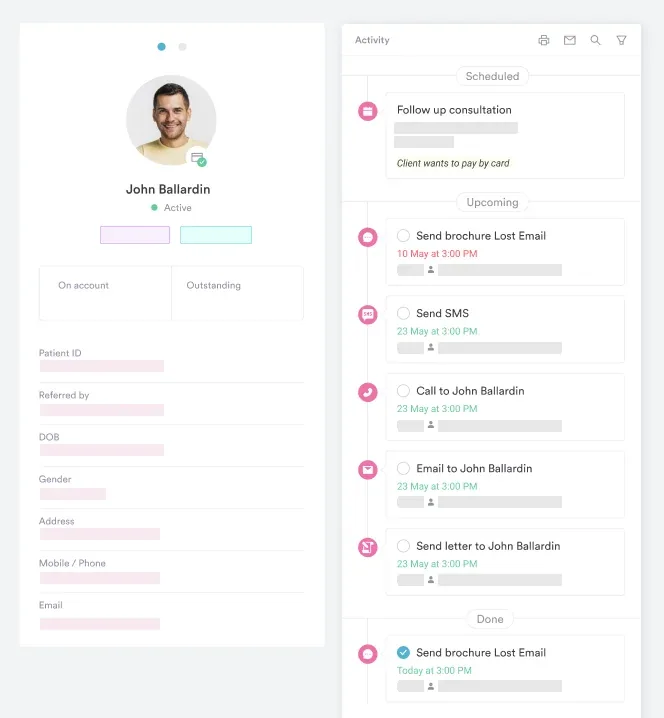
Digital forms sit at the center of practice management software, feeding records, billing, and follow-ups from one entry.
The six NANDA diagnoses that show up in almost every COPD care plan
NANDA-I taxonomy provides standardized diagnosis labels that communicate patient problems to the entire healthcare team. For COPD, six primary diagnoses address respiratory, functional, educational, and psychosocial dimensions.
Impaired gas exchange – related to ventilation-perfusion mismatch and alveolar destruction
Ineffective airway clearance – related to excessive mucus production and impaired cough
Activity intolerance – related to increased work of breathing and oxygen demand
Deficient knowledge – related to unfamiliarity with disease management, medications, and lifestyle modification
Risk for infection – related to compromised lung defenses and recurrent respiratory infections
Anxiety – related to fear of breathlessness, disease progression, and loss of control
Impaired gas exchange: The priority diagnosis in COPD
Impaired gas exchange is the priority NANDA diagnosis for COPD. Evidence of hypoxemia (SpO2 <88%, PaO2 <60 mmHg) or hypercapnia signals an immediate need for oxygenation support and airway management.
Nursing Diagnosis
Related to / As Evidenced By
Goal
Interventions
Rationale
Impaired gas exchange
Related to V/Q mismatch and alveolar destruction. AEB: SpO2 <88%, dyspnea, cyanosis, confusion
SpO2 maintained 88-92% at rest and with activity within 4 hours
• Monitor SpO2 q15-30min • Elevate HOB 30-45° • Position patient upright • Encourage pursed-lip breathing • Administer O2 as ordered • Encourage deep breathing exercises
Monitors oxygenation trend. Upright position maximizes diaphragm excursion. Pursed-lip breathing prolongs expiration, preventing air trapping. Controlled oxygen delivery prevents CO2 retention (key in COPD)
The oxygen mistake that trips up new nurses
Nurses trained on general wards default to a target SpO2 of 94–98%. For a patient at risk of hypercapnic respiratory failure, chasing that range can blunt the drive to breathe and worsen the ventilation-perfusion mismatch that’s already retaining CO2, tipping a stable COPD patient toward acute respiratory failure.
The safer target for at-risk COPD patients is 88–92%, titrated to the lowest flow that keeps them there. If a patient becomes drowsier or more confused than their baseline after oxygen is increased, treat it as a red flag and request a blood gas, not a reason to turn the flow up further.
Ineffective airway clearance: Getting secretions out safely
Excessive mucus and impaired cough reflex cause airway obstruction. Evidence includes wheezing on auscultation, productive cough, and difficulty clearing secretions.
Nursing Diagnosis
Goal
Interventions
Rationale
Ineffective airway clearance
Airway remains patent; breath sounds clear bilaterally within 2 hours
• Assist with effective coughing • Use chest physiotherapy / percussion • Ensure hydration • Administer bronchodilators • Elevate HOB • Monitor sputum character
Coughing mobilizes secretions. Chest percussion loosens mucus. Hydration thins secretions. Bronchodilators (albuterol, ipratropium) relax smooth muscle and improve airflow. Upright position aids gravity drainage
Activity intolerance: Why pacing beats pushing through it
COPD patients often cannot perform activities of daily living (ADLs) due to dyspnea and fatigue. Graded activity and energy conservation techniques reduce workload on the compromised respiratory system.
Nursing Diagnosis
Goal
Key Interventions
Activity intolerance
Completes ADLs with SpO2 >88% and RR <30 within 3 days
• Pace activities • Cluster care • Teach energy conservation • Provide rest between activities • Encourage pursed-lip breathing • Monitor vital signs during activity
Deficient knowledge: What patients actually need to be taught
Patients and caregivers need education on disease management, medication adherence, and lifestyle modification.
Diagnosis
Education Topics
Evaluation Criteria
Deficient knowledge
• Inhaler technique (MDI, DPI) • Medication adherence • Smoking cessation • Trigger avoidance • Pursed-lip breathing • Signs of exacerbation • When to seek help
Patient demonstrates correct inhaler use, verbalizes understanding of triggers, states signs of exacerbation (increased dyspnea, fever, change in sputum color/amount)
Risk for infection: Protecting an already-compromised airway
COPD patients are at high risk for respiratory infections because of compromised lung defenses and chronic inflammation. A secondary infection such as J22 can be enough to tip a stable patient into an exacerbation, so preventive interventions matter as much as treatment.
Risk Factor
Preventive Interventions
Compromised airway defense
• Pneumococcal vaccination • Annual influenza vaccine • Teach hand hygiene • Avoid crowds during cold/flu season • Monitor for fever, purulent sputum
Anxiety in COPD: Breaking the breathlessness-panic cycle
Respiratory-related anxiety is common but often overlooked. Fear of breathlessness triggers a cycle of panic, hyperventilation, and increased dyspnea.
Anxiety Trigger
Nursing Interventions
Rationale
Fear of breathlessness
• Teach diaphragmatic breathing • Establish trust through presence • Provide reassurance during dyspnea • Teach relaxation techniques • Arrange mental health referral if severe anxiety
Putting the template to work, from admission to discharge
This template guides clinical workflows from patient admission through discharge. Customize each section based on the patient’s individual assessment findings and response to interventions.
Complete nursing assessment: Use the subjective/objective data table above to document respiratory status, oxygen saturation, activity tolerance, and patient/caregiver knowledge level. AI-powered documentation can capture assessment findings and structure them into NANDA format, reducing manual charting time.
Select NANDA diagnoses: Match assessment findings to the six primary diagnoses covered in this template. Prioritize by acuity: impaired gas exchange and ineffective airway clearance are immediate; activity intolerance and deficient knowledge are ongoing.
Write measurable goals: Use the SMART framework (Specific, Measurable, Achievable, Relevant, Time-bound). Example: “Patient will maintain SpO2 ≥88% during ADLs within 48 hours” is measurable; “Patient will improve oxygenation” is not.
Document interventions with rationale: Pair each intervention with evidence-based reasoning. Rationales ground the care plan in clinical science and support clinical reasoning during handoff.
Evaluate and adjust: At each shift and care transition, assess whether goals are met, partially met, or unmet. Adjust interventions based on patient response and new assessment data.
Before you finalize the care plan: A quick checklist
Every goal is specific, measurable, and time-bound, not a general intention
The oxygen target matches this patient’s hypercapnia risk, not a blanket 94–98%
Interventions are individualized to today’s assessment, not copied from the last COPD chart
Each intervention has a rationale a colleague could learn from at handover
The plan has been discussed with the patient or family in language they can repeat back
Storing care plans in structured patient records ensures continuity across shifts, departments, and home care transitions.
Comprehensive patient records
Mistakes that quietly weaken a COPD care plan
The care plan itself can be technically correct and still fail the patient, usually because of how it’s written or charted rather than what’s in it.
Vague, unmeasurable goals: “Improve oxygenation” can’t be evaluated. “SpO2 ≥88% during ambulation within 48 hours” can.
Copy-pasted plans: Reusing yesterday’s COPD care plan for today’s patient without adjusting it to their actual assessment findings and oxygen tolerance.
Charting an intervention before it happens: Documenting “pursed-lip breathing taught” ahead of actually teaching it, then never circling back.
Vague evaluation notes: “Tolerating well” instead of the SpO2, respiratory rate, and what the patient actually said.
Dropping the patient’s own words: A direct quote carries more weight than a nurse’s paraphrase, especially for anxiety or dyspnea documentation.
Discharge planning: Getting a COPD patient home safely
Safe discharge requires coordination with patient engagement portals and follow-up scheduling to prevent readmission.
Patient verbalizes understanding of medications, inhaler technique, and trigger avoidance
Patient/caregiver receives written discharge instructions on activity pacing and when to seek emergency care
Outpatient follow-up scheduled within 1-2 weeks with primary care or pulmonary specialist
Community resources, including pulmonary rehabilitation and smoking cessation support, are identified and referrals made
Home oxygen equipment is ordered, delivered, and patient trained if needed
Vaccinations (influenza, pneumococcal) are up to date; reinforced at discharge
What good COPD outcomes actually look like
Measurable, time-bound goals anchor patient-centered care and provide clear evaluation criteria. Goals should reflect realistic outcomes given the chronic, progressive nature of COPD.
Short-term (24-48 hours): SpO2 maintained ≥88%; airway clear on auscultation; patient verbalizes understanding of one key education point
Medium-term (discharge): Patient demonstrates correct inhaler use; tolerates ADLs with SpO2 >88%; verbalizes trigger avoidance and exacerbation warning signs
Long-term (2-4 weeks post-discharge): Patient adheres to medication schedule; participates in pulmonary rehabilitation; reports improved exercise tolerance; avoids respiratory infections
References and external resources
The evidence base for COPD nursing care includes clinical guidelines, regulatory standards, and peer-reviewed research:
NANDA International (NANDA-I) – Official nursing diagnosis taxonomy and definitions (updated biennially)
GOLD (Global Initiative for Chronic Obstructive Lung Disease) – Evidence-based COPD diagnosis, management, and treatment guidelines
CDC COPD statistics – US prevalence, mortality, and public health data on COPD
Download this COPD nursing care plan template and customize it for your clinical setting, whether in acute hospitals, outpatient clinics, home health, or nursing education programs.
Conclusion: What a strong COPD care plan actually protects
Get the fundamentals right, the priority diagnosis, an oxygen target that fits the patient in front of you, and goals specific enough to evaluate, and the rest of the plan tends to follow. COPD won’t reverse, but a care plan built on accurate assessment and individualized interventions is what keeps a breathless patient stable, informed, and out of the hospital longer.
Practice management software like Pabau keeps that plan connected to the rest of the chart, so the same documentation, discharge checklist, and patient record follow the patient from admission through follow-up instead of living in separate systems.
Pabau’s digital forms and Echo AI documentation features help nursing teams structure evidence-based care plans, automate clinical notes, and maintain consistent NANDA-formatted patient records. Reduce charting time while improving care quality and compliance.
Wrapping up a hospital stay?Discharge summary template covers diagnosis, medications, pending results, and follow-up in one document.
Need a template outside respiratory care?DNA appliance template covers patient intake, informed consent, and progress notes for dental and sleep practices.
Need a template outside respiratory care?Appendicitis nursing care plan walks through the same ADPIE structure for an acute abdominal admission.
Frequently asked questions about COPD nursing care plans
How does managing a COPD exacerbation differ from a stable care plan?
A stable plan focuses on maintenance: medication adherence, activity pacing, and watching for early warning signs. An exacerbation shifts the plan to acute management, more frequent oxygen and vital sign checks, bronchodilator and often steroid administration, and closer monitoring for signs of respiratory fatigue.
How do you teach pursed-lip breathing?
Have the patient inhale through the nose for about two counts, then exhale slowly through pursed lips for four to six counts, roughly twice as long as the inhale. It slows the respiratory rate and keeps airways open longer, reducing air trapping. Practicing it during calm moments makes it easier to use during breathlessness.
When does a COPD patient need BiPAP or other non-invasive ventilation?
Consider escalation when a patient shows worsening respiratory acidosis, a rising PaCO2 with a falling pH, increasing use of accessory muscles, or persistent hypoxemia despite appropriate oxygen therapy. Non-invasive ventilation supports the work of breathing and can prevent intubation if started early enough.
What’s the single most important intervention for slowing COPD progression?
Smoking cessation. It’s the only intervention proven to slow the rate of FEV1 decline in COPD. Nicotine replacement or bupropion, combined with counseling, meaningfully improves quit rates compared with willpower alone.
How does a COPD care plan differ from an asthma care plan?
COPD airflow limitation is largely irreversible and progressive, so goals focus on slowing decline, oxygen titration, and pulmonary rehabilitation. Asthma involves reversible bronchospasm, so plans emphasize trigger avoidance and rescue inhaler response, with goals built around returning to baseline lung function after an episode.