Head to toe assessment cheat sheet: Printable nursing guide
A head to toe assessment cheat sheet gives you one fixed order at the bedside, s...

2
Last Updated: Oct 23, 2026

A stroke nursing care plan turns the nursing process into documented assessment, NANDA diagnoses, measurable outcomes, and interventions with rationales.
Six priority diagnoses anchor most acute stroke plans, starting with ineffective cerebral tissue perfusion and impaired physical mobility.
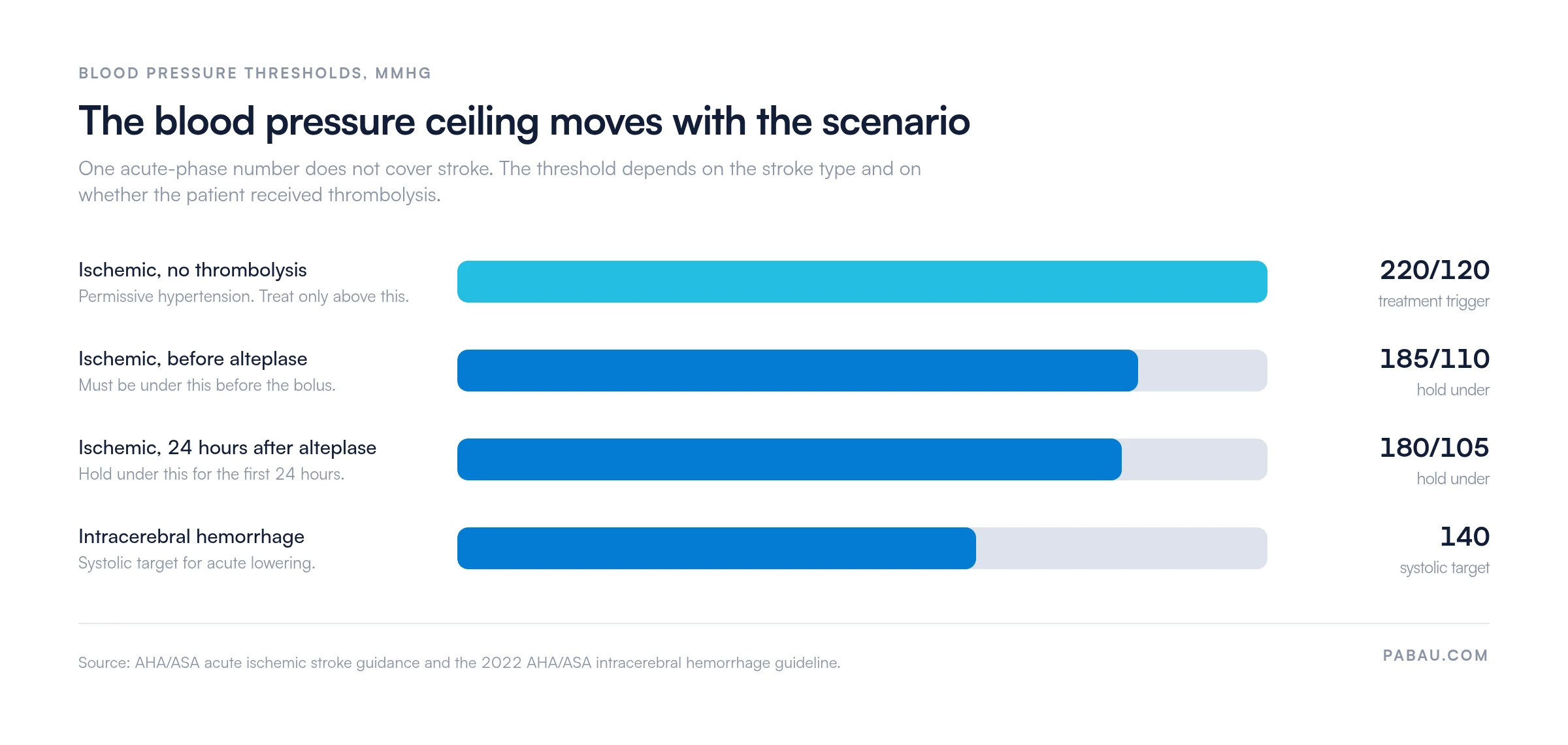
Blood pressure targets are not one number. They shift with the stroke type and with whether the patient received thrombolysis.
Discharge planning starts on admission, and by day three the plan should name the destination, home services, and follow-up appointments.
Practice management software like Pabau keeps the plan, the assessments, and the discharge summary in one client record.
A ready-to-use plan covering admission assessment, NANDA diagnoses, measurable outcomes, interventions with rationales, and discharge planning. Built for acute stroke units and inpatient rehabilitation.
Download templateA stroke nursing care plan is a clinical document that structures care after a cerebrovascular accident (CVA). It carries the nurse through assessment, diagnosis, planning, implementation, and evaluation, in that order.
Stroke is the fifth leading cause of death in the United States, according to the American Heart Association (AHA). It is also the leading cause of long-term disability in adults. A documented plan is what keeps assessment intervals, interventions, and discharge steps consistent between shifts.
This template covers the acute phase and rehabilitation. It also spells out which blood pressure ceiling applies in each stroke scenario, because a single acute-phase range does not cover them all.
A stroke nursing care plan is a formal documentation tool that structures assessment, diagnosis, planning, and intervention for a stroke patient. It translates NANDA International nursing diagnoses into patient-specific goals and actions. Each action carries a rationale rooted in stroke pathophysiology and current guidelines.
The plan builds on the admission record. That means the intake forms nurses complete at the door, the imaging report, and the first timed neuro exam.
A stroke care plan does three jobs:
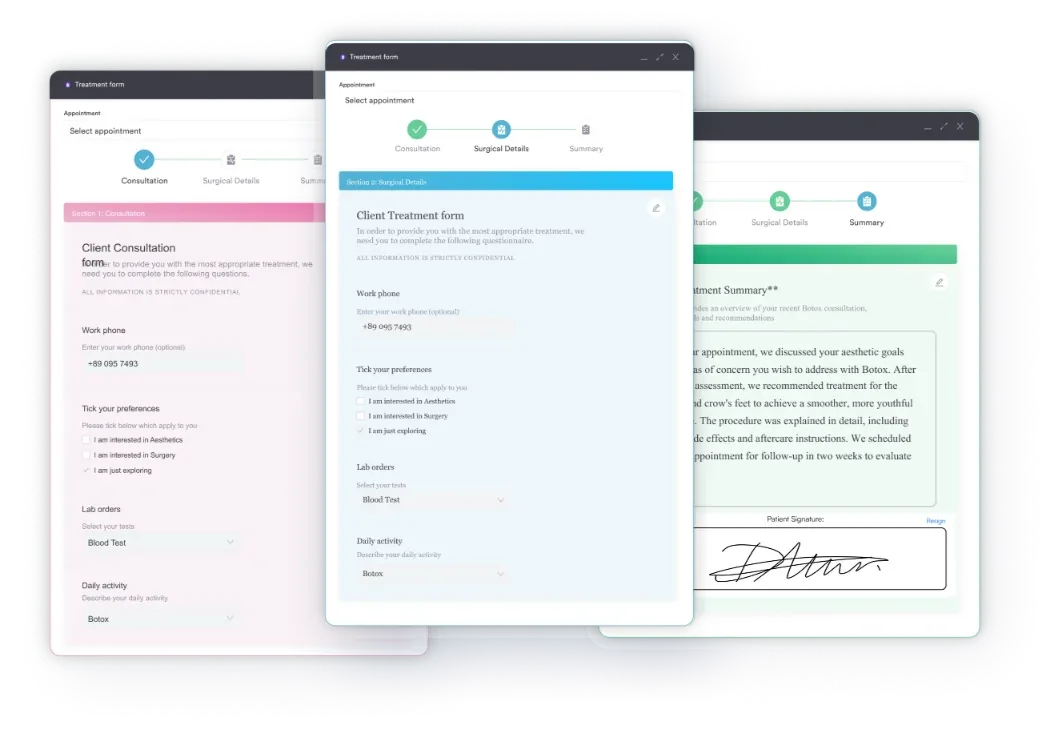
Start the plan at the admission assessment, using validated tools. Those are the National Institutes of Health Stroke Scale (NIHSS), the Glasgow Coma Scale, and a swallowing screen. The plan then runs across five steps tied to the clinical timeline:
The template suits any clinician documenting stroke care in an acute or rehabilitation setting:
It fits stroke units, neuro intermediate care, and inpatient rehabilitation facilities most directly. It also works in behavioral health settings treating stroke survivors with cognitive or mood complications.
Compliance and standardization: NANDA-based documentation lines up with Joint Commission stroke certification standards and CMS stroke quality measures. That makes an audit far less painful.
Complication prevention: Fixed assessment routines catch the early signs of trouble. NIHSS scoring, dysphagia screening, skin checks, and DVT risk scoring run on a schedule. They flag aspiration pneumonia, rising intracranial pressure, pressure injuries, and falls before those set recovery back.
Continuity across the team: One plan shared across shifts, units, and disciplines keeps the goals identical. Nurses, therapists, physicians, and discharge planners work from the same document instead of running parallel interventions.
Faster recovery and fewer readmissions: Early mobilization, a speech therapy referral, and dysphagia precautions only help if they happen on time. Delivering them to plan shortens the complication list and supports 30-day readmission targets.
Six priority NANDA diagnoses form the backbone of most acute stroke plans. Each maps to a specific consequence of the stroke and points to targeted interventions:
Acute-phase priorities are preventing secondary complications and starting recovery early. A bedside neuro checks sheet keeps the assessment intervals consistent from nurse to nurse.
Blood pressure is where a generic care plan loses accuracy. No single acute-phase range covers every stroke patient. The ceiling depends on the stroke type and on whether thrombolysis was given, and the difference between scenarios is wide.
Discharge planning starts on admission and takes shape by day two or three. By then the plan should name the destination, the services needed there, and who is arranging them.
Patient and caregiver education covers a fixed set of topics:
Discharge coordination: Name the destination by day two or three, whether that is home, rehabilitation, or a skilled nursing facility. Arrange home health nursing and therapy where the patient is going home. Confirm prescriptions, equipment, and caregiver support before the discharge date.
Book the neurology, primary care, and therapy follow-ups while the patient is still on the unit. A written discharge planning checklist stops any of those steps from being assumed rather than done. Send the discharge summary and prescriptions to the receiving providers through a secure channel.
A care plan only works if the nurse can see it at the point of care. That means on the handoff dashboard, inside the client record, or printed at the bedside for rounds.
Documentation practice: Record assessment findings and intervention responses as they happen, not at the end of the shift. Timestamped entries build an auditable trail and keep the rest of the team current. Standardized language keeps interpretation consistent, so pair NANDA diagnoses with NIC interventions and NOC outcomes.
Handoff and escalation: An SBAR handoff should reference the care plan directly, covering status, outcome progress, and any changes made. Working from a shared SBAR report template stops a revised priority from disappearing between shifts.
Regulatory alignment: Auditors read care plans as evidence. Joint Commission stroke certification looks for early intervention, documented neuro assessment frequency, VTE prophylaxis, and dysphagia screening. The care plan is where all four are evidenced.
On most units the care plan lives in one system, the assessments in another, and the discharge paperwork in a third. Nurses re-key the same figures, and a revised priority reaches the next shift only if someone remembers to say it out loud.
Practice management software like Pabau holds the client record, the structured forms, and the communication log in one place. Assessment data entered at the bedside stays attached to the patient, so the plan, the observations, and the discharge summary agree with each other.
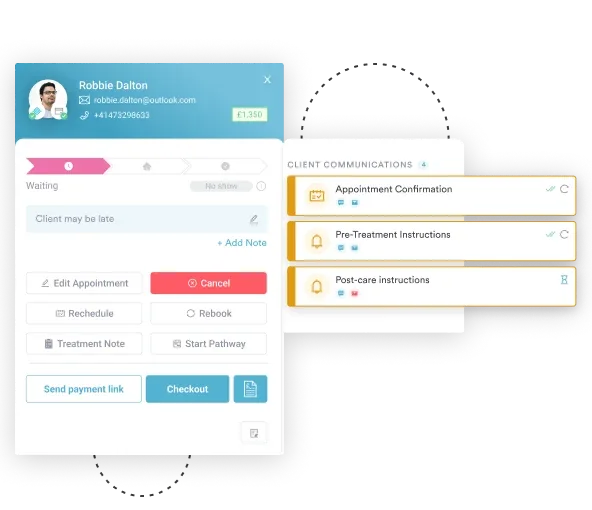
Custom forms let you build the care plan into the record itself, with the NANDA diagnoses and outcome fields your unit uses. Automated messages then handle follow-up appointments and therapy reminders after discharge, so the plan continues past the ward door.
Every Pabau subscription includes every feature. A single-site rehabilitation unit gets the same documentation tools as a multi-site group, with structured onboarding to configure them.

Pabau holds the client record, the structured assessment forms, and the discharge communications in one system. Your team documents once, and the whole care team sees it.

The value of a stroke care plan is in the specificity. A plan that names this patient’s blood pressure ceiling, swallowing screen result, and discharge destination is one the next nurse can act on.
Download the template, adapt the diagnoses and outcomes to your unit’s protocols, and keep it where the team charts. A plan filed somewhere separate stops being read by the second shift.
The trade-off worth remembering is front-loading. Writing the plan properly on admission takes time the acute phase does not feel like it has. Every handoff after that runs faster for it. Book a demo to see how Pabau keeps the plan, the assessments, and the discharge summary in one client record.

Need a bedside neuro assessment reference? Neuro exam cheat sheet walks through the cranial nerve, motor, and sensory checks in order.
Documenting DVT risk on the same patient? DVT nursing care plan covers prophylaxis, assessment, and the interventions that pair with immobility.
Building the education side of discharge? Nursing teaching plan structures patient and caregiver teaching with clear objectives and evaluation.
Want your charting to hold up in an audit? Nursing documentation explains what a defensible clinical note looks like and the habits that keep it that way.
The six priority NANDA diagnoses are Ineffective Cerebral Tissue Perfusion, Impaired Physical Mobility, Impaired Verbal Communication, Risk for Aspiration, Self-Care Deficit, and Disturbed Sensory Perception. Additional diagnoses may include Risk for Injury, Urinary Incontinence, Acute Pain, and Caregiver Role Strain, depending on the patient’s presentation.
A complete plan carries the nursing diagnoses with their related factors and defining characteristics. It then sets measurable, time-bound outcomes and lists the interventions with their rationales. Patient and caregiver education topics and discharge planning close it out. Assessment data and progress evaluation are recorded throughout the stay.
Ischemic stroke accounts for roughly 87% of cases, and care focuses on restoring perfusion. That means thrombolysis where the patient qualifies, antiplatelet therapy, permissive hypertension up to 220/120 mmHg, and early mobilization. Hemorrhagic stroke is managed to prevent rebleeding, so blood pressure control is tighter. The 2022 AHA/ASA intracerebral hemorrhage guideline supports lowering systolic pressure toward 140 mmHg, following the INTERACT2 trial.
Yes. The Pabau stroke nursing care plan is free to download from the box near the top of this page. It covers NANDA diagnoses, assessment frameworks, outcomes, interventions with rationales, and discharge planning for acute and rehabilitation settings.
Pabau lets nurses build the care plan into the client record using structured forms, then document assessments and interventions in real time. The record is shared across the care team, and automated messages handle discharge communication to home health and outpatient providers. Documentation follows NANDA language and supports Joint Commission stroke standards.