HIPAA compliant texting: What you can send patients & how to communicate securely
HIPAA compliant texting is possible when a text holds no protected health inform...

Last Updated: Oct 16, 2026

A discharge planning checklist is a structured tool that helps practices confirm a patient is ready to safely transition from hospital or practice-based care, with medications, follow-up, and home care arrangements documented before the patient leaves.
Poor discharge planning is a recognized driver of preventable 30-day readmissions. A structured checklist helps practices document each step and supports better patient compliance with post-care instructions.
This downloadable template is a single-page checklist covering 11 areas, from patient identification and medical summary through to insurance and billing, plus a doctor’s acknowledgment section for sign-off.
Practice management software like Pabau offers digital forms and automated follow-up workflows that help practices build discharge planning into everyday documentation, with patient communication and post-care coordination built into the clinical record.
A single-page checklist to guide your team through the essentials of a safe patient discharge. It runs from identification and medication plan through to insurance and billing, with a doctor’s acknowledgment section for sign-off.
Download templateA discharge planning checklist is a structured clinical document. It guides healthcare teams through preparing a patient for a safe transition. The move may be from a hospital, practice, or acute care facility to home or another care setting.
The checklist ensures that patient care management extends seamlessly from hospital to post-discharge. It confirms all essential elements are in place before the patient leaves.
Effective discharge planning reduces preventable hospital readmissions, improves patient safety, ensures medication adherence, and clarifies expectations for both patients and caregivers. Under CMS regulations (42 CFR §482.43), hospitals are required to have a documented discharge planning process. This makes the checklist not just best practice but a compliance requirement.
Poor discharge planning is one of the leading preventable causes of 30-day hospital readmission. Research consistently shows that structured discharge planning — supported by a comprehensive checklist — reduces readmission rates by clarifying post-discharge responsibilities, ensuring medication continuity, and confirming follow-up appointments are scheduled before the patient leaves.
The operational benefits are equally important. Discharge planning prevents communication breakdowns between shifts and providers and reduces staff time spent on post-discharge phone calls. It also improves patient compliance with prescribed regimens and protects the practice or hospital from quality-of-care inquiries.
For a more structured methodology, the Agency for Healthcare Research and Quality (AHRQ) publishes the IDEAL discharge planning framework:
It’s a useful model to reference if you want to build a more detailed process than the generic template below provides.
This is a single-page, generic checklist meant as a starting point for any practice — it isn’t specialty-specific, and it doesn’t replace a full discharge planning workflow for complex cases (more on that below). The template covers 11 checkbox items, followed by a doctor’s acknowledgment section:
The form closes with a doctor’s acknowledgment section for the discharging physician’s name, signature, and date. There is no separate patient signature line on this template — if your practice needs documented proof that the patient received and understood their discharge instructions, add a patient sign-off field before you print or distribute it.
An occupational therapy platform can store each completed scale beside the patient’s goals and session history.
Beyond the checklist basics, most care teams also build in a few standing best practices. Before discharge, confirm the patient (or caregiver) can actually manage care at home. That means understanding their medications, performing any needed self-care tasks, and getting to follow-up visits.
Medication reconciliation means comparing every in-hospital medication against what the patient will take at home. It also means flagging interactions or duplicate therapies. Finally, send the patient home with a written, plain-language list of what to take and why.
A booked and confirmed follow-up appointment is one of the strongest predictors of a safe recovery. A vague suggestion to see a doctor within a week is not enough.

When a patient needs equipment, home health nursing, therapy, or other community support, arranging it before discharge, rather than leaving the patient to sort it out once they’re already home, smooths the transition considerably.
Patients should also leave with clear written instructions covering:
Discharge documentation should meet HIPAA and other privacy requirements while remaining written in plain language the patient can understand. A copy should be kept in the patient’s record. That gives both the practice and the patient something to refer back to.
More complex discharges often bring in a case manager. This person coordinates across nursing, physicians, therapy, and social work. They also communicate with the receiving facility if the patient is transferring to a nursing home or rehab program.
Mental health discharges typically call for extra safety planning as well. Established clinical guidance recommends a documented safety plan built on a recent mental state examination, confirmed crisis contacts such as the 988 Suicide and Crisis Lifeline, and follow-up with a therapist or psychiatrist before the patient leaves.
This generic checklist template doesn’t include dedicated case-manager or mental-health sections. If your practice regularly handles these discharges, build those specifics into your own version. Use mental health practice software with digital forms to keep the extra steps documented.
When outpatient mental health care ends, a therapy termination note records the reason, the patient’s progress against goals, and the onward referral.
Discharge planning should not wait until the day of discharge. Best-practice discharge planning begins within 24 hours of admission. Automated workflow reminders can flag discharge planning tasks on a patient’s admission date, ensuring the care team starts the process early and has time to address barriers before the day of discharge.
Healthcare practices managing complex patient transitions can use Pabau’s clinical workflows to build discharge planning into routine operations.
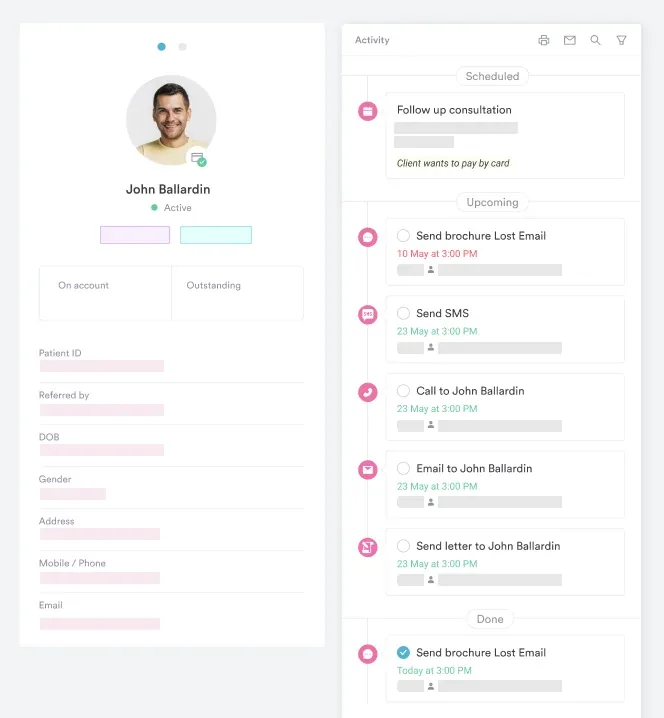
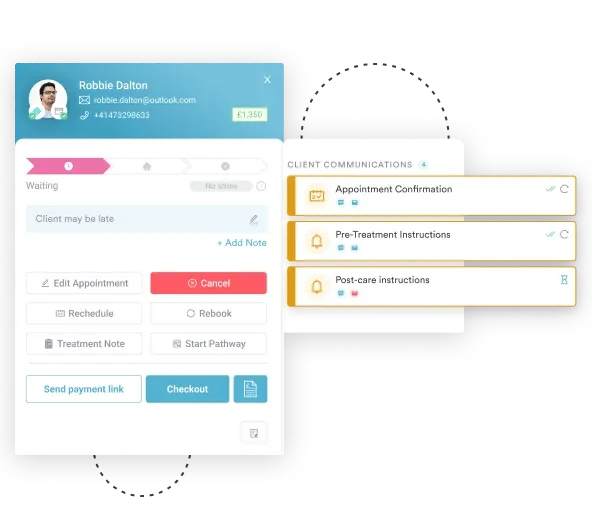
Pabau’s digital forms allow practices to build custom discharge checklists. These are completed during the hospital stay and signed off electronically. The system then files them automatically in the patient’s permanent record. Automated follow-up reminders help make sure patients receive appointment confirmations and medication refill alerts, reducing no-shows and missed medication refills after discharge.
Even structured checklists can fail if barriers are not identified early. Here are the most common challenges discharge planning teams face and how to address them:
Effective discharge planning starts at admission, not on the day the patient leaves. It relies on clear communication, documented follow-up, and attention to patient barriers throughout the stay. A discharge planning checklist helps ensure no step is missed and provides a useful record for quality tracking.
Download the free discharge planning checklist template above and adapt it to your practice’s workflow. Add fields like a patient signature line, case-manager sign-off, or mental-health safety planning if your discharges call for them. A structured checklist paired with timely follow-up appointments and clear patient education can meaningfully reduce readmission risk.
Book a demo with Pabau to see how digital discharge forms and automated follow-up workflows fit into your practice’s discharge process.

Need a quick reference for medication reconciliation? Drug card template gives your team a standardized reference for dosing and interactions during discharge medication checks.
Comparing intake tools before your next software switch? Best patient intake software compares seven platforms and matches each to how different practices work.
Screening a patient before discharge? 5-panel drug test form is a DOT-compliant template covering consent, chain-of-custody, and result documentation.
A thorough discharge planning process should cover a pre-discharge assessment, medication reconciliation with a written list, follow-up appointments scheduled and confirmed, home care services arranged if needed, patient education with written discharge instructions, and documentation of the discharge activities in the medical record. Each area should be completed and signed off by the care team before the patient leaves.
Discharge planning should begin at or near hospital admission, not at the moment of discharge. Early initiation gives the care team time to identify barriers, such as financial constraints or lack of caregiver support, arrange services, educate the patient, and resolve those barriers before the patient goes home.
Common discharge types are routine discharge (patient goes home with outpatient follow-up), discharge to a skilled nursing facility (for rehabilitation or ongoing medical needs), discharge against medical advice (patient refuses recommended treatment), and transfer to another acute care facility. Each discharge type requires different documentation and follow-up intensity.
Structured discharge planning reduces readmissions by ensuring medications are reconciled and the patient understands how to take them, follow-up appointments are scheduled before the patient leaves rather than left for the patient to arrange, home care services are arranged, and patient education is documented. Research on high-touch discharge planning with follow-up calls within 24-48 hours has shown meaningful reductions in readmission rates.