GLP-1 diet plan
A GLP-1 diet plan is a structured eating framework for patients taking semagluti...

2
Last Updated: Oct 13, 2026

SBAR stands for situation, background, assessment, and recommendation, a four-part script for handing off a patient or escalating a concern.
The four sections each carry one job, which is why nothing critical gets skipped in a high-stakes call.
Studies suggest SBAR reduces communication errors during handoffs, and both AHRQ and IHI recommend it as a standard tool.
Pace the delivery so the receiver can write it down, then close by asking whether they have questions.
Practice management software like Pabau templates the four sections into the patient record, so every handoff is documented and timestamped.
A printable one-page form with fields for patient information, chief complaint, and each of the four SBAR sections. It closes with space for additional notes, the attending clinician’s signature, and the date and time of documentation.
Download templateWhen a nurse calls a doctor about a deteriorating patient, every second counts. A rambling call with scattered details delays the decision and invites misunderstanding. An SBAR report structures that conversation into four short sections. Together they tell the whole clinical story in under two minutes.
The framework began as a US Navy briefing protocol for nuclear submarine operations. It was adapted for healthcare in 2002 by Michael Leonard, Doug Bonacum, and Suzanne Graham at Kaiser Permanente.
The Institute for Healthcare Improvement later published and disseminated the tool. It now anchors the communication module of AHRQ TeamSTEPPS. Studies suggest SBAR reduces communication errors when a team uses it at every handoff.
This guide covers what belongs in each section, two worked examples from the bedside, and the habits that blunt SBAR in practice.
An SBAR report is a structured handoff format that sorts patient information into four sequential sections. Situation names what is happening right now. Background supplies the context. Assessment gives your clinical read, and recommendation states the action you need.
The value sits in the predictability. Instead of starting wherever feels natural, clinicians follow the same four steps every time. The receiver knows what to expect in each segment. They also notice straight away when something is missing.
A well-organized patient record makes the background section quick to fill. Medications, history, and recent vitals already sit in one place.
Situation says why you are calling or handing off at this moment. Two or three sentences is plenty.
Background gives the receiving clinician enough context to judge whether the change matters. Keep it to what bears on today’s concern. Most of it is already on file, so a completed medical information form saves you hunting for medications and allergies.
Assessment is where you say what you think is happening. This is your clinical judgment, not a list of symptoms. Objective findings make that judgment easier to act on, whether that means trending vitals or documented neuro checks.
Recommendation is the ask. Name the decision or action you want, and say how soon you need it.
SBAR is not limited to one setting. It works anywhere critical information has to move between clinicians quickly and accurately. Outpatient teams use it too, from mental health practices to physical therapy practices.
Wherever handoff workflows run, a communication breakdown can delay care by hours. Structure is the cheapest defense against that.
Here is a full example of a routine shift change between two nurses.
This example shows the same structure when a nurse escalates a concern. The order gets the physician everything they need without interruption.
Structured communication changes clinical outcomes, not only how the call sounds. Teams that use SBAR consistently report several benefits.
Even with the template in hand, a few habits blunt the benefit. These are the ones worth watching.
Plenty of practices run SBAR on paper or over the phone, then write it up later from memory. Detail fades within the hour, and the record of who said what is thin.
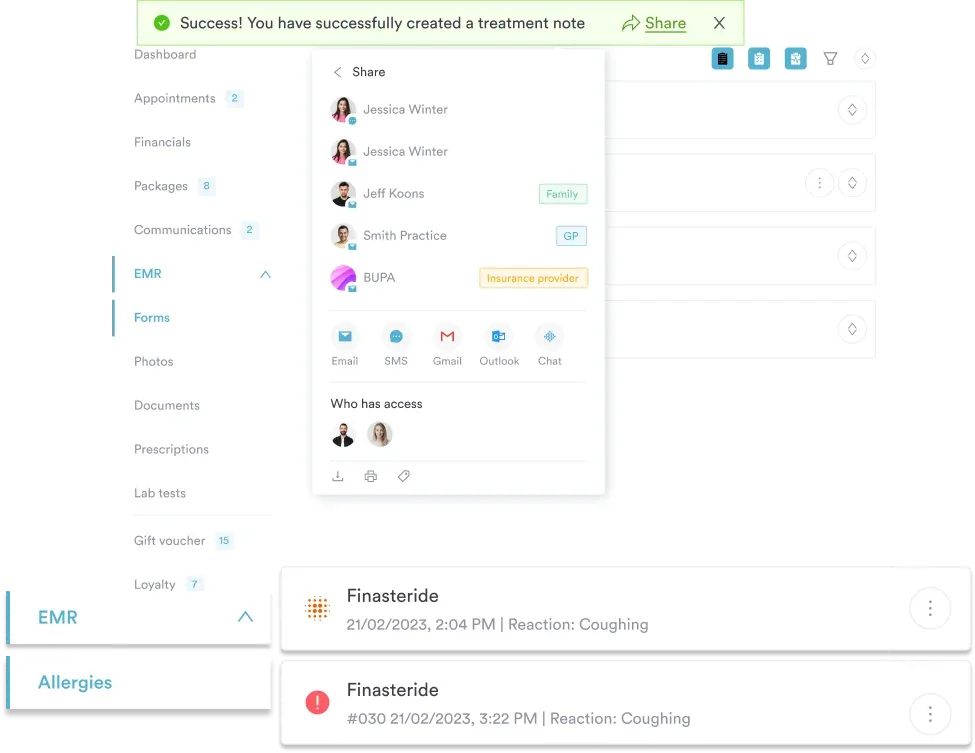
Practice management software like Pabau templates the four sections inside the patient record. Digital forms hold the fields, so a handoff is captured once and never retyped. Each entry is timestamped and attributed, which leaves you an audit trail rather than a recollection.
Several clinicians can open the same record at once, so nobody repeats a transfer twice. For telehealth consultations, the remote clinician reads the same structured note and starts assessing sooner. New staff also pick the framework up by filling it in daily.
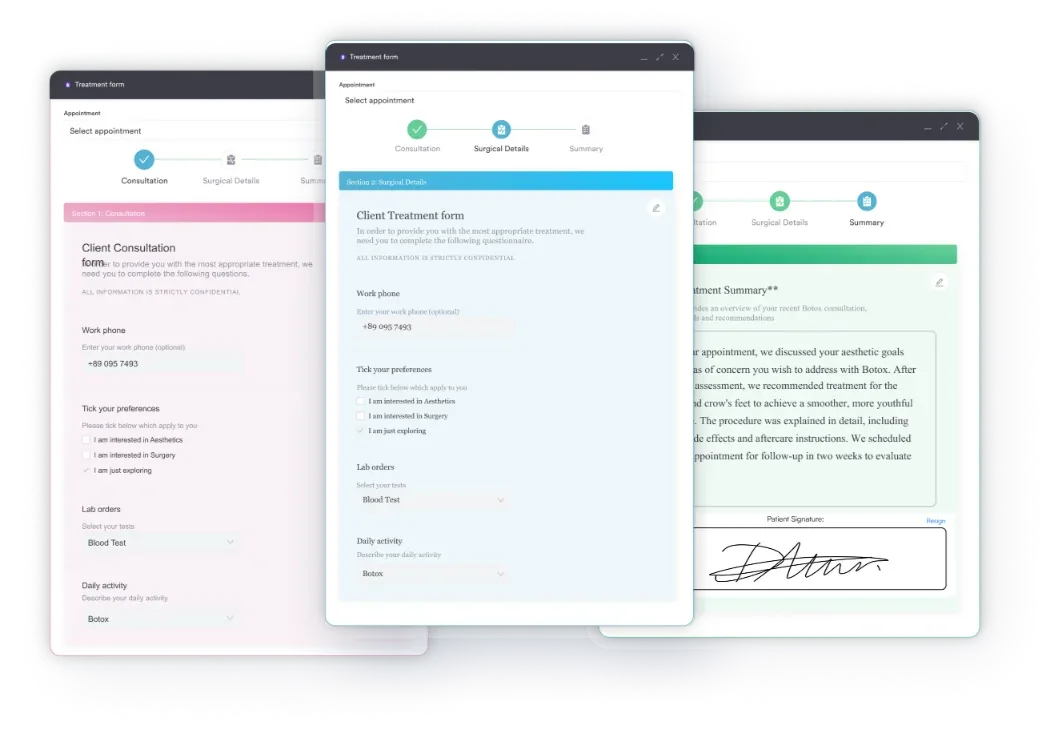

Pabau’s digital forms and patient records keep every handoff documented, timestamped, and easy to find. See how your team can hand over a patient in two minutes.

SBAR earns its place because it takes the guesswork out of a call that is already stressful. Four sections, in the same order, and the receiver always knows where you are.
Print the template and use it on your next shift change or physician call. The first few will feel stilted. After a week the order becomes automatic, and the calls get shorter.
The bigger win comes when that structure lives in your records instead of on a clipboard. Book a demo to see how Pabau keeps handoff documentation structured, timestamped, and easy to find.

Screening a new patient’s health history? Medical information form template screens about 70 conditions, past surgeries, medications, and allergies.
Transferring a patient to another provider? Medical referral form template streamlines patient transfers and captures the demographics a receiving provider needs.
Choosing documentation software for your practice? Clinical documentation software guide compares AI scribes, practice management platforms, and improvement tools by practice type.
Getting consent before dental treatment? Dental treatment consent form covers treatment description, risks, complications, alternatives, and signature blocks.
Releasing a minor’s health records? Medical release form template covers guardian authorization, emergency contacts, and a signature block for record release.
SBAR stands for situation, background, assessment, and recommendation. Situation is the immediate concern and background is the clinical context. Assessment is your interpretation, and recommendation is the action you are requesting.
Use SBAR during nursing shift handoffs and whenever you call a physician about a patient concern. It also fits transfers between units or facilities, perioperative handoffs, and any moment critical information has to move fast.
A well-delivered SBAR report takes one to two minutes for a routine handoff. A physician escalation usually runs two to three minutes. The structure keeps you on track and prevents rambling.
SBAR uses four sequential sections and works well for verbal handoffs and escalation. I-PASS was originally developed for pediatric handoffs and is now used across many specialties, including internal medicine and surgery. It adds illness severity, patient summary, an action list, situation awareness, and synthesis. Both reduce errors, and SBAR is the simpler and faster of the two.
Yes. SBAR is used in physical therapy, mental health, primary care, anesthesia, emergency medicine, and telehealth. Any setting with a handoff benefits from the same structure.
When SBAR breaks down, the receiver misses critical context or never hears what action is being requested. That leads to delayed treatment, avoidable interventions, or a patient safety event. Consistent training and a written template reduce those failures.