GLP-1 diet plan
A GLP-1 diet plan is a structured eating framework for patients taking semagluti...

2
Last Updated: Oct 13, 2026
An RA medication list is a structured clinical record that catalogs every rheumatoid arthritis drug a patient takes, organized by drug class. Each row carries the dose, the frequency, the monitoring it requires, and the date it was last reviewed. Rheumatology and internal medicine practices use it to keep documentation evidence-ready, so no interaction or monitoring deadline slips past.
This guide covers the full spectrum of RA medications, from disease-modifying drugs to symptom-management options. It also explains how to use our downloadable template to standardize medication tracking across your practice.
A ready-to-use clinical template for rheumatology practices to track patient medications by drug class, including monitoring schedules, contraindications, and review dates. Covers conventional synthetic DMARDs, biologics, JAK inhibitors, NSAIDs, and corticosteroids.
Download template
An RA medication list tracks drug name, dose, frequency, prescriber, start date, monitoring labs, and side effects for every rheumatoid arthritis drug a patient takes.
Five drug classes are used in RA management: DMARDs (disease-modifying antirheumatic drugs), biologics, JAK inhibitors, NSAIDs, and corticosteroids.
Monitoring differs by class, so methotrexate needs liver and kidney tests, biologics need TB screening, and JAK inhibitors need lipid panels.
Practice management software like Pabau captures medication records through digital forms, which cuts documentation time and transcription errors.
A medication list for RA is a clinical document that captures every drug a patient receives, organized by therapeutic class. It answers the question every rheumatologist and internist has to settle at each visit. What is this patient currently taking, at what dose, who prescribed it, and what monitoring does it require?
Unlike a general patient medication list, an RA list leads with drug class, because treatment decisions in RA hinge on which class is active. The template flags the monitoring interval for each drug, covering CBC, liver function tests, tuberculosis screening, and lipid panels. Follow-up labs stay on schedule and drug toxicity gets picked up early.
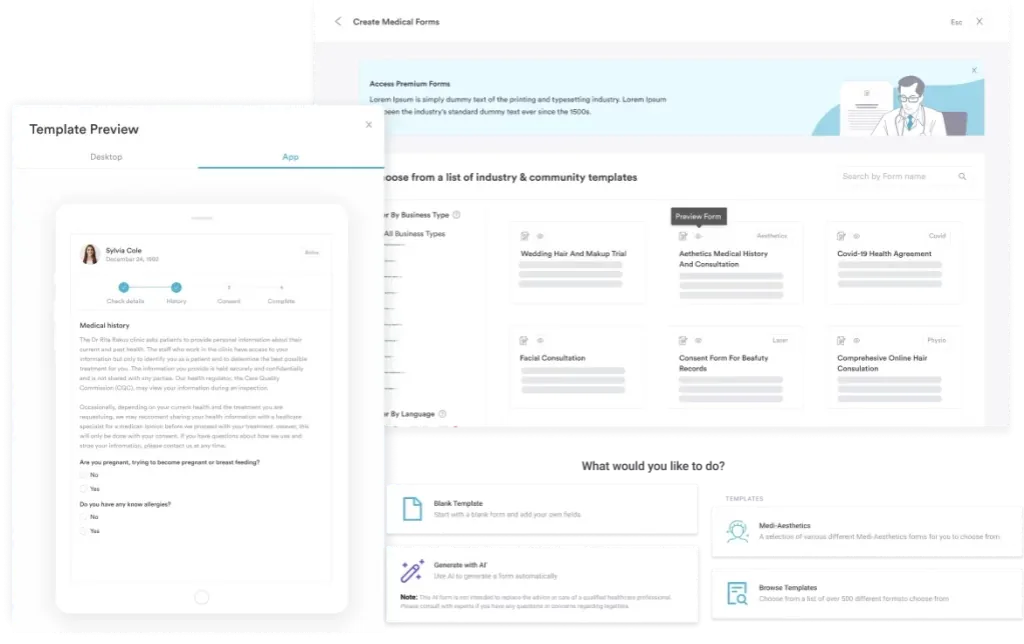
Patient intake software built into your practice management system can auto-populate the medication list at check-in. That cuts transcription errors and the hours your team spends on paper records.
The template is built for clinician workflow. Use these five steps to fit it into your practice:
The template suits any clinician managing rheumatoid arthritis, across several care settings:
Compliance and audit readiness. RA treatment is closely regulated. The FDA mandates black box warnings for JAK inhibitors, covering serious infections, malignancy, and cardiovascular events. The American College of Rheumatology (ACR) publishes the treatment guidelines practices are measured against. A structured medication list proves you documented informed consent, monitored for toxicity, and followed those protocols.
Workflow efficiency. Sharing the list through a patient portal lets patients confirm their own regimen before they arrive. Your front desk fields fewer calls, and reconciliation takes less time at every visit.
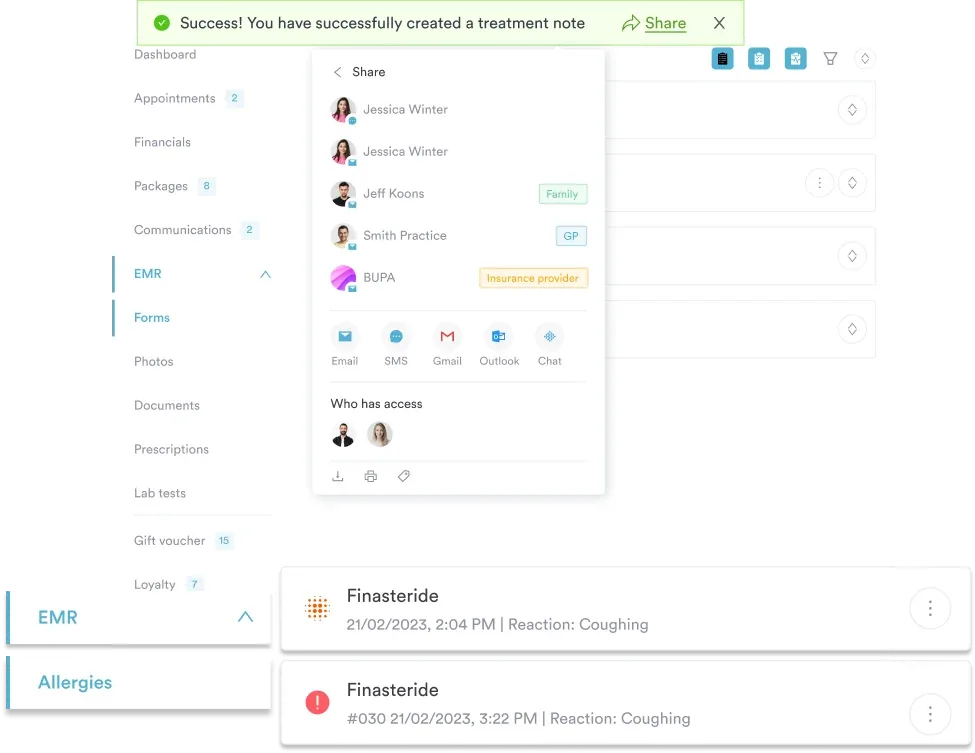
Patient safety. Flagging monitoring requirements lowers the risk that methotrexate hepatotoxicity or leflunomide accumulation goes undetected. Structured side-effect tracking alerts clinicians to drug-induced cytopenias or infections that need urgent attention. Pair the list with a dedicated adverse reaction form when a patient reacts badly, so the report sits alongside the medication record.
RA drug treatment follows a hierarchy. Disease-modifying antirheumatic drugs (DMARDs) are the cornerstone, because they slow or halt joint damage. Biologics and JAK inhibitors are added when conventional DMARDs fail. NSAIDs and corticosteroids manage symptoms and inflammation while the disease-modifying drugs take effect.
The ladder below shows where each class enters and what has to be checked before it starts.
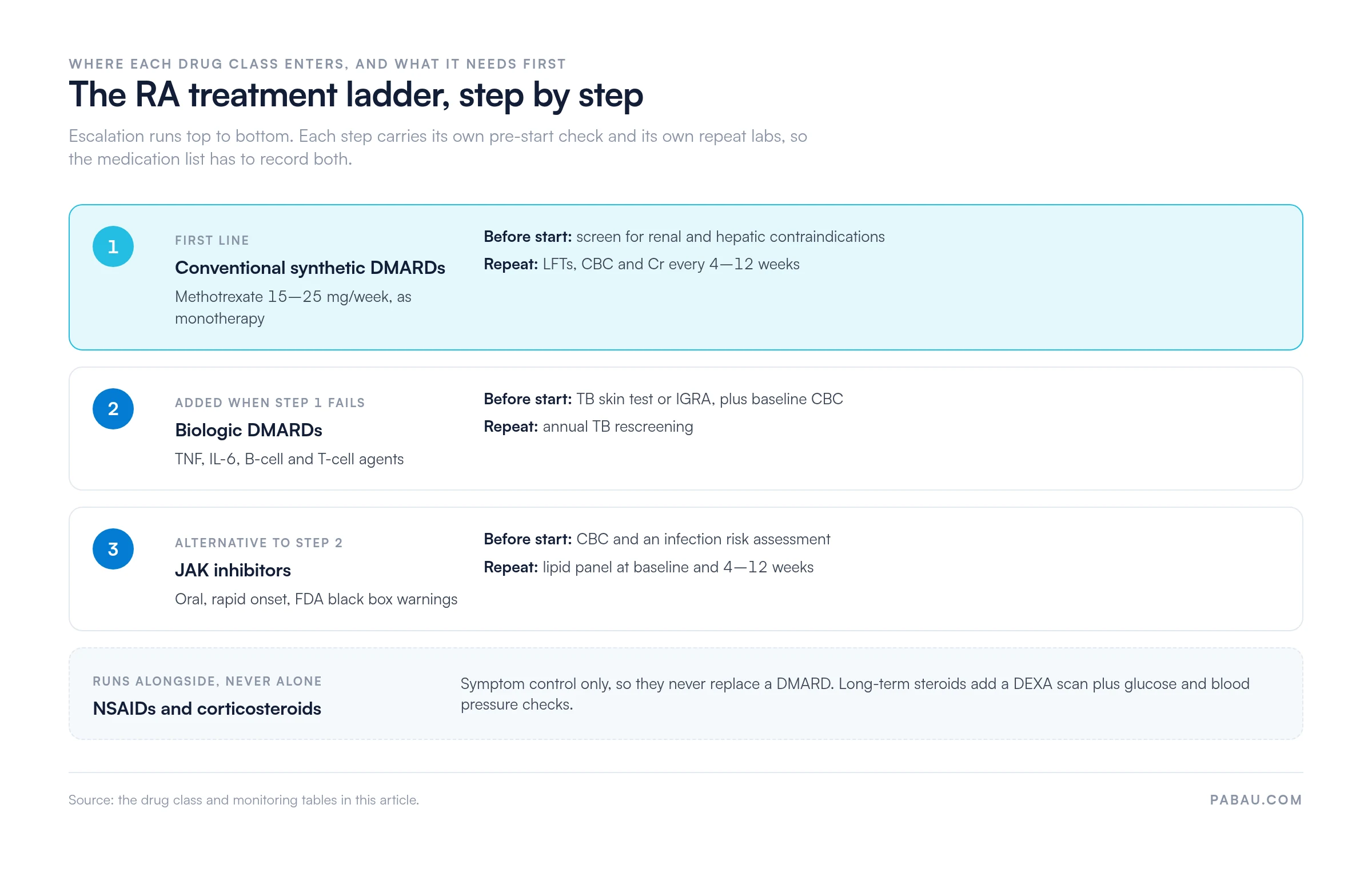
Conventional synthetic DMARDs are the first-line agents. Rheumatology practices start with methotrexate as monotherapy. If it proves ineffective or poorly tolerated, they add a biologic or switch to leflunomide, hydroxychloroquine, or sulfasalazine. Hydroxychloroquine and methotrexate are used in lupus too, and a lupus medication list sets out their dosing and monitoring there.
Biologic agents target specific inflammatory mediators, namely TNF, IL-6, B cells, and T cells. They are potent but carry a higher infection risk, so TB screening is mandatory before initiation. TNF inhibitors (adalimumab, etanercept, infliximab) are prescribed most often. IL-6 inhibitors (tocilizumab), B-cell depleters (rituximab), and T-cell costimulation blockers (abatacept) are added for refractory RA.
These biologics are specialty drugs. Many practices log them on a separate specialty drug reference that records prior authorization status and storage temperature.
JAK inhibitors (tofacitinib, upadacitinib, baricitinib) target intracellular signaling and act quickly. The FDA issued updated black box warnings in 2021 for every approved JAK inhibitor, covering serious infections, malignancy, and cardiovascular events. They require lipid monitoring and a baseline infection risk assessment.
NSAIDs such as naproxen and indomethacin relieve symptoms but do not modify the disease. Corticosteroids (prednisone 5-10 mg/day) are used short-term during flares, and long-term use carries osteoporosis and infection risk. Neither class works as monotherapy, so both sit alongside a DMARD.
Missed monitoring deadlines are what a structured template is built to prevent. Set up automated workflow reminders so the system flags each lab as it falls due.
Modern RA management follows a treat-to-target approach. Reassess disease activity at three months to confirm the patient is improving. Low disease activity or remission is the target at six months, and therapy is adjusted where the patient has not reached it by then.
Record the disease activity score (DAS28, CDAI, or SDAI) at every visit. Structured medical records management keeps those scores beside the medication list, so each treatment decision is evidence-based and defensible to patients and payers.
Use the template to record four things at every review:
That sequence reinforces adherence and leaves a documented trail for quality reviews.
Tag every RA drug with a narrow therapeutic window as HIGH RISK in your medication list. Methotrexate, leflunomide, and the JAK inhibitors all qualify. At each visit, print the list and ask the patient to confirm they are taking it exactly as prescribed. That one check catches toxicity and overdose before either does harm.
Most practices rebuild the medication list by hand at every visit. A nurse reads it back from the last note, the patient corrects half of it, and someone retypes the result into the chart. Monitoring dates end up in a separate spreadsheet, or in nobody’s calendar at all.
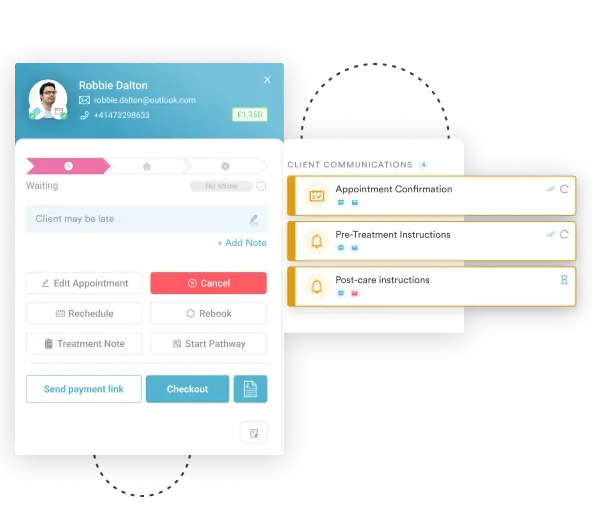
Practice management software like Pabau takes that rework out. Patients confirm their own medications on a digital intake form before they arrive, and their answers land straight on the patient record. Pabau Scribe, our AI scribe, writes the dose change and the reason for it into the note as you talk.
Monitoring works the same way. Set a recall when you start methotrexate, and the reminder for the 12-week LFT goes out on its own. Your team stops chasing labs from memory, and the list stays current between appointments rather than only on the day of the visit.

Pabau’s digital forms and automated recalls build the medication list once, then keep it up to date at every visit. Your team stops retyping drug histories between appointments.

A medication list earns its place when it changes what happens at the next visit. If the monitoring dates on it are live, a missed LFT becomes a task for someone this week rather than a discovery six months later.
The trade-off worth remembering is the effort at the front end. Capturing drug class, dose, prescriber, and monitoring interval takes longer than writing down a drug name. That work pays back the first time a patient escalates to a biologic and the TB screening is already on file.
Download the template, adapt the fields to the way your practice scores disease activity, and give one person responsibility for reviewing it at each appointment. Book a demo to see how Pabau keeps RA medication records and monitoring recalls in step.

Need a simpler log the patient can keep themselves? Free medication log template sets out what to record for each medication between appointments.
Administering the drugs rather than prescribing them? Medication administration record for nursing covers what every dose entry has to show.
Unsure how long to keep dispensing records? Pharmacy record template explains what to include and the retention period to apply.
The cornerstone RA medication is methotrexate, a conventional synthetic DMARD. When methotrexate is ineffective, biologic DMARDs (TNF inhibitors, IL-6 inhibitors, B-cell depleters) or JAK inhibitors are added. NSAIDs and low-dose corticosteroids manage symptoms during flares while waiting for disease-modifying drugs to take effect.
Disease-modifying antirheumatic drugs (DMARDs) slow or halt joint damage by suppressing the immune system’s inflammatory response. Conventional synthetic DMARDs (methotrexate, hydroxychloroquine, sulfasalazine, leflunomide) are taken orally and work over weeks to months. Biologic DMARDs target specific inflammatory molecules (TNF, IL-6, B cells) and work within days to weeks. JAK inhibitors block intracellular signaling and have rapid onset.
NSAIDs reduce inflammation and pain but do not modify disease progression. DMARDs slow or stop joint damage and work toward remission. NSAIDs are symptom-relief tools; DMARDs are disease-stopping drugs. RA treatment always includes a DMARD; NSAIDs are add-on support for symptom control.
Biologic drugs are genetically engineered proteins that target specific inflammatory pathways. TNF inhibitors (adalimumab, etanercept, infliximab) block tumor necrosis factor; IL-6 inhibitors (tocilizumab) block interleukin-6; B-cell depleters (rituximab) eliminate B cells. Biologics are potent and carry higher infection risk, requiring TB screening before initiation and regular monitoring.
JAK inhibitors block Janus kinase enzymes, which sit inside immune cells and relay inflammatory signals. By blocking JAK signaling, these drugs reduce the inflammatory cascade driving joint damage. JAK inhibitors (tofacitinib, upadacitinib, baricitinib) have rapid onset and are taken orally. They carry FDA black box warnings for serious infections, malignancy, and cardiovascular events, so patient selection and monitoring both need care.
RA cannot be managed without disease-modifying medication. NSAIDs and lifestyle changes (exercise, diet, stress management) support symptom relief but do not halt joint destruction. Early, aggressive treatment with DMARDs is the standard of care because it prevents permanent joint damage and improves long-term outcomes. Patient adherence to prescribed RA medications is critical for remission.