Mental health self-care checklist
A mental health self-care checklist is a structured daily tool for tracking the ...

5
Last Updated: Oct 20, 2026

An insomnia test is a validated screening questionnaire, not a diagnosis, so it guides the clinical interview rather than replacing it.
The Insomnia Severity Index scores 0 to 28, with 15 to 21 flagging moderate insomnia and 22 to 28 flagging severe insomnia.
A two-week sleep diary sits alongside the questionnaire and shows whether the problem is falling asleep or staying asleep.
CBT-I is the first-line treatment for a score of 15 or above, with medication kept in reserve.
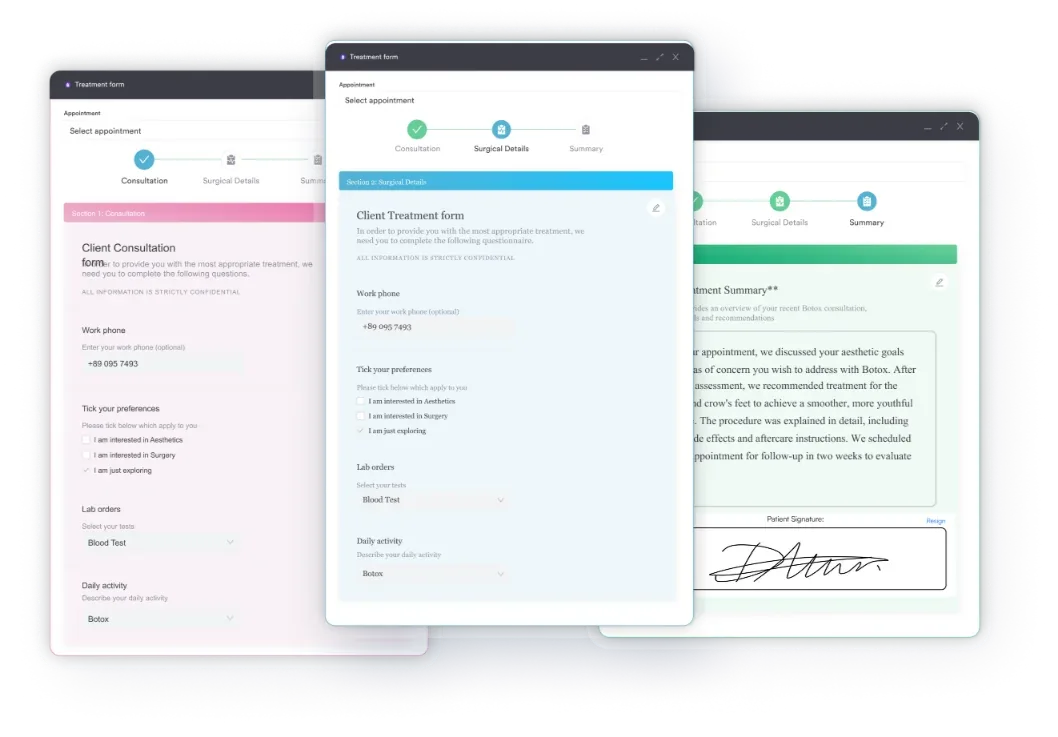
Practice management software like Pabau puts the questionnaire in the pre-visit forms, so answers land on the patient record before the appointment.
A ready-to-use clinical questionnaire covering patient details, the seven ISI items, and their scoring key. It also includes a symptom checklist, two weeks of sleep diary pages, and interpretation notes for each score band.
Download templateInsomnia affects 10% to 30% of adults, and more in older patients and anyone under sustained stress. The practical question in a 15-minute appointment is narrower. Who needs a formal sleep workup, and who needs a behavioral plan you can start today?
A validated questionnaire answers that in five minutes. This template gives you the 7-item Insomnia Severity Index, the scoring bands, a sleep diary, and the referral criteria that go with each band.
An insomnia test is a standardized questionnaire that measures sleep disturbance and its daytime effects. It does not diagnose. Diagnosis comes from the clinical interview and the formal criteria in the DSM-5 or ICD-10. The questionnaire quantifies severity, guides referral, and tracks response to treatment.
Three instruments dominate. The ISI covers sleep onset, sleep maintenance, and daytime impairment. The Pittsburgh Sleep Quality Index (PSQI) rates overall sleep quality. The Epworth Sleepiness Scale (ESS) measures how likely a patient is to doze off during the day.
Put whichever one you choose into your digital intake forms, so the score arrives with the rest of the pre-visit paperwork. Practices running a mental health EMR can keep it on the same record as mood and medication history.
The ISI has seven items, each scored 0 to 4, for a total between 0 and 28. The bands below set the clinical response.
Record the baseline total, then repeat the questionnaire every week or two while you treat. The direction of travel tells you more than any single score.
Check the recall window on the version you hand out. Two-week and one-month variants of the ISI are both in circulation, and their scores are not interchangeable.
One rough week can also lift a stable patient into the 8 to 14 band. Confirm the pattern with a second questionnaire before you change the plan.
The sequence below fits inside an appointment you already have booked.
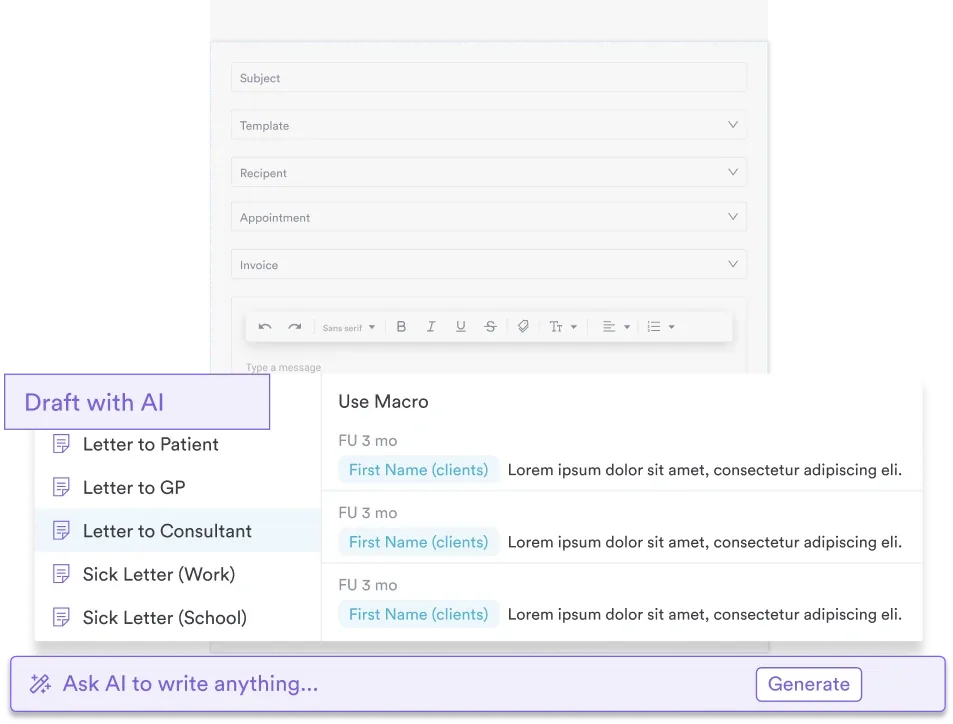
An AI medical scribe can pull the score and the plan into the note, so the assessment is documented without anyone retyping it.
Practices that digitize paper scales with software for capturing forms cut scoring errors and filing time.
Sleep complaints turn up in almost every specialty, usually as a side note in an appointment booked for something else.
Any practice with structured patient care workflows can drop the questionnaire into intake, instead of relying on whoever remembers to ask.
Review ISI scores across your whole patient list once a quarter. Anyone still scoring high after eight weeks of behavioral work may need a medication review or a sleep study. Catching that pattern in a report is faster than waiting for the next appointment.
A score of 15 or above should open a conversation about cognitive behavioral therapy for insomnia (CBT-I). It sits ahead of medication in NICE guidance and in the guidelines from the American Academy of Sleep Medicine (AASM).
CBT-I pulls three things together. Cognitive work challenges unhelpful beliefs about sleep. Behavioral techniques cover stimulus control, sleep restriction, and relaxation training. Sleep hygiene changes support both.
Roughly 60% to 80% of patients with chronic insomnia improve, and the effect often holds 6 to 12 months after treatment ends. Where in-house capacity is short, refer to a trained CBT-I provider or a structured digital program.
Five findings justify a specialist referral.
Build those red flags into the intake form so they surface before the appointment. Reminders and steady patient engagement messaging then stop the referral appointment from quietly slipping.
The distinction changes what you treat first. Primary insomnia, called insomnia disorder in the DSM-5, stands alone with no medical or psychiatric driver. CBT-I, sleep hygiene, and occasionally short-term medication carry the plan.
Secondary insomnia sits on top of something else. Chronic pain, thyroid disease, sleep apnea, stimulants, corticosteroids, depression, and anxiety are the usual candidates. Treat the cause and the sleep tends to follow.
So the intake questions need to cover medical history, current medications, and mood. Alcohol and stimulant use belong there too. A substance use screen such as the CAGE-AID questionnaire pairs neatly with the sleep questions.
On paper, the questionnaire usually gets handed over at the start of the appointment. The patient fills it in while the room waits, someone totals the score by hand, and the sheet is scanned into the file later. Screening eats clinical time, and the number is hard to find at the next visit.
Practice management software like Pabau moves that step earlier. The ISI goes out with the rest of the pre-appointment forms. The patient completes it on their phone, and the answers save straight to the patient record. You read the responses before they sit down.
From there, the score can drive what happens next. A high scorer is routed into a follow-up sequence with CBT-I material attached. A borderline score triggers a repeat questionnaire four weeks later, without anyone having to remember it.
Every subscription includes the forms, the automations, and the reporting, so the whole screening pathway is available to you from day one.

Send the ISI with your pre-appointment forms and the answers land on the patient record before the visit. Follow-ups for CBT-I material and referrals then run on their own.

Screening for insomnia is the easy part. Acting on the score is where practices diverge. A file full of ISI totals that never changed a treatment plan is just more paperwork.
So decide your thresholds before you hand out the first questionnaire. Agree who gets CBT-I at 15, who gets a specialist at 22, and who simply gets asked again in a month.
One caveat is worth carrying with you. The ISI measures how a patient feels about their sleep, not how they sleep, so pair it with a two-week diary before you commit. Book a demo to see how Pabau sends the questionnaire, files the score, and books the follow-up.

Screening how a patient copes with stress? Defense mechanisms worksheet gives you a structured way to explore the coping patterns behind stress-driven sleep loss.
Is the insomnia tracking their stress levels? Circle of influence worksheet helps a patient separate what they can act on from what they cannot.
Comparing software options for your practice? Best psychology practice software compares seven platforms on ratings, pricing, and feature breakdowns.
Looking for the right system to run your practice? Best therapy practice management software compares seven platforms on billing, scheduling, and clinical documentation.
Clinically, insomnia means trouble falling asleep, staying asleep, or waking too early, plus sleep that does not refresh. The pattern has to run three or more nights a week for at least three months, with daytime impairment. The ISI screens for those symptoms, and a clinician confirms the diagnosis.
The ISI is a seven-item questionnaire scored 0 to 28. It covers difficulty falling and staying asleep, early waking, dissatisfaction with sleep, and daytime impairment. A total of 15 or above is clinically significant and warrants treatment.
Primary insomnia occurs on its own, with no medical or psychiatric cause behind it. Secondary insomnia develops alongside a medical condition, a medication, or a mental health disorder. Primary insomnia responds to CBT-I and sleep hygiene, while secondary insomnia improves once the underlying cause is treated.
Yes. Two weeks of bedtime, wake time, sleep latency, wakings, and impairment ratings give you data the questionnaire cannot. The pattern shows whether the problem is falling asleep or staying asleep, which changes the treatment.
Refer at an ISI score of 22 or above, or when you suspect sleep apnea. Complex medical and psychiatric comorbidity, parasomnias, and occupational safety risk also warrant referral. So does insomnia that persists after eight weeks of behavioral treatment.
Yes. The ISI and PSQI are both self-administered, and completing one at home before an appointment saves clinical time. Interpretation still needs a clinician, who rules out secondary causes and sets the treatment plan.