Pabau GO app

The new Pabau GO is heredownload on the App Store

Download on the App Store
Book a demo Book a demo
Coaching

Circle of influence worksheet

Key takeaways

Key takeaways

The worksheet's three zones, control, influence, and concern, come from a widely used expansion of Stephen Covey's original two-circle model.

It helps clients distinguish what they can directly control, what they can influence, and what they must accept. This reduces anxiety and improves focus.

The worksheet is used in CBT, ACT, and coaching contexts to build a proactive mindset and enable effective goal-setting.

Pabau, practice management software for therapy and coaching, stores the worksheet in client records so practitioners can track completion and reference it in later sessions.

Download your free circle of influence worksheet

This printable circle of influence worksheet PDF helps clients map what they can control, influence, and must accept. It’s built on a widely used three-zone expansion of Stephen Covey’s influence-and-concern model.

Download template

A client management platform that supports whole-person care means more than just storing client data. It means having the right tools at the right moment, including evidence-backed worksheets that drive clinical outcomes. The circle of influence worksheet does exactly that. It gives practitioners a structured way to help clients shift from rumination to action, from anxiety to clarity.

What is the circle of influence worksheet?

A circle of influence worksheet is a visual thinking tool that helps individuals categorize their concerns into three concentric circles. The innermost circle represents what you can directly control. The middle circle is what you can influence but not fully control.

The outer circle holds everything beyond your reach. These are things you can only acknowledge and accept. Some clinicians draw it as a three circle venn diagram template with all three zones visible at once. Others use a simpler circle of control diagram with just two zones for clients who find three layers overwhelming at first.

Stephen Covey‘s original model, from “The 7 Habits of Highly Effective People,” described two zones: concern, and within it, influence. The three-zone control, influence, and concern version used here is a widely used later expansion, rooted in decades of locus-of-control psychology research. People who focus energy on their circle of control and influence, rather than their circle of concern, show lower anxiety and improved decision-making. Research also links this focus to greater resilience.

Therapists, counselors, coaches, and occupational health practitioners use the circle of influence worksheet with clients. It helps them break out of worry cycles and build a proactive mindset. For healthcare teams using client management systems, the worksheet becomes part of the formal care record. It’s a documented reflection point that can be revisited and updated as circumstances change.

Circle of control vs circle of influence vs circle of concern

Understanding the three zones is the foundation of effective circle of influence worksheet work. Some clinicians call this the circle of control and influence model, or spheres of control, though the underlying three-zone logic stays the same. Each circle addresses a different type of concern, and confusing them leads to wasted energy and increased stress.

Circle What It Covers How to Respond
Circle of Control Your direct actions, habits, words, choices, and responses. Things entirely within your power. Take action. Invest energy and effort here. This is where change happens.
Circle of Influence Things you can affect but don’t fully control: others’ opinions, outcomes you contribute to, systems you can shape. Build relationships, communicate, collaborate. Your efforts compound but aren’t guaranteed.
Circle of Concern External events, other people’s choices, laws, climate, health crises, the past. Beyond your reach. Acknowledge. Accept. Let go of guilt about what you cannot change.

The power of the circle of influence worksheet lies in this clarity. When a client spends weeks worrying about a manager’s decision (circle of concern), they waste energy and increase anxiety. The worksheet forces that reframing: “Can I control this? If not, can I influence it? If not, can I accept it and move forward?” This single question shift drives measurable wellbeing improvements.

The three-circles idea predates Covey. Stoic philosophers like Epictetus argued centuries ago that peace comes from focusing only on what’s within your power. Covey adapted that Stoic logic into his influence-and-concern model, and later practitioners added the control zone to build the three-circle exercise clinicians use today.

How to use the worksheet: Step by step

Using the worksheet as a circle of control activity with a client is straightforward but requires brief facilitation. Follow these five steps to guide effective reflection.

  1. Frame the model. Spend 1-2 minutes explaining the three circles. Show an empty worksheet and clarify what each zone means. Control means “directly within your power.” Influence means “you can affect it but not guarantee the outcome.” Concern means “it exists but you cannot change it.” This sets the mental frame for honest self-assessment.
  2. Invite the client’s concern or goal. Ask: “What’s weighing on your mind right now? What would you like to improve?” Write or ask them to write that single topic at the top of the worksheet. It might be “managing anxiety at work,” “family conflict,” “career progression,” or “health outcomes.” Keep it specific to one area so the exercise stays focused.
  3. Fill the circle of control. Ask: “What about this situation IS fully in your hands? What can you do, say, or change right now?” Examples: your effort, your words, your tone, your sleep schedule, your boundaries, whether you ask for help. Write these in the innermost circle. This step builds confidence because it surfaces agency clients often overlook. Many clients call this their things-I-can-control list once they see it on paper.
  4. Fill the circle of influence. Ask: “What can you affect but not fully control? Where can your actions help shape the outcome?” Examples: a manager’s perception (influenced by your work quality), team morale (influenced by your participation), a relationship’s direction (influenced by your openness). Write these in the middle circle. This is where collaboration and communication live.
  5. Fill the circle of concern. Ask: “What concerns you but is genuinely beyond your control right now?” Examples: the economy, others’ choices, past events, someone else’s timeline, organizational politics you don’t influence. Write these in the outer circle. Then ask: “Can you mentally set these aside for now? Spending energy here increases anxiety without changing outcomes.” This closes the loop. Acceptance is the goal.

After completing the worksheet, ask the client: “Where should you focus your energy over the next week?” The answer is almost always their circle of control and influence. That’s the power of the exercise. By visually mapping concerns, the worksheet shifts a client’s executive function away from rumination and toward action planning. Send the completed worksheet as a digital intake form, and keep it in their care record so you can reference it in future sessions.
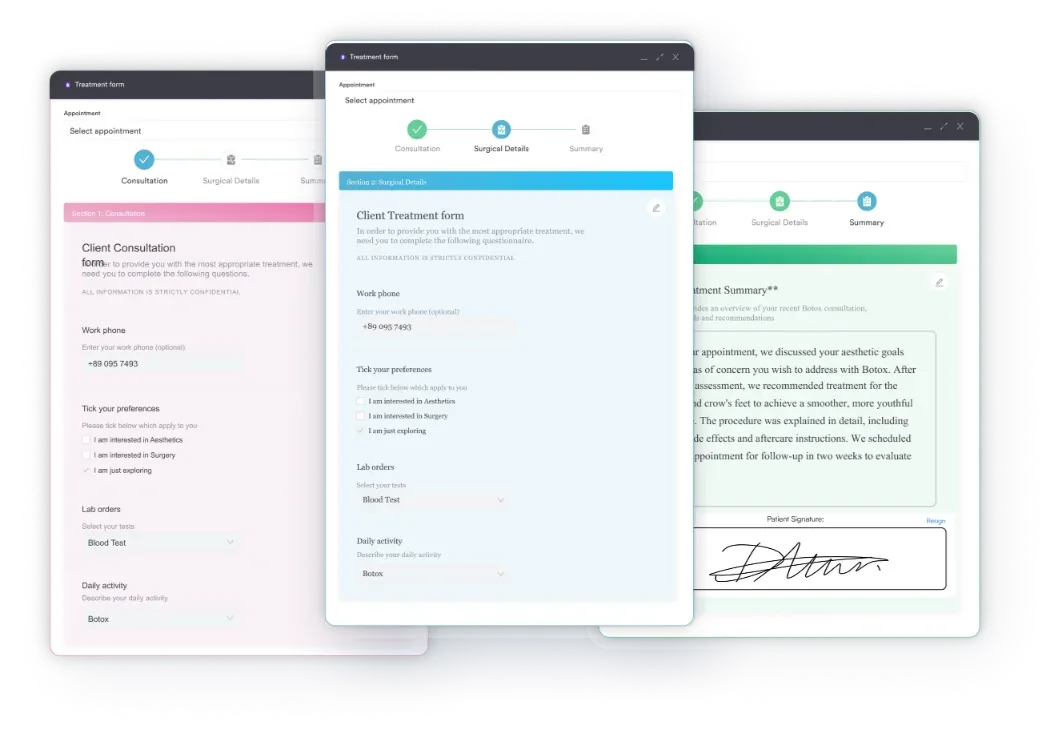
Customizable consent and intake forms
Pabau’s customizable intake forms let you send the circle of influence worksheet before a client’s first session.

Circle of influence: Examples for therapy and coaching

Concrete circle of control examples and circle of influence examples help clinicians explain the model quickly. Here are scenarios clients bring to session.

  • Anxiety at work. Control: preparing thoroughly, asking clarifying questions, speaking up respectfully. Influence: a colleague’s receptiveness to feedback, team collaboration on a shared project. Concern: the manager’s mood, an economy-driven restructure, what others say behind your back. When a client separates these, their anxiety drops. They stop obsessing over the manager’s day and start investing in their own work quality instead.
  • Family relationship conflict. Control: your own communication, setting boundaries, choosing when to engage. Influence: whether a family member opens up to you, their willingness to listen, whether they change their behavior. Concern: their past choices, their unresolved trauma, whether they ever apologize. This separation prevents the trap of trying to “fix” someone else’s psychology and redirects clients to healthier self-protection.
  • Health or weight management. Control: what you eat, how often you move, sleep habits, stress management. Influence: how your behavior affects others’ choices (e.g. family eating patterns), your body’s metabolism response. Concern: genetic predisposition, aging, medical conditions you didn’t choose. This reframe is especially powerful for clients caught in guilt cycles over factors they cannot alter.

Sharing 2-3 examples during your introduction normalizes the model and helps clients apply it to their own situation more readily.

Applying the framework in workplace and team settings

Therapists and coaches use this worksheet for individual anxiety or goal-work. The circle of influence framework is equally powerful in occupational health and team development. Practice managers, HR practitioners, and team leaders can use it to build resilience and accountability within their staff.

  • For team leaders: Run the circle of influence worksheet exercise during a team meeting focused on a shared challenge. Project delays, communication breakdowns, and client satisfaction slips are good examples. Ask each team member to individually map the concern, then facilitate discussion around the circles. You’ll often find team members blame external factors in their circle of concern. Their agency lies in how they communicate or collaborate, within their circles of control and influence. This shifts the conversation from blame to ownership.
  • For occupational health: Corporate wellness programs often pair the circle of influence worksheet with goal-setting work. Employees map their stress sources, identify what they can change, and build action plans. This reduces burnout because it separates actionable items from background noise.
  • For HR and staff development: The worksheet supports resilience training and stress-management initiatives. Employees who learn to distinguish their circle of control from their circle of concern report lower burnout and higher job satisfaction. They stop spinning on variables they cannot change and focus on what they can.

Who is this worksheet helpful for?

The circle of influence worksheet works across diverse clinical and professional settings because the underlying psychology is universal. Humans find clarity and agency when they map their concerns into actionable and non-actionable zones.

  • Mental health practitioners – therapists, counselors, and psychologists use the worksheet in anxiety treatment, CBT/ACT work, and stress management. Therapy practice management tools now embed this worksheet so practitioners can send it before or after sessions and track client engagement.
  • CoachesCoaching client management systems give life coaches, executive coaches, and business coaches a planning tool for goal-setting conversations. This clears mental clutter and focuses energy on what’s actionable.
  • Occupational health and occupational therapy teams – occupational therapists and health practitioners integrate it into resilience and wellbeing programs. This especially helps workers recovering from burnout or managing chronic stress.
  • Healthcare and mental health practice staff. Team leaders use the worksheet during staff meetings, training sessions, and wellness initiatives to build a culture of agency and reduce blame.

Benefits of using the worksheet

Research from the American Psychological Association covers locus of control and cognitive reframing. People who distinguish controllable stressors from uncontrollable ones experience measurably lower anxiety and higher engagement. The circle of influence worksheet turns that research into a single-session tool.
  • Reduces anxiety and rumination. By naming what you cannot control, the worksheet gives permission to stop fighting those battles. Clients report immediate relief when they realize they can release worry about matters beyond their reach.
  • Builds proactive thinking. Once the concern is mapped, action planning becomes obvious. Clients move from “I’m overwhelmed” to “Here’s what I’ll do this week” – a massive shift in executive function and self-efficacy.
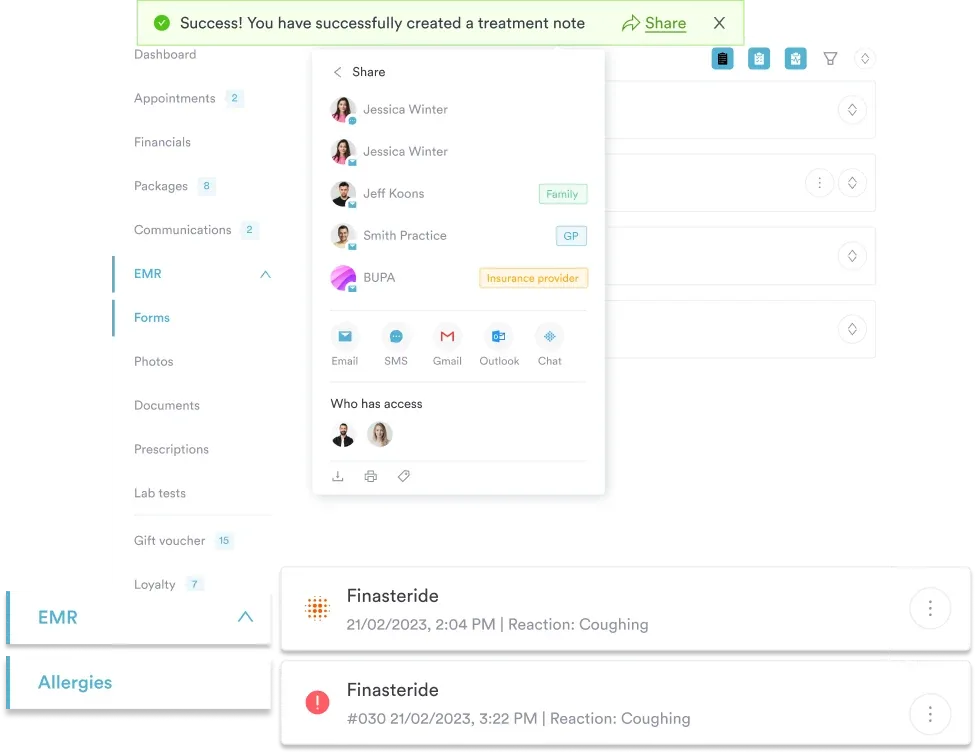
  • Supports documentation and continuity. When stored in a comprehensive client record, the completed worksheet becomes a reference point across sessions. You can review progress on the circles of control and influence and see how the client’s sense of agency has evolved.
Comprehensive EMR & patient record management
Pabau’s client record keeps every completed circle of influence worksheet alongside session notes, so practitioners see the client’s progress over time.
  • Facilitates goal-setting and measurement. The worksheet naturally transitions into goal work: “What’s in your circle of control that you want to change this month?” This frames goals as self-determined and achievable. Pair it with a simple goal setting worksheet once the client names an action item, so momentum carries past the session.

Pro Tip

Ask clients to revisit their circle of influence worksheet monthly. Circumstances change, and what was once in their circle of concern may become actionable again. Reviewing the worksheet tracks shifts in their sense of agency and highlights progress.

Using the worksheet in mental health practice

In psychology and therapy settings, the circle of influence worksheet integrates seamlessly into established treatments for anxiety, depression, and stress. It works well alongside CBT (cognitive behavioral therapy) and ACT (acceptance and commitment therapy) because it directly addresses cognitive distortions. Ruminating about things outside your control is a hallmark of both anxiety and depression.

The worksheet also supports automated workflow reminders. You can schedule follow-up prompts for clients to revisit their circle of influence work. They can then report on action taken in the circles of control and influence. This connects the therapy session to daily life, where behavior change happens.

According to the British Association for Counselling and Psychotherapy (BACP), structured tools like the circle of influence worksheet enhance treatment transparency. They give clients a tangible artifact of their own thinking that they can carry home and revisit without waiting for the next appointment.

How Pabau brings the worksheet into client care?

Most practices still hand clients a paper circle of influence worksheet, then lose track of it before the next appointment. Pabau lets you send the worksheet as a digital form through the client portal, so the client can complete it before or after a session.

Every completed worksheet saves to the client’s record next to the session notes. Practitioners can revisit the same three circles weeks later and track how a client’s sense of control has shifted. Automated reminders can prompt clients to update the worksheet monthly, keeping it part of ongoing care rather than a one-off handout.

See how Pabau makes worksheets part of care

Send this worksheet digitally, track completion, and reference it in ongoing notes, all within one integrated platform designed for therapists, coaches, and clinicians.

Pabau practice management dashboard

Conclusion

A circle of influence worksheet only earns its outcomes if you revisit it. Ask the client to redo the same three zones a month later. Treat any item that moved from concern into control as measurable progress worth naming in session.

Skip that follow-up and the worksheet becomes a one-off handout with no lasting effect. Attach it to the client’s record instead, and it turns into a running measure of how their sense of agency shifts over time. Book a demo to see how Pabau keeps templates like this alongside your session notes, reminders included.

Continue your research

Continue your research

Working with clients on emotion regulation? Distress tolerance skills worksheet gives clients a DBT-based toolkit for riding out intense emotions without acting on them.

Treating anxiety with exposure work? Interoceptive exposure worksheet walks clients through inducing and tolerating physical anxiety sensations.

Seeing clients who eat in response to stress? Emotional eating worksheet helps clients separate physical hunger from emotional triggers.

Coaching clients through big decisions? Coach notebook gives coaches a structured template for capturing session notes and action items.

Onboarding a new coaching client? Life coach intake form collects the background and goals you need before the first session.

Frequently asked questions

What is the circle of influence worksheet used for?

The circle of influence worksheet helps individuals map their concerns into three zones. These are what they directly control, what they can influence, and what lies beyond their reach. It reduces anxiety by directing energy toward actionable items and acceptance toward unchangeable factors.

What is the difference between circle of control and circle of influence?

Circle of control includes actions and choices entirely within your power. Circle of influence includes things you can affect through effort, collaboration, or persuasion, but cannot fully control. Both are actionable. Circle of concern (what you cannot change) is not.

How do you fill out a circle of influence worksheet?

Name a single concern or goal at the top. In the innermost circle, write what you can directly control. In the middle circle, write what you can influence. In the outer circle, write what is beyond your reach. Then discuss where to focus your energy (control and influence) for the next week or month.

Is there a free printable circle of influence worksheet PDF?

Yes. Pabau offers a free downloadable circle of influence worksheet PDF designed specifically for therapists, coaches, and clinicians. It’s not a generic circle of control PDF built for classrooms. Download it above and use it with clients in session or send it digitally through a practice management platform.

How is the circle of influence used in therapy?

Therapists use the circle of influence worksheet in CBT and ACT to help clients stop ruminating about uncontrollable events and shift focus to actionable steps. It combats cognitive distortions like catastrophizing and helps clients build a sense of agency and resilience.
×