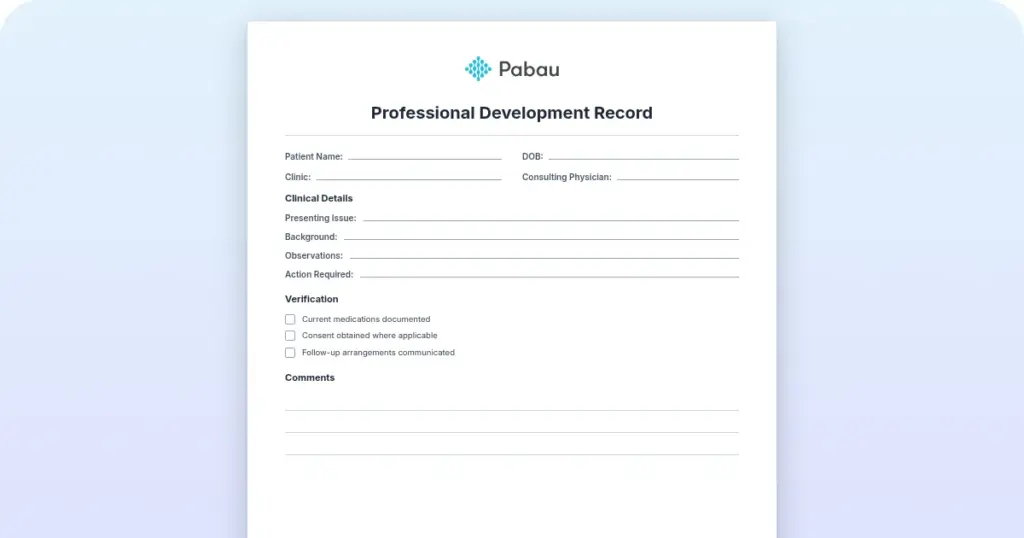
Professional development record
A professional development record is a structured log of a healthcare practition...

8
Last Updated: Oct 8, 2026

The DNA appliance is an FDA-cleared oral device for treating sleep apnea, which may also ease TMJ symptoms, through natural airway development, not medication.
FDA 510(k) clearance K230947 covers adults with mild-to-severe obstructive sleep apnea (OSA); a second clearance, K234089, covers children aged 6-17 with moderate-to-severe OSA and snoring.
Clinical documentation templates prevent consent oversights, improve audit readiness, and standardize provider workflows across multi-clinician practices.
Pabau’s digital forms and Pabau Scribe, our AI scribe, cut intake time and capture standardized treatment notes automatically.
A ready-to-use documentation template for dental and sleep medicine practices offering DNA appliance therapy. It covers patient intake, informed consent screening, treatment planning, progress tracking, and take-home care instructions.
Download templateDental and sleep medicine practices that offer DNA appliance therapy often lack ready-made patient education materials, intake forms, and tracking templates. So staff build these from scratch. As a result, notes vary between providers, compliance slips, and patients arrive unsure of what to expect.
A DNA appliance is a custom-made oral device. It slowly widens the upper arch and palate, which raises airway volume and eases sleep apnea. The FDA cleared it for adults with mild-to-severe obstructive sleep apnea in November 2023 (clearance K230947). Then, in September 2024, a second clearance (K234089) added children aged 6-17 with moderate-to-severe OSA and snoring.
This guide covers what the template includes, how providers use it day to day, and why standardized records protect both patients and the practice. You’ll also find a downloadable template you can customize and use right away.
A DNA appliance, short for Daytime-Nighttime Appliance, is a removable, custom-fitted oral device. Patients wear it overnight and for a few hours during the day to gently widen the palate and upper arch in three dimensions. Unlike fixed dental appliances, the DNA oral appliance uses light force mostly in the evening and at night. So it puts less strain on the patient, while it still encourages natural airway development.
Dr. Dave Singh developed the device as part of an approach he calls epigenetic orthodontics, and Vivos Therapeutics manufactures it. It sits in the same family as the related mRNA appliance, which is also removable but links the trays to move the lower jaw forward. Most practices start with the removable DNA appliance.
As the upper arch widens, the lower jaw can settle into a more forward position. This forward growth pulls the tongue and soft tissue away from the back of the throat. That is how the DNA dental appliance aims to open the airway, rather than simply holding the jaw forward the way mandibular advancement devices do.
Reported clinical outcomes include changes in transpalatal width, airway volume, and the apnea-hypopnea index (AHI), per a peer-reviewed analysis published in PubMed Central. Providers use the appliance mainly for sleep apnea. It may also ease temporomandibular joint (TMJ) symptoms when airway obstruction drives jaw clenching.
The DNA appliance carries two separate FDA 510(k) clearances. K230947 covers adults with mild-to-severe OSA, and K234089 covers children aged 6-17 with moderate-to-severe OSA and snoring.
Some marketing around DNA appliance orthodontics goes further, claiming permanent jaw remodeling in adults or facial reshaping. Those claims remain contested in the clinical literature. So keep informed consent tied to the cleared use, which is treating sleep apnea. Also keep symptom relief separate from any structural claims.
Every consent record should state realistic timelines, which usually run 6-24 months for measurable change, plus the exact scope of FDA clearance. In turn, that protects both patient understanding and the practice.
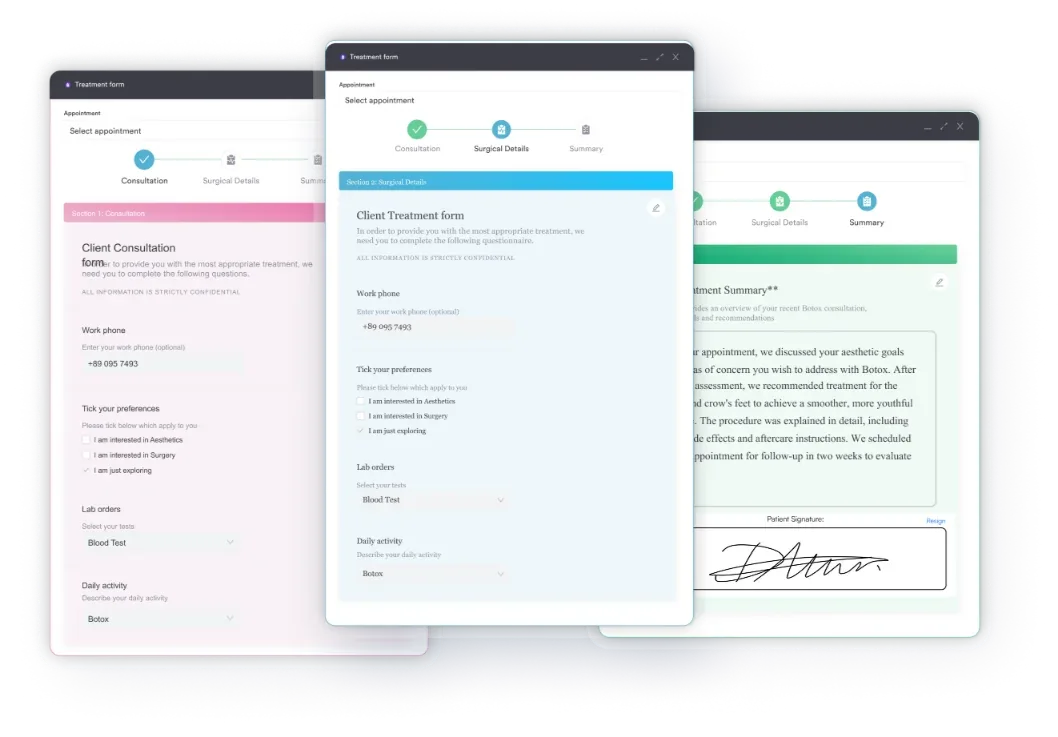
The template follows the patient journey, from first intake through treatment planning, consent, progress tracking, and discharge. Below are the five steps providers follow to put it to work in the clinic.
At the first visit, the template captures demographic data, sleep apnea history (past CPAP use and AHI scores from sleep studies), and TMJ symptom severity. It follows the same structured approach as a general intake evaluation template. Screening then flags absolute barriers, such as active orthodontic treatment, and relative concerns, such as severe bruxism or past jaw surgery. Together, these fields catch red flags early and record how the patient reached the decision to treat.
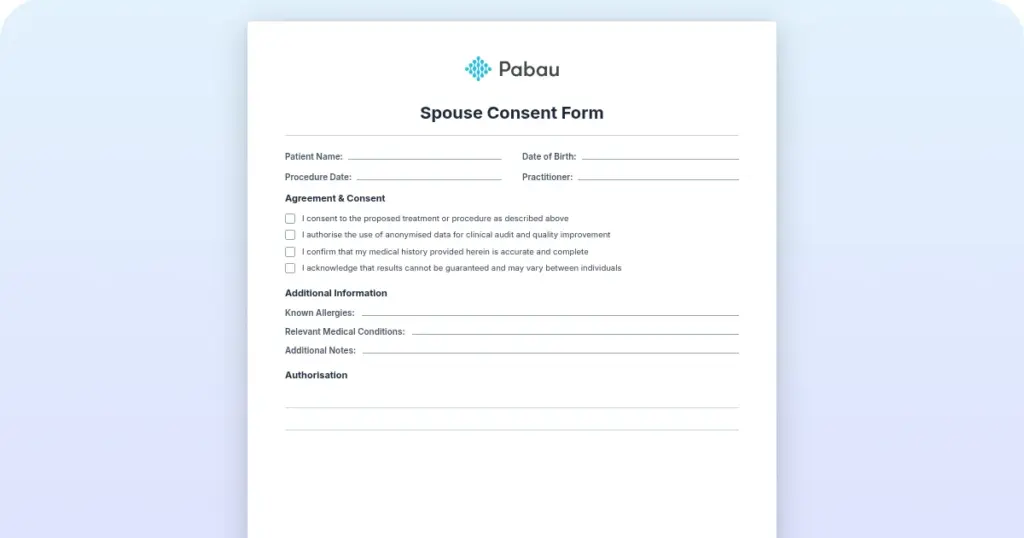
The consent section lists the FDA clearance scope and the expected timeline to benefit (6-24 months). It also covers common side effects, such as minor tongue soreness and early speech changes, and realistic outcome ranges. Providers then record that the patient understood each point. This builds an audit trail for regulatory inspections or patient disputes. For contested adult bone-remodeling claims, the form states plainly that the device is cleared to treat sleep apnea, not to guarantee jaw growth.
The provider records baseline transpalatal width, arch dimensions, and pre-treatment AHI when a recent sleep study is available. This mirrors the baseline approach of a neurological exam checklist. The provider also sets clear goals, such as an AHI reduction target, a symptom-relief goal, and an expected adjustment schedule.
Practice management software like Pabau turns these baseline fields into standardized notes automatically.
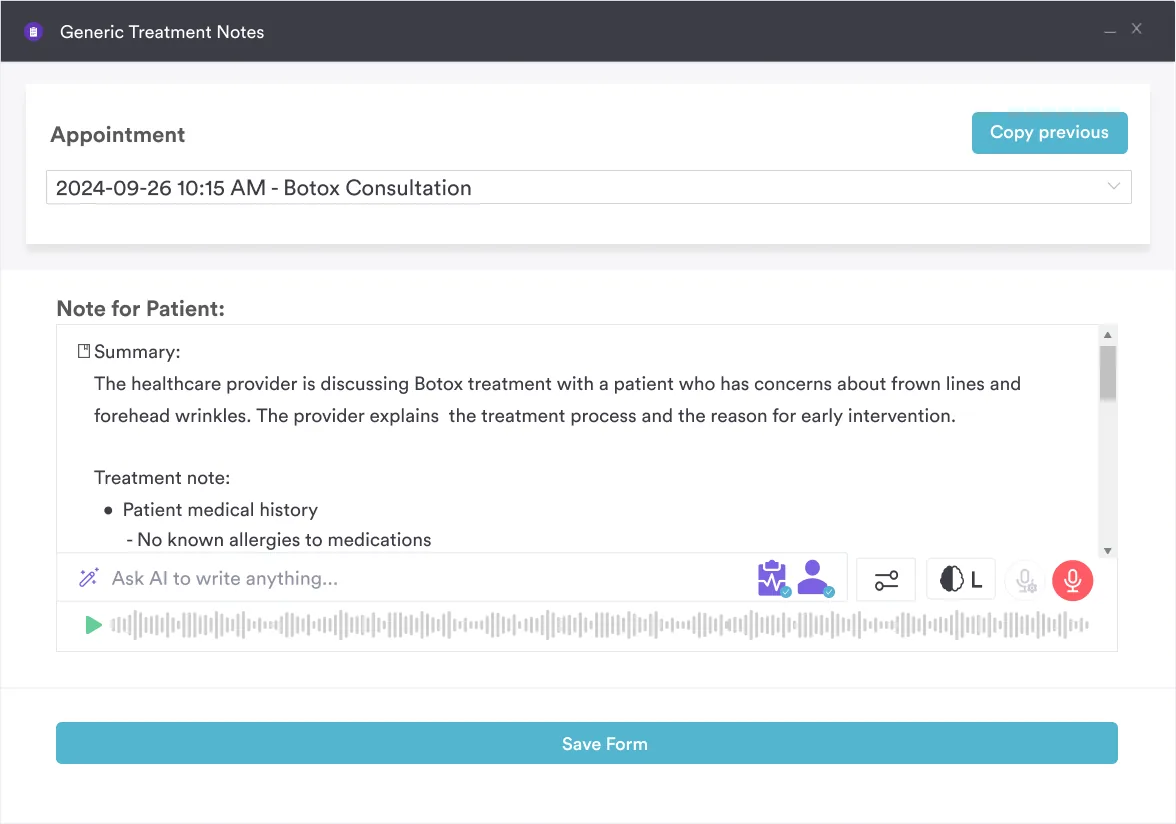
Each visit records the device fit, patient compliance (nightly wear hours), symptom changes across sleep quality, snoring, and jaw pain, and any adjustments made. Practices that track jaw pain closely can pair this with a pain management template for detailed symptom scoring.
These notes feed into a rolling treatment record. As a result, the provider can show the clinical reasoning for continued therapy and justify ongoing costs to insurance reviewers. Practices that also issue a return-to-work doctor’s note can apply the same standardized documentation approach to clearance paperwork.
At delivery and follow-up visits, the template provides take-home instructions on daily wear, cleaning, storage, and the expected adjustment period. It also lists warning signs, such as severe pain, a loose device, or breathing problems, that need a call right away. Clear guidance keeps expectations realistic, so fewer patients drop out partway through.
The template suits dental practices, orthodontic practices, sleep medicine providers. In practice, it supports several roles on the team:
A patient management platform stores every completed form against the right patient record automatically.
Regulatory protection: Documented consent that covers the FDA clearance scope, realistic timelines, and risk disclosures protects the practice during state board inspections or patient disputes. Missing consent details are a common audit finding. A standardized template removes that risk.
Workflow efficiency: Digital intake and progress tracking. Structured fields also keep data capture consistent across clinicians, so notes vary less and rework drops.
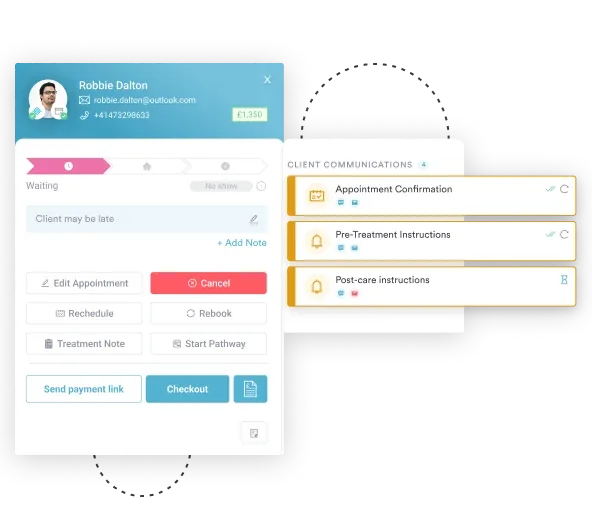
Clinical decision support: Baseline measurements and progress notes build an objective treatment record. In turn, that record supports insurance authorization and shows the AHI improvement or symptom relief needed to justify continued therapy.
Patient compliance and satisfaction: Clear take-home instructions and realistic timelines cut patient drop-off. Because patients know what to expect, they understand why treatment takes months rather than weeks, which lifts satisfaction and follow-through.
Audit readiness: The system timestamps every consent discussion, treatment plan, and progress update, and keeps them easy to retrieve. So if anyone questions an outcome, you can show standard-of-care documentation on demand.
Separate adult from pediatric consent language. Children aged 6-17 have FDA clearance for snoring and moderate-to-severe OSA, but consent must address age-appropriate airway development expectations and parental involvement in treatment compliance. Adults require clearer language distinguishing jaw growth (contested) from airway volume improvement (clinically supported). Use conditional language: ‘may improve’ not ‘will permanently correct.’
Knowing the exact scope of FDA clearance keeps patient communication and documentation accurate. FDA 510(k) clearance K230947, granted in November 2023, covers the Vivos DNA appliance for adults with mild-to-severe obstructive sleep apnea (OSA).
A second clearance, FDA 510(k) clearance K234089, granted September 18, 2024, extends this to snoring and moderate-to-severe OSA in children aged 6-17. Both are treatment clearances, not cure claims.
Most clinical data on the DNA appliance comes from retrospective case series and patient registries. One peer-reviewed analysis of 87 patients (Dao et al., 2023) found mean AHI dropping from 22.5 to 12.3 events per hour, a 46% reduction. In the same group, transpalatal width rose from 32.9mm to 35.2mm, and airway volume rose from 22,263mm³ to 25,567mm³.
Recording before-and-after measurements for each patient (baseline versus post-treatment AHI, airway volume, and transpalatal width) gives the practice an objective record of change.
Still, the evidence remains limited next to CPAP therapy, which has decades of gold-standard randomized controlled trials. The American Academy of Sleep Medicine (AASM) welcomed the FDA clearance. Even so, it still recommends CPAP as the first-line treatment for moderate-to-severe sleep apnea.
DNA appliance therapy works best for mild OSA, patients who cannot tolerate CPAP, or TMJ-related symptoms. So your documentation template should reflect this order to set realistic patient expectations.
DNA appliance success depends heavily on patient compliance. To see a benefit, patients need to wear the device nightly for 6-24 months. So your take-home instructions become the main touchpoint for setting expectations and improving adherence.
Key education topics to cover:
Add the template to your digital workflow through patient-facing portals, which send instructions electronically and track when patients acknowledge them. Automated appointment reminders also lift follow-up attendance. Finally, progress notes captured in centralized patient records keep every team member on the same protocols, even across multiple locations.
In short, DNA appliance therapy is an FDA-cleared, evidence-supported treatment for obstructive sleep apnea, and it may also ease TMJ dysfunction. Clear, standardized documentation helps you set realistic expectations, support informed consent, and keep communication consistent across the team.
Download the template, customize it to your practice, and integrate it into your practice management system to standardize data collection and documentation.
Streamline your DNA appliance workflows: book a demo to see how Pabau’s digital intake forms and Pabau Scribe simplify patient onboarding and standardize progress notes.

Need a template for tracking treatment outcomes over time? Body burn percentage chart supports rapid TBSA estimation with Rule of Nines and Lund-Browder methods.
Building a nursing care plan for oncology patients? Cancer nursing care plan template covers assessment, NANDA-aligned diagnoses, interventions, and outcome evaluation for oncology care.
The DNA appliance treats obstructive sleep apnea (OSA) and may relieve TMJ symptoms. It works by gently expanding the upper arch and nasal cavity to increase airway volume. It is FDA-cleared for mild-to-severe OSA in adults and for snoring and moderate-to-severe OSA in children aged 6-17.
Therapeutic benefit typically appears after 6-12 months of nightly wear; full maxillary expansion and airway remodeling may take 18-24 months. Treatment duration varies by patient age, severity of airway obstruction, and individual response. Baseline sleep study and follow-up testing document improvement.
Yes. The Vivos DNA appliance received FDA 510(k) clearance K230947 in November 2023 for treating mild-to-severe obstructive sleep apnea in adults. A second clearance, K234089, followed on September 18, 2024, for moderate-to-severe OSA and snoring in children aged 6-17. FDA clearance means the device is safe and effective — it does not guarantee individual patient results.
Your consent form must explain the FDA clearance scope and realistic timelines (6-24 months). It should also list side effects like speech changes and tongue soreness, and separate symptom relief from bone remodeling. Use conditional language (“may improve” not “will cure”). Document patient acknowledgment in writing — your DNA appliance template includes standardized language and signature blocks for this purpose.
Document device fit, nightly wear hours (patient-reported compliance), and symptom changes across sleep quality, snoring, and jaw pain. Also note clinical observations like tooth movement and arch width change, any adjustments made, and the next visit plan. Standardized progress notes create an objective treatment record and support insurance authorization requests.
In the US, DNA appliance treatment typically costs between $8,000 and $12,000. The figure depends on case complexity, treatment length, and included diagnostics like sleep studies and CBCT imaging. Coverage for the Vivos DNA appliance varies by insurer and usually requires a documented sleep apnea diagnosis.
All four are oral appliances used for arch development, but they differ in design and evidence. The DNA appliance is removable and patient-adjustable, and it is FDA-cleared for sleep apnea. The ALF (Advanced Lightwire Functional) appliance uses light wires for gentler expansion, and the Homeoblock is another removable expansion device linked to epigenetic orthodontics. The AGGA (Anterior Growth Guidance Appliance) is a fixed device that has faced safety concerns and litigation. For sleep apnea specifically, the DNA appliance has the clearest regulatory clearance of the group.