Journal prompts for mental health
Journal prompts for mental health are guided questions that help people process ...

2
Last Updated: Oct 13, 2026

The Brief COPE is a 28-item self-report tool that measures 14 distinct coping strategies, used across mental health and primary care intake.
Its familiar adaptive/maladaptive split is not part of Carver’s own instrument. That grouping comes from later research by Meyer (2001), not Carver’s original scoring key.
Score each of the 14 subscales separately by summing its two items on a 4-point scale. Carver’s instrument has no valid overall or total score.
Practice management software like Pabau can route a completed Brief COPE straight into the patient record, cutting manual data entry between sessions.
A ready-to-use 28-item coping questionnaire covering all 14 subscales, plus a scoring key. Record each subscale sum separately in the space provided, since the Brief COPE has no single overall score to add up.
Download templateA client says they’re “handling it fine,” then relapses, stops sleeping, or misses the next three sessions. Coping talk alone rarely tells you what’s actually happening day to day. The Brief COPE gives you a faster, more structured read instead. Answer 28 questions, and you get a picture across 14 distinct coping strategies in under five minutes.
Charles Carver built the Brief COPE in 1997 to shorten his original 60-item COPE Inventory. It kept the same clinical value in about a third of the length. Primary care teams, mental health practices, and researchers now reach for it as a fast, structured coping baseline at intake.
Score it correctly, and it shows exactly where a client’s coping style helps them. It also shows where that style works against them.
The Brief COPE is a 28-item self-report questionnaire that measures how someone copes with a stressful period in their life. Clients rate each item on a 4-point scale. Answers range from “I haven’t been doing this at all” to “I’ve been doing this a lot.”
It runs in under five minutes, short enough for busy primary care visits and mental health intake alike. Carver validated it across trauma survivors, chronic illness patients, and general community samples. The same structure holds up whether you’re screening after a diagnosis, a loss, or ongoing life stress.
Each of the 14 two-item subscales below is grouped as adaptive (approach-focused) or maladaptive (avoidant) coping. That split isn’t part of Carver’s original scoring key. It comes from later research by Meyer (2001).
On his own site, Carver says there’s no “overall” score on the Brief COPE. He also gives no official instructions for adaptive or maladaptive composites. His own higher-order grouping splits coping into three categories instead: problem-focused, emotion-focused, and dysfunctional coping.
The adaptive/maladaptive lens below is still a useful shorthand, as long as you know where it comes from.
Clients scoring high on maladaptive strategies, substance use, denial, self-blame, often need targeted intervention: cognitive-behavioral work, acceptance-based approaches, or both. Low scores on adaptive strategies like planning, active coping, or positive reframing point to skills worth building.
A structured tool like a dysfunctional thought record often helps.
Hand clients the form after your standard consent and demographics, so you get a coping snapshot before treatment starts. Ask them to rate each item based on the past month. Use a specific stressor instead if you’re assessing a discrete event, like a diagnosis or a loss. Most clients finish in three to five minutes without help.
Frame it before handing it over. Tell clients there’s no right or wrong answer, and that a few items, substance use, self-blame, can feel exposing. That framing alone cuts down on defensive under-reporting on the maladaptive items.
The same version reaches every client, and scores route into their chart without your team retyping raw numbers.
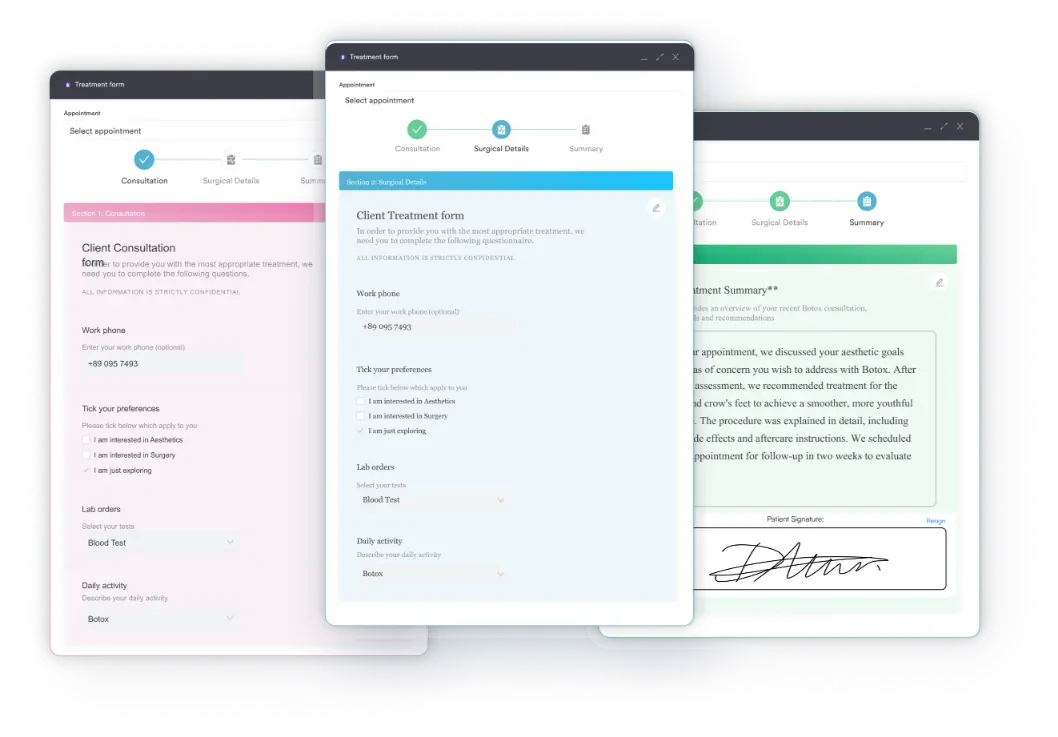
Clinical form capture tools let staff complete assessments like this on a tablet during the session itself.
Scoring is simple once you know the item pairs. Here’s the process.
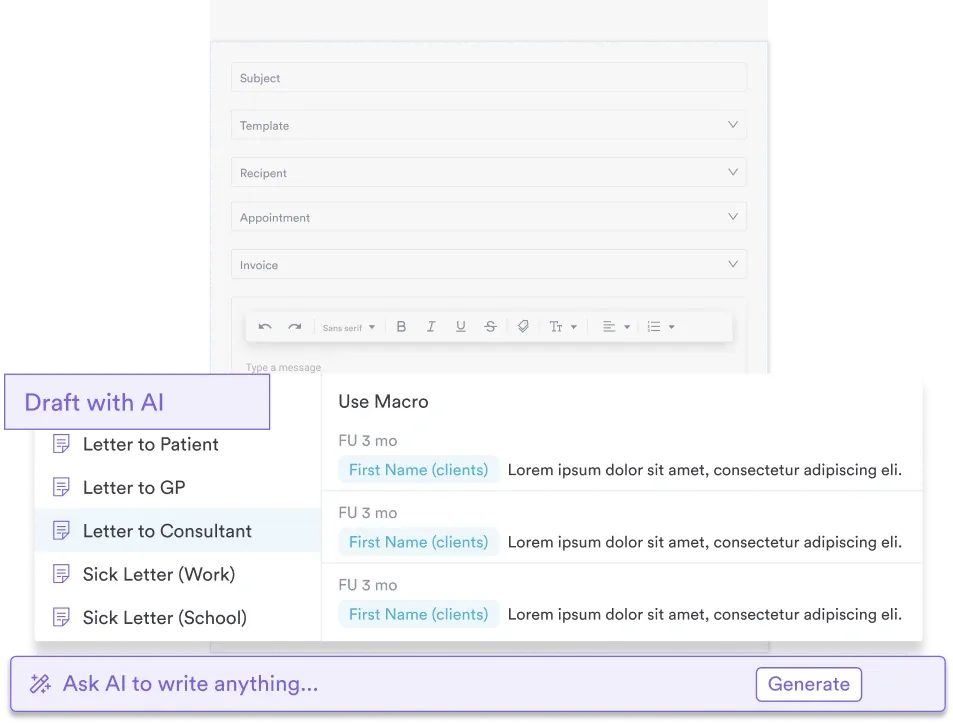
Mental health professionals using AI documentation tools can dictate scores and interpretation notes straight into the patient record. That speeds up the workflow after each assessment.
Give the Brief COPE in the first or second session to set a coping baseline before treatment starts. It fits well inside a standard intake packet, alongside consent forms and a symptom checklist. That way it doesn’t feel like a separate hurdle.
Re-administer the Brief COPE every four to twelve weeks, depending on how intensive treatment is. Rising adaptive coping alongside falling maladaptive coping often tracks with real gains in anxiety, depression, and trauma symptoms. That gives you a second data point beyond a client’s own report of feeling better.
A client scoring high on denial, substance use, or behavioral disengagement already has a clear therapy target. Pair a high Substance Use score with a dedicated screen like the AUDIT alcohol screening test. Two Brief COPE items alone can’t diagnose a substance problem. From there.
Someone scoring high on denial or self-distraction may struggle to name the feeling they are avoiding. A sensation emotion wheel works the other way, tracing a tight chest or racing heart back to the emotion behind it.
A client avoiding a specific stressor ahead of time, a procedure, a diagnosis, a custody hearing, is a good candidate for extra support. Pair the Brief COPE with a focused tool like an anticipatory anxiety worksheet before the event itself.
The Brief COPE holds up across cancer, cardiac, and chronic pain populations, along with trauma survivors and general community samples. Its short length keeps assessment fatigue low. That matters in longitudinal studies that ask the same group to complete it again and again.
Paper administration works, but it creates a data-silo problem fast. Clinicians retype results by hand and store scores in a folder separate from the rest of the chart. That breaks continuity when a client moves between providers, or from in-person care to telehealth.
Embedding the Brief COPE into a digital intake flow solves three problems at once. Clients complete it before they arrive, so it doesn’t eat into session time. Scores auto-populate the record instead of getting retyped, cutting transcription errors. Longitudinal tracking becomes automatic too, so you can see a client’s coping trend across months in a single view.
Platforms like Pabau combine structured digital forms. Together, they can run the Brief COPE as a routine checkpoint rather than a one-time paper snapshot.
The Brief COPE has been tested since Carver introduced it in 1997, and it holds up well. Subscale alphas run from about 0.53 to 0.82 across a peer-reviewed study. That’s weaker than you’d want on paper for two-item scales.
Even so, the same 14-factor structure keeps replicating across new samples. That same research calls it one of the best-validated, most frequently used coping measures in the field. That’s not a claim tied to any single professional body.
Charles S. Carver developed the original instrument at the University of Miami. He published it in the International Journal of Behavioral Medicine in 1997. Validated translations exist in more than 20 languages. Cultural-adaptation studies show the same coping categories hold up across Western and non-Western samples.
Interpretation should still account for local norms around help-seeking and emotional expression. A low Emotional Support score means something different in a culture that discourages open expression outright.
For teams in mental health settings or psychology practices, that evidence matters. You can add the Brief COPE to a standard battery. Trust the subscale data for treatment planning and outcome tracking.
The Brief COPE won’t diagnose anything on its own. It gives you a fast, specific read on how a client is actually coping right now. That’s more than what they say in session. Score each of the 14 subscales on its own, and watch the adaptive and maladaptive balance shift over treatment. That gives you an objective marker of progress that a mood check-in alone can’t.
Running that process by hand works, but it adds friction every time a client walks in. Practice management software like Pabau lets you route a completed Brief COPE straight from an intake form into the patient record. Subscale scores then sit alongside the rest of a client’s chart, ready before the next session.
Want to see what that looks like for your practice? Book a demo and we’ll walk through it.

Working with a client who swaps one dependency for another? A cross addiction worksheet helps you map that pattern before it derails treatment.
Screening someone on the borderline spectrum? Our BPD worksheet gives you DBT-aligned prompts to pair with Brief COPE data.
Seeing flat affect alongside low adaptive coping? The Apathy Evaluation Scale helps you tell apathy apart from depression before setting a plan.
The original COPE Inventory has 60 items across 15 subscales, four items each, and takes 10 to 15 minutes. The Brief COPE cuts that to 28 items across 14 subscales, two items each, finishing in three to five minutes. You trade some precision per subscale for speed, which is why most practices use the Brief COPE day to day.
Yes. It’s in the public domain and available on Carver’s own site, with no licensing fee or permission required for clinical or research use. You can download it, adapt the paper format, and administer it as often as your practice needs.
No. Carver’s own instructions score all 14 subscales separately and reject a composite “overall” score. The adaptive/maladaptive grouping most clinicians use comes from later research by Meyer (2001), not Carver’s original scoring key. It’s still a useful lens once you know its source.
Carver’s site doesn’t give explicit guidance for missing items on a two-item subscale. The safest approach is to mark that subscale as missing rather than estimate it from a single response. A two-item average can’t reliably represent the full construct.
Carver validated it with adults, and there’s no separately normed adolescent version. Some published studies use it with teens and college students with reasonable results. Still, treat scores in younger clients as descriptive rather than benchmarked against population norms.