List of vitamins: All 13 with RDAs and deficiency signs
A list of vitamins names the 13 essential vitamins the body needs from food or s...

12
Last Updated: Oct 8, 2026

A healthy habit checklist is a structured tool that tracks daily wellness behaviors across nutrition, exercise, sleep, hydration, mental health, and preventive care.
Regular habit tracking increases adherence and accountability, since research links self-monitoring to sustained behavior change and better patient outcomes.
The most effective checklists combine specific, measurable habits, such as steps walked or hours slept, with regular clinical follow-up and progress reviews.
Practice management software like Pabau lets clinicians share habit checklists within care plans, track progress across appointments, and automate wellness follow-ups.
A printable assessment tool for tracking lifestyle habits across nutrition, exercise, sleep, hydration, mental health, and preventive care. Use it in clinical settings to monitor patient progress and support wellness planning.
Download templateSustained wellness comes from daily habits, not one-off interventions. Tracking those habits by hand is labor-intensive, though, and patients often lose motivation without structured accountability.
A healthy habit checklist solves both problems at once. It gives patients a tangible way to measure progress. It also gives clinicians a simple way to monitor compliance across nutrition, sleep, exercise, and other wellness domains.
A healthy habit checklist is a structured assessment and tracking tool used by healthcare practitioners, wellness coaches, and individuals to monitor daily health behaviors.
The checklist breaks wellness into key domains: physical activity, nutrition, sleep quality, hydration, mental health, and preventive care. Patients mark off completed habits each day and track patterns over weeks or months.
Clinically, it helps practitioners identify which lifestyle areas a patient struggles with, providing a foundation for targeted intervention. Pairing it with digital intake forms captures baseline wellness status too.
Educationally, it turns the vague idea of “healthy living” into concrete, measurable daily actions. A patient can see immediately whether they drank enough water, moved their body, or managed stress that day.
Unlike generic motivation posters or vague health goals, a well-designed checklist puts wellness guidance into practice. It works because it combines three things: specific habits instead of vague goals, a box to tick daily, and visual tracking that builds accountability.
Once you download the checklist, using it is straightforward. Most clinicians add it to patient onboarding and review it at follow-up visits to check compliance and adjust care plans.
For clinicians using digital practice management systems. This creates a seamless workflow between habit tracking and clinical documentation.
A healthy habit checklist serves multiple practitioner types and patient populations.
Mental health clinicians integrate it into treatment plans for patients managing anxiety, depression, or trauma. Physical activity, sleep, and social connection all directly influence mental health outcomes.
Wellness coaches, nutritionists, and physiotherapists rely on the checklist to bridge the distance between session advice and at-home behavior. Dermatologists and aesthetic practitioners use it to monitor sleep quality and stress, both of which affect skin healing, as well as post-procedure care compliance. Weight-loss practices use it to track nutrition and movement habits alongside medication adherence.
Individually, anyone pursuing health optimization benefits from the structure a checklist provides. This holds whether they are recovering from illness, managing a chronic condition, or building sustainable wellness routines.
The tool works across ages. Parents adapt it for teenagers managing ADHD or building exercise routines, while older adults use it to maintain cognitive and physical engagement.
Occupational therapists often score assessments like this directly inside occupational therapy software, keeping results attached to the treatment plan.
Compliance visibility: A daily checklist makes habit adherence visual and quantifiable. Patients see their own consistency (or lapses) at a glance, which increases accountability without requiring practitioner enforcement.
Workflow integration: When embedded in wellness practice management systems, the checklist becomes part of the clinical record. Practitioners spend less time asking “Did you exercise?” and can focus on deeper conversation: “What barriers prevented sleep last week?”
Evidence-based progress tracking: Unlike subjective self-reports. Over time, you see which habits stick and which need extra support.
Patient autonomy and ownership: Patients feel agency when they check off a habit themselves. This self-directed tracking supports intrinsic motivation more effectively than external rules or judgement.
Personalization of care: A checklist reveals individual barriers and strengths. One patient struggles with sleep; another skips meals.
Track how often patients bring their completed checklist to appointments. Over time, you’ll notice which patients engage with the tool and which need reminders or a simpler version. The checklist only helps if patients actually use it, so adjust the design based on real behavior, not theory.
Habit formation research, spanning decades of behavioral psychology, consistently shows that tracking increases the likelihood of sustained change.
The mechanism is simple: measuring and recording a behavior raises awareness, and awareness drives action. When patients record whether they exercised, their brain registers a small reward (the checkmark), and over time this creates a positive feedback loop.
The commonly cited “21-day rule” (habits form in 21 days) is misleading. Research by Lally et al., published in the European Journal of Social Psychology, found that habit formation takes an average of 66 days.
The range spans 18 to 254 days, depending on the person and the complexity of the behavior. This means a healthy habit checklist works best as a medium-term tool, not a quick fix. Patients need realistic timelines to maintain motivation.
Self-monitoring, the psychological principle behind checklists, is one of the most robust predictors of sustained behavior change. Weight management, exercise adherence, and medication compliance all improve when tracked. The checklist does not change willpower. It channels attention toward habits, making lapses visible and progress tangible.
Beyond patient self-tracking, clinicians can embed the healthy habit checklist into the broader clinical workflow. Assign it during the initial assessment to establish baseline wellness status across domains.
Use the data to prioritize which habit areas need intervention. If a patient’s nutrition is inconsistent but sleep is strong, start with nutrition-focused education rather than overhauling everything at once.
Review the checklist at every follow-up appointment, not as a test but as evidence of engagement. Celebrate consistency: “You hit 6 out of 7 days. What worked?” Address setbacks directly: “You dropped off on weekends. Let’s adjust the plan.” This removes shame and positions the checklist as a collaborative tool, not a grading system.
For multi-week interventions, such as weight loss, post-procedure recovery, or mental health treatment, the checklist creates a continuous feedback loop. This loop ties daily habits to clinical outcomes.
Over time, you see which habit changes correlate with improvements in your patients’ conditions. Sleep affects skin healing in aesthetic practice, and exercise affects mood in mental health practice. These insights personalize treatment and strengthen the patient-clinician relationship through shared data.
An effective healthy habit checklist includes specific, measurable daily actions across key wellness domains. Keep each habit concrete: not “eat healthy” but “eat 3 servings of vegetables,” so patients know exactly what to track.
Physical activity: 30 minutes of moderate movement, such as walking, cycling, or strength training. Sedentary patients can start with a minimum step count (5,000 steps) or a 10-minute mobility routine. Specify the type so patients know what counts.
Nutrition: Drink adequate water (8 glasses or 2 liters) and eat 3+ servings of vegetables. Include a protein source at each meal, limit added sugars, or eat within a time window if you’re using intermittent fasting. Frame this positively: focus on what to include, not just what to avoid. Pabau’s nutrition cheat sheet gives patients quick reference portions for common foods, which makes this habit easier to track accurately.
Sleep: At least 7 hours per night, per CDC guidelines, with a consistent bedtime and wake time, and screen-free time 1 hour before bed. Sleep is foundational and often the easiest habit for patients to understand and track.
Mental health and stress: 10 minutes of mindfulness, breathing exercises, journaling, social connection (phone call or in-person time), or engaging in a hobby. These practices reduce cortisol and improve emotional regulation.
Hydration and preventive care: Drink adequate water, often combined with the nutrition habit above, and take medications or supplements as prescribed. Add a skin care routine for dermatology patients, or medication adherence for other chronic conditions.
Avoid overloading the checklist. 5-7 habits per day is manageable; more than 10 and patients become overwhelmed and abandon tracking. Start with the most impactful habits, typically sleep and movement, and add others as patients build momentum.
While printed checklists work, digital integration amplifies their value. Clinicians can share a digital healthy habit checklist template via a patient portal, where patients log habits directly into their record. This eliminates manual data entry and keeps the checklist synchronized with appointment notes.
With AI-powered clinical notes, practitioners can summarize checklist data in seconds. For example: “Patient tracked 85% adherence over 4 weeks, sleep improved from 5 to 7 hours nightly, and exercise consistency increased.” This context enriches clinical documentation without extra work from the clinician.
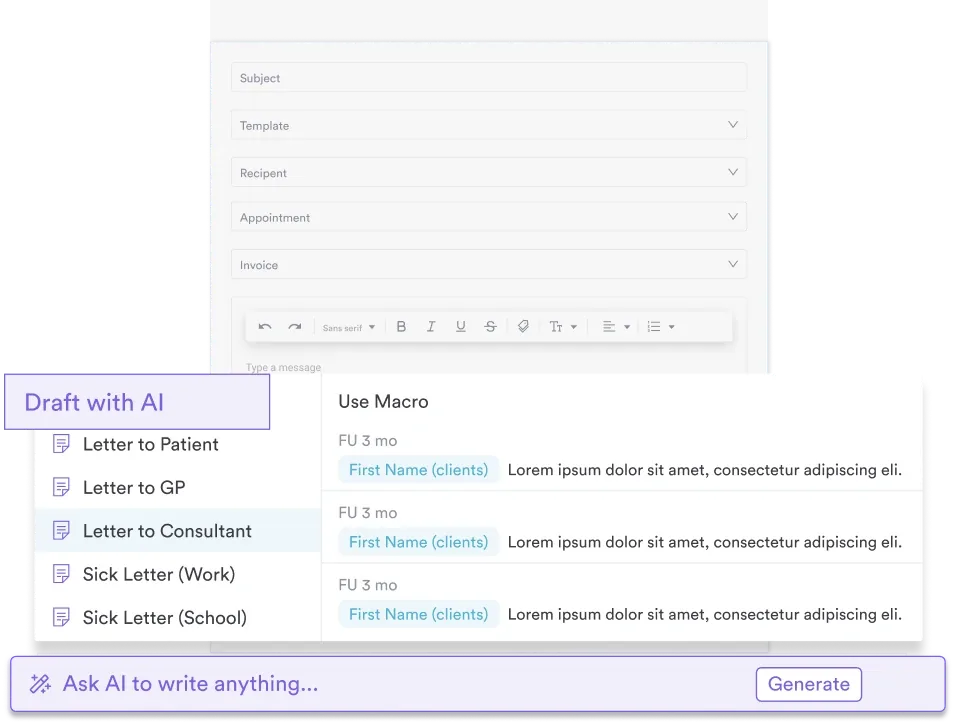
Automation also enables reminders. A patient portal can send weekly nudges to complete the checklist, freeing the clinician from manual follow-up texts.
For group settings or large patient populations. This makes population-level insights visible, such as:
Printed habit checklists work, but they depend on the patient remembering to bring them back. The clinician has no visibility into progress between visits.
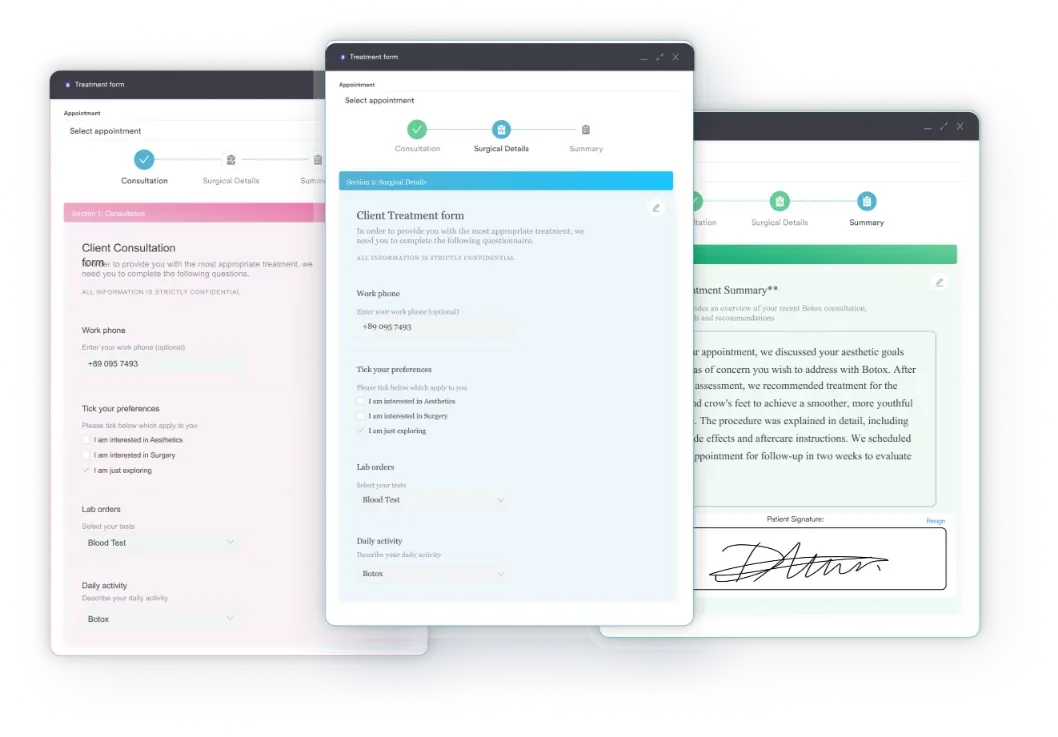
Practice management software like Pabau turns the same checklist into a digital form that patients complete through the patient portal. Entries sync into the clinical record as they happen. Automated reminders nudge patients to log habits on the days they would otherwise skip.
Pabau’s AI-powered clinical notes can also summarize weeks of checklist entries into a few lines a clinician can scan before a follow-up. That way, the appointment starts with data instead of a guess. The result is less admin time and a clearer picture of which habits are actually sticking.

Patients log habits in Pabau’s forms and portal between visits, and automated reminders keep your team on top of every checklist.

A checklist only earns its place in a care plan if someone actually looks at it. Pick five to seven habits that matter most for a given patient, then hand over the checklist. Put a review of it on the calendar for the next visit, rather than leaving it to chance.
What changes once you do this is the conversation itself. Instead of asking a patient to recall two weeks of behavior from memory, you are both looking at the same record. That shifts the visit from guesswork to problem-solving.
The trade-off is that a checklist needs upkeep. A form nobody reviews becomes paperwork, not a tool. Book a demo to see how Pabau keeps habit tracking and follow-up on schedule without adding to your team’s workload.

Patient symptoms with no clear cause? Guide to autonomic testing covers the test types, how to prepare, and what the results mean.
Want to track cognitive health too? A brain health assessment template gives your team one structured form to screen, score, and document cognitive function.
Suspect a food is triggering symptoms? An elimination diet plan template walks patients through a defined food-avoidance period, a reintroduction schedule, and a symptom diary.
A healthy habit checklist should include specific, measurable daily habits across at least five domains: physical activity, nutrition, sleep, mental health, and hydration. For example: 30 minutes of movement, 3+ vegetable servings, 7-9 hours of sleep, 10 minutes of mindfulness, and 8 glasses of water. Avoid vague goals like “eat healthy.” Name exact actions your patients can tick off.
Research suggests habit formation takes an average of 66 days, with a range of 18-254 days depending on the habit complexity and individual. The common “21-day rule” underestimates the timeline for most people, leading to discouragement. Realistic timelines (8-12 weeks minimum) support sustained motivation.
Share the checklist during the initial assessment, explain each habit clearly, and set realistic daily targets based on the patient’s current baseline. Have patients check off completed habits daily, then review the checklist at follow-up visits. Use it as a conversation tool, not a grading system.
No. A healthy habit checklist is a complementary tool that supports clinical treatment and patient self-awareness. It helps patients manage lifestyle factors like sleep, movement, and stress that influence health. It does not replace medical care, medication, therapy, or specialist intervention when needed.
Sleep, movement, and stress management have the broadest impact on health and should typically be tracked first. Nutrition and hydration are next. Tailor the checklist to your patient’s condition. A mental health patient prioritizes stress and social connection, while a post-procedure aesthetic patient prioritizes sleep and skin care.