Gene test: Types, how it works, and what results mean
A gene test is a laboratory analysis of your DNA, chromosomes, or proteins that ...

Last Updated: Sep 22, 2026

VO2 max testing measures how much oxygen the body uses during exercise, in ml/kg/min, the gold standard for cardiorespiratory fitness.
Direct lab measurement with a metabolic cart is the most accurate method, while submaximal and field tests offer practical, clinic-friendly alternatives.
A test only counts as valid when it hits markers like a VO2 plateau, a high respiratory exchange ratio, or a near-maximal heart rate.
ACSM normative tables classify results from poor to superior by age and sex, giving clinicians a framework for individualized exercise prescription.
Practice management software like Pabau helps exercise physiology clinics document assessments, track progress, and schedule follow-ups without manual admin.
Most fitness metrics tell you how hard someone trained. VO2 max testing tells you how well their body responded to it. Maximal oxygen uptake (VO2 max) is the highest rate at which the body can consume oxygen during intense exercise. I
t is measured in milliliters of oxygen per kilogram of body weight per minute (ml/kg/min). According to the American College of Sports Medicine (ACSM), a vo2 max assessment is the single best objective measure of cardiorespiratory fitness available to clinicians.
Higher scores mean the cardiovascular and respiratory systems can deliver more oxygen to working muscles at peak effort. That translates directly into athletic performance, long-term health outcomes, and mortality risk. For clinicians running a sports medicine software-enabled practice or a longevity clinic, this single number anchors everything from exercise prescription to cardiac risk stratification.
This guide covers how the test is performed, which protocols suit which patients, and how to read normative charts. It also covers how clinics can build VO2 max testing into their service offering.
Not every clinic owns the vo2 max testing equipment needed for a direct lab measurement, and not every patient should be pushed to maximal exertion. Understanding the difference between testing approaches is the first decision an exercise physiologist makes when designing a testing protocol.
As ACSM guidelines outline, direct measurement with a metabolic cart during a graded exercise test (GXT) remains the reference standard. This method is also called a lab vo2 max test. Submaximal and field tests provide useful estimates but introduce error through prediction equations.
Consumer wearables and vo2 max calculator formulas publish their own accuracy claims, though independent validation studies show variable results. Treat these estimates as trend indicators, not clinical-grade measurements.
A test only counts as maximal when it meets at least two of three validity criteria. One is a plateau in oxygen consumption despite a rising workload. The others are a respiratory exchange ratio of 1.15 or higher, or a heart rate within 10 beats of the age-predicted maximum. Documenting which criteria a test met keeps re-test comparisons defensible.
The protocol shapes everything: session duration, patient safety, and the reliability of results. Clinics choosing a vo2 max test protocol typically pick from four main approaches, matched to the patient in front of them.
The Bruce protocol is the most widely recognized vo2max treadmill test used in clinical settings. It starts at a low speed and incline, then increases in three-minute stages until most healthy adults reach near-maximal effort within 8-12 minutes. The standard version suits athletes and active adults, but it can be too demanding for deconditioned or clinical populations. A modified Bruce protocol, with lower starting stages, works better for those groups.
A vo2 max test bike protocol (commonly Astrand-Ryhming or Ramp) suits patients with lower-limb joint problems or those uncomfortable on a treadmill. Power output increases incrementally while the metabolic cart measures oxygen consumption breath-by-breath. Results correlate well with treadmill-derived values. Because cycling uses less active muscle mass, a vo2 max calculator cycling estimate typically reads 5-10% lower than the same person’s treadmill score.
For clinical populations where maximal exertion carries risk, submaximal tests extrapolate VO2 max from the heart rate response at moderate effort. The YMCA Step Test and the Astrand-Ryhming Nomogram are common examples. A vo2 max calculator step test formula converts the heart rate data into an estimated score. Accuracy depends on correct heart rate measurement and the assumption that the heart rate-oxygen relationship stays linear. Pre-test screening is essential. Patients on beta-blockers will produce unreliable estimates.
The Cooper 12-minute run and the multi-stage fitness test (Beep test) estimate VO2 max from distance covered or the last completed stage. A vo2 max calculator 12 minute run formula converts the distance directly into an estimated score. Both tests require no specialist equipment, but they depend on maximal voluntary effort. That makes them suitable for motivated athletes and unsuitable for patients with health limitations.
Preparation directly affects result validity. Clinics should send pre-test instructions at least 48 hours ahead. Digital intake forms make this easy to standardize across every patient. Key guidance includes:
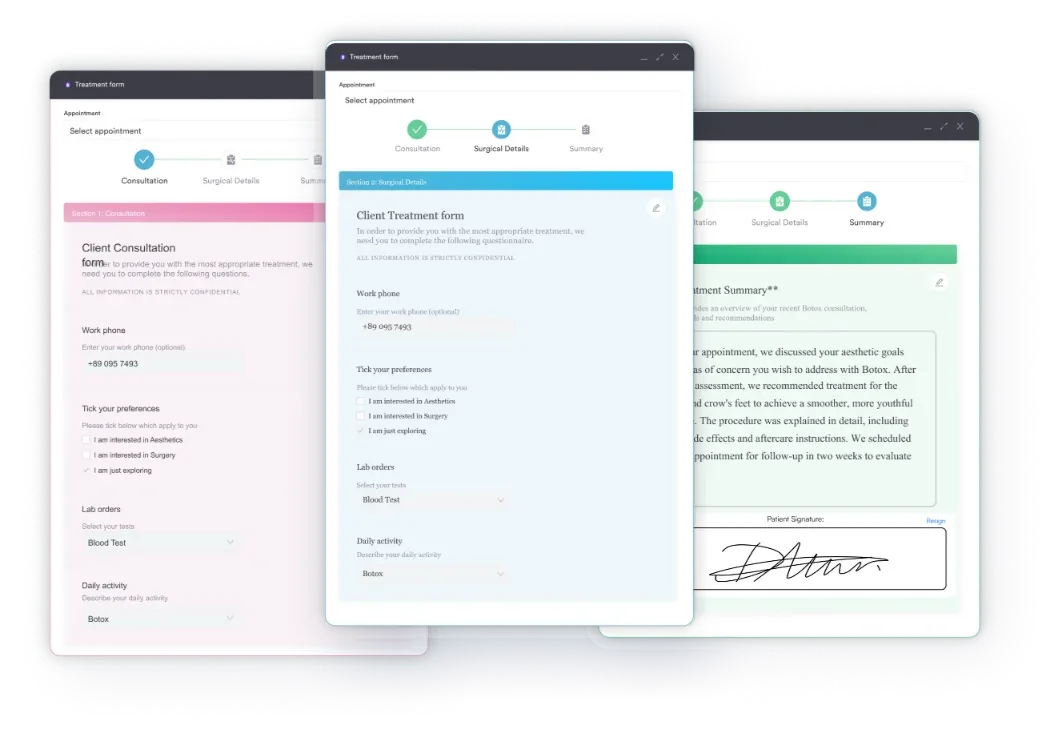
Exercise physiologists should conduct a brief pre-exercise health screening before the session. This includes blood pressure measurement and a review of contraindications such as recent acute illness or uncontrolled hypertension. A baseline range of motion assessment is also useful for older adults or patients with joint limitations before choosing a protocol.
Raw scores only become meaningful when compared against normative data on a vo2 max chart. ACSM publishes age- and sex-stratified classification tables, shown below for adults (ml/kg/min).
Normative cut-offs vary slightly between reference sources, so always cite the specific ACSM edition or reference table you use when communicating vo2max values to patients. A vo2 max calculator by age can approximate where someone sits on the chart, but the ACSM tables above remain the clinical reference. Clinics using measurements tracking software can store these benchmarks against each patient’s record and flag progress automatically at re-test.
A score means nothing without context. The exercise physiologist’s job is to translate ml/kg/min into an exercise prescription the client can act on. Here is how the classifications map to clinical decisions.
VO2 max is a fitness assessment, not a medical diagnosis. Refer to a physician before prescribing exercise when results indicate a possible cardiovascular concern. Examples include an abnormal heart rate response during the test or a significantly below-average score in a patient with risk factors. Clinicians using client record management in their practice management system can attach the raw score, classification, and follow-up plan directly to the patient file.

Document the testing protocol used (Bruce, Astrand, Cooper) alongside the raw VO2 max score in every patient record. Protocol differences can shift scores by 5-10%, so comparisons across re-tests are only valid when the same protocol is used. Noting this in the record prevents misinterpretation down the line.
VO2 max is trainable, but the rate and ceiling of improvement depend on genetics, age, and baseline fitness. Sedentary individuals can expect larger early gains, while trained athletes may see modest increments that need targeted intervention. A structured, periodized training approach outperforms simply adding training volume.
Clinics offering vo2 max testing as a service have an opportunity to pair results with structured training programs and re-test every 12-16 weeks. This creates a recurring touchpoint that drives retention and demonstrates measurable client progress. For a growing medical practice, regular reassessment anchors the entire treatment relationship in objective data.
Protocol selection changes significantly depending on who is being tested. Applying a maximal treadmill protocol to a 68-year-old cardiac rehab patient introduces unnecessary risk. The exercise physiologist’s skill lies in matching the method to the person.
Exercise physiology clinics offering vo2 max testing as a service face a common operational problem. Test data lives in spreadsheets, follow-up scheduling is manual, and re-test reminders get missed. That disconnect between delivering a great assessment and maintaining the client relationship costs clinics revenue and repeat business.
Practice management software like Pabau addresses this directly. Its automated follow-up workflows schedule re-test reminders at 12 or 16 weeks automatically, triggered the moment the initial assessment is completed. Results documentation links directly to the patient file. Pre-appointment prep instructions, including the digital pre-test questionnaire, go out automatically through the digital forms feature, with no clinic administrator needing to remember.
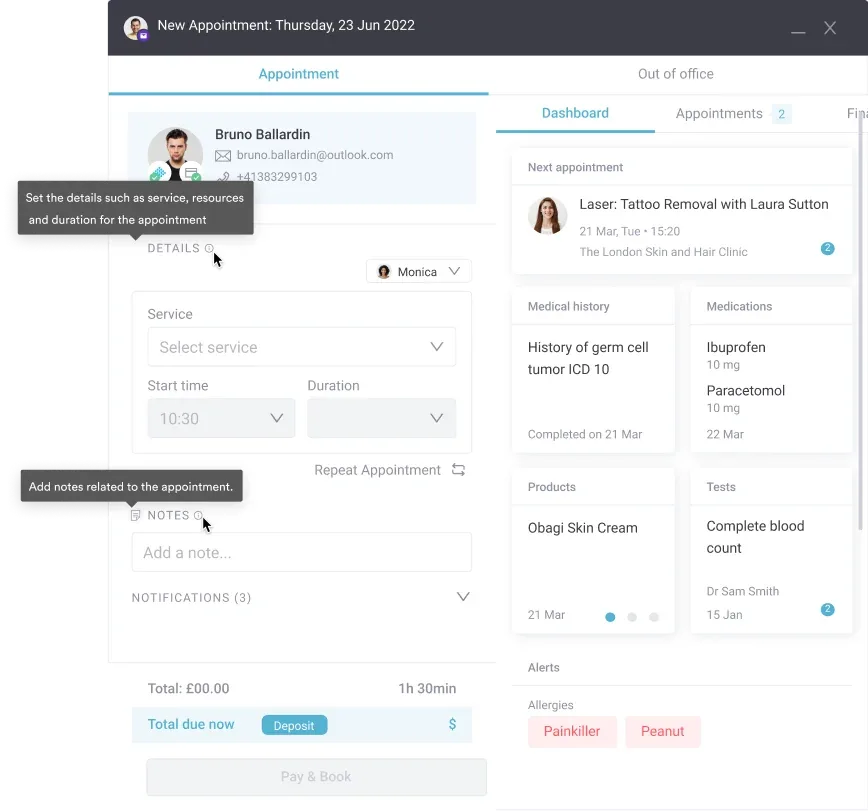
For clinics running a wellness clinic that bundles VO2 max with body composition and metabolic rate testing, all services sit inside the same patient record. The patient scheduling software handles multi-service bookings without double-entry. Staff see the full clinical picture in one place, and clients get a single coherent follow-up communication rather than separate emails from different systems.
Practices that have invested in practice management software features like these consistently report that the admin reduction pays back within the first month of adoption. For a vo2 max testing program specifically, automated recall means no client falls through the cracks between their baseline test and their 16-week re-assessment.

Pabau handles pre-test forms, result documentation, and automated re-test reminders so your exercise physiologists can focus on the assessment, not the paperwork. See how it works for exercise physiology and wellness clinics.

A well-run vo2 max testing program gives clinicians one of the most actionable numbers in exercise science. It is a direct measure of cardiorespiratory fitness that guides everything from training zone prescription to cardiac risk stratification. What separates clinics that get value from it is operational consistency: delivering assessments, documenting results, and keeping clients engaged between re-tests.
Pabau’s scheduling, digital forms, and automated recall workflows handle that operational load. Book a demo to see how Pabau supports exercise physiology and wellness clinics running vo2 max testing as a service.

Assessing muscle tone before building a rehab plan? The Tardieu Scale template gives clinicians a standardized way to score spasticity before setting exercise intensity.
Need a quick strength check before a fitness protocol? The Quadriceps Active Test template documents baseline muscle function for patients starting a structured program.
Tracking functional recovery alongside a fitness score? The Knee Outcome Survey (KOS-ADLS) template scores how joint limitations affect daily activities.
Screening for shoulder instability before clearing high-intensity training? The Clunk Test template walks through the procedure and documentation for this shoulder assessment.
Ruling out non-organic factors before a maximal exertion test? The Waddell sign test guide covers the five categories, scoring, and clinical use.
A VO2 max assessment measures the maximum rate at which the body can use oxygen during intense exercise. Results are expressed in ml/kg/min, the standard unit for cardiorespiratory fitness. Exercise physiologists, sports clinicians, and wellness practitioners use the score to guide training, track progress, and assess cardiovascular health.
A good VO2 max score varies by age and sex. For men aged 30-39, above-average scores range from 39 to 47 ml/kg/min according to ACSM tables. Women in the same age group reach an above-average range of 30 to 37 ml/kg/min in the same tables. Elite endurance athletes commonly post scores of 60 to 70 ml/kg/min or higher. The ACSM publishes full age- and sex-stratified normative tables as the standard clinical reference.
Direct VO2 max testing uses a metabolic cart to measure oxygen consumption breath-by-breath during a maximal graded exercise test, giving the most accurate result. Indirect testing (submaximal or field tests) estimates VO2 max from heart rate response or distance covered, using prediction equations with 10-20% error margins. Direct testing is the gold standard, and indirect methods suit clinical populations or resource-limited settings.
Most exercise physiologists recommend reassessment every 12-16 weeks when following a structured training program, which is enough time to see meaningful aerobic adaptation. Annual testing suits clients using VO2 max as a general health metric rather than a performance tool. Use the same protocol at each re-test to ensure scores are directly comparable.
Consumer wearables such as Garmin and Apple Watch estimate VO2 max using optical heart rate sensors and proprietary algorithms. They are not clinically validated equivalents of laboratory measurement. Independent validation studies show variable accuracy, and the estimates are best used for tracking trends over time rather than as a clinical baseline. For diagnostic or prescription purposes, a lab-based vo2 max assessment remains the appropriate standard.
Clinics can offer VO2 max testing by training or hiring a qualified exercise physiologist. They also need a metabolic cart, or submaximal protocols that require only a heart rate monitor, plus integration into their existing booking system. Practice management software that handles digital pre-test forms, result documentation, and automated re-test scheduling makes the service scalable without adding significant admin burden.
The most accurate way is a lab vo2 max test, using a metabolic cart during a graded exercise test. It measures oxygen consumption directly as effort increases to exhaustion. Submaximal and field tests estimate VO2 max from heart rate response or distance covered, trading some accuracy for equipment simplicity.