Obagi Blue Peel Radiance: Consent form and aftercare guide
An Obagi Blue Peel Radiance consent form records that your patient understood a ...

4
Last Updated: Sep 29, 2026

A body map — sometimes called a body chart in physiotherapy and massage practice — is a visual assessment tool that lets healthcare professionals and patients document physical sensations, symptoms, emotions, injuries, and treatment responses on a body outline.
Body maps support clinical documentation across mental health, physiotherapy, dermatology, and aesthetic practice by creating a clear, visual record that improves communication and reduces documentation errors and inconsistencies.
Digital body maps integrated into practice software eliminate paperwork, improve data security, and provide a searchable record for follow-up care and treatment tracking.
Practice management software like Pabau lets you embed body map assessments directly into intake and treatment records, including plotting injection sites on a digital map for aesthetic treatments, so a finding is captured once and stored securely in the patient file.
The Body Map Emotions Worksheet is a free, printable PDF form that helps clinicians and patients record where physical sensations and emotions show up in the body during a session. Use it as a standalone worksheet, or alongside a visual body chart, to support trauma-informed care.
Download templateA body map template is a clinical form for recording where a patient’s symptoms, injuries, skin conditions, or emotions appear on the body — either as a structured worksheet with written fields, like the download above, or as a body outline the patient marks directly. Physiotherapists and massage practitioners often call the same tool a body chart. If you also use body maps to mark injection sites, our roundup of med spa software compares injection charting across eight platforms.
Whether you work in mental health, physiotherapy, dermatology, or aesthetic medicine, a standardized template keeps documentation consistent from visit to visit. Any clinician who picks up the record sees exactly what was found, and where.
A body map is a visual diagram of the human body used to record physical observations, symptoms, injuries, emotions, or treatment responses directly on anatomical outlines. The practitioner or patient marks specific areas to create a clear, documented record of where pain, swelling, rashes, bruising, or other clinical findings are located.
Body maps are used across healthcare disciplines:
The key strength of a body map is its visual clarity. A practitioner can instantly see where a patient’s problems are located, compare changes across visits, and communicate findings to other team members without misinterpretation.
Not really — a body chart template and a body map template describe the same kind of document, and the terms are often used interchangeably. The main difference is who uses each word. Physiotherapists, massage therapists, and chiropractors usually say “body chart” and expect a body outline for marking pain points, movement limits, or musculoskeletal findings. Mental health, nursing, and safeguarding teams tend to say “body map” for documenting emotions, injuries, or abuse concerns.
The format can differ too. Searches for “body chart” often turn up diagram-style templates — musculoskeletal charts, before-and-after aesthetic charts, or full-body outline charts you mark up visually. Our free download above is a structured worksheet built for emotional and symptom documentation, with written fields rather than a markup diagram. If your practice needs a visual outline chart for physiotherapy or aesthetic charting, pair this worksheet with a blank body diagram, or mark findings directly in a digital record like Pabau. Before and after photos are only comparable when lighting, angle and distance are consistent, which the record should enforce.
Integrating a body map into your clinical workflow is straightforward and improves documentation speed:
Pro tip: Digital form collection through practice management software like Pabau removes the printouts and manual filing. Patients complete body maps on a tablet at check-in, the data links straight to their record, and you get a permanent, timestamped assessment for compliance and continuity of care.
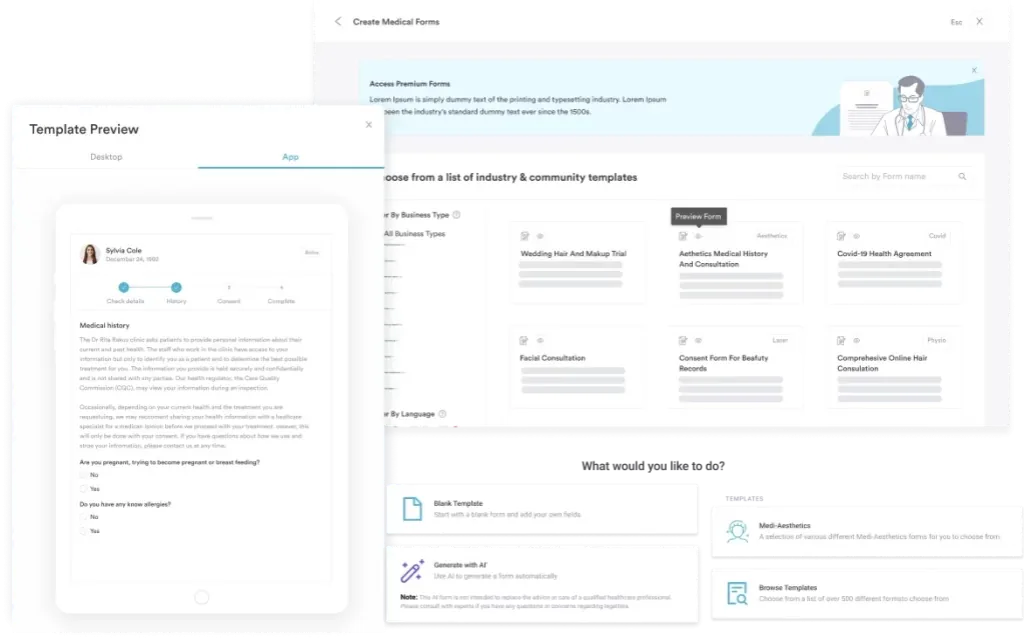
Turning this scale into a digital form with form capture software removes double entry and keeps every score legible.
Body maps are used across a wide range of healthcare settings and professional roles:
Each specialty benefits from the same core principle: a visual, patient-centered record that reduces ambiguity and improves clinical communication.
Clarity and precision: A body map eliminates vague descriptions. Instead of noting “shoulder pain”, you document exactly where the pain is located, its extent, and how it changes over time.
Patient engagement: Involving patients in mapping their own symptoms increases their awareness and investment in treatment. They see visual evidence of progress, which supports compliance.
Reduced documentation time: A single visual diagram replaces lengthy written descriptions. Paired with dedicated clinical documentation software, practitioners spend less time writing and more time on patient care.
Continuity across visits: Comparing body maps from different appointments shows progression, changes, or stagnation. This visual timeline is invaluable for adjusting treatment plans.
Compliance and legal protection: Detailed, dated body maps serve as evidence of your clinical assessment and decision-making, protecting you in audits and compliance investigations.
Team communication: When every staff member reads the same visual map, interpretation stays consistent and nothing gets miscommunicated between clinicians.
Different specialties benefit from tailored body map designs:
Many practices keep more than one version on hand. A general template covers initial consultations, and specialty-specific versions handle detailed assessments.
Printed body map templates offer simplicity and immediate usability. Going paperless in your practice with digital body maps provides additional benefits:
Best practice: Use centralized patient records that store body maps alongside clinical notes, treatment history, and imaging. This creates a complete picture of the patient’s journey and supports continuity of care across your practice.
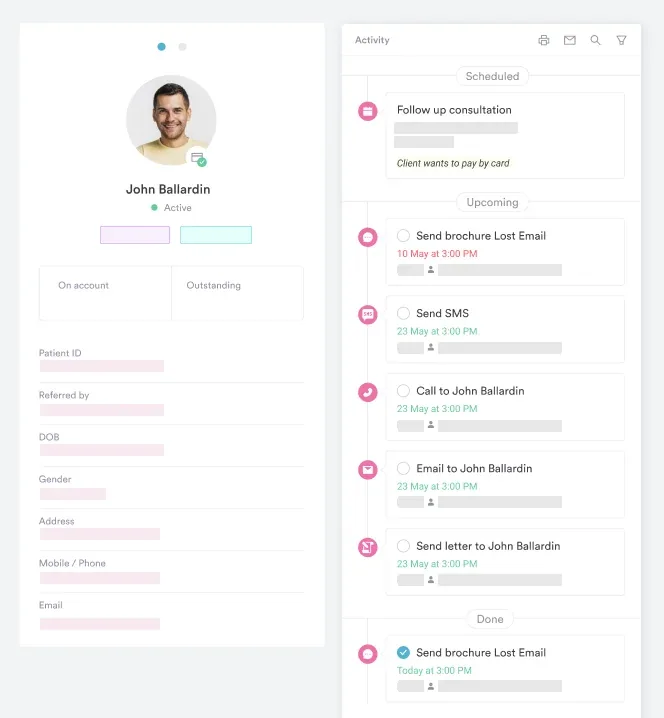
To maximize the benefit of body maps, integrate them into your standard practice processes:
AI-powered clinical documentation can speed up the written notes that accompany each body map, drafting assessment summaries so you spend less time typing and more time with patients. Learn how AI clinical documentation works in day-to-day practice.
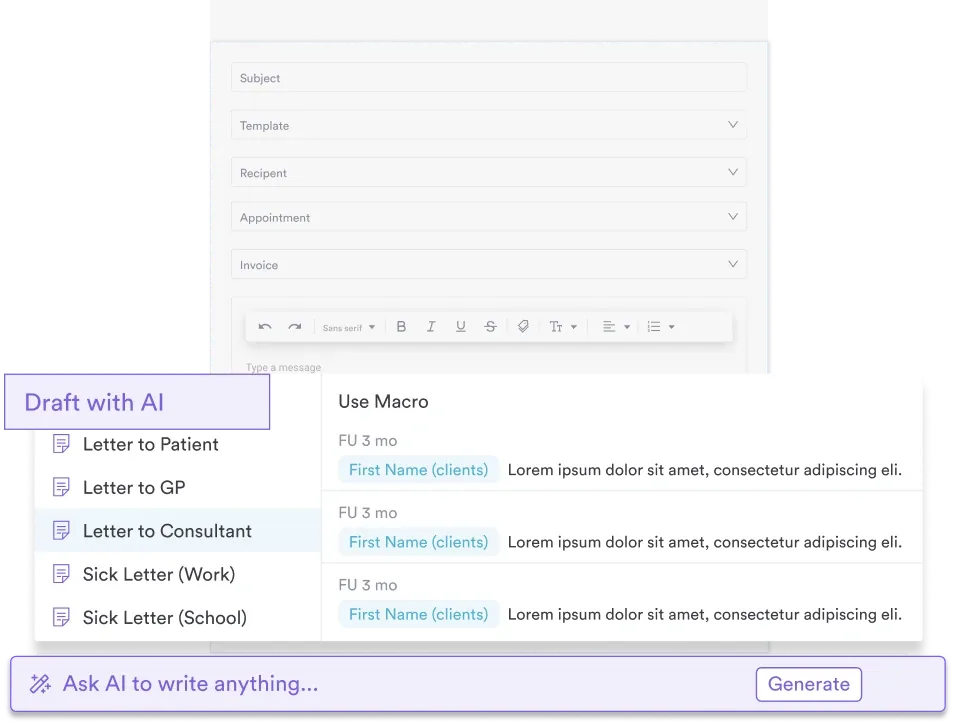
Pabau’s digital forms and patient record system integrate body maps directly into your workflow, reducing paperwork and improving compliance tracking.
Body maps are critical documentation tools when recording injuries and possible abuse. Accuracy and timeliness matter. Care workers and clinicians use them to record visible injuries, patterns of harm, or concerns that may indicate abuse or neglect. These maps become evidence in abuse and neglect investigations.
Patients see what is being recorded about their health, and clinicians demonstrate accountability.
Digital storage with access logs proves that records are handled securely and only accessed by authorized staff.

Standardize your notation. Use consistent colors, symbols, or labels across your practice. For physical findings, a common scheme is red for pain, blue for swelling, green for normal. For emotional body maps, practices often use red for anger, blue for sadness, and orange for anxiety, so any clinician can read a completed map at a glance. Staff training ensures everyone interprets maps the same way.
Include measurement and detail. Note not just the location but the size, severity, or characteristics (e.g., “3cm x 2cm bruise, darkening at edges”). Vague maps are less useful for follow-up.
Date every map. A body map without a date loses its value for tracking change. Always include the date and clinician name.
Link to treatment records.
Train staff. Clinicians should understand the purpose of body maps and practice completing them consistently. New staff benefit from reviewing examples during onboarding.

Assessing liver function from a lab panel? AST blood test template covers requisition data, result interpretation, and patient communication guidance.
Ordering a lab test for a patient? Blood test lab request form template lists the patient ID, specimen type, and ICD-10 code every request needs.
Tracking multiple medications for one patient? Daily medication chart template logs dosages, frequency, and time of day alongside caregiver notes.
A body map template is a practical, widely used tool for improving documentation, patient engagement, and continuity of care across healthcare specialties. Whether you use printed templates or integrate digital body maps into your practice software, the visual clarity and structured assessment they provide strengthen your clinical practice and protect your patients.
Download the free Body Map Emotions Worksheet above, or book a demo with Pabau to see how body maps and consent forms drop straight into the patient record, so nothing gets logged on paper and later lost.
A body map is a visual assessment tool that allows clinicians and patients to document the location and characteristics of symptoms, injuries, emotions, skin conditions, or treatment responses directly on a human body outline. It improves documentation clarity, supports patient engagement, and provides a visual record for follow-up care comparison and abuse-documentation evidence.
A clinical body map should include male and female human body outlines, space for dating and clinician name, a key or legend explaining notation (colors, symbols), sections for describing each marked area, and fields linking to the patient’s diagnosis or treatment plan. Specialty-specific maps may include anatomical detail (joints, skin zones) or measurement grids.
Mark the affected area on the body map using consistent notation (e.g., color coding or symbols), note the date and time, write a brief description of the injury or condition (size, color, texture, severity), and include your clinical observations. Link the completed map to the patient’s clinical note and treatment plan for continuity of care.
Digital body maps offer advantages: automatic linking to patient records, searchability for pattern analysis, timestamping for compliance, accessibility across devices, and secure data protection. Printed maps are simpler for immediate use but require manual filing and lack the audit trail digital systems provide. Most practices benefit from digital storage with the option of printing for patient education.
Yes. Body maps are essential documentation tools in care settings, documenting visible injuries, patterns of harm, or concerns that may indicate abuse or neglect. Accurate, dated, detailed maps serve as evidence in investigations. Digital storage with access logs ensures compliance with data protection and patient-protection standards.
They usually mean the same thing. “Body chart” is more common in physiotherapy, massage, and chiropractic care, while “body map” is used more in mental health, nursing, and safeguarding. Body chart searches tend to surface diagram-style charts for marking findings visually, while our free worksheet is built for written emotional and symptom documentation — pair it with a blank body diagram if you also need a markup chart.
Body maps are used across mental health (trauma therapy, anxiety mapping), physiotherapy (pain patterns, range of motion), dermatology (skin condition assessment), aesthetic medicine (treatment targeting), nursing homes (pressure ulcer monitoring), primary care (injury assessment), and abuse and neglect documentation. Any practice that benefits from visual patient assessment can use body maps effectively.
Some NHS trusts and UK safeguarding services use their own body map template as part of local policy, so check with your service first if you need to match a specific format. For general practice use, our free downloadable body map template above covers the same core fields most versions ask for — location on the body, physical sensations, and clinician notes — and works equally well for US and UK teams.