Emotional awareness worksheet
An emotional awareness worksheet is a structured psychoeducational tool that hel...

2
Last Updated: Oct 16, 2026

A binge eating quiz is a standardized screening tool that helps clinicians identify binge eating behaviors and assess eating disorder risk in patients.
DSM-5 diagnostic criteria require at least one binge eating episode per week for three months; the quiz maps these core criteria for clinical accuracy.
Therapists and dietitians use binge eating quizzes in intake workflows to streamline assessment, document patient-reported symptoms, and establish baseline severity before treatment.
Practice management software like Pabau lets practices administer the binge eating screening tool electronically, track responses over time, and keep secure documentation of every assessment.
A ready-to-use screening tool that assesses eating patterns, loss-of-control episodes, and binge eating severity. Includes DSM-5 diagnostic criteria mapping, scoring guidance, and patient-ready PDF format for immediate use in your practice.
Download templateA binge eating screening tool gives therapists, psychiatrists, and dietitians a standardized way to assess eating patterns, identify loss-of-control eating, and judge whether a patient meets DSM-5 criteria for binge eating disorder (BED). Binge eating disorder is the most common eating disorder in the United States, with a lifetime prevalence of about 2.8% among adults. Many cases stay undiagnosed because practices have no structured way to screen for it. Assessment results kept on paper get filed and forgotten, so practice software for psychologists keeps them beside the notes.
This guide explains what a binge eating quiz measures, how to run it at intake, and how to read the results to guide treatment. The downloadable template below works as a paper form or inside practice management software like Pabau, so you can standardize intake, document screening, and track severity over time.
A binge eating screening tool, often called a binge eating quiz, is a structured questionnaire that helps clinicians identify binge eating behaviors and assess eating disorder risk. It captures self-reported symptoms aligned with DSM-5 diagnostic criteria for binge eating disorder, including how often binge episodes occur, feelings of loss of control, and the emotional triggers around eating.
The quiz is a screening aid, not a diagnostic tool. It helps clinicians decide whether further evaluation or a specialist referral is warranted. A positive screen does not confirm BED. It signals the need for a full clinical interview and medical workup to rule out other eating or metabolic disorders.
Validated screening instruments for BED include the Binge Eating Scale (BES) and the Eating Disorder Examination Questionnaire (EDE-Q). Many practices build hybrid versions that blend these instruments with their own intake questions to suit their patient population and workflow. A screening tool works well as a digital form because patients can complete it remotely, responses are recorded automatically.
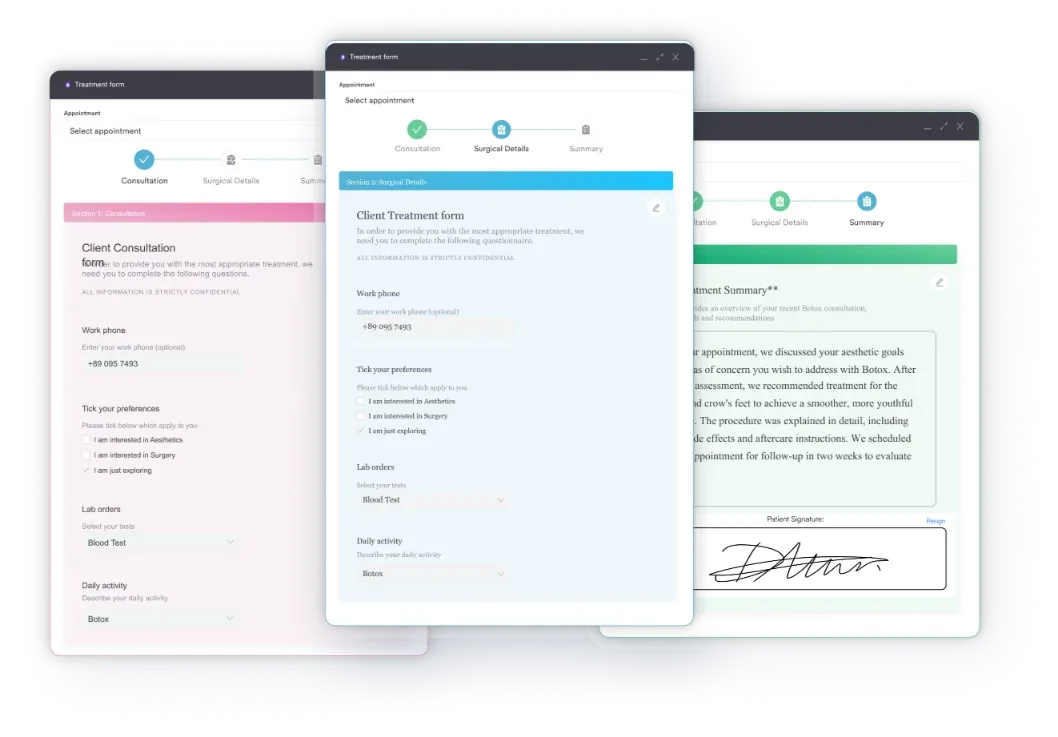
Implementing a binge eating quiz streamlines your intake process and ensures consistent assessment across all new patients presenting with eating concerns. Follow these five operational steps:
Practices using therapy practice management software can build the binge eating quiz straight into the intake workflow. Automated scoring, score-trend reports, and built-in links to the clinical note mean every screening is recorded, scored, and easy to document.
A mental health EMR keeps completed worksheets beside session notes and treatment plans.

Administer, score, and track eating disorder screening tools digitally. Practice management software like Pabau builds your binge eating quiz into patient intake, automating scoring and linking results to the clinical record.

A binge eating screening tool is useful in any healthcare setting that evaluates or treats eating disorders, mental health conditions, or metabolic health concerns.
The screening tool also supports ongoing patient management, where clinicians track symptom severity over time and measure treatment response.
The DSM-5 (American Psychiatric Association, 5th edition) defines binge eating disorder through five core diagnostic criteria (A-E). A clinically valid binge eating quiz maps quiz items to these criteria so results directly inform clinical decision-making:
| DSM-5 criterion | Quiz mapping |
|---|---|
| Criterion A — Recurrent episodes of binge eating (eating an objectively large amount of food with a sense of loss of control) | Questions 1-3: frequency of binge episodes, amount of food consumed, sense of control during eating |
| Criterion B — Binge episodes associated with three or more features: eating rapidly, eating until uncomfortably full, eating large amounts when not hungry, eating alone due to embarrassment, or feeling disgusted, depressed, or guilty afterward | Associated-feature items: how quickly the patient eats, eating past fullness, eating when not physically hungry, secrecy or eating alone, and post-binge guilt or shame |
| Criterion C — Marked distress regarding binge eating | Questions 9-10: emotional impact, feelings of guilt/shame, disruption to daily life |
| Criterion D — Binge eating occurs, on average, at least once per week for three months | Questions 4-5: frequency and duration of binge eating behavior |
| Criterion E — Binge eating is not associated with regular compensatory behaviors (purging, excessive exercise, fasting) and does not occur exclusively during bulimia nervosa or anorexia nervosa | Questions 6-8: screening for vomiting, laxative misuse, exercise compulsion, or dietary restriction after binges, distinguishing BED from bulimia nervosa |
| Severity specifier (not a diagnostic criterion) — mild, moderate, severe, or extreme based on the number of binge episodes per week | Scoring algorithm translates episode frequency into severity ratings for treatment planning |
A quiz grounded in DSM-5 criteria ensures that screening results align with clinical decision rules and treatment guidelines. This matters for practices documenting patient data securely, because accurate criterion mapping supports both patient safety and audit compliance.
After the patient completes the binge eating quiz, calculate the total score using the scoring key provided in the template. Score bands typically indicate severity:
Note: these score bands are the template’s own screening categories and are not identical to the DSM-5 severity specifiers, which are based on the number of binge episodes per week (mild: 1-3, moderate: 4-7, severe: 8-13, extreme: 14 or more).
Document the quiz score, severity category, and your clinical impression in the patient’s record. Use this information to inform the treatment plan and set goals collaboratively with the patient.
A binge eating quiz is a practical, evidence-based screening tool that helps clinicians quickly identify potential binge eating disorder and determine severity for treatment planning. By building the quiz into your intake workflow, as a paper form or a digital assessment, you standardize evaluation, catch cases early, and document care in line with DSM-5 criteria and best-practice guidelines.
Ready to streamline your practice’s eating disorder screening? Book a demo with Pabau to see how digital forms, secure client records, and integrated assessment tracking can simplify intake and improve patient outcomes in your practice.

Need a fuller mental health intake process? Psychiatric Evaluation Template walks through every component of a thorough mental health assessment, from intake to diagnosis.
A binge eating quiz is a standardized screening tool that helps clinicians assess eating patterns, loss-of-control episodes, and binge eating severity using DSM-5 diagnostic criteria. It is not a diagnostic tool but a structured screening aid that informs clinical decision-making and specialist referral.
Administer the binge eating quiz at the initial intake to establish baseline severity. Repeat every 4-8 weeks during treatment to track progress, adjust therapy goals, and document treatment response for insurance and compliance purposes.
No. A binge eating quiz screens for potential BED and indicates whether further clinical evaluation is needed. A formal diagnosis requires a comprehensive clinical interview, medical workup, and assessment by a qualified mental health professional or eating disorder specialist.
Binge eating disorder involves recurrent binge episodes without compensatory behaviors (purging, excessive exercise, fasting). Bulimia nervosa includes binge episodes followed by intentional purging or other compensation. A clinically valid binge eating quiz screens for compensatory behaviors to differentiate the two conditions.
Yes, when administered through HIPAA-compliant or secure practice management software. Practices should ensure patient responses are encrypted, stored securely, and accessible only to authorized clinical staff. Digital administration through a secure patient portal meets confidentiality and regulatory standards.