Pabau GO app

The new Pabau GO is heredownload on the App Store

Download on the App Store
Book a demo Book a demo
Practice Management Tips

mental health safety plan

gutenberg

Key Takeaways

Key Takeaways

A mental health safety plan is a collaborative, written document that helps clients identify crisis warning signs, immediate coping strategies, and emergency contacts to reduce suicide risk during distressing moments.

The evidence-based Stanley-Brown Safety Planning Intervention uses six structured steps: identifying warning signs, listing internal coping strategies, naming social contacts for distraction, identifying family/friends for emotional support, documenting professional and crisis resources, and making the environment safe.

Safety plans reduce acute suicide risk when completed collaboratively with the client-the clinician facilitates, but the client drives the content and owns the plan so it feels personally meaningful and actionable.

Pabau’s digital forms and AI-powered documentation features streamline safety plan completion, storage in the client record, and audit-ready compliance tracking-eliminating manual form entry and keeping the plan accessible at every appointment.

Download your free mental health safety plan template

Mental health safety plan

A ready-to-use form for identifying crisis warning signs, internal coping strategies, support network contacts, professional resources, and safety agreements-all in one collaborative document your clients can reference during emotional crises.

Download template

Mental health crises strike suddenly-suicidal ideation, acute anxiety, self-harm urges, or severe depressive episodes can escalate in minutes. When clients are in acute distress, they need a tangible, pre-planned action guide that doesn’t require them to problem-solve on the spot.

That’s where a mental health safety plan comes in. This structured, personalized document walks clients through crisis warning signs, immediate self-soothing techniques, social contacts who can distract or support them, professional resources (including 988), and concrete ways to make their environment safer. The research is clear: safety planning-especially when co-created collaboratively between clinician and client-measurably reduces acute suicide risk and gives clients ownership over their own wellbeing.

This guide covers what a mental health safety plan includes, how to complete one collaboratively with your clients, and how to document it securely in your practice management system so it’s accessible at every future session.

What is a mental health safety plan?

A mental health safety plan is a written clinical document created jointly by a therapist, psychiatrist, or counselor and their client. It serves as a personalized crisis action plan-a reference guide the client can use during moments of acute emotional distress, suicidal ideation, self-harm urges, severe anxiety, or depressive episodes when rational thinking is clouded.

The plan is evidence-based: it draws from the Stanley-Brown Safety Planning Intervention, an approach endorsed by the Substance Abuse and Mental Health Services Administration (SAMHSA), the Veterans Affairs system, and peer-reviewed clinical literature. Unlike a crisis plan (which is typically provider-focused and reactive), a safety plan is patient-centered and preventive-it anticipates crisis triggers and pre-loads coping actions the client can execute independently.

The plan typically covers six domains: personal warning signs the client recognizes as early signals of crisis, internal coping strategies the client can use alone (breathing exercises, grounding, self-soothing), social contacts they can reach out to for distraction or support, professional resources and crisis lines they can contact, and concrete steps to restrict access to means of self-harm. All sections are completed collaboratively-the client generates ideas and owns the content; the clinician facilitates, validates, and documents.

The underlying principle: mental health EMR software and structured clinical workflows ensure every detail is documented and retrievable, but the safety plan itself is a client-centered document, not a clinician checklist. It works because the client has agency over it.

Safety plans reduce acute suicide risk when the client believes the plan is feasible, knows where to find it, and has practiced using it (or at least reviewed it) with their clinician. The plan is most effective for clients experiencing suicidal ideation, severe mood instability, persistent self-harm urges, or acute anxiety-though it can be adapted for any client managing a mental health condition that involves crisis episodes.

How to use the safety plan collaboratively with your client

The six-step Stanley-Brown Safety Planning Intervention provides the scaffolding for your collaborative session. Each step maps to a section of the safety plan form.

  1. Step 1: Identify warning signs. Ask the client to name the internal warning signs and external triggers that signal they’re entering a crisis state. Examples: “My racing thoughts get louder,” “I isolate from everyone,” “I start having intrusive thoughts about ending things,” “My sleep falls apart.” Write these exactly as the client describes them-specificity matters because the client will use these to recognize crisis early. Typical warning signs include emotional intensification (rage, overwhelming sadness, panic), physical sensations (chest tightness, trembling), behavioral changes (withdrawing, increased substance use), or specific thought patterns (hopelessness, “everyone would be better off”).
  2. Step 2: Internal coping strategies. List self-soothing and distraction techniques the client can use alone, without contacting anyone. Ask: “When you’re feeling upset but not yet in full crisis, what helps? Music? Exercise? Cold water on your face? A specific show or book?” Examples include breathing exercises (box breathing, 4-7-8 breathing), progressive muscle relaxation, grounding techniques (5-4-3-2-1 sensory method), journaling, art, movement, or cognitive strategies like thought-challenging. These must be strategies the client has actually tried and knows work-not generic advice. Aim for 5-8 techniques so the client has options.
  3. Step 3: Social contacts for distraction. Identify people the client can contact specifically to distract themselves-someone they can talk to about everyday topics, go do an activity with, or just spend time around. These are not support people (Step 4); they’re people who help via distraction. The client should feel comfortable asking them for this specific form of help. Include phone numbers and best contact methods (text, call, in-person meet-up). Frame as: “Who is someone who can take my mind off things?” Examples: a friend to watch a movie with, a sibling to go for a walk with, a gym buddy, a gaming friend.
  4. Step 4: Family and friends for emotional support. Now list people the client trusts for direct, empathetic support-people they can tell they’re struggling and who won’t minimize their pain. These contacts should understand mental health, know about the client’s history, and be available to listen. Include phone numbers. Emphasize: “These are people who get it, who you can be honest with.” This often includes a partner, close family member, or trusted friend who has already been disclosed to about the client’s mental health.
  5. Step 5: Professional and crisis resources. Document all professional contacts: therapist’s emergency number, psychiatrist’s on-call line, clinic crisis team, intensive outpatient program (IOP) number, hospital emergency department, and-critically-the 988 Suicide and Crisis Lifeline (call or text 988). For international clients, include local equivalents (e.g., Samaritans in UK). Include hours of operation and brief instructions (e.g., “If I’m in immediate danger, call 911; if I’m thinking about suicide but not planning, call 988 first”). Make this section easy to reference in a crisis.
  6. Step 6: Making the environment safe (means restriction). Discuss and document ways to reduce access to lethal means. This is a sensitive conversation: ask the client directly about their most likely method and help them brainstorm barriers. Examples: “Can someone else hold your medication?”, “Can you store sharp objects in a place that requires a second step to access?”, “Who can you give a spare key to so you’re not alone?” Research shows means restriction, even temporary, reduces immediate suicide risk. Frame this as collaborative safety-building, not surveillance.

Completion best practice: Schedule 30-45 minutes for safety planning so you’re not rushing. Fill out the form together, with the client writing or speaking their answers and you documenting. Let silence happen-brainstorming warning signs or coping strategies takes reflection. End the session by reviewing the plan together, emphasizing where to find it (printed copy + in their client portal if your practice management system supports it), and asking the client to name one warning sign and one coping strategy they’ll watch for this week. This reinforces ownership.

Who is the mental health safety plan helpful for?

Mental health practitioners: therapists, licensed counselors, psychologists, psychiatrists, psychiatric nurse practitioners, marriage and family therapists, social workers, and clinical mental health specialists in private practice, clinics, hospitals, community mental health centers, and schools.

Client populations: The safety plan is most directly indicated for clients experiencing suicidal ideation, non-suicidal self-injury (NSSI), severe mood episodes, acute anxiety, or acute substance use crises. It is standard of care in psychiatric settings and is increasingly used in general therapy practice as a preventive tool. It can be adapted for clients with bipolar disorder (mood crisis prevention), anxiety disorders (panic and severe anxiety), depression (hopelessness and isolation), post-traumatic stress disorder (flashback and dissociation crises), and borderline personality disorder (emotional dysregulation and impulsive self-harm).

Clinical settings: private therapy practices, psychiatry clinics, substance use disorder treatment programs, crisis stabilization units, inpatient psychiatric hospitals (especially discharge planning), community mental health centers, school-based counseling programs, employee assistance programs (EAP), and peer support organizations.

Benefits of using a mental health safety plan

Reduces acute suicide risk. Research shows safety planning lowers the likelihood of suicide attempts in the short term (hours to days) by giving the client concrete, rehearsed actions to take instead of acting on suicidal ideation. The pre-planned coping strategies and contact list lower barriers to reaching out for help.

Increases client agency and ownership. Because the client co-creates the plan (rather than receiving a generic form), they feel ownership. This psychological buy-in-“I wrote this, I know this will work for me”-makes them more likely to use it during crisis.

Clarifies the crisis response pathway. Clients in acute distress often can’t think clearly. Having a written, step-by-step plan removes decision-making burden and ensures they know exactly whom to contact first, what to do if that person isn’t available, and when to escalate to professional help or emergency services.

Improves clinician documentation and regulatory compliance. Safety planning is a Joint Commission standard and is documented in most electronic health records. AI-powered clinical documentation can auto-structure your session notes, ensuring safety planning is clearly documented and easily audited. Compliance management tools can flag when a safety plan hasn’t been reviewed or updated, reducing liability.

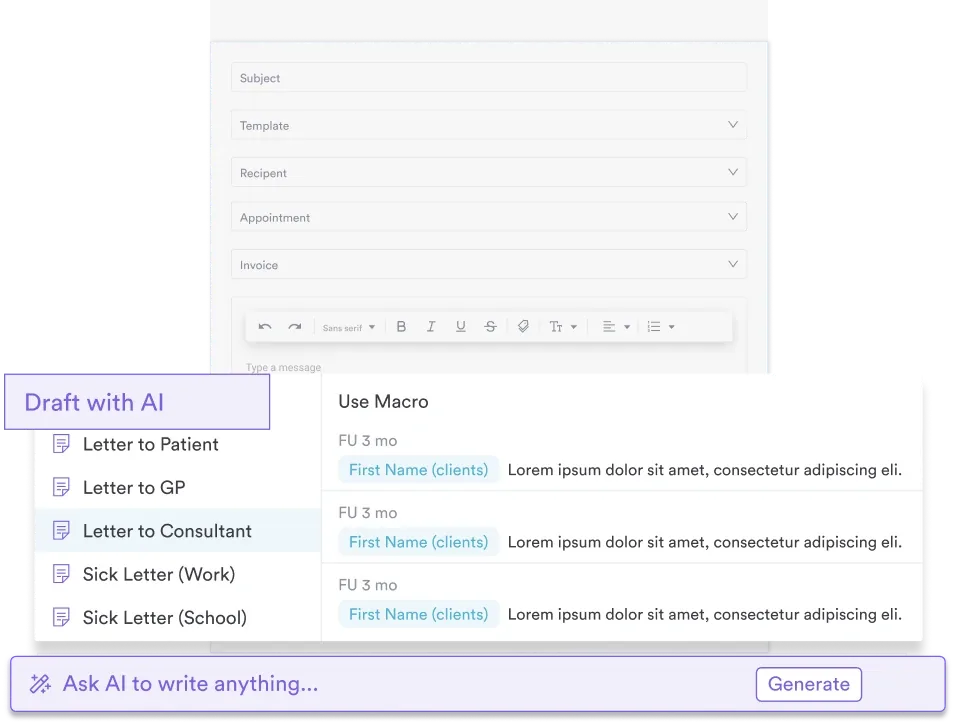
AI powered patient letters

Provides a touchstone for ongoing therapy. The safety plan is not a one-time intervention-it becomes a reference point in every session. “How has your plan been working?” or “Have you used any of your coping strategies this week?” keeps the plan alive and relevant, and allows you to refine it as the client’s situation evolves.

Engages family and support systems. By documenting who the client’s support people are, the plan creates accountability and communication touchpoints. Some clinicians share the plan (with client consent) with family members or close friends, so everyone understands the crisis protocol.

See how Pabau secures safety plans in your EMR

Keep every client’s safety plan in their digital record-accessible across all sessions, automatically audit-tracked, and integrated with clinical notes via AI documentation.

Pabau client record showing safety plan documentation

Documenting the safety plan in your practice management system

A safety plan is only effective if the client can find it and review it. Most clinicians store the plan in two places: a printed or PDF copy the client keeps, and a digital copy in the client’s electronic health record (EHR) accessible at every appointment.

Storage and access: Scan or upload the completed safety plan form into the client’s record under a clear label (e.g., “Safety Plan – Completed [Date]”). Consider adding a digital form version so clients can update it online, and clinicians can track version history. Flag the safety plan in the client summary so it’s visible at appointment check-in-this ensures you remember to review it regularly.

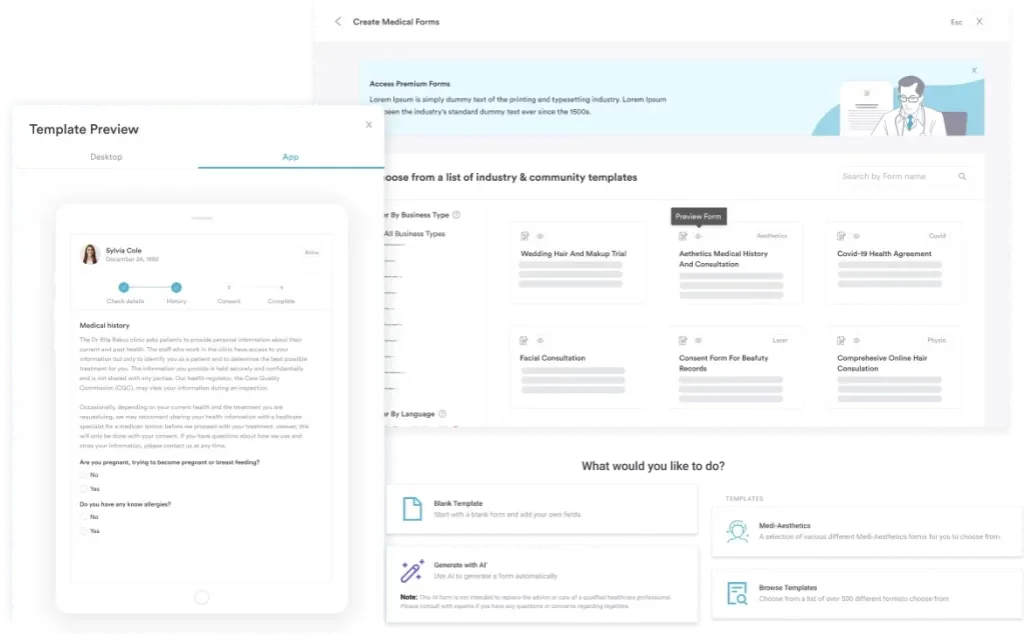
Digital forms
Digital forms

Review cadence: Safety plans should be reviewed at least annually or whenever the client’s situation changes (new medications, new relationships, relocation, job loss, symptom escalation). Document each review: “Plan reviewed and client reports all contacts still accurate. No new warning signs identified. Coping strategies remain relevant.” This creates an audit trail showing you’re actively monitoring suicide risk.

Compliance and risk management: Documentation of safety planning is a HIPAA-compliant best practice and a requirement under many state licensing boards and The Joint Commission. Storing the plan in your EHR ensures it’s part of the permanent clinical record, protected under privacy regulations, and readily available to any clinician covering your caseload in your absence. This is especially critical for practices with multiple clinicians or after-hours coverage.

Safety plan examples: what a completed plan looks like

Here’s a brief annotated example of how a real (anonymized) safety plan might be completed for a 32-year-old client with bipolar II disorder and history of suicide attempts:

Plan section Example content
Warning signs Sleeping only 3 hours and feeling energized (not tired). Racing thoughts about projects. Spending money impulsively. Irritable if anyone questions my ideas. This is how my last manic episode started.
Internal coping Cold shower. 20-minute walk. Listen to grounding playlist. Journal about what I’m feeling. Do a puzzle (slows racing thoughts). Call my mom (see Step 4). Breathe in for 4, hold for 4, out for 6.
Distraction contacts Jake (brother): 555-0123. Go to gym or get coffee. Sarah (friend): 555-0124. Watch a movie together. Diego (work buddy): 555-0125. Talk about our fantasy football league.
Support contacts Mom: 555-0126. I can tell her I’m struggling and she won’t judge. Partner Alex: 555-0127. Alex knows my history and can help me think through what’s happening.
Professional/crisis My therapist Dr. Chen: 555-0128 (office hours); 555-0198 (after-hours line). My psychiatrist Dr. Patel: 555-0129. 988 (call or text). ER: 911 if I’m planning to harm myself.
Means restriction Mom holds my credit cards during manic episodes. Medications locked in a safe. I’ve agreed to tell my partner if I’m having suicidal thoughts (rather than hiding it). If I feel unsafe, I’ll go to the ER immediately.

Notice how the plan is specific to this client: warning signs use the client’s own language, coping strategies are concrete and tested, contacts have actual phone numbers, and means restriction reflects their real situation and support system. A generic plan (“Call a friend,” “Use breathing exercises,” “Get help”) won’t work in crisis-specificity and personalization are the active ingredients.

Conclusion

A collaboratively created mental health safety plan is one of the highest-evidence crisis prevention tools in your clinical toolkit. By walking your clients through their warning signs, coping strategies, support people, professional resources, and safety agreements, you’re equipping them to survive the next crisis-and to reach out rather than act impulsively.

The magic happens when the client owns the plan and knows exactly where to find it. Store it securely in your practice management system, review it regularly, and update it as their life changes. Your consistency signals that safety planning isn’t a one-time box-checking exercise-it’s core to your treatment approach. Pabau’s mental health EMR system makes it easy to organize, version-track, and access safety plans across all client sessions, ensuring continuity of care and regulatory compliance.

Continue your research

Continue your research

Searching for best practices in safety planning? HIPAA compliance for medical offices covers how to store and secure client documents-including safety plans-without legal exposure.

Want to streamline your clinical documentation workflow? Patient management software explains how practice management systems organize client records and automate safety plan tracking.

Planning for crisis intervention in your clinic? Crisis intervention strategies for clinicians teaches de-escalation and immediate response techniques-the complement to long-term safety planning.

Frequently asked questions about mental health safety plans

What is a mental health safety plan?

A mental health safety plan is a written, personalized document co-created by a therapist or psychiatrist and their client that outlines warning signs of crisis, immediate coping strategies, support network contacts, professional resources, and means restriction agreements. It serves as a crisis action guide the client can reference when experiencing suicidal ideation, self-harm urges, severe anxiety, or acute mood episodes.

What are the six steps of the Stanley-Brown safety planning intervention?

The six steps are: (1) identify personal warning signs of crisis, (2) list internal coping strategies the client can use alone, (3) name social contacts for distraction, (4) identify family/friends for emotional support, (5) document professional and crisis resources (including 988), and (6) make the environment safe by reducing access to lethal means. These steps scaffold a collaborative conversation and produce a structured form the client keeps and reviews regularly.

How often should a mental health safety plan be reviewed or updated?

Annual review is minimum standard of care; however, the plan should be updated whenever the client’s situation changes significantly-new medications, new relationship status, relocation, job loss, or any escalation of symptoms. Review the plan briefly in sessions when crisis risk is elevated. Document each review in the client record.

Can a mental health safety plan be used for anxiety and self-harm, not just suicide?

Yes. While safety planning originated in suicide prevention research, the six-step framework works for any acute mental health crisis: severe anxiety attacks, panic episodes, self-harm urges, manic escalation, or acute substance use cravings. The structure and collaborative approach remain the same; only the warning signs and coping strategies shift to match the client’s primary crisis presentation.

Is the Stanley-Brown safety planning intervention evidence-based?

Yes. The Stanley-Brown Safety Planning Intervention has been validated in peer-reviewed research showing it reduces suicide attempts when clients follow the plan. It is endorsed by the Substance Abuse and Mental Health Services Administration (SAMHSA), the U.S. Department of Veterans Affairs, and the Stanley-Brown Safety Planning Intervention website, and is considered a best practice in psychiatric settings.

What should be included in a mental health safety plan template?

A complete template includes: (1) client identifying information and date, (2) warning signs of crisis (internal and external), (3) internal coping strategies, (4) social contacts for distraction (with names and phone numbers), (5) family/friends for support (with contact info), (6) professional contacts and crisis resources (therapist, psychiatrist, 988 lifeline, emergency services), and (7) means restriction agreements. Download our free template to see the exact format.

How do therapists create a safety plan with clients?

The clinician facilitates a 30-45 minute session using the six-step Stanley-Brown framework. The client generates the content (warning signs they recognize, coping strategies they’ve tried, contacts they trust), and the clinician documents their responses on the form. The conversation is collaborative and non-judgmental; the client owns the plan and must feel the coping strategies and contacts are genuinely helpful. At the end, review the plan together and emphasize where the client will keep it and when to use it.

×